
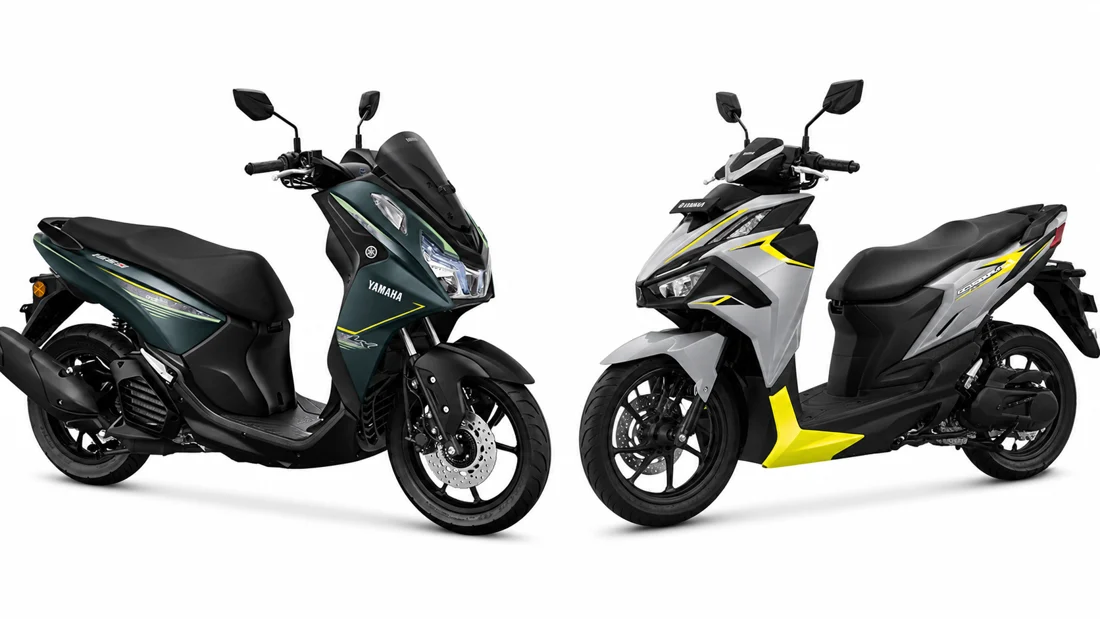
The competition within the 150cc to 160cc automatic scooter segment in Indonesia has reached a new pinnacle of intensity as of July 2026. This specific market bracket, often referred to as the "premium daily commuter" category, remains the primary battleground for the country’s two largest motorcycle manufacturers, Yamaha and Honda. Yamaha Indonesia Motor Manufacturing (YIMM) continues to push the Lexi LX 155 as a sophisticated, comfortable solution for urban mobility, while PT Astra Honda Motor (AHM) has recently introduced the Vario Evo 160, a refreshed and more aggressive iteration of its popular sport-oriented scooter. As the second half of the year commences, a detailed comparison of their pricing structures reveals a strategic tug-of-war designed to capture various consumer demographics, from budget-conscious commuters to tech-savvy enthusiasts seeking top-tier safety features.
The Price Landscape: A Comparative Breakdown
In the current economic climate of July 2026, the pricing strategies of both manufacturers show a remarkably narrow gap, indicating a highly saturated and competitive market. Prospective buyers looking at the entry-level options will find that Yamaha holds a slight advantage in terms of initial affordability. The Yamaha Lexi LX 155 Standard is currently the most accessible entry point into this premium segment, with an On-The-Road (OTR) Jakarta price of Rp 27,850,000. In contrast, Honda’s base model, the Vario Evo 160 CBS, is positioned at Rp 28,525,000. This places the Lexi LX 155 Standard at a price point roughly Rp 675,000 lower than its Honda counterpart, a margin that often appeals to fleet buyers or first-time upgrades from the 110-125cc class.
However, the dynamic shifts significantly as one moves into the mid-tier and flagship variants. For the mid-range "S Version" of the Lexi LX 155, Yamaha has set the price at Rp 29,650,000. Honda counters this with the Vario Evo 160 CBS Nitro, a variant that emphasizes aesthetic upgrades and enhanced braking systems, priced at Rp 28,775,000. At this level, the Honda Vario Evo 160 is actually more affordable than the Yamaha Lexi by approximately Rp 875,000. This suggests that Honda is leveraging its manufacturing scale to offer more features in its mid-tier models at a lower cost to the consumer.
The disparity becomes even more pronounced at the top of the range. The Yamaha Lexi LX 155 Connected/ABS, which features full smartphone integration and anti-lock braking systems, is marketed at Rp 32,500,000. Meanwhile, the Honda Vario Evo 160 ABS is priced more competitively at Rp 31,406,000. Consequently, the flagship Honda model is approximately Rp 1.09 million cheaper than Yamaha’s top-spec Lexi. This pricing structure indicates that while Yamaha focuses on a premium "Maxi" brand image for the Lexi, Honda is aggressively pursuing market share by offering high-end safety technology like ABS at a more reachable price point.
Chronology and Evolution of the 160cc Rivalry
To understand the current market position in July 2026, it is essential to look back at the evolution of these two models. The rivalry began in earnest in early 2022 when Honda launched the Vario 160, replacing the long-standing Vario 150. This move forced Yamaha to rethink its strategy for the Lexi, which at the time only featured a 125cc engine. In early 2024, Yamaha responded by launching the Lexi LX 155, utilizing the latest generation of the Blue Core engine equipped with Variable Valve Actuation (VVA).
By late 2025, Honda introduced the "Evo" suffix to the Vario 160 line, signaling a mid-cycle refresh that included aerodynamic improvements, a more rigid eSAF (enhanced Smart Architecture Frame) 2.0, and updated electronics. The 2026 models currently on showroom floors represent the refinement of these technologies. Yamaha has focused on the "LX" (Liquid Cooled) designation to emphasize thermal efficiency and long-distance reliability, whereas Honda’s "Evo" branding targets a younger demographic that prioritizes acceleration and sharp handling.
Technical Specifications and Performance Metrics
The choice between these two scooters often comes down to the underlying engineering philosophy. The Yamaha Lexi LX 155 utilizes a 155cc, liquid-cooled, 4-stroke, SOHC engine. Its standout feature is the VVA technology, which adjusts valve timing at specific RPMs to ensure consistent torque across both low and high speeds. This makes the Lexi particularly adept at maintaining fuel efficiency during city stop-and-go traffic while still providing enough power for highway overtakes.
The Honda Vario Evo 160, on the other hand, employs a 157cc eSP+ (enhanced Smart Power Plus) 4-valve engine. Honda’s engineering focus has been on reducing internal friction and maximizing the power-to-weight ratio. Because the Vario Evo 160 is generally lighter and more compact than the Lexi, it often delivers a more "punchy" feel during initial acceleration. For the 2026 "Evo" edition, Honda reportedly optimized the Fuel Injection (PGM-FI) mapping to provide a smoother power curve, addressing previous consumer feedback regarding vibrations at idle.
Ergonomics and Design Philosophy: Maxi vs. Sport
Design remains a polarizing factor for Indonesian consumers. The Yamaha Lexi LX 155 is part of the "Maxi Yamaha" family, sharing DNA with the NMAX and XMAX. Its primary selling point is the flat floorboard—a rarity in the 150cc+ segment—which offers superior utility for carrying groceries or providing extra legroom. The seating position is designed for "Touring Comfort," with a wide saddle and a relaxed handlebar reach.
The Honda Vario Evo 160 maintains its "Sporty Scooter" identity. It features a narrower profile and a more aggressive "head-down" stance. While it also features a flat floorboard, the overall dimensions are more compact than the Lexi, making it the preferred choice for riders who frequently navigate through dense traffic or narrow urban alleys. The 2026 Evo model features updated LED signature lighting and a more minimalist rear fender, further emphasizing its modern, athletic aesthetic.
Market Implications and Official Perspectives
Industry analysts suggest that the current pricing reflects a shift in consumer behavior. "We are seeing a trend where the 150cc-160cc segment is no longer a luxury, but a necessity for the modern Indonesian worker who commutes from satellite cities like Depok or Bekasi into Jakarta," says an automotive consultant based in Jakarta. "The price sensitivity is high; even a difference of Rp 500,000 can influence a purchasing decision, which explains why Honda and Yamaha are keeping their prices so close."
While official statements from PT Yamaha Indonesia Motor Manufacturing (YIMM) emphasize "Value for Money through Technology," they acknowledge that the Lexi LX 155 is positioned for those who want the prestige of a Maxi scooter without the bulk of an NMAX. "Our goal is to provide a premium riding experience that remains accessible," a Yamaha representative noted during a recent press briefing. "The Lexi LX 155 is about more than just engine displacement; it’s about the ergonomics and the VVA experience."
On the other side, PT Astra Honda Motor (AHM) continues to lean into its massive dealership network and the reputation of the Vario nameplate. "The Vario Evo 160 is our answer to the demand for a high-performance, stylish, and safe daily ride," an AHM spokesperson stated. "By offering ABS at a more competitive price point, we are prioritizing the safety of our riders across all segments."
Summary of Prices for July 2026 (OTR Jakarta)
For consumers currently navigating their options, the following list summarizes the official prices as of July 1, 2026:
Yamaha Lexi LX 155 Series:
- Lexi LX 155 Standard: Rp 27,850,000
- Lexi LX 155 S Version: Rp 29,650,000
- Lexi LX 155 Connected/ABS: Rp 32,500,000
Honda Vario Evo 160 Series:
- Vario Evo 160 CBS: Rp 28,525,000
- Vario Evo 160 CBS Nitro: Rp 28,775,000
- Vario Evo 160 ABS: Rp 31,406,000
Broader Impact and Future Outlook
The ripple effects of this pricing war extend beyond just these two models. The competitive nature of the 160cc segment has forced other manufacturers, such as Suzuki and various electric vehicle (EV) startups, to reconsider their entry into the premium market. Furthermore, the second-hand market for these models remains incredibly strong, with both the Lexi and Vario retaining high resale values due to their popularity and the widespread availability of spare parts.
As 2026 progresses, the industry anticipates further updates, possibly in the form of new color palettes or limited-edition liveries to coincide with the Indonesian Independence Day celebrations in August. However, for now, the data is clear: Yamaha offers the lowest entry price for those looking for a standard 155cc experience, while Honda provides better value for those looking to invest in mid-to-high-spec features and safety technology.
Prospective buyers are advised that the prices mentioned are specifically for the Jakarta region (On-The-Road). Due to differences in regional taxes (BBN-KB) and distribution costs, prices in areas such as East Java, Kalimantan, or Sulawesi may vary significantly. Consumers are encouraged to visit their local authorized dealers to obtain the most accurate quotes and to inquire about current financing promotions, which often include low down-payment options or discounted monthly installments, further bridging the gap between these two formidable rivals.
