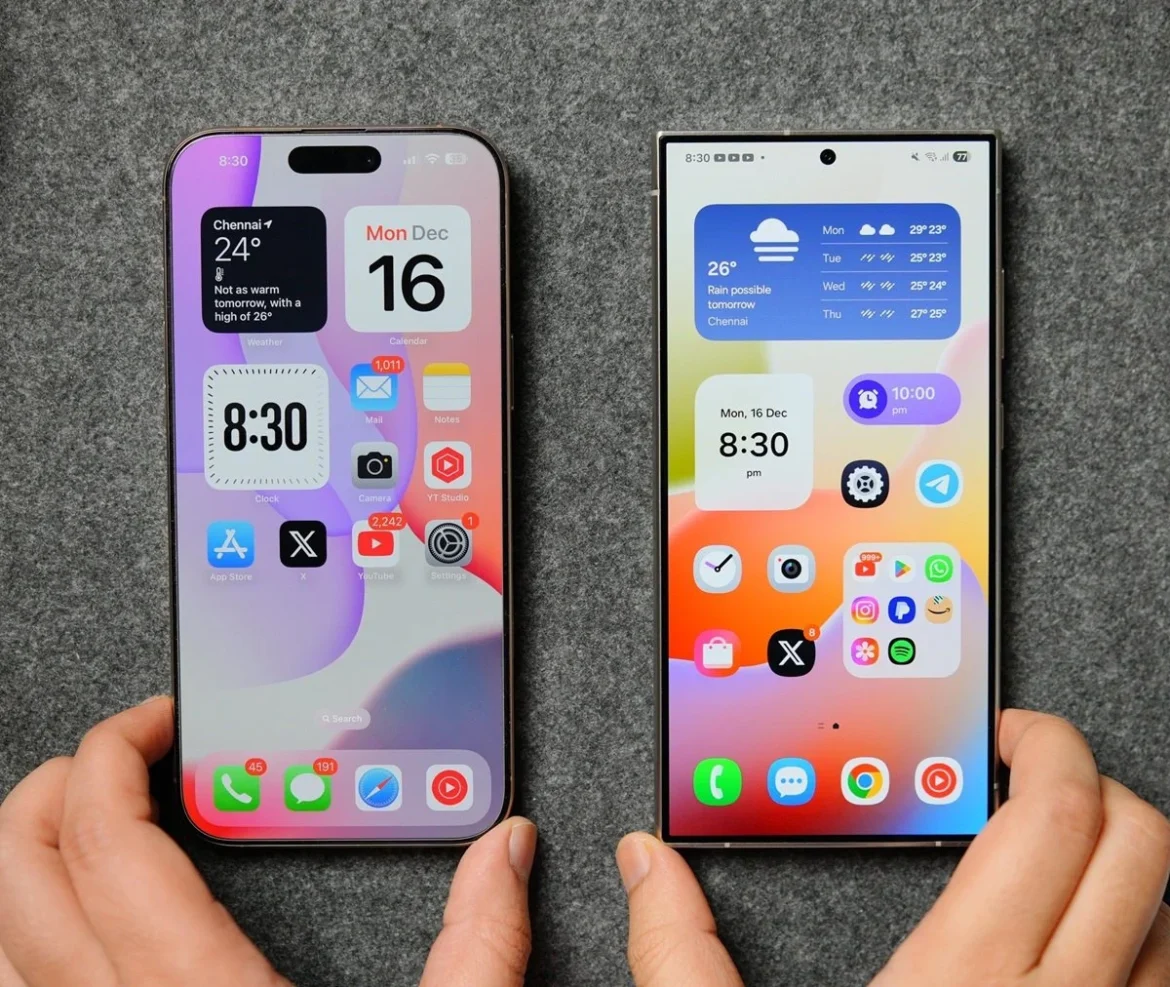
The protracted rivalry between tech giants Apple and Google, a battle waged for years to sway smartphone users from one platform to another, appears to be settling into a period of entrenched loyalty. Despite both companies investing heavily in migration tools—Apple’s "Move to iOS" and Google’s "Switch to Android" applications—recent market analysis indicates a remarkably static user base, with minimal cross-platform shifts. This trend underscores a maturing smartphone market where brand stickiness, particularly for Apple, has reached unprecedented levels, challenging the traditional dynamics of competitive consumer technology.
The latest findings from Consumer Intelligence Research Partners (CIRP), as reported by Techspot on Sunday, July 19, 2026, reveal that the percentage of iPhone owners upgrading from a previous iPhone has seen a notable increase this year. This upward trajectory suggests a profound satisfaction within the iOS ecosystem, leading to high retention rates. Conversely, the number of Android users migrating to Apple’s platform has experienced a decline, signaling a potential plateau in Apple’s ability to poach users from its primary competitor.
Deconstructing the Stagnation: A Closer Look at Migration Data
CIRP’s methodology involves regularly surveying consumers who have recently purchased a new smartphone about their previous device. The data collected for the quarter ending March 2026 provides a clear picture of user inertia. Only 12 percent of new iPhone buyers reported migrating from an Android device during this period. This figure represents a noticeable drop from the 14 percent recorded in the same quarter of the previous year (2025) and 13 percent in 2024. The consistent decline over three years highlights a persistent challenge for Apple in expanding its user base by converting Android loyalists.
Furthermore, the survey indicated that an even smaller fraction—a mere 1 percent—of new iPhone purchasers upgraded from feature phones or other operating systems this year. This leaves the vast majority, an overwhelming 87 percent, as existing iPhone users who opted to upgrade to a newer model within the Apple ecosystem. This percentage marks an increase from 84 percent in the previous year, further solidifying the narrative of a deeply entrenched user base. The trend unequivocally reinforces the notion that most smartphone users have firmly committed to their platform of choice, exhibiting a strong reluctance to switch allegiances. This stability suggests that the initial rush of smartphone adoption has long passed, giving way to a replacement market dominated by internal upgrades rather than inter-platform migration.
Apple’s Dominance in Brand Loyalty: An Unwavering Commitment
The findings from CIRP are not isolated; they are corroborated by other independent market analyses that underscore Apple’s formidable lead in brand loyalty. A separate survey conducted by SellCell earlier this year highlighted an exceptionally high degree of loyalty for Apple in the United States market. Out of more than 5,000 smartphone users surveyed, the percentage of individuals planning to remain loyal to their iPhone brand surged from 90.5 percent in 2019 to an impressive 96.4 percent in 2026. This nearly six-percentage-point increase over seven years illustrates a compounding effect of satisfaction and ecosystem lock-in that makes the iPhone platform incredibly sticky.
In stark contrast, Android users exhibited a lower, albeit still significant, loyalty rate of 86.4 percent in 2026. While robust, this figure suggests a greater openness to exploring alternatives compared to iPhone users. Critically, the SellCell data also revealed a striking imbalance in migration intent: Android users were found to be four times more likely to consider switching to iOS than iPhone users were to contemplate moving to Android. This disparity underscores a fundamental difference in how users perceive the value proposition and overall experience offered by each platform.
Several factors likely contribute to Apple’s superior loyalty metrics. The tightly integrated hardware and software experience, the perceived premium quality of its devices, and a robust ecosystem of services (iCloud, Apple Music, Apple Pay, App Store) create a powerful network effect. The "walled garden" approach, while sometimes criticized for its restrictiveness, also provides a consistent and often seamless user experience that fosters trust and minimizes friction. Moreover, social dynamics, particularly the phenomenon of iMessage’s "green bubble" stigma in certain markets, inadvertently contribute to user stickiness by creating a social barrier to switching away from iOS. For many users, the convenience and social acceptance of remaining within the Apple ecosystem outweigh the perceived benefits of exploring Android.
The Enduring Ecosystem War: A Historical Perspective
The intense competition between Apple and Google dates back to the very genesis of the modern smartphone era. Apple, with the launch of the original iPhone in 2007, redefined mobile computing. Google, recognizing the revolutionary potential, swiftly responded by acquiring Android Inc. and releasing its open-source operating system in 2008, leading to the first commercial Android phone, the HTC Dream, in 2008. From these nascent stages, a fundamental divergence in philosophy emerged: Apple’s closed, vertically integrated approach versus Google’s open, flexible platform adopted by numerous hardware manufacturers.
This philosophical divide has shaped every aspect of their rivalry, from hardware design and software features to app store policies and developer ecosystems. Both companies have consistently aimed to create compelling reasons for users to not only choose their platform initially but to remain loyal. Early competitive strategies included feature parity (e.g., app stores, push notifications, voice assistants), aggressive marketing campaigns, and even the development of dedicated migration tools designed to simplify the daunting process of transferring contacts, photos, and apps between different operating systems. The "Switch to Android" app and Apple’s "Move to iOS" are tangible manifestations of this ongoing battle for user retention, yet their impact on overall migration rates, as the recent surveys indicate, appears to be diminishing. The smartphone market has largely matured, with most consumers having already made their platform choice, leading to a focus on retaining existing customers rather than winning over new ones from the competitor.
Impact of New Features and Shifting Platform Philosophies
The ongoing evolution of smartphone features and underlying platform philosophies continues to shape user perception and loyalty, though not always in predictable ways.
RCS Messaging Integration: One recent development that garnered significant attention was Apple’s decision to adopt the Rich Communication Services (RCS) standard, promising an improved messaging experience between iPhone and Android users. This move, which will enable cross-platform features like end-to-end encryption, higher-quality media sharing, and read receipts—functionalities long available within iMessage—was widely seen as a conciliatory gesture aimed at alleviating the social pressures associated with the "green bubble" phenomenon. However, the survey data suggests that this integration, while beneficial for user experience, has had a "very minimal" impact on brand loyalty. This indicates that messaging capabilities, while important, are not a primary driver for switching platforms for the vast majority of users, whose loyalty is likely rooted in deeper ecosystem integrations and overall user experience. The stickiness of iMessage for existing Apple users remains, but the absence of iMessage features for Android users is clearly not a strong enough deterrent to drive them to switch.
Sideloading and Android’s Openness vs. Tightening Controls: A core tenet of the Android platform has always been its open nature, allowing users the freedom to "sideload" applications—installing apps from sources other than the official Google Play Store. This flexibility offers users greater control over their devices and access to a wider range of software, a distinct advantage over iOS’s more restrictive, App Store-centric model. However, reports suggest that Google may be preparing to tighten these sideloading functionalities. If implemented, such a shift could potentially diminish one of Android’s most significant value propositions for a segment of its user base, particularly those who prioritize customization and unrestricted access. This move, if it materializes, could be seen as Google attempting to emulate some aspects of Apple’s more controlled ecosystem, potentially in the name of security, but at the risk of alienating a portion of its loyal users who value the freedom Android traditionally offers.
The AI Battleground: The Next Frontier of Differentiation
The landscape of smartphone competition is currently being redefined by the rapid advancements in generative artificial intelligence (AI). This emerging technology presents a new battleground for Apple and Google to differentiate their platforms and enhance user engagement.
Google has been notably more aggressive and proactive in integrating AI into its Android ecosystem. Through its Gemini assistant, Google has already deployed a suite of AI-powered features designed to streamline daily tasks. These include automated scheduling, intelligent form filling, advanced dictation capabilities, and automated web browsing, all woven directly into the Android operating system. This early integration positions Google as a leader in bringing practical, on-device AI experiences to a broad user base. The strategy is to make Android devices indispensable through intelligent automation that anticipates user needs and simplifies complex tasks.
Apple, while traditionally more cautious in its public AI rollout, is poised to introduce similar capabilities with the upcoming iOS 27 update, scheduled for release in the fall. These anticipated enhancements for Siri include visual descriptions, AI-powered web search, and advanced document drafting, aiming to elevate the virtual assistant’s intelligence and utility. Apple’s approach often involves a more deliberate, polished launch, focusing on seamless integration and user privacy. However, its later entry into the mainstream AI feature race compared to Google could be perceived as a catch-up effort. The success of these AI integrations will be crucial for both companies, as AI’s potential to personalize and optimize the smartphone experience is immense, offering a new avenue to strengthen platform loyalty and attract discerning users. The platform that can most effectively leverage AI to provide truly transformative and intuitive experiences stands to gain a significant advantage in the long run.
Broader Market Implications and Future Outlook
The findings of minimal cross-platform migration and high brand loyalty carry significant implications for the broader smartphone market. Firstly, they underscore the maturity and saturation of the global smartphone market. In developed economies, most consumers already own a smartphone, meaning growth largely comes from replacement cycles rather than new adoptions. This shifts the strategic focus from acquiring new users to retaining existing ones and encouraging upgrades within the same ecosystem. For both Apple and Google, this translates into a relentless pursuit of innovation that compels users to upgrade their devices frequently, even if they remain on the same platform.
Secondly, the entrenched loyalty benefits Apple disproportionately. Its premium pricing strategy, coupled with high retention, allows it to maintain robust profit margins and cultivate a highly engaged, affluent customer base. For Android, while its open nature and diverse range of devices have secured it a larger global market share, the lower loyalty rate and higher propensity for its users to switch to iOS pose a persistent challenge. Google must continually work to enhance the Android experience, strengthen its brand identity among hardware partners, and provide compelling reasons for users to stick with its platform, particularly as some of its traditional advantages, like sideloading, might face restrictions.
The future of smartphone competition will likely revolve around the sophistication and seamless integration of AI, the evolution of privacy and data control, and potentially, the emergence of new form factors and extended reality (XR) experiences. While current data indicates strong user inertia, a truly disruptive innovation or a significant shift in user priorities could still shake up the established order. However, for the foreseeable future, the smartphone market appears to be characterized by deep-seated brand loyalty, with users content to remain within the digital ecosystems they have come to know and trust. The battle is no longer primarily about winning over new converts from the opposing camp, but about deepening engagement and satisfaction among the already loyal.