
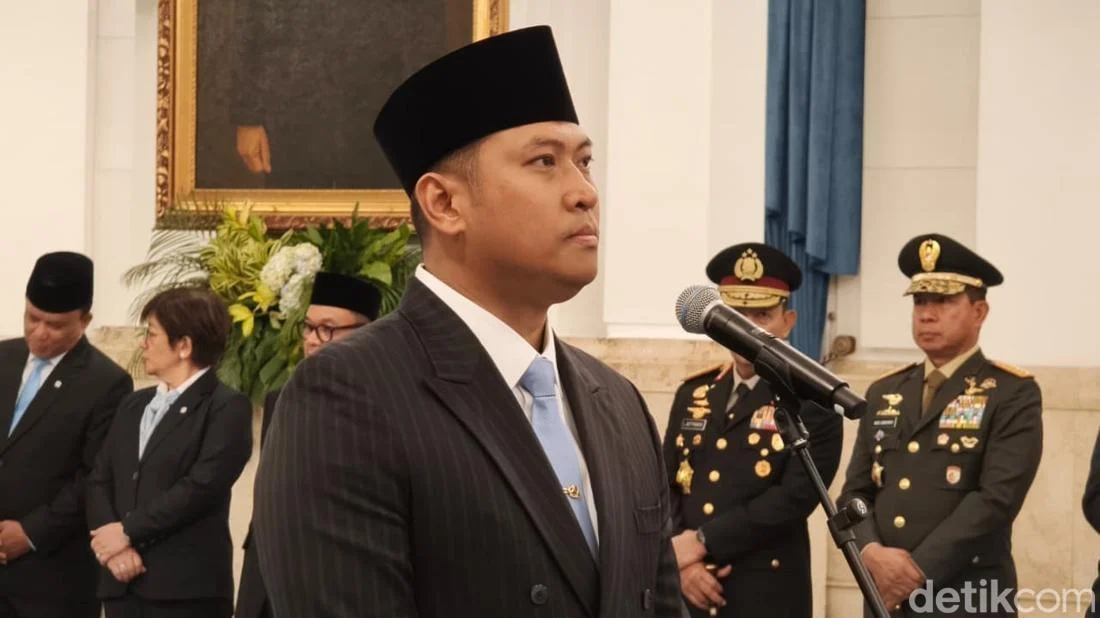
President Prabowo Subianto officially inaugurated Sudaryono as the new Head of the National Nutrition Agency (Badan Gizi Nasional – BGN) on Wednesday, July 22, 2026, at the State Palace in Jakarta. Sudaryono steps into this pivotal role following the resignation of Nanik S Deyang, who cited health reasons for her departure. The transition occurs at a critical juncture for the BGN, an agency tasked with a significant mandate concerning public health and nutrition, particularly through its flagship free nutritious meal program.
The appointment of Sudaryono, who previously served as Deputy Minister of Agriculture, signals a continuity in the administration’s focus on food security and nutritional well-being. His background in agricultural policy is seen as a strategic asset, aligning the BGN’s operational activities with broader national food production and distribution strategies. The President’s decision to appoint Sudaryono was reportedly influenced by his deep understanding of the MBG (Makan Bergizi Gratis) program’s conceptualization and ongoing implementation, a key initiative under the agency’s purview.
Addressing Program Perceptions and Transparency
Following his swearing-in ceremony, Sudaryono was quick to address public perceptions surrounding the MBG program, particularly concerning any potential conflicts of interest within his family. When questioned about his family’s involvement in or ownership of any "SPPG kitchens" or related facilities, Sudaryono unequivocally stated, "No, there are none. I do not have an SPPG, I do not have a kitchen, no. None of my family members own an SPPG kitchen." This direct denial aims to preemptively counter any rumors or insinuations that might arise, emphasizing a commitment to impartiality and ethical governance within the agency. The term "SPPG" likely refers to specific types of food preparation facilities or catering services associated with government programs, and Sudaryono’s statement seeks to assure the public of his personal and familial detachment from any potential private gain connected to the BGN’s operations.
The MBG program, a cornerstone of the BGN’s efforts, has been instrumental in providing free nutritious meals to vulnerable populations, including children and the elderly. Its success hinges on efficient procurement, preparation, and distribution of food, making transparency and accountability paramount. Sudaryono’s emphasis on addressing these aspects underscores a recognition of the challenges and responsibilities inherent in managing such a large-scale public service program.
Acknowledging Predecessor and Future Vision
Sudaryono also extended his well wishes to his predecessor, Nanik S Deyang, expressing gratitude for her service and offering prayers for her recovery. "I want to express my appreciation to Mrs. Nanik Deyang, and also pray for her. That Mrs. Nanik resigned due to health reasons," Sudaryono stated. "Let us pray for her to be healthy and well again as usual," he added. Deyang’s resignation due to health issues, reportedly related to a heart condition, highlights the demanding nature of leadership roles within government agencies and the personal sacrifices that may be required.
Looking ahead, Sudaryono articulated a clear vision for the BGN, prioritizing the enhancement of its governance structure, with a particular focus on improving transparency. He acknowledged this as a "big task" that he will undertake with the support of two Deputy Heads, the entire BGN staff, and collaboration from various ministries and other government institutions. This commitment to improved governance suggests a strategic intent to bolster public trust and ensure the efficient and equitable delivery of the agency’s services.
Background and Context of the MBG Program
The National Nutrition Agency (BGN) was established with the overarching goal of improving the nutritional status of the Indonesian population, thereby contributing to national health and productivity. The MBG program, in particular, has been a significant undertaking, requiring substantial logistical coordination and financial investment. Its primary objective is to combat malnutrition and stunting by ensuring access to balanced and nutrient-rich meals, especially for those most at risk.
The program’s implementation has involved partnerships with local food suppliers, community kitchens, and educational institutions. The effectiveness of such programs is often measured by indicators like the reduction in malnutrition rates, improved school attendance and performance among children, and enhanced well-being of the elderly. Data from the Ministry of Health has consistently shown a correlation between access to nutritious food and positive health outcomes. For instance, reports in recent years have indicated a gradual decrease in stunting rates among children under five, a trend that public health initiatives like MBG aim to accelerate.
The resignation of Nanik S Deyang at this time, while attributed to health reasons, also occurs within a broader context of ongoing public discourse and scrutiny regarding the efficacy and management of large government programs. Leaders in such positions often face intense public and media attention, demanding not only administrative competence but also resilience and robust health.
Sudaryono’s Mandate and Expected Impact
The selection of Sudaryono as the new Head of BGN is strategically significant. His prior role as Deputy Minister of Agriculture provided him with direct experience in agricultural production, supply chains, and food distribution networks, all of which are intrinsically linked to the BGN’s mission. This background is expected to facilitate a more integrated approach to nutrition policy, ensuring that food availability and affordability are considered alongside nutritional quality.
Mensesneg (Minister of State Secretary) Prasetyo Hadi, in commenting on the appointment, emphasized Sudaryono’s long-standing engagement with the MBG program’s conceptualization and development. This suggests that Sudaryono is not an outsider to the agency’s core objectives and operational challenges. His familiarity with the program’s genesis is likely to enable a smoother transition and a more informed direction for its future development.
The BGN’s mandate extends beyond the MBG program. It also encompasses public health nutrition education, policy formulation, and the monitoring of national nutritional status. Sudaryono’s leadership will be crucial in navigating these multifaceted responsibilities. His stated commitment to improving governance and transparency is a positive signal for stakeholders, including beneficiaries, government partners, and the general public.
Broader Implications and Future Outlook
The leadership transition at the BGN is more than just an administrative reshuffling; it carries broader implications for national health policy and the government’s commitment to tackling malnutrition. The success of the MBG program and other BGN initiatives directly impacts the well-being of millions of Indonesians and contributes to the nation’s human capital development.
The emphasis on transparency and improved governance by Sudaryono is particularly important. In programs involving public funds and widespread beneficiary reach, accountability mechanisms are crucial for preventing corruption and ensuring that resources are utilized effectively. A robust governance framework can enhance public confidence and attract further support for nutritional programs.
Furthermore, Sudaryono’s background in agriculture could foster stronger inter-ministerial cooperation. A coordinated approach between the Ministry of Agriculture, the Ministry of Health, and other relevant agencies is essential for creating a holistic ecosystem that supports nutritional goals. This includes ensuring the availability of diverse, nutritious food products at affordable prices and promoting sustainable agricultural practices that contribute to food security.
The coming months will be critical for Sudaryono to establish his leadership, implement his reform agenda, and demonstrate tangible progress in the BGN’s mission. The agency’s ability to adapt to evolving nutritional challenges, such as the dual burden of malnutrition and non-communicable diseases, will also be a key determinant of its long-term success. The appointment of Sudaryono, with his stated commitment to transparency and his relevant experience, offers a promising outlook for the future of national nutrition in Indonesia.
