
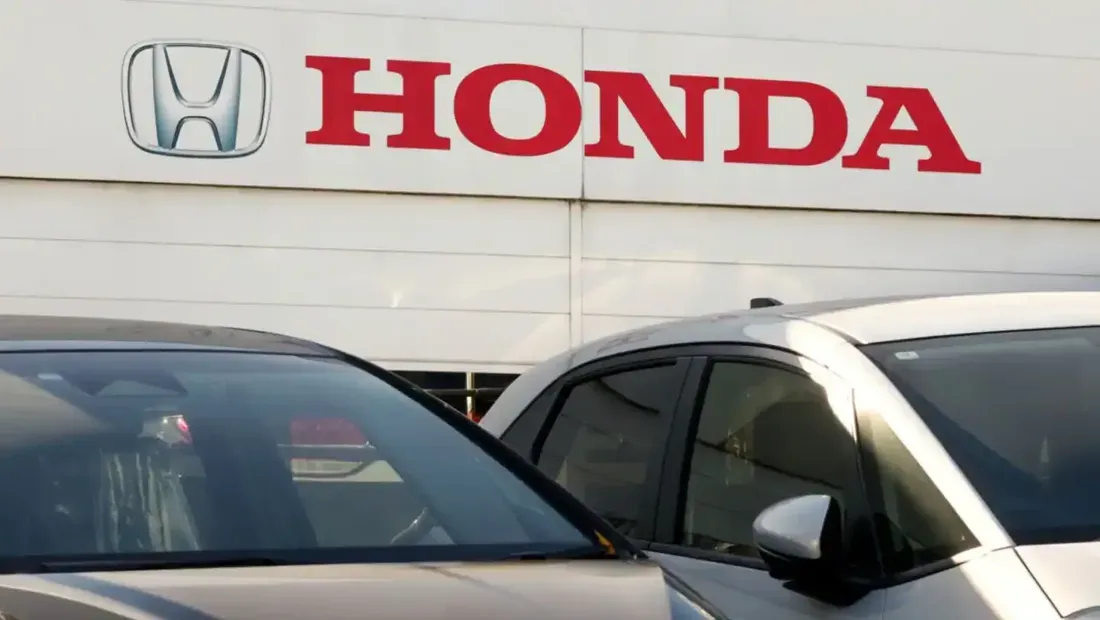
Honda Motor (China) Investment Co., Ltd. (HMC), a wholly-owned subsidiary of Honda Motor Co., Ltd., has officially announced the extension of its joint venture agreement with Guangzhou Automobile Group Co., Ltd. (GAC Group), ensuring the continued operation of GAC Honda Automobile Co., Ltd. (GAC Honda) through the year 2038. This strategic renewal underscores Honda’s long-term commitment to the Chinese market, which currently stands as the world’s largest and most competitive arena for automotive sales and technological innovation. By extending this partnership, both entities aim to leverage their combined manufacturing expertise, research and development capabilities, and extensive supply chains to address the surging demand for electrified vehicles and intelligent driving systems.
A Legacy of Cooperation: The Genesis of GAC Honda
The partnership between Honda and GAC Group is one of the most storied in the history of the Chinese automotive industry. GAC Honda, originally known as Guangzhou Honda Automobile Co., Ltd., was established in July 1998. At the time, it represented a pioneering effort as the first joint venture for Honda in China dedicated to both the production and sales of passenger vehicles. The venture was a cornerstone of China’s "Market for Technology" policy, which encouraged foreign automakers to partner with domestic firms to modernize the local industrial base.
Production officially commenced in March 1999 at a facility in Guangzhou, Guangdong Province. The first model to roll off the assembly line was the Honda Accord, a vehicle that would go on to define the mid-size sedan segment in China for decades. The success of the Accord was not merely a result of its engineering but also due to GAC Honda’s innovative approach to customer service. The joint venture introduced the "four-in-one" (4S) dealership model to the Chinese market—integrating Sales, Spare parts, Service, and Survey (feedback) into a single location. This model set a new standard for the retail experience in China, fostering high levels of brand loyalty and trust among early Chinese car buyers.
Chronology of Growth and Milestones
Since its inception in the late 1990s, GAC Honda has navigated through several distinct phases of the Chinese economic miracle. The following timeline illustrates the key milestones that have defined the joint venture’s trajectory:
- 1998 (July): GAC Honda is officially established with a 50:50 investment split between Honda and GAC Group.
- 1999 (March): Mass production begins with the sixth-generation Accord, marking a significant entry into the Chinese premium sedan market.
- 2003: GAC Honda achieves a cumulative production milestone of 200,000 units, reflecting the rapid expansion of the Chinese middle class.
- 2007: The joint venture establishes its own Research and Development Center in Guangzhou, signaling a shift from simple assembly to localized engineering.
- 2016: GAC Honda enters the luxury segment with the launch of the Acura brand in China (though Acura would later undergo strategic restructuring, the manufacturing experience remained vital).
- 2020: Despite global supply chain disruptions, GAC Honda maintains robust sales, crossing the 8 million cumulative units mark.
- 2023-2024: The partnership surpasses 11 million cumulative sales and announces a pivot toward a "China-first" electrification strategy.
- 2024 (Current): The signing of the contract extension ensures the partnership will remain active until 2038, focusing on New Energy Vehicles (NEVs).
Performance Data and Market Significance
The scale of GAC Honda’s operations is reflected in its massive cumulative sales volume, which has now exceeded 11 million units. This figure places the joint venture among the most successful foreign-domestic partnerships in the country. Honda’s performance in China is dual-pronged, as it also operates a second major joint venture, Dongfeng Honda, based in Wuhan. Together, these entities have made Honda a household name across every province in China.
In recent years, however, the market landscape has shifted. China’s total automotive market has transitioned from a period of hyper-growth to one of structural transformation. In 2023, China’s total vehicle sales reached 30.09 million units, a record high, but the growth was driven almost entirely by New Energy Vehicles (EVs and Plug-in Hybrids), which saw a 37.9% year-on-year increase. Traditional Internal Combustion Engine (ICE) vehicles, the historical strength of Japanese automakers, have faced declining market share.
To counter this, GAC Honda has been aggressively restructuring its product portfolio. The extension of the contract to 2038 provides the necessary timeframe for the joint venture to transition its manufacturing facilities. Honda has announced plans to introduce 10 Honda-brand EV models in China by 2027 and aims for EVs to represent 100% of its automobile sales in China by 2035. This ambitious target is five years ahead of Honda’s global goal, reflecting the unique speed of the Chinese market.
Strategic Objectives for the 2038 Extension
The decision to extend the partnership for another 14 years is a calculated move to stabilize operations amidst geopolitical and economic uncertainties. Several key strategic objectives underpin this agreement:
1. Acceleration of the "e:N" and "Ye" Series
Honda is launching a new generation of electric vehicles specifically designed for the Chinese consumer. The "e:N" series and the more recently announced "Ye" series are built on dedicated EV platforms. The GAC Honda plant in Guangzhou is currently being upgraded to serve as a hub for these new models, incorporating advanced automation and carbon-neutral manufacturing processes.
2. Integration of Intelligent Connected Vehicles (ICV)
China leads the world in the adoption of smart cabin technologies and autonomous driving features. Through the extended partnership, Honda will collaborate more closely with GAC Group’s ecosystem of technology partners. This includes the integration of AI-driven voice assistants, advanced driver-assistance systems (ADAS) tailored for complex Chinese urban environments, and over-the-air (OTA) software updates.
3. Supply Chain Localization and Cost Optimization
The rise of domestic Chinese brands like BYD and Geely has put immense price pressure on traditional automakers. By extending the GAC Honda contract, Honda secures its relationship with local suppliers for batteries and semiconductors. GAC Group’s own advancements in battery technology (through subsidiaries like GAC Aion) provide a potential synergy for Honda to reduce costs and improve the range and charging speeds of its electric offerings.
4. Navigating the Regulatory Landscape
The Chinese government’s "Dual Credit" policy—which penalizes the production of high-emission vehicles while rewarding the production of NEVs—makes a strong local partner essential. GAC Group, as a state-owned enterprise, possesses a deep understanding of local regulatory shifts and industrial policies, providing Honda with a vital navigational guide in a complex political environment.
Official Responses and Industrial Impact
In the official press release accompanying the announcement, Honda emphasized the mutual benefits of the long-standing relationship. "GAC Honda has contributed significantly to the development and growth of the automotive industry in China," the statement noted. "By fully utilizing the respective technologies and resources of Honda and GAC Group, and continuing to offer products that meet the diverse needs of customers, Honda will further strengthen its automotive business in China."
Industry analysts view this extension as a signal of resilience. While some Western manufacturers have scaled back their presence in China or shifted focus to other emerging markets, Honda is doubling down. This move is seen as an acknowledgement that to be a global leader in the automotive sector, one must remain competitive in China.
"The extension to 2038 is a clear message to dealers, suppliers, and customers that Honda is not exiting," said a senior automotive analyst based in Shanghai. "It provides the stability needed to invest billions into new EV platforms. The challenge for GAC Honda will be to match the speed of innovation seen in Chinese tech-heavy startups while maintaining the reliability and build quality that the Honda brand is known for."
Broader Implications for the Global Auto Industry
The renewal of the GAC Honda partnership carries implications beyond the borders of China. It serves as a blueprint for how legacy automakers can attempt to pivot in the face of the "EV disruption." The transition is not without its difficulties; Honda recently announced a reduction in its ICE production capacity in China to better align with current demand, including the closure of certain assembly lines. However, the long-term extension suggests that these closures are part of a broader "pruning" process to allow for the growth of the electric division.
Furthermore, the Guangzhou region continues to solidify its status as a global automotive powerhouse. With GAC Honda at its heart, the city has developed a massive cluster of parts suppliers, logistics providers, and research institutes. The continuation of this joint venture ensures that thousands of jobs are preserved and that the regional economy continues to benefit from foreign direct investment.
As 2038 approaches, the automotive world will likely look vastly different than it does today. By securing this partnership, Honda and GAC Group are betting that their combined heritage and future-focused technology will allow them to remain at the forefront of the mobility revolution. The 11 million units sold to date are viewed not just as a historical achievement, but as a foundation upon which the next generation of intelligent, electrified transportation will be built.
