
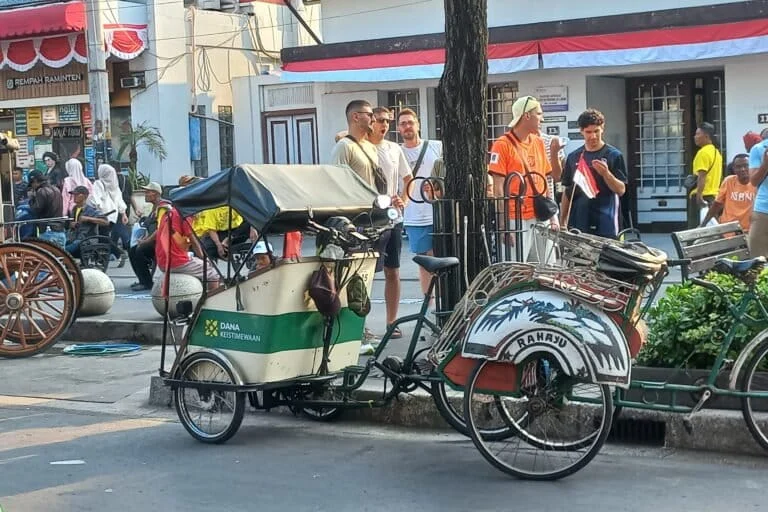
The transition to electric mobility in the historic corridors of Malioboro, Yogyakarta, was championed as a milestone in Indonesia’s commitment to low-emission urban planning. However, beneath the veneer of modern, eco-friendly tourism lies a narrative of systemic failure, technological inadequacy, and the marginalization of the very laborers the program was intended to empower. For the traditional becak drivers of Yogyakarta, the shift from motorized or pedal-powered vehicles to government-supplied electric units has become a source of profound economic instability and physical hazard. Interviews with local operators, engineers, and energy policy experts reveal that the project, which began with high-level ambitions, has largely neglected the technical realities of the street and the livelihoods of those navigating them.
A Chronology of Disenfranchisement
The push to replace traditional becaks with electric models gained momentum as part of a broader "Green Yogyakarta" initiative aimed at reducing noise and air pollution in the iconic Malioboro tourism district. Since the inception of the project, however, the process has been characterized by top-down decision-making.
Drivers like Giyono, a long-time operator in the area, describe the consultative process as a performative gesture. According to Giyono, the design phase of the vehicles involved little to no input from the drivers themselves. Instead, operators were presented with finished units, often finding themselves compelled to accept them under the pressure of local regulations and the promise of a "modernized" future. By the time the program was fully implemented, many drivers found their original, reliable motorized becaks dismantled or destroyed, leaving them with no bargaining power and a fragile new vehicle that failed to meet the demands of their daily labor.

Technical Failure and the Lack of Standardization
The technological failures plaguing the electric becak fleet are not mere accidents; they are, according to experts, the result of fundamental engineering oversights and an absence of rigorous standardization. Abdullah, founder of E-Clont Yogyakarta—a workshop specialized in electric vehicle maintenance—has become the primary responder to the fleet’s recurring mechanical crises.
Abdullah points to two primary issues: poor manufacturing quality and a lack of understanding regarding the vehicle’s usage profile. Many of the vendors contracted for the project treated the electric becaks as low-intensity leisure vehicles rather than the heavy-duty, commercial workhorses they are. As a result, the internal components, particularly the wiring and Battery Management Systems (BMS), are frequently undersized for the constant "stop-and-go" traffic and heavy loads characteristic of Malioboro.
"We are not just repairing these vehicles; we are essentially redesigning them," Abdullah noted. His workshop frequently replaces thin, inadequate wiring with heavy-duty cables capable of handling the high current loads that cause standard units to melt or short-circuit. This lack of professional oversight at the manufacturing stage has turned the fleet into a liability for the drivers, who bear the cost of downtime and repairs.
Expert Analysis: The Cost of Ignoring the Grassroots
Jayan Sentanuhady, a Professor at the Department of Mechanical and Industrial Engineering at Universitas Gadjah Mada (UGM), has been studying the requirements for electric becaks since 2018. His research indicates that a successful transition requires an empathetic, data-driven approach to design—one that the current project notably lacks.
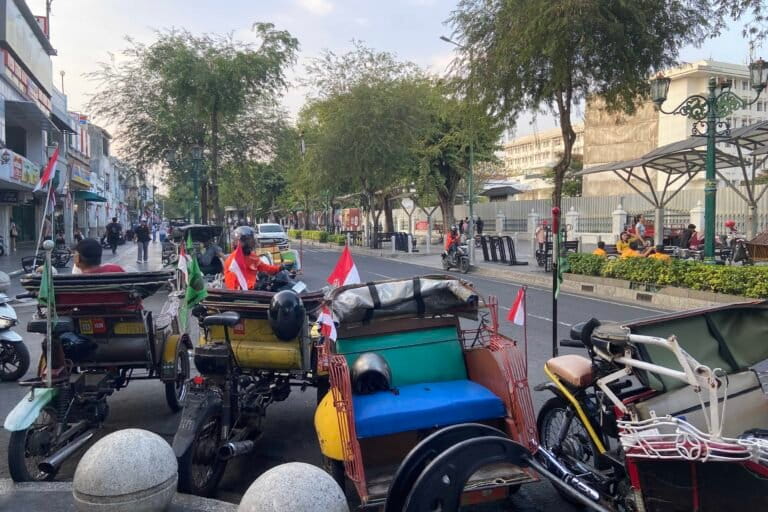
Professor Sentanuhady’s field research determined that the average becak driver in Yogyakarta covers 30 to 35 kilometers daily, frequently navigating inclines and heavy congestion. These conditions demand high torque rather than high speed. When manufacturers prioritize aesthetic appeal over structural integrity and power management, the result is an immediate failure in the field. Sentanuhady warns that when a vehicle’s cables begin to melt, it is a clear indicator that the manufacturer lacks the fundamental engineering expertise required for electric vehicle production. He posits that the current state of the fleet serves as a cautionary tale: when infrastructure projects are treated as business opportunities for vendors rather than public service utilities, the working class invariably pays the price.
Infrastructure Gaps and Economic Vulnerability
The failure of the electric becak program extends beyond the mechanical defects of the vehicles. It is exacerbated by a severe lack of supporting infrastructure. Currently, the designated charging stations for the entire fleet are concentrated in a single, remote location at the Ketandan Parking Area. This centralized configuration forces drivers to constantly monitor their battery levels, leading to a "range anxiety" that directly limits their income.
Petrus Juli, chairman of the local becak drivers’ cooperative, explains that drivers are now forced to decline long-distance fares for fear of being stranded. Furthermore, the cost of maintenance is prohibitive. A full battery replacement can cost upwards of IDR 4.8 million—a figure that represents months of profit for an average driver. Despite these challenges, official responses from the government, including the Department of Transportation (Dishub) of Yogyakarta, suggest that the government views its role as limited to initial support. Agha Perdana Putro, an official at the Department of Transportation, stated that the government cannot indefinitely subsidize the energy needs of the drivers, signaling an expectation for future commercialization of charging services by private entities.
The Myth of the "Green" Transition
The broader environmental argument for the electric becak program has also come under intense scrutiny. While the vehicles produce no tailpipe emissions in Malioboro, their overall environmental footprint remains problematic. Melky Nahar, Coordinator of the National Mining Advocacy Network (Jatam), argues that the program ignores the environmental and social costs embedded in the supply chain.
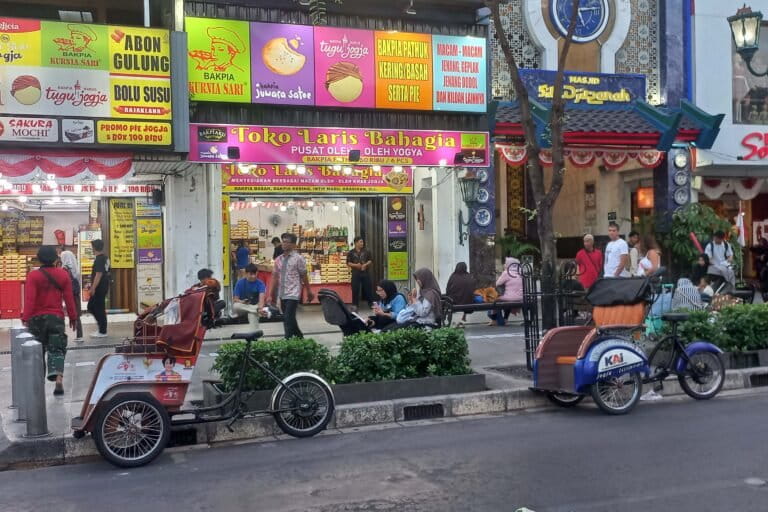
The batteries powering these becaks rely on nickel, an industry that is notoriously destructive in regions like Maluku and other parts of Eastern Indonesia. The extraction and processing of these minerals often involve significant deforestation and water contamination before the materials are shipped abroad for battery manufacturing and subsequently imported back into Indonesia.
Furthermore, the electricity used to charge these vehicles is largely derived from coal-fired power plants. Consequently, the transition is merely a relocation of emissions from the streets of Yogyakarta to the industrial zones and power plants of the archipelago. Beyrra Triasdian, an energy transition campaigner at Trend Asia, emphasizes that a true energy transition must be holistic. "If the electricity powering these vehicles is not clean, and if the production chain is exploitative, the label of ‘renewable’ is misleading," Triasdian stated.
Implications for Future Policy
The situation in Yogyakarta serves as a critical case study for policymakers across Indonesia. It highlights the dangers of implementing "green" technology without first securing the economic and social stability of the affected communities.
The primary implications are threefold:

- Design Failure: Without involving end-users in the design process, technical specifications will consistently fail to meet the actual operational demands of the workforce.
- Economic Displacement: Forcing an immediate technological transition without a robust, long-term support system (such as affordable parts, local repair networks, and decentralized charging infrastructure) turns public policy into a mechanism for impoverishing the vulnerable.
- Greenwashing Risks: The reliance on top-down, non-transparent supply chains undermines the legitimacy of climate goals. True transition requires transparency, from the source of the minerals to the grid powering the end product.
As the electric becak project continues to struggle, the message from the drivers and experts is clear: an energy transition that does not prioritize the dignity and economic security of the worker is not a solution, but a failure of governance. For the drivers of Malioboro, the hope remains that the government will move away from mandatory, top-down implementation and toward a collaborative model that respects both the environment and the people who keep the city’s heart beating. Without such a pivot, the "green" future of Yogyakarta risks remaining a hollow promise, leaving its most iconic laborers in the dark.
