
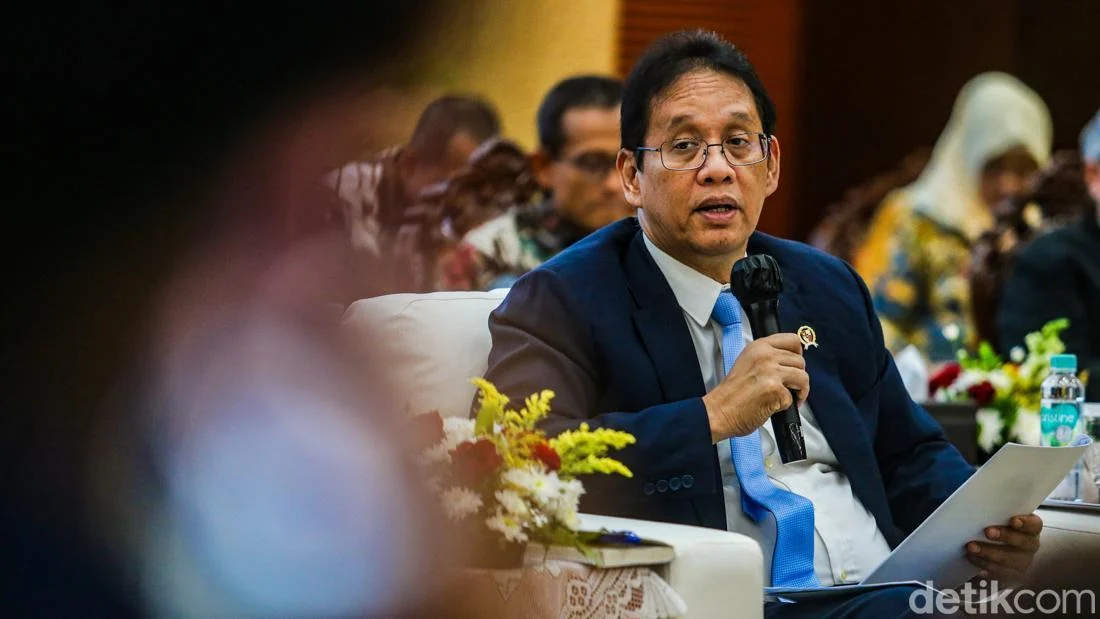
Jakarta, Indonesia – In a significant move to bolster Indonesia’s biosecurity and streamline import-export oversight, Finance Minister Purbaya Yudhi Sadewa has given the crucial "green light" for officers from the Indonesian Quarantine Agency (Barantin) to directly participate in monitoring scanning machines operated by the Directorate General of Customs and Excise (Bea Cukai). This pivotal decision, announced on Friday, July 24, 2026, followed a high-level meeting between Minister Sadewa and the Head of Barantin, Abdul Kadir Karding, at the Ministry of Finance offices in Central Jakarta. The initiative aims to close existing supervisory loopholes that have historically allowed potentially hazardous goods to enter the country without proper quarantine inspection, thereby safeguarding national agriculture, public health, and economic stability.
The Mandate for Integrated Border Control
The approval from the Finance Minister signals a revival and refinement of a long-standing but previously stalled regulation. Minister Sadewa confirmed that a Ministerial Regulation (PMK) – specifically PMK 19 – had already established provisions for joint supervision involving Barantin and Bea Cukai at entry points such as seaports and airports. However, the implementation of this critical regulation faced delays due to what was termed "technical readiness" issues on the ground. "The regulation wasn’t revoked; it stipulated joint supervision with the Quarantine Agency, utilizing Customs facilities together. But at the time, they weren’t ready, so it was postponed," explained Minister Sadewa. This historical context underscores the persistent need for inter-agency collaboration and the challenges associated with operationalizing complex governmental directives across different bodies with distinct mandates and technical infrastructures. The decision to reactivate and revise this framework represents a renewed commitment to integrated border management, recognizing that a fragmented approach poses inherent risks to national interests.
The impetus for this renewed push came directly from Barantin, highlighting a proactive stance from the agency responsible for protecting Indonesia’s diverse ecosystems and agricultural sector. Head of Barantin, Abdul Kadir Karding, emphasized the critical need for this direct involvement during his visit to the Ministry of Finance. His discussions with Minister Sadewa focused on strengthening data integration and enhancing overall export and import services, with a particular emphasis on addressing the vulnerabilities in existing inspection protocols. Karding articulated a significant concern: goods that might appear innocuous to Customs officers, whose primary focus is often on revenue collection and general contraband, could pose severe biosecurity threats if they bypass specialized quarantine checks.
Bridging the Supervisory Gap: Unseen Threats at the Border
Karding’s primary argument revolved around the distinct but complementary roles of Bea Cukai and Barantin. Bea Cukai is primarily responsible for the collection of import duties, export taxes, and the prevention of illicit trade in general goods, narcotics, and weapons. Their advanced scanning technology, including X-ray and gamma-ray scanners, is highly effective for identifying concealed items and anomalies in cargo manifests. However, their expertise is not specifically tailored to the nuances of plant and animal pathology, entomology, or veterinary science – the core competencies of Barantin.
"Currently, people sometimes bring in fruits or pets, and they occasionally slip past quarantine because we don’t have officers there, or our data isn’t relayed with the X-ray data at Customs," Karding elaborated. This statement encapsulates the precise nature of the supervisory gap. A container full of seemingly benign agricultural products, for instance, might pass Customs scrutiny for tax purposes, yet harbor invasive pests or plant diseases invisible to the untrained eye or general scanner interpretation. Similarly, an imported exotic animal, while not contraband in the traditional Customs sense, could carry zoonotic diseases posing a severe threat to public health and indigenous livestock populations if not subjected to rigorous quarantine procedures.
The proposed solution – placing Barantin officers directly at the Customs scanner stations – is designed to leverage existing infrastructure while injecting specialized expertise at the point of initial inspection. These officers, equipped with their knowledge of specific quarantine regulations, pest and disease vectors, and agricultural product vulnerabilities, will be able to interpret scanner images through a biosecurity lens. This direct oversight will enable them to immediately identify suspicious items that may require further physical examination or specific quarantine protocols, even if those items do not flag as general contraband for Customs. This collaborative approach is expected to significantly reduce the risk of biological contaminants, invasive species, and other agricultural or health hazards entering the country undetected.
Operationalizing Enhanced Surveillance: Technical Readiness and Data Integration
While the "green light" has been given, Minister Sadewa underscored that the full implementation of this enhanced surveillance strategy is contingent upon rigorous technical preparation from both agencies. "He [Karding] wants to join monitoring our scanners so they can also see if there are goods that need quarantine, or various other things, agricultural goods, etc., meat, all sorts coming in. That’s good, I think we will run it, he said they are ready, but I told him to meet with the technical team first to ensure they are truly ready. If they are ready, then it will proceed," Purbaya stated, outlining a prudent, phased approach.
This emphasis on technical readiness is crucial. It likely involves several key components:
- Training and Expertise: Barantin officers will require specialized training not only in interpreting scanner images but also in understanding Customs’ operational procedures and data systems. Conversely, Customs officers might benefit from awareness training on common biosecurity risks.
- Data Integration and System Compatibility: The existing "data not relay" issue highlights a fundamental challenge. For effective joint monitoring, Barantin’s systems must be able to interface seamlessly with Bea Cukai’s X-ray and cargo manifest databases. This could involve developing shared platforms, real-time data feeds, or integrated software solutions that allow both agencies to access and analyze the same information concurrently. Such integration would ensure that potential threats identified by Barantin officers at the scanner can be immediately flagged and linked to the relevant cargo documentation within Customs’ system.
- Standard Operating Procedures (SOPs): Clear and concise SOPs will need to be developed for joint inspections, detailing roles, responsibilities, decision-making processes, and escalation protocols when suspicious items are identified. This will ensure efficiency and prevent procedural conflicts.
- Physical Infrastructure: While utilizing existing Customs scanners, there might be a need for minor adjustments to physical workspaces at ports and airports to accommodate Barantin personnel comfortably and efficiently alongside their Customs counterparts.
The successful integration of these technical aspects will be paramount to moving from policy approval to effective operational execution. A well-prepared technical framework will not only facilitate smoother collaboration but also enhance the overall efficiency of border control operations, minimizing potential delays for legitimate trade while maximizing security.
Broader Implications for National Security and Economy
The decision to strengthen inter-agency collaboration at border points carries profound implications for Indonesia’s national security, public health, and economic prosperity.
Safeguarding Indonesia’s Biosecurity: Indonesia, an archipelagic nation with rich biodiversity and a significant agricultural sector, is particularly vulnerable to the introduction of exotic pests and diseases. The agricultural sector contributes substantially to the national GDP and provides livelihoods for millions. An outbreak of a foreign plant disease (e.g., fruit flies, blight) or animal disease (e.g., African Swine Fever, Avian Influenza) could devastate crops, livestock, and aquaculture, leading to massive economic losses, food insecurity, and widespread ecological damage. By strengthening quarantine surveillance, Indonesia aims to create a more robust protective barrier against such catastrophic events, thereby preserving its natural resources and food supply chains.
Protecting Public Health: Beyond agriculture, effective quarantine is a critical component of public health. The global rise of zoonotic diseases – illnesses transmitted from animals to humans – underscores the importance of stringent controls on imported animals and animal products. Direct monitoring by Barantin officers can help identify uncertified or diseased animals, contaminated meat, or other high-risk biological materials that could trigger public health crises. This proactive measure is a vital layer of defense against potential pandemics originating from imported vectors.
Economic Ramifications: The economic benefits of enhanced quarantine measures are multi-faceted.
- Preventing Losses: By preventing disease outbreaks, the country avoids direct economic losses in agriculture, livestock, and fisheries, which can amount to billions of rupiah.
- Ensuring Market Access: Adherence to international sanitary and phytosanitary (SPS) standards, as mandated by the World Trade Organization (WTO), is crucial for maintaining and expanding Indonesia’s access to global markets for its agricultural and fishery products. Countries often impose strict import requirements based on the disease status of exporting nations. A robust quarantine system demonstrates Indonesia’s commitment to these standards, fostering trust among trading partners.
- Fair Competition: Preventing the illegal entry of agricultural products or animals can protect domestic producers from unfair competition from potentially cheaper, unregulated, or substandard imports.
- Consumer Confidence: Ensuring the safety and quality of imported food products through strict quarantine builds consumer confidence in the food supply.
Trade Facilitation and Compliance: While increasing scrutiny, the goal is not to impede legitimate trade. Rather, by making the inspection process more efficient and targeted, the initiative can ultimately facilitate trade by reducing the need for extensive manual inspections of low-risk goods. Clearer identification of high-risk items at the scanning stage allows for faster processing of compliant shipments, reducing dwell times at ports and airports, which benefits importers, exporters, and logistics providers. This balance between security and facilitation is a hallmark of modern, effective border management.
Global Context and Best Practices
Indonesia’s move towards more integrated border control aligns with international best practices and recommendations from global bodies such as the World Trade Organization (WTO), the World Organisation for Animal Health (OIE), and the International Plant Protection Convention (IPPC). These organizations advocate for strong national SPS measures to protect food safety, animal health, and plant health, while minimizing their impact on international trade. Many developed nations employ multi-agency task forces or integrated border management systems where customs, immigration, and specialized inspection agencies (like quarantine) work in close coordination, often co-located and sharing information in real-time. This allows for a comprehensive risk assessment and more efficient allocation of resources. By adopting a similar approach, Indonesia is strengthening its position as a responsible trading nation and a protector of global biosecurity.
The Path Forward: Regulatory Revision and Long-Term Vision
The immediate next step will be the revision of PMK 19 to reflect the updated operational framework and solidify the legal basis for Barantin officers’ direct involvement in Customs scanning operations. This regulatory refinement will need to clearly define the scope of authority, operational protocols, and accountability mechanisms for both agencies.
Beyond the technical team’s assessment and regulatory adjustments, broader stakeholder engagement will be crucial. Importers, exporters, freight forwarders, and relevant industry associations should be informed of the changes and provided with clear guidelines to ensure a smooth transition. Transparency in the implementation process will build confidence and facilitate compliance from the private sector.
Ultimately, this collaboration between the Ministry of Finance and the Quarantine Agency represents a significant leap towards a more robust, integrated, and efficient border control system for Indonesia. It acknowledges the evolving complexities of global trade and the increasing threats posed by illegal and unsafe imports. By leveraging technology, fostering inter-agency cooperation, and deploying specialized expertise at critical junctures, Indonesia is poised to enhance its biosecurity, protect its economy, and uphold its commitment to international health and trade standards for years to come. The "green light" is not merely an administrative approval; it is a strategic investment in the nation’s future resilience.
