
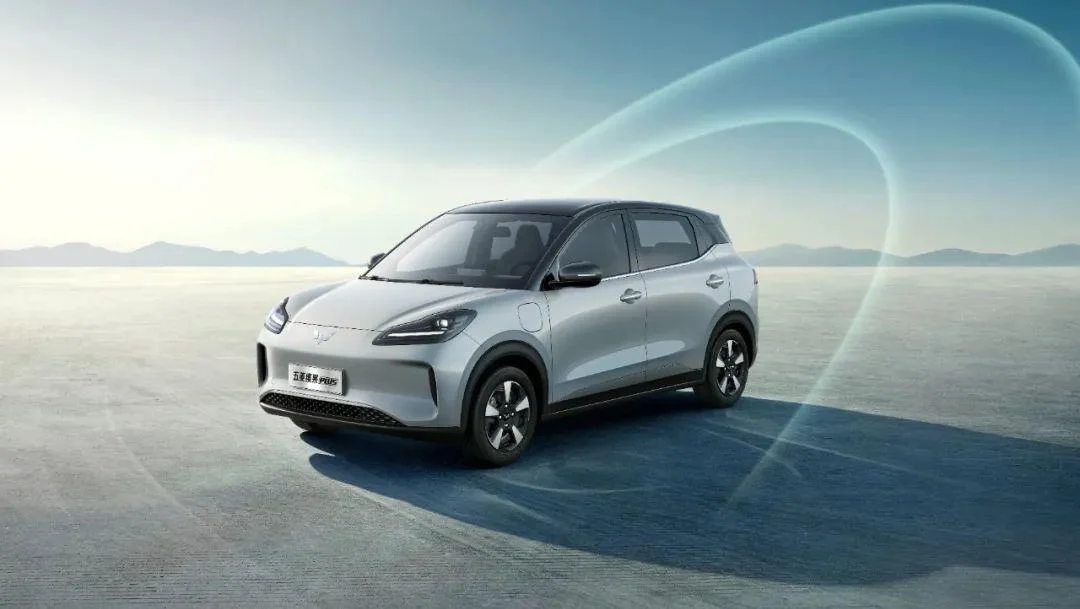
General Motors is currently evaluating a significant expansion of its electric vehicle portfolio by leveraging its partnership with SAIC-GM-Wuling to introduce a rebadged version of the Wuling Bingo Pro under the Chevrolet marque. This strategic move aims to address the growing demand for affordable, entry-level zero-emission vehicles in key emerging markets, specifically targeting regions such as Mexico, Brazil, and other territories across Latin America, Africa, and Southeast Asia. According to industry reports from GM Authority and CNEV Post, the American automotive giant is considering the Wuling Bingo Pro as the ideal candidate to serve as Chevrolet’s first dedicated electric hatchback in these cost-sensitive markets, marking a new chapter in the company’s global electrification strategy.
The decision to utilize the Wuling Bingo Pro platform highlights a shift in General Motors’ approach to international market penetration. While the company has focused heavily on its proprietary Ultium battery platform for premium and high-performance models in North America and Europe, the competitive landscape in emerging economies requires a different tactical approach. In these regions, high price points remain the primary barrier to electric vehicle adoption. By utilizing an existing, high-volume platform from its Chinese joint venture, GM can significantly reduce research and development costs and accelerate the time-to-market for a Chevrolet-branded EV that remains accessible to a broader demographic.
The Strategic Importance of the SAIC-GM-Wuling Partnership
The foundation of this potential move lies in the long-standing and highly successful joint venture known as SAIC-GM-Wuling (SGMW). Established in 2002, the venture is a three-way partnership between SAIC Motor, General Motors, and Liuzhou Wuling Motors. General Motors holds a 44 percent stake in the entity, which has become a powerhouse in the Chinese automotive sector, particularly in the production of micro-EVs and affordable passenger cars.
SGMW first gained international notoriety with the launch of the Wuling Hongguang Mini EV, which at one point became the best-selling electric vehicle in the world, surpassing even Tesla’s Model 3 in monthly volume. The success of the Mini EV demonstrated that there was a massive, untapped market for small, functional, and inexpensive electric cars. The Wuling Bingo, launched in March 2023, was designed as a more sophisticated successor to the Mini EV, offering more space, better safety features, and longer range, while still maintaining an aggressive price point. By leveraging this platform, Chevrolet can bypass the years of development required to build a budget EV from scratch, allowing the brand to compete directly with Chinese manufacturers like BYD and Great Wall Motor (GWM) on a global scale.
Technical Specifications and the Evolution of the Wuling Bingo Pro
The Wuling Bingo has undergone rapid evolution since its debut. The original model was designed to target the urban "city car" segment in China, but the introduction of the "Bingo Pro" variant represents a more robust offering suitable for international export. The Bingo Pro is a five-door hatchback that measures approximately 3,950 mm in length, 1,708 mm in width, and 1,580 mm in height, with a wheelbase of 2,560 mm. These dimensions place it firmly in the B-segment, making it comparable in size to a traditional subcompact car, which is a staple in markets like Brazil and Mexico.
Under the hood, the Bingo Pro is powered by a front-mounted single electric motor. The powertrain delivers a maximum output of 65 kW, equivalent to roughly 87 horsepower, and 150 Nm of torque. While these figures are modest compared to high-end EVs, they are more than sufficient for urban commuting and short-distance travel between cities. The vehicle is equipped with Lithium Iron Phosphate (LFP) batteries, a chemistry favored for its durability, safety, and lower production cost compared to Nickel Cobalt Manganese (NCM) alternatives.
The Bingo Pro offers two primary battery configurations providing ranges of 330 kilometers and 403 kilometers based on the China Light-Duty Vehicle Test Cycle (CLTC). While actual range under real-world conditions or different testing standards like WLTP might be slightly lower, these figures remain highly competitive for an entry-level vehicle. Furthermore, the Bingo Pro supports DC fast charging, which allows the battery to be replenished from 30% to 80% in approximately 35 minutes, a crucial feature for consumers who may not have access to dedicated home charging infrastructure.
Targeting Growth in Mexico, Brazil, and Beyond
The rationale for introducing a rebadged Bingo in Mexico and Brazil is grounded in current automotive market data. In Brazil, the government has recently reinstated import taxes on electric vehicles to encourage local production, but demand for EVs continues to surge. The Brazilian market has seen a influx of Chinese brands, with BYD’s Dolphin and Dolphin Mini (Seagull) capturing significant market share. For Chevrolet to maintain its historical dominance in Brazil, it requires a product that can compete on price while offering the reliability and service network associated with the Chevrolet brand.
Mexico presents a similar opportunity. As a hub for North American automotive trade, Mexico is seeing an increasing interest in electrification, driven both by environmental concerns in dense urban centers like Mexico City and by the proximity to the U.S. market. However, the majority of EVs currently available in Mexico are luxury models. A Chevrolet-branded electric hatchback based on the Bingo Pro would provide a much-needed option for younger buyers and first-time car owners who are currently priced out of the EV market.
Beyond Latin America, the Bingo Pro-based Chevrolet could find a home in various African and Asian markets. In regions where infrastructure is still developing, small, efficient, and simple EVs are often more practical than large, tech-heavy SUVs. The compact footprint of the Bingo makes it ideal for navigating the congested streets of cities like Jakarta, Lagos, or Cairo.
A Proven History of Rebadging Success
The strategy of rebadging SAIC-GM-Wuling products for the Chevrolet brand is not a new experiment for General Motors; rather, it is a proven business model that has yielded significant dividends in the past. One of the most notable examples is the Chevrolet Captiva. The current generation of the Captiva sold in Southeast Asia, the Middle East, and Latin America is actually a rebadged Baojun 530 (another SGMW brand). This move allowed Chevrolet to offer a competitive SUV with modern features at a price point that would have been impossible if the vehicle were developed and manufactured in North America.
More recently, GM has introduced the Chevrolet Spark EUV, which is based on the Baojun Yep Plus, and the Captiva EV, which shares its architecture with the Wuling Starlight S. These precedents suggest that GM has a high degree of confidence in the engineering and build quality of SGMW products. By applying Chevrolet’s rigorous quality control standards and adapting the aesthetics to match the brand’s global design language, GM can effectively "westernize" these Chinese-developed vehicles for international consumers.
Potential Design Adaptations and Brand Identity
If the plan to rebadge the Wuling Bingo Pro moves forward, automotive analysts expect Chevrolet to implement several design modifications to ensure the vehicle aligns with the "Bowtie" brand’s identity. While the core structure and powertrain would remain the same, the exterior is likely to feature a redesigned front fascia, including a new grille pattern and the integration of the iconic Chevrolet logo. The interior may also see updates, such as localized infotainment systems with support for Apple CarPlay and Android Auto—features that are highly valued by the target demographic of young, tech-savvy buyers.
Furthermore, the vehicle is expected to receive a new nameplate. While "Bingo" has been a successful name in the Chinese market, Chevrolet may opt for a name that resonates more effectively with global consumers or revives a classic nameplate associated with small, efficient cars. The goal would be to position the vehicle not just as a "cheap EV," but as a smart, modern, and environmentally conscious choice for the urban driver.
Market Implications and Competitive Analysis
The entry of a Chevrolet-branded Bingo Pro into emerging markets would create a significant ripple effect in the automotive industry. It would put General Motors in direct competition with BYD, which has been aggressively expanding its global footprint. The BYD Seagull, known as the Dolphin Mini in some markets, is currently the benchmark for affordable EVs. If Chevrolet can offer a comparable product with the added advantage of its extensive dealership and service network in countries like Brazil and Mexico, it could effectively slow the expansion of Chinese brands in those regions.
From an economic perspective, this move allows GM to maximize the economies of scale generated by the SGMW joint venture. By increasing the production volume of the Bingo platform for export, the cost per unit decreases, benefiting both the Chinese domestic market and international operations. It also provides a hedge against the volatility of the North American EV market, where demand for high-end electric trucks and SUVs has shown signs of cooling.
Conclusion and Future Outlook
While General Motors has not yet officially confirmed the exact launch date or the final naming convention for the rebadged Wuling Bingo Pro, the move appears to be a logical and necessary step in the company’s "EVs for Everyone" vision. By bridging the gap between Chinese manufacturing efficiency and Chevrolet’s global brand equity, GM is positioning itself to capture the next wave of automotive growth in emerging economies.
The timeline for this introduction will likely depend on the speed at which GM can adapt the vehicle to meet local safety and regulatory standards in the target markets. However, given the existing infrastructure of the SGMW partnership and GM’s history of successful rebadging, the transition could be relatively swift. As the global automotive industry continues to pivot toward electrification, the introduction of a Chevrolet-branded Bingo Pro could serve as a pivotal moment, proving that the future of electric mobility is not just for the luxury segment, but is increasingly accessible to the global masses.
