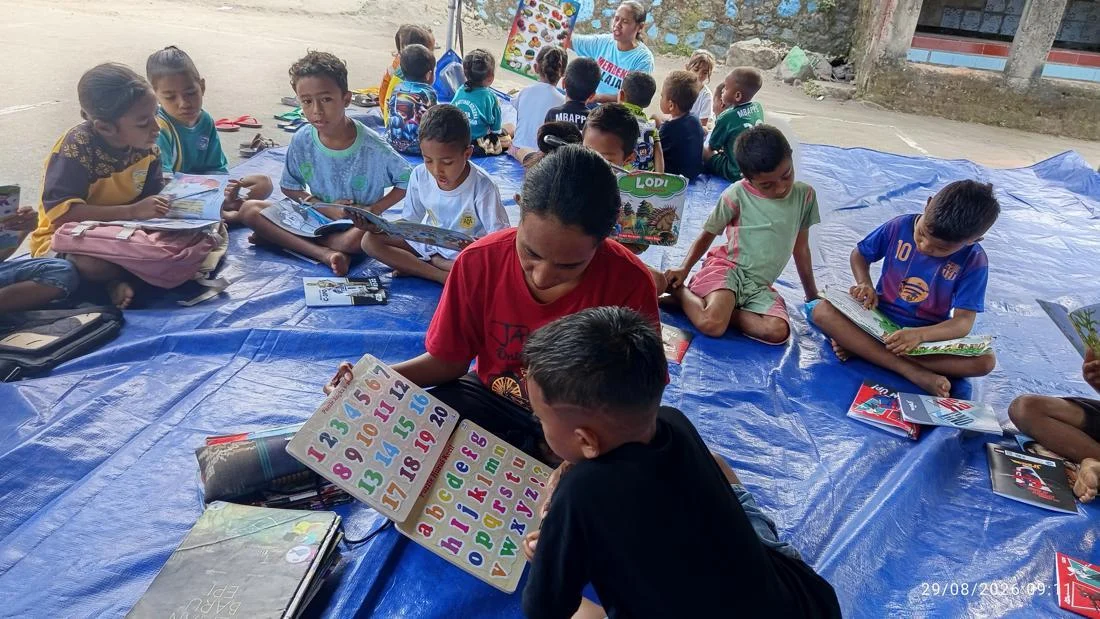
Jakarta — Nearly 2,500 educational institutions affected by the recent earthquake in East Nusa Tenggara (NTT) are gradually navigating a path toward recovery, balancing the urgent need for structural safety with the continuity of academic instruction. Out of the 2,447 schools officially reported to have sustained damage from the natural disaster, a total of 478 educational units have successfully resumed normal face-to-face learning inside conventional classrooms. Meanwhile, the vast majority of remaining institutions are forced to sustain educational activities through carefully organized emergency learning modalities, ensuring that the region’s children do not experience prolonged interruptions to their foundational schooling.
The comprehensive update regarding the education sector’s post-disaster response was delivered by Dr. Saryadi, ST, MBA, the Director of Special Education and Special Service Education (PK & PLK) at the Ministry of Primary and Secondary Education (Kemendikdasmen). Speaking during a virtual media briefing titled "Developments in NTT Disaster Management in the Education Sector" on Monday, September 14, 2026, Dr. Saryadi outlined the multifaceted challenges and ongoing interventions deployed across the disaster-stricken districts.
"Out of the 2,447 schools reported affected, as many as 1,960 educational units are organizing learning in emergency modes carried out in tents, in open spaces, or temporary emergency classrooms," Dr. Saryadi stated during the briefing.
This decentralized and adaptable response is the direct result of close synergy forged between school administrators, local government entities, and Ministry partners operating directly on the ground. The execution of these emergency measures aligns strictly with the directive outlined in the Circular Letter of the Minister of Primary and Secondary Education concerning the implementation of learning in disaster-affected educational units.
To govern this transitional period safely and effectively, the Ministry has established three core guiding principles: placing the safety and security of students and educators as the absolute top priority, maintaining operational flexibility regarding learning schedules and modalities to match dynamic local conditions, and providing robust psychosocial support for all members of the school communities grappling with the psychological aftermath of the seismic event.
Rigorous Facility Assessment and Safety Categorization
Adhering strictly to the principle of safety, the evaluation of damaged school buildings is being conducted comprehensively and collaboratively. Dr. Saryadi explained that the assessment protocol is executed jointly by the Ministry of Public Works (PU), the National Disaster Management Agency (BNPB), technical teams from various state universities, and the Ministry’s own Revitalization Team.
"Assessments of structural materials in buildings are currently ongoing across all affected districts, utilizing a color-coded marking system of green, yellow, and red," Dr. Saryadi elaborated.
Under this system, any school infrastructure categorized under yellow and red markers is strictly prohibited from being utilized until comprehensive engineering evaluations certify them as structurally sound. Conversely, educational facilities sustaining minor damage—such as compromised ceilings—are permitted to resume normal usage only after immediate safety hazards are thoroughly mitigated and repaired.
Prior to allowing students to step back into physical classrooms, schools are mandated to conduct rigorous evacuation simulations and safety preparedness briefings. These training sessions target teachers, education personnel, and students alike, fostering a culture of disaster resilience and minimizing panic in the event of future seismic occurrences.
Balancing Safety with Urgent Academic Milestones
The resumption of limited face-to-face learning (PTM) holds strategic importance beyond routine pedagogical continuity. According to the Ministry, the phased reactivation of schools directly supports senior students who must prepare for the upcoming Academic Ability Test (TKA) scheduled for later this year.
"Limited face-to-face learning has been initiated gradually from late August through early September 2026, with a primary focus on grade 6, 9, and 12 students to prepare them for facing the Academic Ability Test in the coming October," Dr. Saryadi noted.
This targeted approach ensures that graduating cohorts do not fall behind in their national academic evaluations, thereby safeguarding their transition to secondary and tertiary education levels despite the operational disruptions caused by the natural disaster.
Extensive Infrastructure Damage and Phased Government Interventions
Statistical data presented during the media briefing underscored the sheer scale of physical destruction inflicted upon the region’s educational infrastructure. Out of 13,750 recorded classrooms across the affected zones, 8,728 classrooms have been officially declared damaged, with 730 educational units suffering severe structural destruction.
Ministry officials emphasize that these figures remain dynamic and are continuously updated as field verification teams complete their comprehensive surveys in collaboration with local governments. Despite these staggering numbers, continuous monitoring confirms that localized learning activities persist across various makeshift setups.
In the immediate aftermath of the earthquake, the Ministry of Primary and Secondary Education deployed an initial batch of 100 emergency classroom tents valued at Rp 5.5 billion. The distribution was strategically allocated based on regional need: 28 tents were sent to Manggarai, 27 to East Manggarai, 17 to Nagekeo, 8 to West Manggarai, 8 to Sikka, 7 to Ngada, and 5 to Ende.
Complementing government logistics, local communities and school committees have proactively constructed temporary learning spaces utilizing accessible local materials such as bamboo, wood, and heavy-duty tarpaulins. Financing for these grassroots structures has been drawn from the Education Operational Assistance Fund (BOSP) and regional Unexpected Expenditure allocations.
Looking ahead toward the impending rainy season, the government is scaling up infrastructural support to construct more weather-resistant temporary classrooms designed to last between four to six months. In the first phase of this extended intervention, the Ministry will disburse a total of Rp 3.5 billion to finance 672 temporary classrooms. This allocation covers 194 Early Childhood Education (PAUD) units, 12 Special Schools (SLB), and 372 spaces for junior high schools, with a targeted budget of Rp 4 million per temporary classroom.
Furthermore, additional funding tiers are slated for immediate rollout. This includes dedicated budgets for 65 temporary classrooms for junior high schools and 29 temporary classrooms for senior high schools, funded at Rp 15 million per unit, designed to meet the rigorous structural demands of older student groups.
"The reports we continue to receive up until this afternoon indicate that learning activities continue to progress steadily," Dr. Saryadi concluded, offering an optimistic outlook on the resilience of the educational ecosystem in East Nusa Tenggara.
Broader Implications for Disaster-Prone Regions
The ongoing recovery efforts in East Nusa Tenggara serve as a critical case study in disaster risk management within Indonesia’s decentralized education framework. As an archipelago situated along the seismically active Pacific Ring of Fire, Indonesia faces perpetual vulnerabilities to natural hazards. The integration of structural safety audits, psychological support systems, and flexible pedagogical frameworks highlights an evolving institutional maturity in emergency response.
However, the extensive damage to thousands of classrooms underscores persistent structural vulnerabilities in regional public infrastructure. Analysts note that long-term recovery will require sustained cross-sectoral collaboration, strict enforcement of earthquake-resistant building codes for public schools, and increased budgetary allocations for disaster mitigation and preparedness.
As the Ministry of Primary and Secondary Education proceeds with its phased reconstruction timeline, the primary challenge remains bridging the gap between immediate emergency relief and sustainable infrastructural revitalization. Ensuring that every student in East Nusa Tenggara returns to a safe, permanent learning environment will require enduring cooperation between central authorities, local governments, international partners, and civil society organizations in the months and years to come.