
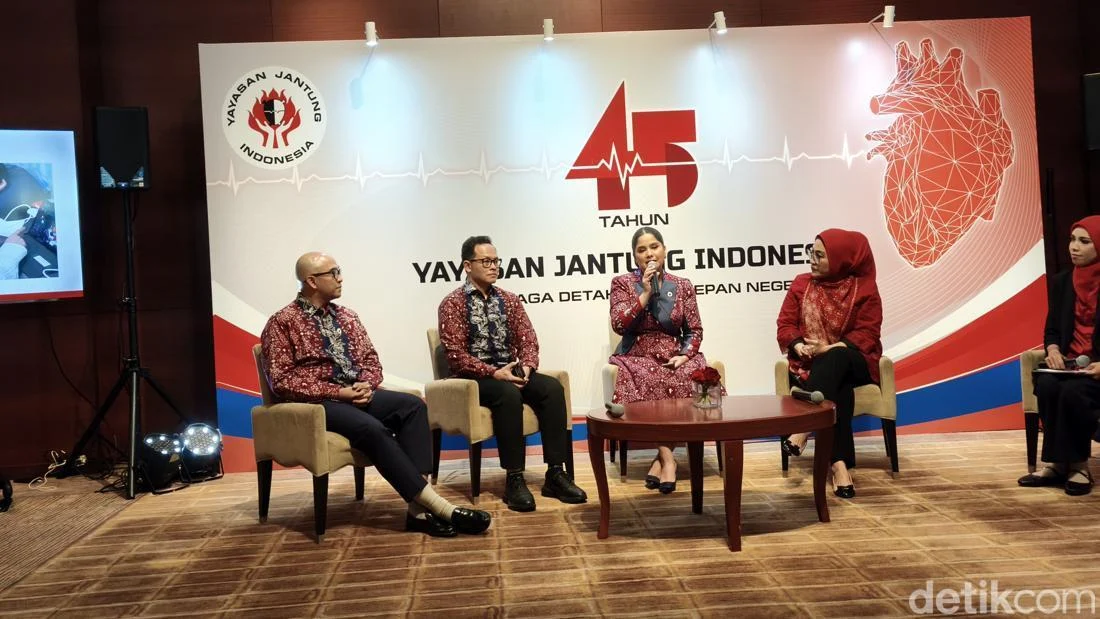
Marking a significant milestone in its ongoing mission to combat cardiovascular diseases across Indonesia, the Indonesian Heart Foundation (Yayasan Jantung Indonesia, or YJI) has officially reached its 45th anniversary. Commemorating nearly half a century of public health service, education, and advocacy, the organization announced a major nationwide health initiative targeting young students. During a press briefing held in Central Jakarta on Sunday, November 29, 2026, leadership from the foundation revealed that over 4,000 school-aged children have already undergone comprehensive medical evaluations as part of an ambitious school-based Rheumatic Heart Disease (RHD) screening program.
The extensive outreach initiative, designed to catch latent cardiovascular conditions before they develop into debilitating health crises, represents a proactive approach to pediatric cardiology in the archipelago. As lifestyle patterns shift across modern Indonesian society, medical professionals and public health advocates are increasingly turning their attention toward early intervention strategies. By embedding diagnostic procedures directly into the school environment, YJI aims to bridge the gap between clinical healthcare and grassroots accessibility, ensuring that children from diverse socio-economic backgrounds receive vital cardiac assessments.
The Scope and Strategy of the National RHD Screening Initiative
The ongoing screening drive is not an isolated event but rather the centerpiece of YJI’s 45th-anniversary campaign. According to organizational metrics released during the anniversary briefing, the current phase of the program has successfully evaluated 4,205 school children. However, this figure is merely a stepping stone toward a broader objective. The foundation has set a firm target of examining a total of 7,500 children spread across four distinct priority regions carefully selected due to geographic and epidemiological factors: Malang in East Java, Tulang Bawang in Lampung, Bekasi in West Java, and North Minahasa in North Sulawesi.
Selecting these diverse regions allows the foundation to gather critical data regarding regional health disparities and the prevalence of streptococcal infections among varying demographics. The school-based model eliminates traditional barriers to healthcare access, such as transportation costs, parental work constraints, and a general lack of awareness regarding pediatric heart conditions. By bringing diagnostic equipment, trained medical personnel, and educational materials directly to the classrooms, YJI ensures high participation rates and immediate identification of at-risk youth.
Understanding Rheumatic Heart Disease and the Threat of Silent Killers
To fully comprehend the significance of YJI’s current campaign, one must examine the medical reality of Rheumatic Heart Disease (Penyakit Jantung Rematik or PJR). Project Director of the YJI RHD Screening Program, Dr. Ario Soeryo Kuntjoro, SpJP(K), provided deep clinical context during the briefing, explaining that PJR is a severe yet entirely preventable condition. The disease typically originates from untreated or inadequately treated streptococcal infections, commonly known as strep throat or scarlet fever, which can trigger an autoimmune response leading to acute rheumatic fever. Over time, recurring episodes can cause progressive and permanent damage to the heart valves.
"Identification of potential RHD cases at an early stage helps children obtain follow-up examinations and appropriate treatment, thereby potentially reducing the risk of long-term heart valve damage. This is a tangible investment for a healthier and more productive Indonesian generation," stated Dr. Ario.
Global health metrics underscore the urgency of these interventions. According to estimates by the World Health Organization (WHO), approximately 55 million people worldwide currently live with Rheumatic Heart Disease, resulting in roughly 360,000 preventable deaths annually. A significant tragedy of the disease lies in its latency; early symptoms are frequently subtle, vague, or entirely unnoticed by parents and educators alike. Consequently, many patients are diagnosed only after irreversible structural damage has occurred to the heart. Because school-aged children—typically ranging from early childhood through adolescence—represent the demographic most vulnerable to streptococcal infections and subsequent rheumatic fever, targeted school screenings serve as the most effective epidemiological shield.
Shifting Perspectives: Leadership Insights on Modern Cardiovascular Health
The anniversary press conference also served as a platform for YJI leadership to address broader cultural and generational shifts in health consciousness. Annisa Pohan Yudhoyono, General Chairperson of YJI, delivered a sobering assessment of modern health trends, warning that cardiovascular disease is no longer an affliction restricted to the elderly.
"Heart disease does not look at age. Modern lifestyles, stress, and poorly maintained food intake make this ‘time bomb’ able to explode at any time, even at the age of 20 or 30," Annisa remarked during her address.
Her remarks highlight an alarming epidemiological transition observed globally and domestically: the rising incidence of early-onset cardiovascular risk factors among young adults and adolescents. Sedentary lifestyles, increased consumption of ultra-processed foods, digital screen fatigue, and elevated academic or social stress contribute to a cumulative vascular burden that manifests much earlier in life than it did for previous generations.
Emphasizing prevention over reactive treatment, Annisa urged the public to embrace incremental lifestyle modifications rather than waiting for catastrophic health events to occur. "Don’t wait to get sick to care. Don’t wait to grow old to move. Start from now, from yourself, from your family, from your surrounding environment. One small step today will be a big leap for a healthier future," she added.
Tailoring Health Education for the Digital Generation
Complementing the medical evaluations is a sophisticated communication strategy aimed at shifting how younger demographics perceive wellness. Iwet Ramadhan, Head of the Communications Division and Project Leader for the YJI RHD Screening Program, spoke on the necessity of modernizing health advocacy. He argued that traditional fear-based public health messaging—which often relies on grim statistics and ominous warnings—has lost its efficacy among tech-savvy, media-literate youth.
"We can no longer just scare people. Young people need reasons that are relevant to their world: health, appearance, and the future. When they realize that their body is their most expensive asset, the choice to live healthy will come from self-awareness," Iwet explained.
This philosophy underpins YJI’s public outreach materials, social media campaigns, and educational workshops conducted alongside the clinical screenings. By framing cardiovascular health not merely as the absence of disease, but as a prerequisite for personal autonomy, physical vitality, and future success, the foundation is successfully fostering a culture of preventative self-care among adolescents.
Celebrating 45 Years of Humanitarian and Medical Legacy
Beyond the immediate scope of the RHD screening drive, the press conference marked a solemn and celebratory reflection on YJI’s 45-year institutional history. Founded decades ago to address the burgeoning burden of cardiovascular diseases in a developing Indonesia, the foundation has evolved from a localized initiative into a nationally recognized pillar of public health.
As part of the anniversary commemorations, YJI unveiled a commemorative publication documenting its four-and-a-half-decade journey. Iwet Ramadhan noted that the anniversary book is designed to capture the multifaceted nature of the foundation’s work, bridging the gap between clinical medicine and human-centric advocacy.
"Through this 45th-anniversary book, we want to invite the public to see our journey, not only from a medical perspective, but also from a humanitarian side. This book is a mirror of the hard work of the founders, volunteers, and partners for 45 years. We hope this book can be a source of inspiration and heart health literacy for the wider community. Early detection must be part of the system, not a separate program," Iwet concluded.
Future Implications and Policy Directions
The successful execution of the 4,200-child screening milestone and the ongoing push toward the 7,500 target carry significant implications for Indonesian healthcare policy. As infectious diseases recede relative to non-communicable diseases (NCDs), cardiovascular health requires a fundamental restructuring of primary healthcare delivery systems.
YJI’s school-based screening model provides a scalable blueprint for public-private partnerships in healthcare. By combining the diagnostic capabilities of pediatric cardiologists with the institutional infrastructure of the national education system, preventative care can reach marginalized or underserved populations that might otherwise slip through the cracks of the formal clinical referral network.
Moving forward, the medical team at YJI plans to systematically compile, analyze, and publish the aggregate data gathered from the screenings across Malang, Tulang Bawang, Bekasi, and North Minahasa. This epidemiological dataset will be shared with the Ministry of Health and local health agencies to inform future policy formulations, optimize resource allocation, and refine national protocols for the surveillance and eradication of rheumatic fever and its cardiac complications.
Ultimately, YJI’s 45th-anniversary initiatives demonstrate that combating heart disease requires a dual-pronged approach: rigorous clinical interventions such as early RHD screenings, paired with sustained cultural education that empowers individuals to take charge of their vascular health from an early age. Through these concerted efforts, the foundation continues to lay the groundwork for a healthier, more resilient generation of Indonesians.
