

Marine ecosystems are complex webs of interaction where the line between predator, prey, and passenger often blurs. While scientists have long documented the phenomenon of epibionts—organisms that live on the surface of other living things—a recent discovery off the Pacific coast of Costa Rica has upended conventional understanding of marine hitchhiking. Researchers from the Florida Museum of Natural History have identified that certain crab species are using sea snakes as temporary, albeit ill-fated, floating islands, a behavior that challenges previous assumptions about how crustaceans navigate the open ocean during their developmental life stages.
The study, published in the journal Ecology and Evolution, details the identification of multiple crab species in their megalopae stage—the intermediate phase between the free-swimming larval state and adulthood—clinging to the bodies of yellow-bellied sea snakes (Hydrophis platurus). This revelation provides a rare window into the perilous journey these crustaceans undertake as they transition from the open sea toward their coastal habitats.
A Decade of Discovery: The Chronology of an Unexpected Find
The discovery originated in 2012, when Joseph Pfaller, a marine herpetologist then affiliated with the University of Florida, was conducting extensive field surveys of the yellow-bellied sea snake. These reptiles are notable for their unique physiological adaptations to marine life, including their method of shedding skin. Unlike terrestrial snakes that rub against abrasive surfaces like rocks or logs to initiate a shed, sea snakes must coil their bodies into intricate, knotted loops to create the friction necessary to slough off their old, outer epidermis.
During his field collections, which eventually totaled 371 specimens, Pfaller observed that these knots often served as temporary shelters for more than just the snake itself. He noticed small, clawed invertebrates detaching from the reptiles upon capture. At the time, the observation was anecdotal, tucked away in the museum’s archives as Pfaller transitioned his primary research focus toward sea turtle ecology.

It was not until a decade later that the collection was revisited. During a conversation with Robert Lasley, a crustacean expert at the University of Guam, Pfaller mentioned the peculiar hitchhikers. The ensuing investigation, which involved genetic sequencing and careful morphological analysis by researcher Soma Elefánti, confirmed that these were not the expected Planes crabs—a genus well-known for living on floating debris or sea turtles—but rather members of the Grapsidae family, whose adult counterparts reside in coastal forests and rocky shorelines.
Biological Context and the Megalopae Stage
To understand why a crab would choose a sea snake as a vessel, one must examine the life cycle of the Grapsidae family. These crabs typically release their larvae into the ocean, where they undergo several developmental molts. By the time they reach the megalopa stage, the individuals are essentially miniature, free-swimming versions of their adult selves.
Biologists posit that at this stage, the crabs are hard-wired with a biological imperative: find a solid surface. In the open ocean, such substrates are rare. Driftwood, floating kelp, or even sea turtles offer a refuge where the young crab can settle, feed, and eventually transition to its terrestrial home. When these megalopae encounter a sea snake, they appear to misidentify the reptile as a suitable, stable platform.
However, the choice is ultimately a biological dead end. While the crabs may gain temporary transport, the yellow-bellied sea snake is a highly mobile, pelagic predator. It does not return to the shore in a manner that would allow the crabs to safely colonize their native, land-based habitats. Consequently, these hitchhikers are essentially trapped in an evolutionary trap, clinging to a host that will lead them further away from the safety of the coast.
Data Analysis and Scientific Implications
The data collected during the study highlights a significant disparity between survival strategies. While the genus Planes—often called "drift crabs"—has evolved to recognize and utilize floating objects as a reliable part of its life cycle, the Grapsidae species found on the snakes appear to be operating on instinct without the requisite evolutionary "map" to discern between a productive habitat and a lethal detour.
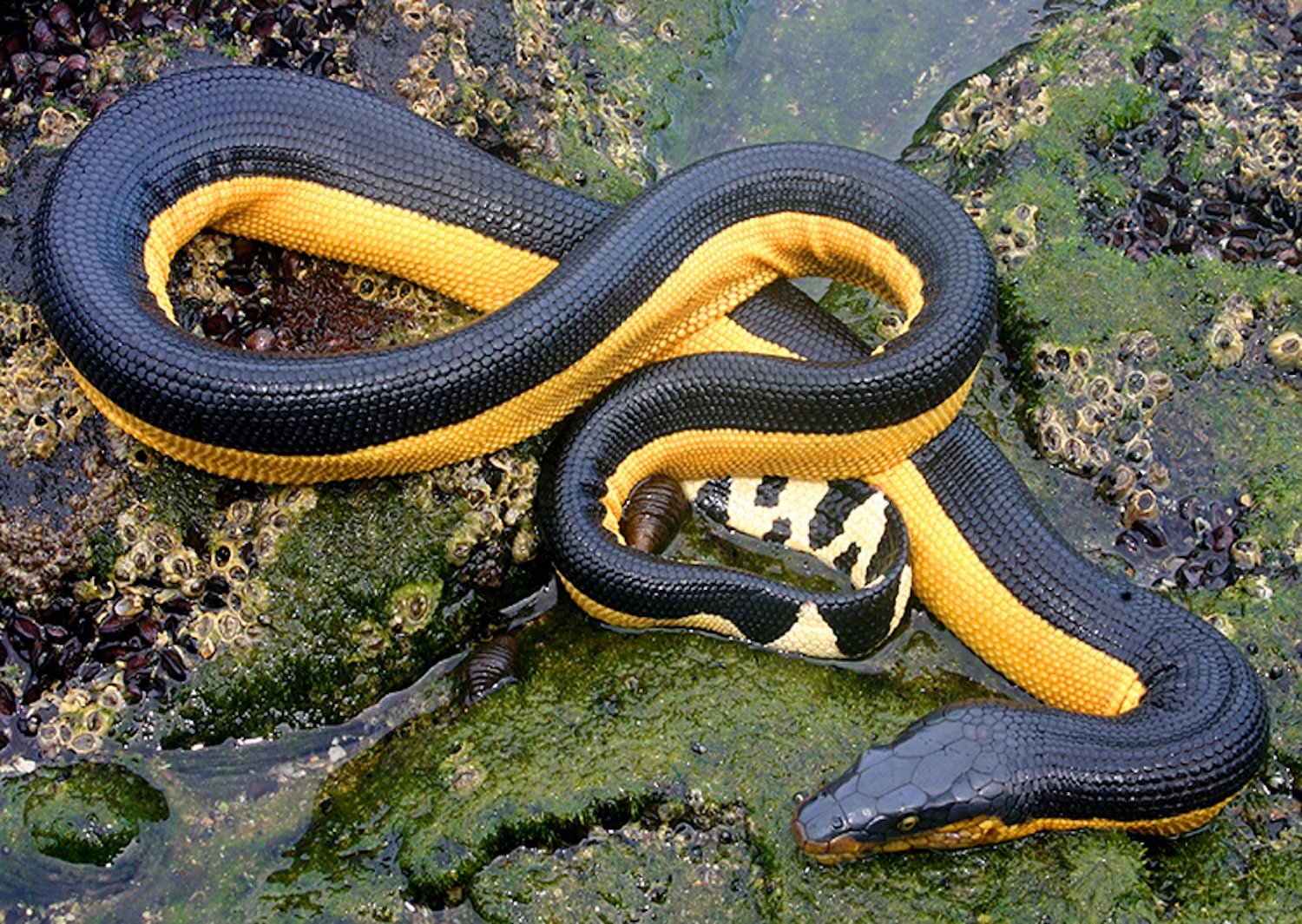
Of the 371 snakes examined, the diversity of the "passengers" was striking. Beyond the crabs, researchers identified shrimp, various snails, and even clingfish attached to the reptiles. This suggests that the yellow-bellied sea snake acts as a mobile biodiversity hotspot. The fact that this has gone largely unnoticed by the scientific community is attributed to the intense focus researchers have historically placed on the snakes themselves—specifically their vibrant color patterns and their status as one of the few reptiles that have fully colonized the open ocean.
Official Responses and Expert Perspective
"The thought that we could name this study ‘Planes on a Snake’ was enough to get me motivated, but when we got the results, it was evident that something weird and interesting was going on here," noted Robert Lasley during the research process. The play on words, referencing the 2006 cult horror film Snakes on a Plane, underscored the surprise felt by the research team when the DNA results arrived.
Joseph Pfaller emphasized the accidental nature of this interaction from the crab’s perspective. "The snakes are just there, and the crabs don’t know the difference," he stated. This lack of discrimination between a solid piece of floating driftwood and a living, moving predator highlights the high-stakes nature of early crustacean development. For these megalopae, the drive to settle is so powerful that they will attempt to colonize anything that provides the tactile sensation of a hard surface, even if that surface is biologically unsuitable for their long-term survival.
Broader Ecological Impacts
The implications of this discovery reach beyond the taxonomy of the crabs involved. It provides a new perspective on how marine organisms utilize "biological rafts" to traverse the ocean. While the sea snake might not be a "chosen" habitat, the fact that it carries such a diverse array of hitchhikers suggests that the connectivity of marine ecosystems is far more granular than previously suspected.
From a conservation standpoint, understanding these interactions is vital. As oceanic conditions shift due to climate change and the distribution of marine reptiles fluctuates, the prevalence of these hitchhiking events may change. If sea snakes move into new territories, they may inadvertently act as vectors for invasive or non-native larval species, potentially introducing them to ecosystems where they would not naturally occur.

Furthermore, this research serves as a reminder of the gaps in our knowledge regarding the early life stages of common marine invertebrates. Despite the ubiquity of crabs in coastal environments, the transit phase of their life cycle remains a "black box" for many species. By documenting these interactions, the Florida Museum team has provided a baseline for future studies on how larvae navigate the transition from the open, pelagic environment to the structured, littoral zones where they mature.
In conclusion, the case of the "Planes on a snake" is more than just a biological curiosity. It is a testament to the complex, often chaotic, and occasionally fatal decisions made by organisms in the infancy of their development. It highlights a recurring theme in marine biology: that even in the vast, seemingly empty expanse of the open ocean, every living thing is part of a complex, interconnected network of survival, adaptation, and error. As scientists continue to monitor the movements of these sea snakes, the data gathered will undoubtedly continue to reveal the hidden passengers that rely on them for passage across the world’s oceans.
