
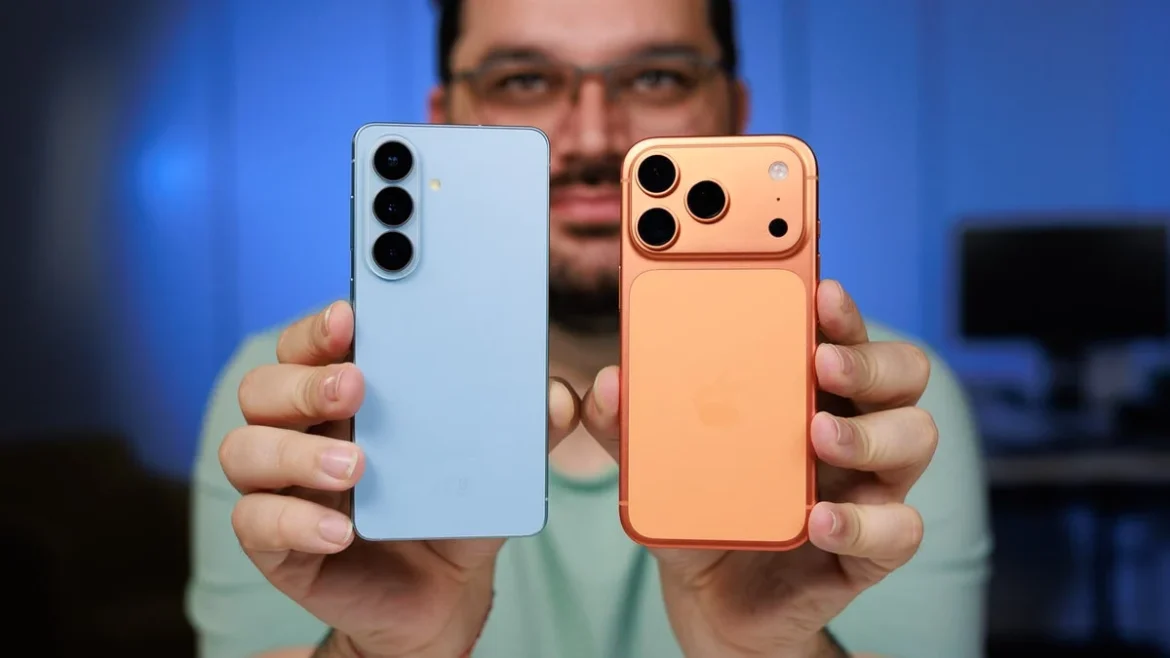
The global smartphone market is navigating one of its most challenging periods in over a decade, with the second quarter of calendar year 2026 (Q2 CY2026) marking a significant downturn. This contraction is largely attributed to a sharp increase in the prices of critical components like DRAM and NAND memory, a phenomenon driven by a massive reallocation of production capacity towards the burgeoning Artificial Intelligence (AI) data center sector. At a time when consumers are increasingly sensitive to price fluctuations amidst global economic uncertainties, this surge in production costs has placed immense pressure on smartphone manufacturers. Yet, amidst this difficult landscape, two industry giants, Apple and Samsung, have not only weathered the storm but have emerged stronger, significantly expanding their market share.
The severity of the market contraction is evident across various industry analyses. Counterpoint Research reported an 11 percent year-on-year (YoY) decline in global smartphone shipments for Q2 CY2026, marking it as the weakest second-quarter performance since 2013. This figure underscores a profound shift in consumer purchasing patterns and manufacturing capabilities. While Omdia, another prominent market research firm, estimated a slightly less severe drop of 4 percent, the consensus on a significant market contraction remains. International Data Corporation (IDC), a long-standing tracker of the technology market, provided absolute shipment figures, estimating 277.5 million units shipped in Q2 CY2026, representing a 6.7 percent YoY decrease. Despite these variations in specific percentages, all three research powerhouses arrived at the same overarching conclusion: Apple and Samsung significantly gained market share, while a majority of their competitors experienced declines.
The Memory Market Conundrum: Fueling the Smartphone Slump
At the heart of the current market disruption is the unprecedented surge in demand and subsequent price hike for DRAM (Dynamic Random-Access Memory) and NAND (Non-Volatile Flash Memory). These components are fundamental to the operation of modern smartphones, enabling multitasking capabilities, data storage, and overall device performance. Historically, the memory market has been cyclical, characterized by periods of oversupply leading to price drops, followed by undersupply and price increases. However, the current situation is distinct, largely due to the explosive growth of generative AI and its foundational infrastructure.
The rapid expansion of AI data centers, which require vast quantities of high-performance memory, has created an enormous new demand sink. Memory manufacturers, keen to capitalize on higher margins and strategic importance, have actively diverted significant portions of their production capacity towards specialized memory types like High Bandwidth Memory (HBM) and enterprise-grade DRAM/NAND for AI servers. This strategic pivot has inevitably constrained the supply of standard memory chips used in consumer electronics, including smartphones. The imbalance between surging demand from AI and reduced supply for traditional devices has led to dramatic price escalations.
According to Omdia, memory and storage components now constitute over 60 percent of the production cost for entry-level smartphones (those priced under $100) and more than 30 percent for premium devices. This disproportionate impact on lower-tier devices is a critical factor in the market’s current dynamics. Some manufacturers are reportedly paying four to five times more for the same memory components compared to just a year prior. Specifically, Omdia’s analysis indicates that for smartphones priced below $100, memory can account for approximately 64 percent of the Bill of Materials (BoM). This figure slightly decreases to 59 percent for devices in the $100-$400 range. For higher-end smartphones, the memory cost contribution is lower but still significant: around 28 percent for devices between $600 and $800, and slightly over a quarter for those exceeding $800. This cost structure fundamentally explains the widening chasm between market leaders and struggling competitors.
Samsung’s Resurgence and Apple’s Unprecedented Q2
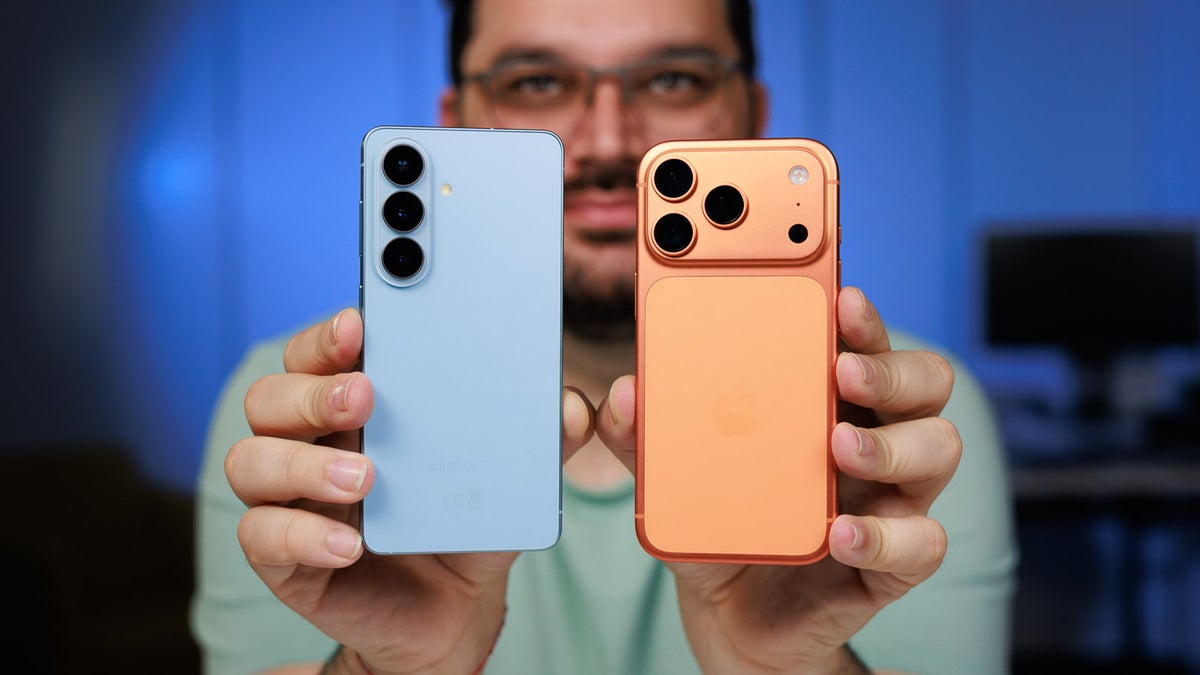
Amidst the challenging market conditions, Samsung, the South Korean technology conglomerate, reclaimed its global leadership position. Counterpoint data placed its market share at 24 percent, while Omdia’s estimates were slightly lower at 22 percent. Crucially, Samsung recorded the strongest growth among the top five smartphone brands, a testament to its diversified product portfolio and strategic positioning. The company’s extensive range, spanning from budget-friendly Galaxy A and M series to its premium S and innovative Z foldable series, allows it to cater to a broad spectrum of consumer needs and price points. Its vertical integration, including the production of its own memory chips and display panels, also provides a significant competitive edge in securing critical component supplies.
Apple, the Cupertino-based tech giant, also demonstrated remarkable resilience. It reported a 3 percent year-on-year increase in shipments, a seemingly modest gain that nonetheless propelled its market share to a record 20 percent for a second quarter. Omdia lauded this as the company’s strongest second-quarter performance in its history. Apple’s success stems from its unwavering focus on the premium segment, where brand loyalty is exceptionally strong, and higher average selling prices (ASPs) provide a substantial buffer against rising component costs. Unlike many Android manufacturers, Apple does not compete in the highly price-sensitive entry-level or mid-range segments, making it less susceptible to the acute memory cost inflation impacting those categories.
A key factor underpinning the success of both Samsung and Apple in this volatile environment is their immense scale and influence over the supply chain. As Navkendar Singh, Associate Vice President at IDC India, noted earlier in the year, the sway of Apple and Samsung over memory suppliers isn’t primarily about negotiating significantly lower prices. Instead, it’s about securing reliable and prioritized access to components. Their sheer volume of purchases places them at the top of allocation lists for memory manufacturers, guaranteeing a steady supply even when shortages are rampant. This preferential treatment is a critical advantage over smaller Original Equipment Manufacturers (OEMs) who struggle to secure adequate component volumes.
The Plight of Chinese OEMs: Xiaomi, OPPO, and Vivo
In stark contrast to the gains made by Apple and Samsung, major Chinese smartphone manufacturers such as Xiaomi, OPPO, and Vivo experienced significant setbacks. All three brands recorded double-digit year-on-year declines in shipments and consequently lost market share. Their vulnerability is directly linked to their heavy reliance on the sub-$400 market segment, precisely where the inflation in memory costs has had the most profound impact.
For companies like Xiaomi, a significant portion of their global shipments falls into the highly price-sensitive entry-level category. Omdia’s Q1 CY2026 analysis revealed that over half of Xiaomi’s global shipments were priced below $200. In this segment, where profit margins are inherently thin, absorbing dramatically increased component costs is nearly impossible without either raising retail prices or accepting severely diminished profitability. Both options present significant challenges. Raising prices risks alienating price-sensitive consumers and losing market share to even cheaper alternatives or the growing refurbished market. Accepting lower margins, on the other hand, compromises investment in R&D, marketing, and future product development.
This dilemma has profound implications for the product strategies of these OEMs. Analysts like Shilpi Jain, Senior Analyst at Counterpoint, highlighted that sustaining previous price levels for low-end and mid-range smartphones, which constitute the bulk of global shipments, has become unsustainable. In response, these manufacturers have adopted various coping mechanisms: some have accepted lower margins, others have extended the lifecycle of existing products, and some have even reduced the pace of new product launches altogether, leading to a slower refresh cycle and potentially less innovation in these crucial segments.
Strategic Pricing and Portfolio Management
The divergent performance of smartphone manufacturers in Q2 CY2026 also underscores the critical role of pricing strategy and portfolio management in a high-cost environment. Apple’s decision to maintain the pricing of its iPhone 17 models during the quarter stands out. This move, despite CEO Tim Cook acknowledging that higher component costs had become "unsustainable" for other product lines, protected its most strategic and profitable product. While Apple did raise prices on other hardware, including iPads, Macs, MacBooks, and home products in June, the iPhone remained untouched. This indicates a deliberate strategy to shield its flagship smartphone line ahead of its anticipated next-generation launch cycle later in the year. Analysts, including Singh, widely anticipate that the next iPhone generation will see price increases of approximately $100 to $150 across the board, signaling a delayed but inevitable adjustment.
Samsung has employed a similar, albeit nuanced, approach. While protecting its ultra-premium Galaxy S and Z series from significant price hikes, the company has reportedly increased prices more noticeably on its mid-range Galaxy F and M series devices. This strategy allows Samsung to recover higher component costs through models that still offer strong value propositions in their respective segments, without diluting the premium brand image associated with its top-tier devices. It’s a sophisticated balancing act that leverages its diverse portfolio to manage cost pressures strategically.
For Xiaomi, OPPO, and Vivo, replicating such strategies is significantly more challenging. Their limited presence in the ultra-premium segment means that smartphone models priced above $800 constitute only a small fraction of their total shipments. They lack the high-margin premium sales that Apple and Samsung can leverage to absorb increased costs or strategically adjust pricing across their portfolio. Their core business lies in segments where consumers are highly price-sensitive, making any significant price adjustments a risky proposition that could lead to substantial market share erosion.
Broader Implications and Future Outlook
The current memory crisis and its impact on the smartphone market have far-reaching implications. For consumers, the immediate future likely entails higher smartphone prices across all segments, potentially leading to longer upgrade cycles. The appeal of refurbished or used devices may also grow as consumers seek more affordable alternatives. Innovation in the budget and mid-range segments, traditionally a battleground for features and value, could be stifled as manufacturers prioritize cost management over aggressive technological advancements.
From an industry perspective, this period of intense cost pressure could accelerate market consolidation. Smaller OEMs with less purchasing power and weaker brand loyalty will find it increasingly difficult to compete. The market may see further concentration of power in the hands of a few dominant players who possess the scale, financial strength, and supply chain leverage to navigate such turbulences. The long-term stability of the memory market itself remains a subject of intense scrutiny. While AI demand is projected to continue its explosive growth, memory manufacturers are also investing in expanding production capacity. The question is whether capacity can catch up with demand, and when the market will achieve a new equilibrium that eases the pressure on component prices for smartphones.
In response to the ongoing memory scarcity, OEMs are exploring various strategies beyond pricing adjustments. Some are deepening their relationships with memory suppliers, others are looking for new regional suppliers, and a few might even consider greater vertical integration where feasible. Optimizing software to be less memory-intensive, or focusing on niche markets where price sensitivity is lower, could also become more prevalent strategies.
In conclusion, the second quarter of 2026 served as a stark reminder of the global smartphone market’s susceptibility to supply chain shocks and evolving technological landscapes. The AI boom, while promising transformative advancements, has inadvertently created a challenging environment for smartphone manufacturers, particularly those reliant on high-volume, lower-margin segments. As Apple and Samsung continue to leverage their strategic advantages, the coming quarters will reveal how the rest of the industry adapts to these new realities, potentially reshaping the competitive landscape for years to come.
