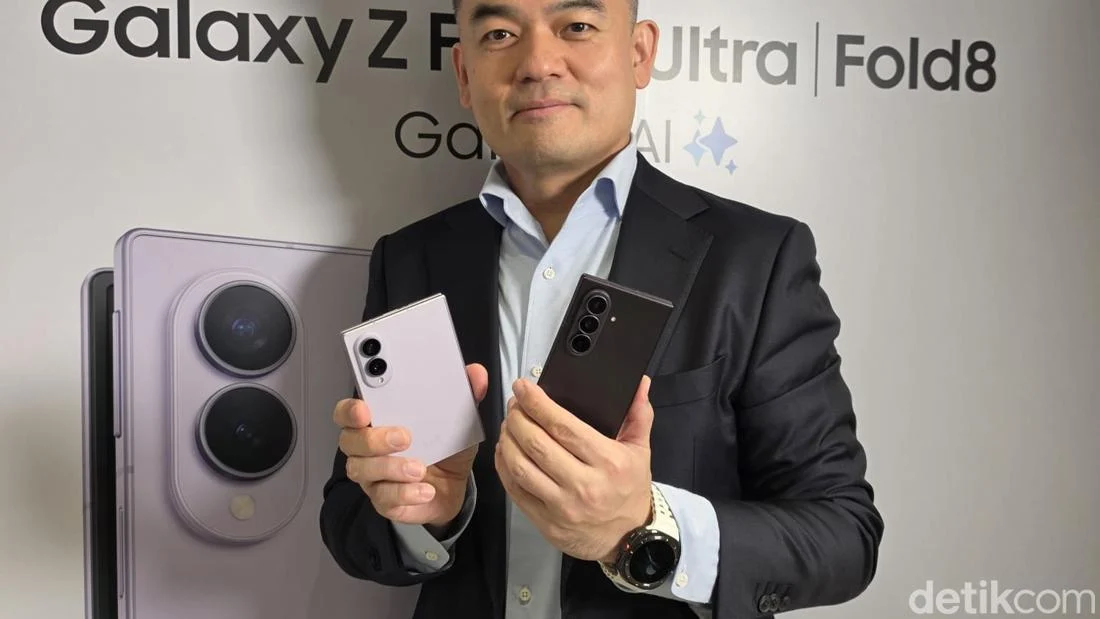
London – Samsung, the South Korean electronics giant, has announced a remarkable surge in the adoption of its Artificial Intelligence (AI) features across Galaxy smartphones in Southeast Asia. According to Chon Hong, Head of Marketing for Samsung Electronics Southeast Asia & Oceania, approximately 95% of Galaxy users in the region, including Indonesia, are now actively utilizing Galaxy AI in their daily routines. This figure represents a substantial increase from 84% recorded in September 2025, underscoring AI’s rapid integration into the fabric of mobile interaction. The announcement, made during the sidelines of a recent Galaxy Unpacked event in London, highlights a pivotal shift in how consumers engage with their smartphones, moving AI from a novel feature to an indispensable tool.
The Genesis and Evolution of Galaxy AI
The journey of Galaxy AI began in earnest with the global launch of the Galaxy S24 series in January 2024. This flagship lineup was the first to integrate a comprehensive suite of on-device AI capabilities, designed to enhance communication, productivity, and creativity. Samsung’s strategic vision was to deliver a hybrid AI experience, leveraging both on-device processing for immediate, privacy-sensitive tasks and cloud-based AI for more complex computations. This approach aimed to provide users with powerful AI tools while maintaining optimal performance and data security, a core tenet of Samsung’s Knox security platform.
Following the successful debut with the S24 series, Samsung swiftly expanded Galaxy AI’s reach. Through a series of over-the-air (OTA) updates, the AI features were rolled out to previous-generation flagship devices, including the Galaxy S23 series, S23 FE, Z Fold5, Z Flip5, and the Tab S9 series. This widespread availability was crucial in accelerating adoption rates, allowing a larger segment of Samsung’s premium user base to experience the transformative power of AI without needing to upgrade to the very latest model immediately. This phased rollout strategy played a significant role in fostering the reported high engagement rates across the region.
Southeast Asia: A Hotbed for AI Adoption
Southeast Asia, with its dynamic digital economy, high smartphone penetration, and tech-savvy youth demographic, has proven to be a fertile ground for the rapid uptake of Galaxy AI. Chon Hong emphasized Samsung’s continuous monitoring of user engagement to understand how various AI features are being utilized. "We are observing strong engagement with Galaxy AI across Southeast Asia among our customers," Hong stated, noting the company’s commitment to "understand, monitor, and listen to how they are using our AI experiences on our devices."
The reported 95% adoption rate is not merely a statistic; it reflects a profound change in user behavior. The leap from 84% to 95% within a relatively short period (from September 2025 to the present reporting period) indicates that initial curiosity has matured into habitual usage. This acceleration points to the practical utility and perceived value that users in the region are finding in these AI-powered functionalities. Markets like Indonesia, the Philippines, Vietnam, Thailand, Malaysia, and Singapore, characterized by diverse linguistic landscapes and a high demand for efficiency in daily digital interactions, are particularly well-suited for features that simplify communication and information access.
Key AI Features Driving Engagement
Among the myriad of features offered by Galaxy AI, Chon Hong specifically highlighted Circle to Search with Google and "Now Brief" (likely referring to the functionality found in features like Note Assist or Browsing Assist) as particularly popular.
-
Circle to Search with Google: This innovative feature allows users to instantly search for information about anything on their screen by simply circling, highlighting, or tapping it. Whether it’s an object in an image, text in an article, or a location in a video, users can get contextual search results without leaving their current application. This seamless integration of search into everyday tasks significantly streamlines information retrieval, making it a powerful tool for learning, shopping, and general exploration. Its intuitive nature and immediate utility have made it a favorite among users seeking quick answers and deeper understanding.
-
Note Assist / Browsing Assist (Functionality similar to "Now Brief"): These features leverage AI to summarize long articles, web pages, or notes into concise, digestible points. For professionals, students, or anyone needing to quickly grasp the essence of lengthy content, these summarization tools are invaluable. They enhance productivity by reducing the time spent sifting through information, allowing users to focus on key insights. The "contextual" nature of these features, as highlighted by Hong, means they adapt to the user’s immediate needs, providing relevant information efficiently.
Beyond these, other Galaxy AI features also contribute significantly to the overall user experience:
- Live Translate: This feature provides real-time voice and text translations during phone calls, breaking down language barriers in communication. Its utility in a multicultural region like Southeast Asia, where business and personal interactions often span multiple languages, is immense.
- Chat Assist: This AI-powered tool helps refine message tones, translate conversations, and suggest appropriate replies, enhancing written communication across various platforms.
- Photo Assist (Generative Edit): This suite of tools allows users to resize, reposition, or even remove objects in photos, with AI intelligently filling in the background. It offers advanced photo editing capabilities directly on the device, democratizing professional-grade image manipulation.
- Transcript Assist: This feature converts voice recordings into text, summarizing and organizing them, which is highly beneficial for meetings, lectures, or interviews.
Foldable Devices: Pioneering AI Adoption
An even more compelling insight from Samsung’s data is the exceptionally high adoption rate among users of its premium foldable smartphones. Chon Hong revealed that approximately 96% of users of the latest generation of Galaxy Z series devices—potentially referring to the "Z7" series mentioned, indicative of Samsung’s current or upcoming premium foldables—are utilizing Galaxy AI features.
This figure suggests that early adopters of cutting-edge technology, such as foldable phones, are more inclined to explore and integrate advanced AI functionalities into their daily lives. Users investing in premium devices like the Galaxy Z Fold and Z Flip series often seek the most innovative features and highest levels of productivity and versatility. The larger, expansive screens of the Fold series, for instance, naturally lend themselves to enhanced multitasking and information consumption, making AI features like Circle to Search and Note Assist even more impactful. This trend reinforces Samsung’s strategy of positioning its foldable lineup not just as a design innovation but as a platform for its most advanced software experiences, including AI.
Samsung’s Broader AI Strategy and Future Outlook
The high adoption rates in Southeast Asia are a strong validation of Samsung’s long-term commitment to AI integration. Chon Hong underscored that these usage patterns are transforming how consumers interact with their devices. "Whenever you need something, consumers are now adopting new behaviors (with AI)," he remarked, indicating that users are increasingly relying on AI as an intuitive assistant for information retrieval and comprehension.
Samsung’s vision extends beyond the current suite of features. The company is continuously investing in research and development to enhance its AI capabilities, aiming to embed intelligence deeper into its entire product ecosystem. The forthcoming Galaxy Z Fold8, for instance, is anticipated to introduce even more sophisticated and seamless AI experiences. "There are so many features embedded in the devices, and we are very excited to show consumers what new experiences will come through the Z Fold8 series," Hong teased, hinting at a future where AI becomes even more ambient and personalized.
This future includes a focus on expanding on-device AI processing, which offers superior privacy and reduced latency, while intelligently leveraging cloud AI for tasks requiring vast computational power. Samsung’s proprietary Gauss AI model, developed by Samsung Research, is expected to play an increasingly central role in powering these advanced capabilities, ensuring a robust and secure AI framework across its devices.
Implications for the Smartphone Industry and User Behavior
The enthusiastic embrace of Galaxy AI in Southeast Asia carries significant implications for both Samsung and the broader smartphone industry.
- Shift from Feature to Habit: The most striking implication is the transformation of AI from a mere "feature" into a "habit." This signals a maturity in AI’s role within mobile technology, indicating that users are not just experimenting with AI but are finding genuine, repeated value in its applications. This habitual integration is crucial for long-term adoption and brand loyalty.
- Competitive Landscape: Samsung’s strong lead in AI adoption places it at a distinct advantage in the increasingly competitive smartphone market. As other major players like Google and Apple intensify their AI offerings, Samsung’s early success and proven user engagement with Galaxy AI provide a powerful differentiator. The "AI Phone" narrative is becoming a key battleground for market share, and Samsung is clearly positioning itself at the forefront.
- Enhanced Productivity and Accessibility: The popularity of features like Circle to Search and summarization tools highlights a growing user demand for efficiency and contextually relevant information. AI is empowering users to be more productive, access information faster, and communicate more effectively, transcending language barriers and simplifying complex tasks.
- Redefining User Experience: AI is fundamentally altering the user experience, making smartphones more intuitive and proactive. Devices are becoming intelligent companions that anticipate needs, offer solutions, and personalize interactions, moving beyond simple task execution to intelligent assistance.
- Market Growth and Innovation: The success of Galaxy AI is likely to spur further innovation across the industry, driving other manufacturers to accelerate their AI development. This competitive environment will ultimately benefit consumers through more advanced and integrated AI experiences across a wider range of devices.
While the rapid adoption is encouraging, challenges remain. These include ensuring data privacy and security, continuously improving AI accuracy and relevance, and managing the computational demands of on-device AI without compromising battery life or device performance. However, Samsung’s current trajectory in Southeast Asia suggests a positive outlook, with AI poised to reshape the mobile landscape for years to come. The high engagement figures serve as a clear indicator that the era of the "AI smartphone" is not just arriving but is already deeply embedded in the daily lives of millions of users.