
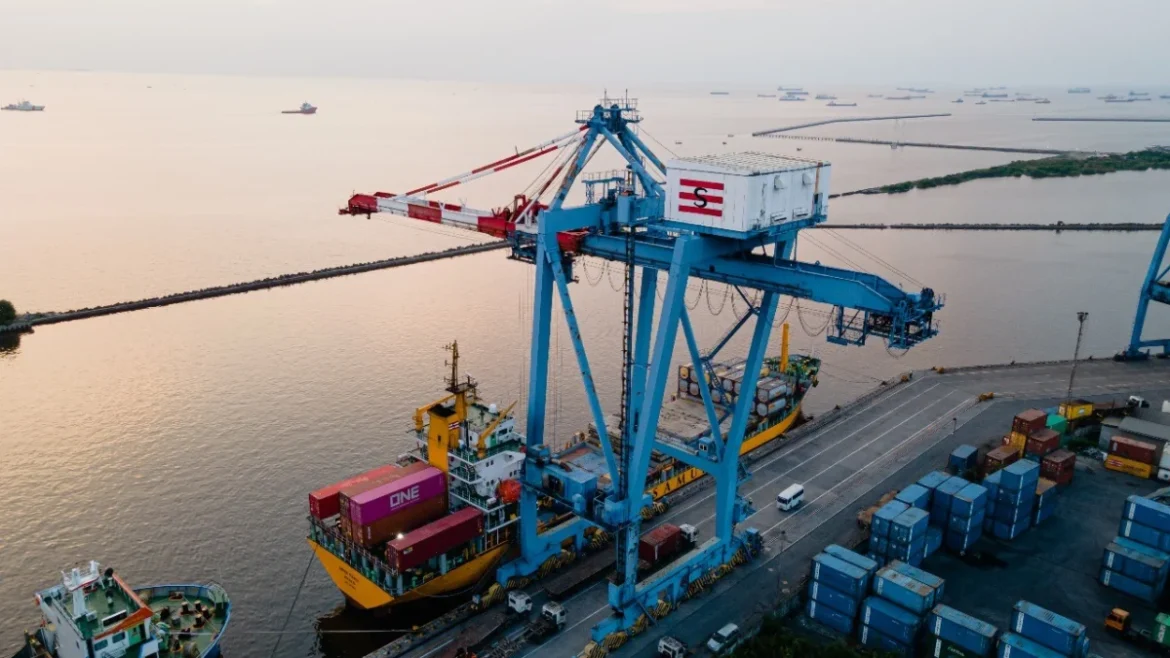
PT Samudera Indonesia Tbk (ticker code: SMDR), a prominent integrated shipping and logistics powerhouse in Indonesia, has officially reinforced its corporate footprint by injecting a combined capital of Rp40.70 billion into two of its strategic subsidiaries. This decisive financial maneuver, executed through the issuance of new shares, underscores the conglomerate’s overarching strategy to fortify its financial architecture, optimize operational synergies, and aggressively scale its footprint within the domestic property and logistics landscape. The transaction highlights the management’s proactive approach toward supporting subsidiary growth while simultaneously delivering long-term, sustainable value to its public shareholders and institutional investors alike.
According to official disclosures filed with the Indonesia Stock Exchange (IDX), the capital injection was officially finalized on September 16, 2026. The lion’s share of this funding was directed toward PT Samudera Properti Indonesia (SPI), a dedicated subsidiary operating within the real estate and property development sector. The total transaction value earmarked for PT SPI reached Rp43.70 billion—though subsequent disclosures detail the primary transaction batch amounting to Rp33.70 billion executed via the issuance of 33,700 new shares at a nominal price of Rp1 million per share. This substantial capital acquisition represents a massive 99.593 percent stake of the entire issued and paid-up capital of PT SPI, cementing the parent company’s absolute control and strategic oversight over the entity’s future developmental trajectories.
Because PT Samudera Indonesia Tbk and PT Samudera Properti Indonesia maintain a profound affiliate relationship—with SMDR owning an overwhelming majority of SPI’s equity prior to the transaction—the execution of this capital addition was formally exempted from rigid regulatory third-party fairness opinions and extensive independent approval mechanisms typically mandated for non-affiliated corporate actions under capital market regulations. Nevertheless, the management ensured absolute transparency by broadcasting the details to the public via official information disclosure channels to maintain investor confidence and adhere strictly to good corporate governance (GCG) principles.
Strategic Rationale Behind the Capital Injection
The decision by PT Samudera Indonesia Tbk to channel tens of billions of rupiah into its subsidiaries is far from an isolated financial event; rather, it is a calculated tactical component of the company’s broader corporate roadmap for 2026 and beyond. Over the past several fiscal years, SMDR has consistently sought to diversify its revenue streams beyond its core maritime transportation and cargo handling businesses. While shipping remains the primary revenue driver, fluctuations in global freight rates, geopolitical tensions impacting international trade routes, and volatile bunker fuel prices have prompted the management to seek defensive and high-yielding diversification assets, particularly in logistics infrastructure and strategic real estate.
By bolstering the capital structure of PT Samudera Properti Indonesia, SMDR aims to equip the subsidiary with the necessary financial liquidity and balance sheet strength to acquire land banks, accelerate ongoing construction projects, and develop integrated warehousing and logistics hubs. In the modern supply chain ecosystem, the convergence of property development and logistics—often manifested through modern distribution centers, automated warehouses, and port-adjacent industrial estates—represents a high-growth sector. The capital infusion directly addresses the subsidiary’s working capital requirements, allowing it to negotiate more favorable terms with contractors, financial institutions, and strategic partners without being overly reliant on high-cost external debt financing.
Chronology of Corporate Actions and Regulatory Compliance
The journey toward this latest capital enhancement follows a meticulously planned internal corporate calendar. The strategic review of PT Samudera Properti Indonesia’s financial needs began early in the third quarter of 2026, driven by project pipelines that required immediate capital outlays to capitalize on rising demand for industrial and commercial spaces.
- Early Third Quarter 2026: Management teams from SMDR and PT SPI conducted comprehensive financial audits and operational feasibility studies to determine the exact funding requirements for upcoming real estate and logistics property initiatives.
- September 16, 2026: The Board of Directors of PT Samudera Indonesia Tbk formally executed the capital subscription agreement, authorizing the issuance of 33,700 new shares in PT SPI at a valuation of Rp1 million per share, totaling Rp33.70 billion for this specific tranche.
- September 19, 2026: Official disclosures were formally published on the Indonesia Stock Exchange information portal, detailing the transaction parameters, the affiliated nature of the entities, and the broader economic justifications underpinning the capital injection to satisfy regulatory transparency mandates.
This structured timeline reflects the company’s adherence to stringent corporate governance frameworks, ensuring that material corporate actions are communicated to the market swiftly and accurately.
Financial Health and Consolidated Revenue Implications
From a macroeconomic and accounting perspective, the capital injection into PT Samudera Properti Indonesia is expected to yield favorable outcomes for SMDR’s consolidated financial statements over the medium to long term. When a parent company infuses capital into a subsidiary through equity rather than interest-bearing loans, it avoids inflating the subsidiary’s debt-to-equity ratio (DER). This keeps the subsidiary’s balance sheet robust and attractive for independent project financing.
Furthermore, as PT SPI utilizes these funds to execute its real estate and logistics property projects, its operational capacity will expand exponentially. Increased operational efficiency and asset utilization are projected to translate into higher revenue generation. Because PT SPI is a heavily consolidated subsidiary within the Samudera Indonesia corporate umbrella, any top-line growth and net income generated by SPI will directly flow into SMDR’s consolidated financial reports. This positive ripple effect is expected to enhance the parent company’s earnings per share (EPS) metrics over successive quarters, ultimately benefiting the broader base of public shareholders who hold SMDR stock on the Indonesia Stock Exchange.
Industry Context and Market Reactions
The Indonesian property and logistics sectors have experienced a dynamic recovery phase, marked by shifting consumer behaviors, rapid e-commerce expansion, and an increasing corporate demand for decentralized distribution hubs. Companies that possess strong balance sheets—such as PT Samudera Indonesia Tbk—are uniquely positioned to consolidate their market share during periods when smaller, less capitalized competitors may struggle to secure financing due to elevated interest rate environments.
Market analysts observing SMDR’s corporate moves have noted that the market’s reaction to the announcement has remained relatively stable, as the transaction size of Rp40.70 billion (inclusive of both subsidiary adjustments) is well within the company’s internal liquidity buffers and capital expenditure budget for the fiscal year. SMDR’s strong cash position, built upon years of solid performance during the post-pandemic shipping boom, allows the conglomerate to comfortably execute such strategic investments without compromising its dividend payout capabilities or operational liquidity.
Broader Impact and Future Outlook for Samudera Indonesia
Looking forward, the successful recapitalization of PT Samudera Properti Indonesia serves as a bellwether for how legacy shipping enterprises are transforming into comprehensive supply chain and logistics ecosystem players. By ensuring that its subsidiaries are well-capitalized, SMDR is effectively future-proofing its business model against cyclical downturns in the global maritime freight market.
Management remains optimistic that the synergies created between its core maritime transport operations and its burgeoning property and logistics infrastructure investments will yield robust financial returns. As these real estate assets mature and commence commercial operations, they will not only diversify SMDR’s revenue base but also anchor long-term corporate resilience. For investors and market watchers, this capital injection signals a disciplined, forward-looking management team committed to strategic growth, asset enhancement, and sustainable shareholder value creation within Indonesia’s dynamic economic landscape.
