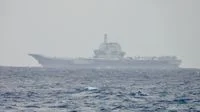
The activity of Chinese government vessels around Taiwan surged dramatically in June 2026, reaching unprecedented levels and prompting grave concerns in Taipei that Beijing is actively testing scenarios for a potential blockade or disruption of Taiwan’s strategic supply lines from its allies in the Pacific region. This significant increase in maritime presence marks a concerning escalation in cross-strait tensions, signaling a deliberate and calculated strategy by Beijing to exert greater pressure on the self-governing island.
Data compiled by Taiwan’s Coast Guard Administration (CGA) revealed a startling figure of 55 Chinese government vessels, encompassing both Coast Guard ships and research vessels, operating in the waters surrounding Taiwan throughout June 2026. This number represents a sharp increase from 30 vessels detected in May 2026 and a staggering jump from just 25 vessels observed during the same period in 2025. The 83% month-over-month increase and a 120% year-over-year surge underscore a sustained and intensified pattern of Chinese maritime operations in the sensitive region. These figures, as emphasized by Taiwanese authorities, do not even account for the ongoing Chinese vessel activity around the smaller, Taiwan-controlled islands located close to the Chinese mainland, suggesting an even broader scope of operations.
Taipei’s Heightened Alert and Defense Posture
Taiwanese officials are not underestimating the implications of this surge. A senior official from Taiwan’s Coast Guard, speaking anonymously to Reuters in late July 2026 due to the sensitivity of the matter, articulated Taipei’s deep-seated anxieties. "If the situation escalates into a blockade, or what is already equivalent to a quasi-war, we have plans to cooperate with the navy to jointly protect Taiwan’s vital sea lanes," the official stated. This declaration highlights Taiwan’s proactive approach to defense planning, recognizing the potential for non-military vessels to play a significant role in future conflict scenarios.
The official further elaborated on Taiwan’s state of preparedness: "We have anticipated this scenario not only through simulation exercises but also through live drills." This suggests that Taiwan has been actively integrating potential blockade scenarios into its national defense strategies, moving beyond theoretical discussions to practical operational readiness. The focus on protecting vital sea lanes underscores Taiwan’s acute awareness of its reliance on maritime routes for trade, energy, and communication, making the integrity of these pathways critical to its national security and economic survival.
The Evolving Role of China’s Coast Guard and "Lawfare" Tactics
Taipei interprets the current trend as indicative of the Chinese Coast Guard’s increasingly prominent role in Beijing’s strategy to intensify pressure on Taiwan. According to the Taiwanese government, China is now more frequently deploying its Coast Guard vessels to bolster its territorial claims through what Taiwan refers to as "lawfare" – a strategy involving the creation of a legal basis or justification for Chinese activities around Taiwan, even in areas where its jurisdiction is disputed under international law.
A key aspect of this "lawfare" strategy, as detailed by a senior Taiwanese Coast Guard official, involves the deployment of significantly more capable vessels. A number of China’s Coast Guard ships, the official revealed, are in fact former naval destroyers that have been repurposed, repainted, and subsequently transferred to Coast Guard service. These converted vessels possess distinct advantages over Taiwan’s Coast Guard fleet, boasting larger sizes, superior endurance, and substantially more robust military capabilities. Their presence fundamentally alters the maritime balance in the Taiwan Strait, allowing China to project power more effectively and persistently without immediately invoking the overtly military connotations of naval deployments.
Furthermore, Chinese Coast Guard vessels are now frequently observed operating in pairs, often venturing beyond Taiwan’s exclusive economic zone (EEZ) into the broader Pacific Ocean. This coordinated deployment, according to the Taiwanese official, places immense pressure on the operational capacity and resources of Taiwan’s comparatively smaller and less equipped Coast Guard fleet, forcing them to dedicate significant assets to monitor and respond to these incursions. The consistent presence of these larger, more capable Chinese vessels in Taiwan’s peripheral waters serves as a constant assertion of China’s claims and a persistent test of Taiwan’s resolve and resources.
Interference with Commercial Shipping and Taiwan’s Counter-Measures
Adding another layer to Beijing’s "lawfare" strategy, a separate senior Taiwanese official reported that Chinese Coast Guard vessels have begun broadcasting requests for information to commercial merchant ships regarding their port entry and exit activities. This move, while not yet resulting in commercial vessels altering their routes, is seen by Taipei as an attempt to gradually normalize Chinese authority over international shipping in the Taiwan Strait and surrounding waters. By seeking to collect information and assert control, Beijing appears to be laying the groundwork for future, more assertive actions.
In direct response to these overtures, Taiwan has initiated its own counter-broadcasts to merchant vessels, advising them to maintain their normal navigation routes and disregard any instructions issued by Chinese authorities. "They know that they do not have jurisdiction now, so they are trying to create something out of nothing," the Taiwanese official asserted, highlighting Taipei’s determination to resist any attempts to unilaterally alter the established international maritime order. This verbal sparring via radio waves underscores the ongoing contest for narrative and control in the strategically vital waterway.
Broader Context: The Enduring Cross-Strait Divide
The recent surge in Chinese maritime activity is not an isolated event but rather a continuation of Beijing’s long-standing campaign to assert its sovereignty over Taiwan, which it considers a breakaway province. China’s Communist Party maintains that Taiwan is an inalienable part of China, a stance it has consistently reiterated, refusing to rule out the use of force to achieve "reunification," particularly if Taiwan were to formally declare independence. The "One China" principle, a cornerstone of Beijing’s foreign policy, underpins these claims.
Conversely, Taiwan, officially known as the Republic of China, vehemently rejects Beijing’s sovereignty claims. Taipei asserts that it is a sovereign and independent nation with its own democratically elected government, and that only the people of Taiwan have the right to determine their future. This fundamental disagreement lies at the heart of the cross-strait dilemma, which has simmered for over seven decades since the Chinese Civil War.
The geopolitical landscape surrounding Taiwan is complex and volatile. The island’s democratic governance, coupled with its critical role in the global technology supply chain – particularly in advanced semiconductor manufacturing – makes it a focal point of international interest and concern. Any disruption to the status quo in the Taiwan Strait would have profound global economic and security ramifications.
International Implications and Regional Security
The increasing Chinese pressure on Taiwan has not gone unnoticed by the international community. While China’s Ministry of National Defense and the Taiwan Affairs Office have yet to officially comment on the latest developments, the silence itself is interpreted by some analysts as a tacit acknowledgment of the deliberate nature of these operations.
The United States, Taiwan’s most significant international supporter and arms supplier, has repeatedly expressed concerns over Beijing’s coercive actions and has affirmed its commitment to supporting Taiwan’s self-defense capabilities in accordance with the Taiwan Relations Act. Other regional powers, including Japan and Australia, also monitor developments in the Taiwan Strait closely, recognizing the potential for instability to disrupt vital shipping lanes and impact regional security. A blockade of Taiwan, even a partial one, would not only cripple the island’s economy but also send shockwaves through global supply chains, affecting industries worldwide that rely on Taiwanese exports.
Analysis of Blockade Scenarios and "Grey Zone" Tactics
The current Chinese strategy, as interpreted by Taiwan, aligns with what military strategists term "grey zone" tactics – actions that fall short of overt warfare but are designed to incrementally alter the status quo through persistent coercion and intimidation. The deployment of Coast Guard vessels, as opposed to naval warships, allows China to test boundaries and assert claims without triggering an immediate military response that might accompany naval maneuvers. This ambiguity makes it challenging for international actors to formulate a unified and proportionate response.
A blockade scenario could take various forms, from a full-scale naval cordon to a "quarantine" enforced by Coast Guard and maritime militia vessels, similar to tactics observed in the South China Sea. Such a "quarantine" could involve restricting access to ports, inspecting commercial vessels, or disrupting air and sea traffic, all under the guise of law enforcement or maritime safety. The sheer volume and increasing sophistication of China’s Coast Guard fleet provide it with the capability to execute such a strategy, gradually isolating Taiwan from its allies and international trade.
Taiwan’s strategic position at the nexus of major East Asian shipping routes, including the crucial South China Sea, further amplifies the global stakes. A significant portion of the world’s commercial shipping, including critical energy and raw material flows, transits these waters. Any sustained disruption would lead to soaring shipping costs, significant delays, and potentially a re-routing of global trade, with cascading economic consequences.
Future Outlook and Resilience
The June 2026 surge in Chinese maritime activity around Taiwan represents a critical inflection point in cross-strait relations. It underscores Beijing’s growing willingness to employ non-military assets to achieve strategic objectives and tests Taiwan’s resolve and its partners’ commitment. While Taiwan continues to bolster its defense capabilities and prepare for various contingencies, the long-term implications of China’s "lawfare" and grey zone tactics remain a significant challenge for regional stability and global security.
The international community watches closely as Taiwan navigates this intricate balance, seeking to maintain its democratic way of life in the face of escalating pressure, while simultaneously working to ensure the freedom of navigation and the peaceful resolution of disputes in one of the world’s most vital geopolitical hotspots. The events of June 2026 serve as a stark reminder of the fragile peace in the Taiwan Strait and the potential for seemingly minor maritime incidents to escalate into broader geopolitical crises. Taiwan’s resilience, backed by its commitment to democracy and its strategic importance, will continue to be tested as Beijing refines its methods of asserting its claims in the region.