
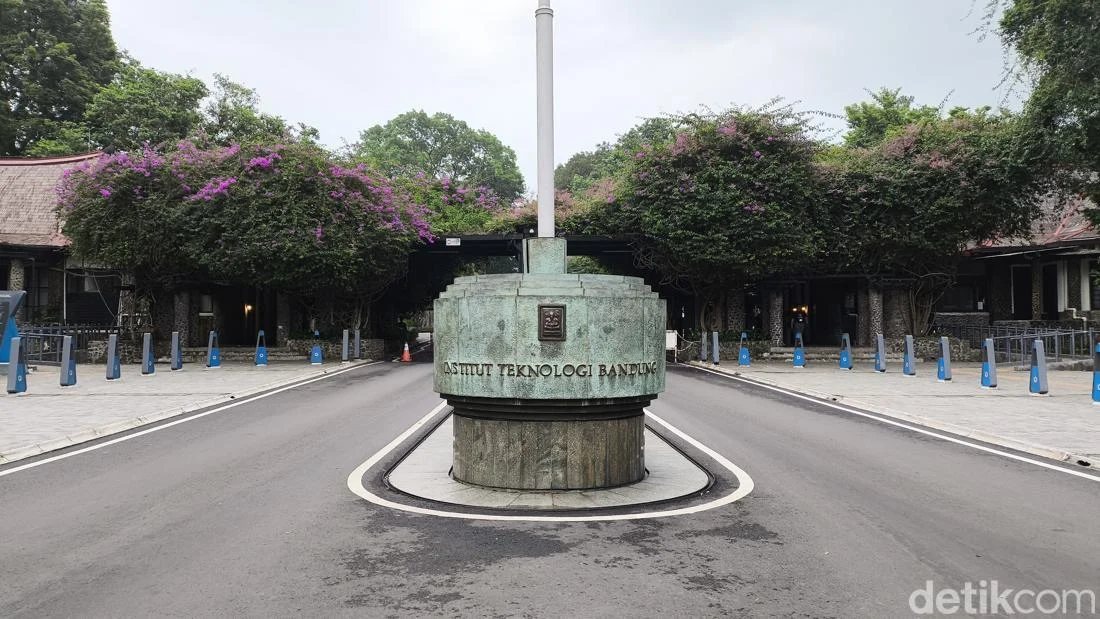
The Jakarta Provincial Government has officially announced a strategic partnership with the Bandung Institute of Technology (ITB) to provide comprehensive scholarship support for students originating from Jakarta. This initiative is specifically designed to assist 85 students who have successfully gained admission to one of Indonesia’s most prestigious technical universities but face significant financial hurdles. The collaboration underscores a growing commitment by the metropolitan administration to ensure that academic merit is not stifled by economic limitations, fostering a pathway for the city’s brightest minds to contribute to national development.
The formalization of this agreement took place at the Jakarta City Hall on Friday, July 17, 2026. During the event, the Rector of ITB, Prof. Dr. Ir. Tatacipta Dirgantara, personally handed over the list of eligible candidates to the Governor of Jakarta, Pramono Anung. This meeting served as a pivotal moment in the administration’s efforts to bridge the gap between secondary education and high-level tertiary academic achievement. By targeting students from low-income families, the program aims to alleviate the burden of tuition fees, allowing students to focus entirely on their rigorous academic schedules at ITB.
Strengthening the Educational Safety Net in Jakarta
Governor Pramono Anung emphasized that the Jakarta Provincial Government’s readiness to support these students is part of a broader, long-term vision for the city. The administration has historically prioritized education as a cornerstone of its social welfare policy. Each year, the provincial government facilitates thousands of scholarships for Jakarta residents holding provincial ID cards (KTP DKI) who are accepted into various state and private universities across the Indonesian archipelago.
"Our commitment is clear: no child in Jakarta should be forced to abandon their dreams of higher education because of their family’s financial status," the Governor stated during the handover ceremony. He further noted that the partnership with ITB is particularly significant given the institution’s reputation for producing the nation’s top engineers, scientists, and business leaders. The 85 students selected for this specific program represent a vanguard of Jakarta’s youth, chosen for their resilience and academic excellence despite their socio-economic backgrounds.
The scholarship program is designed to operate within the established legal and bureaucratic frameworks of the provincial government. This ensures transparency and accountability in the disbursement of public funds. The selection process involves a rigorous verification of the students’ economic status, ensuring that the aid reaches those truly in need. This collaborative effort also involves the Jakarta Education Agency, which monitors the academic progress of scholarship recipients to ensure that the investment yields tangible results for the city’s human capital.
A Chronology of the Academic Collaboration
The journey toward this scholarship agreement began earlier in the academic year as ITB finalized its admission cycles through the National Selection Based on Merit (SNBP) and the National Selection Based on Tests (SNBT). As the results were announced, it became evident that a significant number of qualified candidates from Jakarta were hesitant to enroll due to the projected costs of living and tuition in Bandung.
Recognizing this trend, the ITB administration initiated a dialogue with the Jakarta Provincial Government to find a sustainable solution. Over the course of several months, administrative teams from both the university and the City Hall worked to align the university’s tuition categories (UKT) with the city’s scholarship budget. The timeline of the collaboration can be summarized as follows:
- Early 2026: Identification of high-achieving Jakarta-based candidates through national entrance exams.
- May 2026: ITB’s admissions office conducts an internal audit of students requiring financial assistance.
- June 2026: Preliminary discussions between the ITB Rectorate and the Jakarta Education Agency regarding quota allocations.
- Early July 2026: Finalization of the 85-student list based on socio-economic verification and residency requirements.
- July 17, 2026: Official handover of the scholarship recipients’ names at Jakarta City Hall, marking the commencement of the funding for the upcoming semester.
Understanding the Financial Landscape: ITB Tuition Fees
To understand the necessity of this scholarship, one must look at the cost structure of education at the Bandung Institute of Technology. ITB utilizes a Single Tuition Fee (UKT) system, which categorizes students based on their family’s economic capability. While the system is designed to be equitable, the higher tiers of UKT can still pose a significant challenge for middle-to-low-income households.
The cost of tuition at ITB varies significantly depending on the faculty and the specific selection path. For those entering through the SNBP and SNBT tracks, the UKT is divided into several groups. The highest tier, Group 7, is found within the School of Business and Management (SBM), where fees reach Rp 14,500,000 per semester. Conversely, the lowest tier across all faculties is Group 1, set at a nominal Rp 500,000 per semester.
Detailed Breakdown of UKT at the School of Business and Management (SBM)
The SBM is often cited as one of the most expensive schools within ITB, reflecting the high demand and the specialized resources required for business education:
- UKT 7: Rp 14,500,000
- UKT 6: Rp 12,500,000
- UKT 5: Rp 10,500,000
- UKT 4: Rp 8,500,000
- UKT 3: Rp 6,500,000
- UKT 2: Rp 1,000,000
- UKT 1: Rp 500,000
Tuition Fees for the Faculty of Mathematics and Natural Sciences (FMIPA) – Mathematics
The mathematics department within FMIPA has a slightly different cost structure compared to the broader science and engineering faculties:
- UKT 7: Rp 12,250,000
- UKT 6: Rp 10,250,000
- UKT 5: Rp 8,250,000
- UKT 4: Rp 6,250,000
- UKT 3: Rp 4,250,000
- UKT 2: Rp 1,000,000
- UKT 1: Rp 500,000
General Tuition for Other Faculties and Schools
The majority of other faculties—including the Faculty of Earth Sciences and Technology (FITB), Faculty of Mining and Petroleum Engineering (FTTM), Faculty of Industrial Technology (FTI), and the School of Electrical Engineering and Informatics (STEI)—follow a standardized UKT structure:
- UKT 7: Rp 12,500,000
- UKT 6: Rp 10,500,000
- UKT 5: Rp 8,500,000
- UKT 4: Rp 6,500,000
- UKT 3: Rp 4,500,000
- UKT 2: Rp 1,000,000
- UKT 1: Rp 500,000
For many families in Jakarta, even the mid-range UKT levels (Groups 3 to 5) can represent a substantial portion of their annual income. The scholarship provided by the Jakarta Provincial Government is intended to cover these costs, ensuring that students can maintain their focus on the demanding ITB curriculum.
Complementary Support Systems: KIP-Kuliah
In addition to the local government scholarships, ITB continues to facilitate the Kartu Indonesia Pintar Kuliah (KIP-Kuliah), a national program initiated by the central government. KIP-Kuliah allows eligible students to attend university for free, with the government covering both tuition fees and providing a monthly living allowance.
The integration of local provincial scholarships with national programs like KIP-Kuliah creates a multi-layered support system. While KIP-Kuliah serves as a primary safety net, the Jakarta Provincial Government’s scholarship fills the gap for those who may not qualify for the national program but still fall within a vulnerable economic bracket. This "filling the gap" strategy is essential in a high-cost urban environment like Jakarta, where the poverty line and cost of living often differ from national averages.
Broader Implications for Social Mobility and Economic Growth
The decision to fund 85 students at ITB is more than just a philanthropic gesture; it is a calculated investment in Jakarta’s future economic resilience. ITB is a primary feeder for Indonesia’s industrial, technological, and entrepreneurial sectors. By ensuring that Jakarta’s underprivileged youth can access this institution, the provincial government is actively promoting vertical social mobility.
Analysts suggest that such programs have a "multiplier effect." When a student from a low-income background graduates from a top-tier university like ITB, they are likely to secure high-paying employment, which in turn lifts their entire family out of poverty. Furthermore, these graduates often return to Jakarta to work in its burgeoning tech hubs, contributing to the city’s tax base and innovation ecosystem.
The Rector of ITB, Prof. Tatacipta Dirgantara, noted that diversity in the student body is vital for the university’s mission. "A university thrives when it brings together the best minds from all walks of life. By collaborating with the Jakarta Provincial Government, we are ensuring that ITB remains an inclusive environment where talent is the only currency that matters," he said.
Future Outlook: Expanding Educational Access
As the 2026 academic year approaches, the Jakarta Provincial Government has signaled that this is not a one-off initiative. There are plans to review the program’s success and potentially expand the number of recipients in future years. Additionally, the administration is looking to establish similar formal agreements with other "Big Three" universities in Indonesia, such as the University of Indonesia (UI) and Gadjah Mada University (UGM), to create a standardized support network for Jakarta’s students.
The collaboration between the Jakarta Provincial Government and ITB serves as a model for how local governments can take a proactive role in higher education. By removing the financial barriers to entry at the nation’s premier institutions, Jakarta is securing its place as a leader in human resource development. The 85 students set to benefit from this program now carry not only their personal aspirations but also the hopes of a city committed to the idea that education is the most powerful tool for change.
In the coming months, these students will begin their journey in Bandung, supported by the knowledge that their home city has invested in their potential. As they navigate the complexities of engineering, business, and science, the partnership between City Hall and ITB stands as a testament to the power of institutional synergy in solving the most pressing challenges of modern education.
