
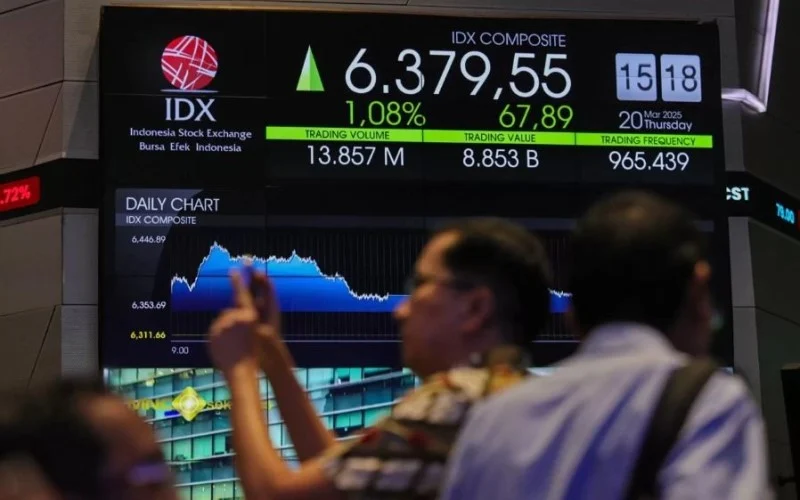
The Indonesian Composite Stock Price Index (IHSG) is poised to extend its upward trajectory, with market analysts projecting a test of the 6,355-6,398 resistance range. This optimistic forecast, however, is tempered by a cautionary note regarding the potential for short-term corrections, which could see the index retracting to the 6,274-6,307 levels. The latest assessment from MNC Sekuritas, released on Wednesday, July 22, 2026, underscores a complex but generally bullish outlook for the Jakarta bourse, driven by a confluence of technical indicators and broader market dynamics.
Detailed Technical Outlook and Market Momentum
According to MNC Sekuritas, the IHSG’s current positioning suggests it is navigating a crucial phase within its Elliott Wave structure. The firm’s analysis indicates the index is presently situated within "wave iii of wave (c) of wave [iv]," a configuration often associated with sustained upward momentum following a period of consolidation or corrective movement. This technical framework provides a roadmap for potential future price action, guiding investors on likely turning points and trend continuations.
The preceding trading day, July 21, 2026, concluded with a significant display of strength, as the IHSG surged by 1.74 percent, closing at 6,340. This robust performance was accompanied by a notable increase in buying volume, signaling strong investor conviction. Critically, the index managed to break above its 60-day moving average (MA60), a key technical milestone often interpreted as a shift from a bearish or neutral trend to a more bullish one. The MA60 acts as a significant indicator for medium-term trend direction, and its breach is typically viewed as a positive signal by technical traders.
In their comprehensive market brief, MNC Sekuritas outlined key technical levels for investors to monitor. The primary support levels are identified at 6,111 and 5,839, which would act as potential floors should the market experience a downturn. Conversely, the resistance levels, indicating ceilings where upward momentum might face selling pressure, are set at 6,377 and 6,599. These figures are vital for both short-term traders looking for entry and exit points, and long-term investors assessing the overall health and potential of the market.
Chronology of Recent Market Performance
The IHSG’s recent advance to the 6,340 level is not an isolated event but rather the culmination of a period marked by fluctuating investor sentiment and a gradual recovery trend. In the weeks leading up to this forecast, the Indonesian market has demonstrated resilience, absorbing both domestic and international economic pressures. Following a period of mild corrections in early July, likely influenced by global inflation concerns and geopolitical uncertainties, the index began to show signs of renewed vigor. This resurgence was initially fueled by stronger-than-expected corporate earnings reports from key sectors and positive shifts in commodity prices, particularly for energy and industrial metals, which significantly benefit Indonesia’s resource-rich economy.
Mid-July saw a steady accumulation of buying interest, as foreign investors, in particular, began to re-enter the market, attracted by Indonesia’s robust economic fundamentals and relatively stable political landscape. Domestic institutional investors also played a crucial role, providing a strong base of support that prevented sharper declines during periods of profit-taking. The breach of the MA60 on July 21, 2026, therefore, served as a confirmation of this building momentum, suggesting that the underlying trend has indeed turned positive. This recent rally has instilled a renewed sense of optimism among market participants, who are now closely watching for further breakout potential.
Driving Factors and Supporting Economic Data
Several interconnected factors are contributing to the positive sentiment surrounding the IHSG. Domestically, Indonesia’s economy has shown impressive resilience and growth potential. Data from the Central Statistics Agency (BPS) in Q2 2026 indicated a stronger-than-anticipated GDP growth rate, driven primarily by robust consumer spending and increased government infrastructure investment. Inflation, while a global concern, has been largely managed within the central bank’s target range, providing stability and fostering consumer confidence. The government’s continued focus on structural reforms, digital transformation, and attracting foreign direct investment (FDI) has also bolstered long-term growth prospects.
On the corporate front, preliminary earnings reports for the second quarter of 2026 revealed healthy performance across several key sectors, particularly banking, telecommunications, and commodities. This strong corporate profitability provides a fundamental underpinning for stock valuations and encourages further investment. The banking sector, a significant component of the IHSG, has benefited from improving loan growth and stable interest rate environments, leading to higher net interest margins.
Globally, a more stable economic outlook in major trading partners like China and the United States has also provided tailwinds. While global supply chain disruptions persist in some areas, the overall trend towards normalization has eased concerns about input costs and logistics. Furthermore, a relatively stable commodity price environment, particularly for coal, palm oil, and nickel – key Indonesian exports – has translated into healthy revenues for resource-based companies, which in turn positively impacts the broader market index. Investor confidence has also been buoyed by the prospect of continued liquidity in global markets, even as major central banks navigate their monetary policies.
Spotlight on Key Stocks: BRMS and TLKM
Amidst the broader market optimism, MNC Sekuritas has specifically highlighted two stocks for investors to monitor: BRMS (Bumi Resources Minerals Tbk) and TLKM (PT Telekomunikasi Indonesia Tbk). These selections reflect strategic plays within sectors poised for growth.
BRMS (Bumi Resources Minerals Tbk) – Trading Buy
Bumi Resources Minerals Tbk (BRMS) saw a significant jump of 7.83 percent, closing at IDR 620 on the last trading day. This surge was accompanied by a substantial increase in buying volume, indicating strong market interest. Technically, BRMS’s price action is currently positioned within the range of its 20-day and 60-day moving averages, suggesting a period of consolidation before a potential breakout. MNC Sekuritas’s technical analysis places BRMS in "wave [v] of wave 1 of wave (C)," an Elliott Wave pattern that typically implies the final leg of an impulsive upward movement within a larger corrective phase. This suggests that BRMS could experience further upside in the near term as it completes this wave structure.
The positive outlook for BRMS is largely attributed to the robust performance of the global mining and resources sector. As a diversified mineral exploration and mining company, BRMS stands to benefit from sustained demand for commodities like gold, copper, and zinc. Rising global economic activity and potential supply constraints continue to support commodity prices, translating into improved revenue and profitability prospects for companies like BRMS. Investors are likely eyeing BRMS for its potential leverage to the commodity cycle, as well as any company-specific developments in its exploration and production activities.
TLKM (PT Telekomunikasi Indonesia Tbk) – Stock to Watch
While specific technical details for PT Telekomunikasi Indonesia Tbk (TLKM) were not provided in the same granular detail as BRMS, its inclusion as a stock to "cermati" (watch closely) by analysts is highly significant. As Indonesia’s largest telecommunications company, TLKM plays a pivotal role in the nation’s digital transformation. The telecommunications sector in Indonesia continues to demonstrate strong growth, driven by increasing smartphone penetration, expanding internet usage, and the ongoing rollout of 5G infrastructure.
Analysts are likely focusing on TLKM for several reasons. Firstly, its dominant market position and extensive network coverage provide a stable revenue base from mobile, fixed-line, and internet services. Secondly, the company’s strategic investments in data centers, cloud services, and digital platforms position it well to capitalize on the burgeoning digital economy. Thirdly, TLKM is often considered a defensive stock due to its stable cash flows and attractive dividend yields, making it appealing to investors seeking both growth and income. The company’s ability to innovate and adapt to evolving technological landscapes, alongside its strong financial health, makes it a compelling choice for investors looking for long-term value and exposure to Indonesia’s digital growth story. Potential catalysts for TLKM could include further expansion of its fiber optic network, successful monetization of new digital services, or strategic partnerships that enhance its ecosystem.
Statements and Reactions from Market Participants
The generally bullish forecast for the IHSG has been met with cautious optimism from various market participants. Leading fund managers and independent financial advisors have acknowledged the positive technical indicators but also emphasized the importance of selective stock picking and diligent risk management.
"The breach of the MA60 and the strong closing volume are definitely encouraging signs, suggesting a renewed upward bias for the IHSG," commented a senior analyst from a prominent Jakarta-based investment firm, who wished to remain anonymous due to company policy. "However, investors must remain vigilant. Global macroeconomic headwinds, such as potential shifts in interest rate policies by major central banks or unexpected geopolitical events, could quickly alter the market landscape. The current environment calls for a balanced approach, combining exposure to high-growth sectors with defensive positions."
Retail investors, who have become an increasingly influential force in the Indonesian market, are also closely monitoring the situation. Online investment forums and social media channels are abuzz with discussions about the target levels and the recommended stocks. While excitement is palpable, financial literacy campaigns by the Indonesia Stock Exchange (IDX) and the Financial Services Authority (OJK) continue to stress the importance of fundamental analysis and avoiding speculative trading based solely on short-term forecasts.
Broader Impact and Implications
A sustained upward trend in the IHSG has significant implications for both individual investors and the broader Indonesian economy. For investors, a rising market translates into wealth creation, potentially boosting retirement savings and overall financial well-being. It also encourages greater participation in the capital market, fostering a deeper and more liquid investment environment.
Economically, a strong stock market often serves as a barometer of investor confidence in a nation’s economic health. A thriving IHSG can attract further foreign direct and portfolio investment, providing capital for businesses to expand, innovate, and create jobs. This positive feedback loop can contribute to higher GDP growth, improved balance of payments, and overall economic stability. Furthermore, a buoyant equity market facilitates capital raising for companies through initial public offerings (IPOs) and rights issues, enabling them to fund expansion plans and contribute to national development.
However, the potential for short-term corrections, as highlighted by MNC Sekuritas, serves as a crucial reminder of market volatility. Such corrections, while sometimes painful for investors, are a natural part of market cycles, helping to dissipate speculative bubbles and re-establish more sustainable valuation levels. Regulators like the OJK and IDX play a vital role in maintaining market integrity and transparency, ensuring fair trading practices and protecting investors from undue risks. Their ongoing efforts to enhance regulatory frameworks and enforce compliance are critical in sustaining long-term market growth and investor trust.
Conclusion: Navigating Opportunities and Risks
The forecast for the IHSG to continue its strengthening trend towards the 6,355-6,398 range reflects a generally optimistic outlook for the Indonesian stock market, underpinned by robust domestic economic fundamentals, positive corporate earnings, and favorable global commodity dynamics. The technical indicators, particularly the breach of the MA60 and increased buying volume, lend significant weight to this bullish sentiment.
However, the cautionary note regarding potential short-term corrections to 6,274-6,307 underscores the inherent volatility of financial markets. Investors are advised to remain agile, utilize the identified support and resistance levels as guides, and conduct thorough due diligence before making investment decisions. The spotlight on stocks like BRMS and TLKM provides specific opportunities within high-growth sectors, but a diversified portfolio and a clear understanding of individual risk tolerance remain paramount. As the market progresses through the latter half of 2026, a keen eye on both domestic policy developments and global economic shifts will be essential for navigating the opportunities and challenges that lie ahead. The Indonesian market, while promising, demands an informed and strategic approach from all participants.

