
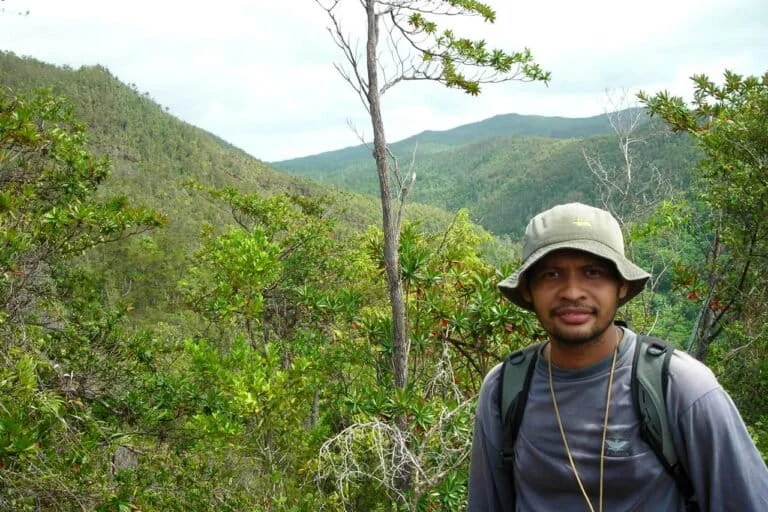
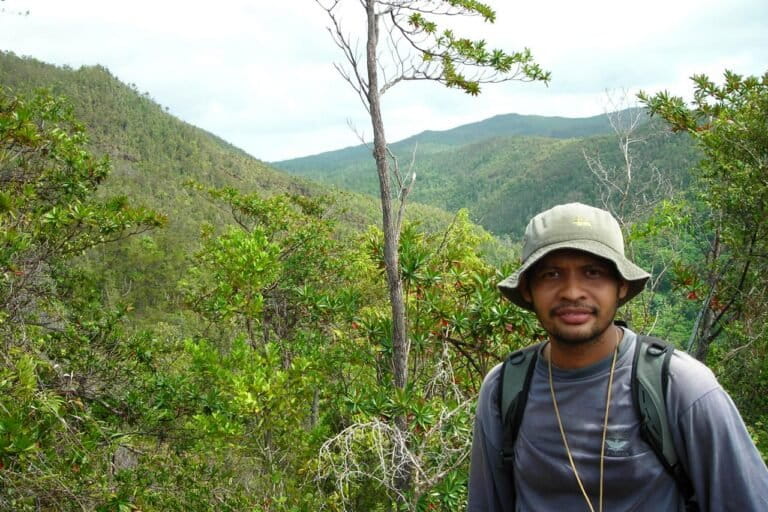
Professor Dr. Charlie Danny Heatubun views the sprawling rainforests of Papua not merely as a scenic landscape harboring immense biological wealth, but as a living laboratory and a foundational reservoir of knowledge that must dictate the trajectory of regional development. As a Professor of Forest Botany at the Faculty of Forestry, University of Papua (UNIPA), Heatubun has emerged as one of the world’s preeminent authorities on palms (Arecaceae), having dedicated more than a quarter-century to the meticulous study of the flora that defines the Indonesian provinces of Papua and West Papua. His work represents a critical intersection between rigorous academic inquiry and the pragmatic demands of governance, ensuring that the "Princes of Plants"—as palms are often called—remain central to the conservation and economic strategies of the region.
The scientific journey of Professor Heatubun is intrinsically linked to the broader effort to document the biodiversity of New Guinea, the most floristically diverse island on Earth. Recent studies, including a landmark 2020 report in the journal Nature, have confirmed that New Guinea hosts more than 13,000 species of vascular plants, surpassing even the biodiversity hotspots of Madagascar and the Amazon. Within this vast botanical tapestry, palms hold a position of both aesthetic and ecological dominance. For Heatubun, the fascination began with their structural elegance and their ubiquitous utility in the daily lives of indigenous Papuan communities. This early interest evolved into a lifelong mission that has seen him traverse the island’s most inhospitable terrains to bring hidden species to light.
A Chronological Foundation of Botanical Mastery
The academic and professional trajectory of Charlie Danny Heatubun reflects a steady progression from localized research to international scientific leadership. He completed his undergraduate studies in 1995, focusing his thesis on the diverse palm varieties found within the Papuan landscape. This initial research served as the springboard for a career defined by field exploration. By 1996, he was actively participating in botanical expeditions across Papua and other parts of the Indonesian archipelago, honing the skills necessary to identify and classify species in some of the world’s most challenging environments.
A pivotal moment in his career arrived in the year 2000 when he was officially integrated into the "Palms of New Guinea" project. This ambitious international collaboration sought to provide a comprehensive taxonomic account of every palm species on the island. The culmination of this monumental effort was realized in 2024 with the publication of a definitive book on the subject, a work that serves as a cornerstone for tropical botany. Throughout this period, Heatubun’s contributions were not merely additive; they were transformative. To date, he has been responsible for the publication of 50 new species and the identification of five entirely new genera, a feat that places him in the highest echelon of modern plant taxonomists.
From the Cycloop Mountains to the Corridors of Raja Ampat
The discovery of new species is rarely a matter of simple observation; it often requires extraordinary physical endurance and scientific intuition. One of the most storied chapters in Heatubun’s career involves the search for the elusive Zebra Palm, or Caryota zebrina, in the rugged Cycloop Mountains. In an expedition that tested the limits of his team’s resolve, Heatubun spent nearly a week stationed in the high-altitude forests of the range. The team was forced to take shelter beneath massive rock formations, enduring days without adequate water for bathing or basic comforts, as they scoured the terrain for the distinctive striped patterns of the Caryota zebrina. The successful documentation and subsequent publication of this species in 2000 remains a testament to the "extreme botany" that characterizes Papuan research.
Conversely, some of Heatubun’s most significant discoveries have occurred in the most unexpected settings, highlighting his constant state of scientific vigilance. While attending a Regional Development Planning Meeting (Musrenbang) in Raja Ampat—a setting usually reserved for administrative and political discourse—Heatubun noticed a large, unfamiliar palm growing just outside the meeting hall. His trained eye immediately recognized features that deviated from known classifications. Subsequent phylogenetic analysis conducted in collaboration with research institutions in the United Kingdom confirmed his suspicion: the palm belonged to an entirely new genus. It was named Wallaceodoxa, honoring the legendary naturalist Alfred Russel Wallace. This discovery underscored a vital truth in Heatubun’s philosophy: that scientific wonder can be found anywhere, provided one has the knowledge to see it.
The Evolution of the West Papua Research and Innovation Agency
In recent years, Professor Heatubun has expanded his influence beyond the herbarium and the forest canopy into the sphere of high-level policy. Recognizing that scientific data is often siloed away from the decision-makers who need it most, he took on the leadership of the West Papua Regional Research and Innovation Agency (BRIDA). Under his guidance, BRIDA has become a vital organ of the provincial government, serving as a bridge between academic research and the formulation of public policy.
The role of BRIDA, as envisioned by Heatubun, is to ensure that every developmental decision in West Papua is "evidence-based." This is particularly crucial in a region where the pressure for industrial expansion—such as palm oil plantations and mining—often clashes with the need for environmental preservation. Heatubun’s agency transforms complex botanical and ecological data into "policy briefs" that are accessible to governors and legislators. This approach has been instrumental in the drafting of regulations regarding the recognition and protection of indigenous peoples, as well as the establishment of West Papua as a "Conservation Province" (Provinsi Konservasi), a legal framework that prioritizes ecological integrity as the foundation of the economy.
Integrating Traditional Knowledge with Modern Bio-Economics
A core tenet of Professor Heatubun’s work is the integration of indigenous wisdom with modern scientific methodology. He argues that the people of Papua have functioned as the primary stewards of the forest for millennia, and their traditional ecological knowledge (TEK) is an invaluable resource for sustainable development. By documenting how local communities use palms for food, construction, and ritual, Heatubun’s research provides a roadmap for "non-deforestation commodities."
The economic implications of his work are profound. Heatubun advocates for a transition toward a "nature-based economy" where the standing forest is worth more than its cleared counterpart. This involves:
- Ecotourism Development: Leveraging the unique flora of Papua, such as the rare palms he has discovered, to attract high-value, low-impact scientific and nature tourism.
- Non-Timber Forest Products (NTFPs): Identifying and commercializing products derived from the forest that do not require the felling of trees, such as specialized oils, fibers, and medicinal extracts from palms.
- Sustainable Agriculture: Promoting the cultivation of native species that thrive under the forest canopy, thereby preserving the ecosystem while providing livelihoods for local farmers.
Global Significance and Future Implications
The work of Charlie Danny Heatubun carries weight far beyond the borders of Indonesia. As the global community grapples with the dual crises of climate change and biodiversity loss, the preservation of the Papuan rainforest—the third-largest tropical forest in the world—is a matter of international security. Heatubun’s research provides the taxonomic and ecological "inventory" necessary for international conservation bodies to prioritize their efforts.
Furthermore, his success in transitioning from a researcher to a policymaker provides a model for other biodiversity-rich nations. It demonstrates that the "ivory tower" of academia can and must be dismantled in favor of a more integrated approach where scientists are active participants in the machinery of the state. His leadership suggests that the future of conservation lies not in locking the forest away, but in understanding its complexity so deeply that it can be managed sustainably for the benefit of all.
As Professor Heatubun continues his work at the University of Papua and BRIDA, his legacy is already visible in the next generation of Papuan scientists he mentors. He emphasizes that the task of documenting and protecting Papua’s green heritage is far from over. With thousands of square miles of forest still unexplored and many species yet to be named, the "Princes of Plants" still have many secrets to reveal. Through his tireless dedication, Charlie Danny Heatubun ensures that these secrets will be used to build a future where the people of Papua and their majestic forests can thrive in tandem.
The story of this botanical pioneer is a reminder that the most effective way to protect the natural world is to understand it, value it, and weave it into the very fabric of human governance. In the shadows of the Cycloop Mountains and the meeting halls of Manokwari, the work continues, ensuring that the green crown of Papua remains intact for generations to come.

