
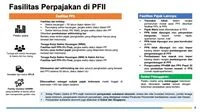
Indonesia is poised to solidify its position in the global financial landscape with the establishment of the Indonesia International Financial Center (PFII), a strategic initiative designed to attract significant investment through a comprehensive package of tax facilities. Crucially, these incentives are being meticulously crafted to operate in full compliance with the Global Minimum Tax (GMT) agreement, a testament to Indonesia’s commitment to international tax standards while fostering domestic economic growth. Mukhamad Misbakhun, Chairman of Commission XI of the House of Representatives (DPR), affirmed on Thursday, July 23, 2026, that while the existing legal framework allows for substantial tax exemptions, the nation is fully adapting to the evolving global tax landscape.
The Vision Behind the Indonesia International Financial Center (PFII)
The establishment of the PFII is not merely an exercise in offering tax breaks; it represents a pivotal component of Indonesia’s broader strategy to deepen its financial markets, diversify financing instruments and sources, and significantly boost investment. Enshrined in Article 248A of Law Number 4 Year 2026, which amends Law Number 4 Year 2023 concerning Financial Sector Development and Strengthening (P2SK), the PFII is mandated to be regulated by its own dedicated legislation. This legislative foundation underscores the government’s long-term vision for the PFII as a catalyst for economic transformation, aiming to elevate Indonesia’s stature within the global financial ecosystem. By creating a robust and attractive hub, Indonesia seeks to channel both domestic and international capital into productive sectors, fostering sustainable development and enhancing resilience against global economic fluctuations. The P2SK Law itself, enacted in late 2023 and subsequently amended, represents a landmark effort to modernize and strengthen Indonesia’s financial sector, encompassing banking, insurance, capital markets, and fintech, with the PFII serving as a critical engine for international engagement.
Navigating the Dual Mandate: Incentives and Global Compliance
The core appeal of the PFII lies in its attractive tax incentives, initially envisioned to include a tax exemption period of up to 50 years for eligible investors. This generous provision reflects a common strategy employed by emerging economies to lure foreign direct investment (FDI) and stimulate economic activity. However, the advent of the Global Minimum Tax (GMT), a groundbreaking international agreement, has introduced a new layer of complexity and necessitates a nuanced approach. Misbakhun emphasized, "The law already stipulates that investors are granted a tax exemption for 50 years. But we are, of course, aware of the changes in the international tax landscape, and we are following all of them." This statement highlights Indonesia’s proactive stance in aligning its domestic policies with global norms, even as it strives to maintain its competitive edge in attracting capital. The challenge for the PFII, therefore, is to craft a framework that leverages its attractive incentives without inadvertently triggering additional tax liabilities for investors under the GMT regime.
The Global Minimum Tax: A Paradigm Shift in International Taxation
The Global Minimum Tax, often referred to as Pillar Two of the OECD/G20 Base Erosion and Profit Shifting (BEPS) 2.0 initiative, represents a monumental shift in international corporate taxation. Developed by the Organisation for Economic Co-operation and Development (OECD) and endorsed by the G20, the GMT aims to ensure that large multinational enterprises (MNEs) pay a minimum effective tax rate of 15% on their profits, regardless of where they operate or book their profits. This initiative was born out of growing concerns over aggressive tax planning strategies employed by MNEs, which often resulted in profits being shifted to low-tax jurisdictions, eroding the tax bases of other countries.
The GMT framework comprises several interconnected rules designed to achieve this minimum taxation:
- Qualified Domestic Minimum Top-up Tax (QDMTT): This allows a jurisdiction to impose a top-up tax on the domestic profits of MNEs if their effective tax rate in that jurisdiction falls below 15%. This ensures that any additional tax revenue generated by the minimum tax stays within the country where the profits are earned.
- Income Inclusion Rule (IIR): This is the primary rule, imposing a top-up tax on a parent entity in respect of the low-taxed income of its foreign subsidiaries. The ultimate parent entity’s jurisdiction is responsible for applying the IIR.
- Undertaxed Payment Rule (UTPR): This acts as a backstop, denying deductions or requiring an equivalent adjustment if the low-taxed income is not subject to IIR. It allocates the top-up tax among other group entities in jurisdictions that have adopted the UTPR.
Indonesia, alongside more than 60 other countries including regional financial powerhouses like Singapore, Malaysia, Hong Kong, and the UAE, has committed to implementing the GMT, with the effective date for its application in Indonesia being January 1, 2025. This widespread adoption signifies a global consensus on the need for greater tax fairness and stability, fundamentally reshaping the competitive landscape for international financial centers.
PFII’s Framework Under GMT: Who Benefits and How
For the PFII, the application of GMT introduces specific conditions for the highly sought-after tax incentives. The GMT rules will primarily apply to Multinational Enterprises (MNEs) with a consolidated global turnover of at least 750 million Euro. This threshold is critical in determining which entities will be subject to the new global tax regime within the PFII.
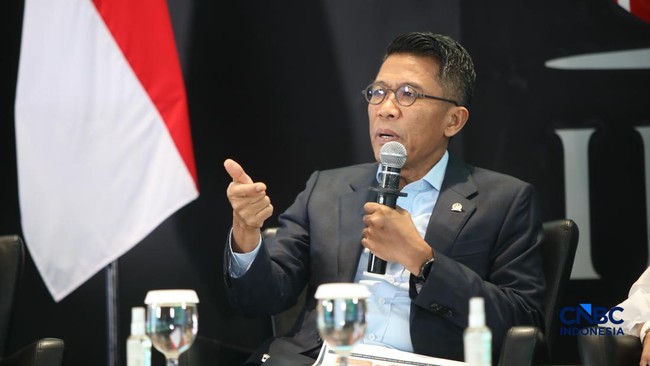
Misbakhun clarified the mechanism: "The mechanism is already in place; we just need to see whether the companies that will invest in the PFII fall within the scope of the global minimum tax or not. If not, it means they can still enjoy the 50-year tax exemption." This distinction is vital for potential investors.
- Entities NOT Subject to GMT: Individuals and businesses that are not part of an MNE group with a global turnover below 750 million Euro will remain fully eligible for the original 50-year tax holiday and other incentives offered by the PFII. This ensures that the PFII remains highly attractive to smaller, domestically focused entities, as well as start-ups and individual investors, who are not the primary target of the GMT.
- MNEs Subject to GMT: For MNEs exceeding the 750 million Euro threshold, the tax incentives offered by the PFII will be re-evaluated through the lens of the GMT. However, even within this category, there are critical nuances. An MNE operating within the PFII will not incur additional top-up tax if its effective tax rate in Indonesia, when combined with its other subsidiaries in Indonesia (even outside the PFII), already exceeds the 15% minimum threshold. This provision is significant as it allows MNEs to benefit from the PFII’s incentives as long as their overall Indonesian tax contribution meets the global minimum. The application of QDMTT within Indonesia further ensures that any top-up tax required to reach the 15% minimum stays within Indonesia, contributing to domestic revenue.
Beyond the corporate tax holiday, the PFII is designed to offer a suite of other attractive facilities. Misbakhun detailed these, stating, "In addition to the tax holiday, investors, businesses, and experts there are also provided with various other facilities, such as income tax exemption for foreign permanent establishments (SPLN), as well as various VAT and Luxury Goods Sales Tax (PPnBM) facilities." These additional incentives aim to create a holistic environment conducive to investment, covering not just corporate profits but also operational costs, expatriate talent attraction, and the flow of goods and services within the financial center.
Chronology of Indonesia’s Financial Sector Reform and GMT Adoption
Indonesia’s journey towards establishing the PFII and integrating GMT has been a multi-year process, reflecting both domestic aspirations and international commitments:
- Early 2010s: Discussions around establishing an international financial center in Indonesia begin, recognizing the nation’s economic potential and large domestic market.
- 2013: The OECD/G20 launches the BEPS project to address tax avoidance strategies by MNEs.
- 2016: Indonesia becomes a member of the OECD/G20 Inclusive Framework on BEPS, signaling its commitment to participate in global tax reform efforts. This is likely the period when initial discussions and policy intentions, as perhaps referenced by Misbakhun’s original statement (if 2016 was indeed the correct year for the quote, implying a very early foresight), began to form.
- October 2021: The OECD/G20 Inclusive Framework reaches a political agreement on the two-pillar solution, including the Global Minimum Tax (Pillar Two). Indonesia is among the signatories.
- December 2023: Law Number 4 Year 2023 on Financial Sector Development and Strengthening (P2SK) is enacted, providing a comprehensive framework for financial sector reform and laying the groundwork for the PFII.
- January 1, 2025: The Global Minimum Tax officially comes into effect in Indonesia, alongside many other jurisdictions globally. This marks a critical juncture for all tax incentive regimes, including those planned for the PFII.
- 2026: Law Number 4 Year 2026 amends the P2SK Law, specifically mandating the establishment of the PFII through a separate, dedicated law (as per Article 248A). This legislative move solidifies the government’s commitment and provides the explicit legal basis for the PFII’s operationalization. Misbakhun’s statement on July 23, 2026, would therefore be a contemporary affirmation of the PFII’s tax framework within the context of the newly amended P2SK law and the already implemented GMT.
- Ongoing: Drafting and enactment of the specific law for the PFII, alongside the development of detailed implementing regulations, is anticipated to ensure its full operational readiness.
Stakeholder Perspectives and Reactions
The announcement and subsequent clarification regarding the PFII’s tax framework, particularly its adherence to GMT, have elicited varied but generally positive responses from key stakeholders.
- Government Officials: The Ministry of Finance and the Investment Coordinating Board (BKPM) have consistently emphasized that Indonesia’s approach demonstrates a commitment to being a responsible global economic player. They highlight that compliance with GMT enhances Indonesia’s reputation, reduces risks of being labeled a tax haven, and promotes fair competition. The focus is on attracting "quality" investment—long-term, value-adding capital that contributes to technology transfer, job creation, and sustainable economic growth, rather than just tax arbitrage.
- Business Community and Foreign Investors: While some multinational corporations might initially perceive the GMT as reducing the attractiveness of pure tax-driven incentives, many appreciate the clarity and stability provided by a globally harmonized tax system. Chambers of commerce representing foreign investors have expressed optimism that a well-regulated and transparent PFII, even with GMT, can still be a strong magnet if complemented by other factors like ease of doing business, legal certainty, a skilled workforce, and robust infrastructure. They recognize that a predictable tax environment, even at 15%, is often preferred over opaque or constantly changing regimes.
- Tax Experts and Economists: Analysts largely view Indonesia’s strategy as pragmatic and necessary. They point out that in a post-GMT world, countries cannot solely rely on low tax rates to attract MNEs. Instead, the focus shifts to other competitive advantages. The QDMTT mechanism is particularly lauded as it allows Indonesia to retain any top-up tax, potentially boosting domestic tax revenues without making the country less attractive for genuine economic activity. However, experts also caution that the success of the PFII will hinge on the efficiency of its regulatory framework, the depth of its financial markets, and its ability to cultivate a vibrant ecosystem of supporting services.
Broader Implications for Indonesia’s Financial Landscape
The strategic alignment of the PFII with the Global Minimum Tax carries profound implications for Indonesia’s economic future:
- Enhanced FDI Quality: By filtering out purely tax-driven investments, the PFII is expected to attract MNEs seeking genuine business opportunities, market access, and operational efficiencies, rather than just minimal tax burdens. This could lead to more sustainable and impactful FDI.
- Deepening Capital Markets: The PFII is envisioned to serve as a hub for sophisticated financial transactions, promoting the development of new financial instruments (e.g., green bonds, Islamic finance products, derivatives), and enhancing liquidity in Indonesia’s capital markets. This diversification will reduce reliance on traditional financing sources and create more avenues for businesses to raise capital.
- Regional Competitiveness: In a post-GMT era, the competitive landscape for financial centers will shift. While regional peers like Singapore, Hong Kong, and the UAE have historically leveraged low tax rates, they too are now grappling with GMT implementation. Indonesia’s PFII will need to differentiate itself through its unique market size, strategic location, demographic dividend, and potentially specialized niches (e.g., sustainable finance, digital economy focus). The clarity on GMT compliance can, paradoxically, be a competitive advantage by offering certainty to investors.
- Increased Tax Revenue: The implementation of QDMTT within the PFII means that if an MNE’s effective tax rate falls below 15%, Indonesia will be able to collect the difference as a top-up tax. This mechanism is crucial for safeguarding the nation’s tax base and potentially increasing domestic revenue streams from large MNEs.
- Strengthening International Reputation: Adhering to global tax standards reinforces Indonesia’s image as a responsible and transparent player in the international economic arena. This can foster greater trust among foreign investors and international organizations, potentially leading to increased collaborations and partnerships.
Challenges and Future Outlook
Despite the robust legal framework and strategic intent, the journey for the PFII will not be without challenges. Operationalizing the center will require meticulous planning, including developing a world-class regulatory environment, attracting top-tier financial talent, and establishing efficient business processes. The ongoing evolution of global tax policies and economic conditions will also necessitate continuous monitoring and potential adjustments to the PFII’s framework. Furthermore, beyond tax incentives, the PFII’s long-term success will hinge on the overall ease of doing business in Indonesia, the stability of its legal system, and the quality of its infrastructure.
In conclusion, Indonesia’s International Financial Center represents a bold and strategic move to enhance the nation’s global economic standing. By thoughtfully integrating attractive tax incentives with the imperatives of the Global Minimum Tax, Indonesia is demonstrating a sophisticated approach to global finance. The PFII is set to become a vital pillar in the nation’s economic development, driving investment, deepening financial markets, and reinforcing Indonesia’s position as a dynamic and responsible participant in the global economy.

