
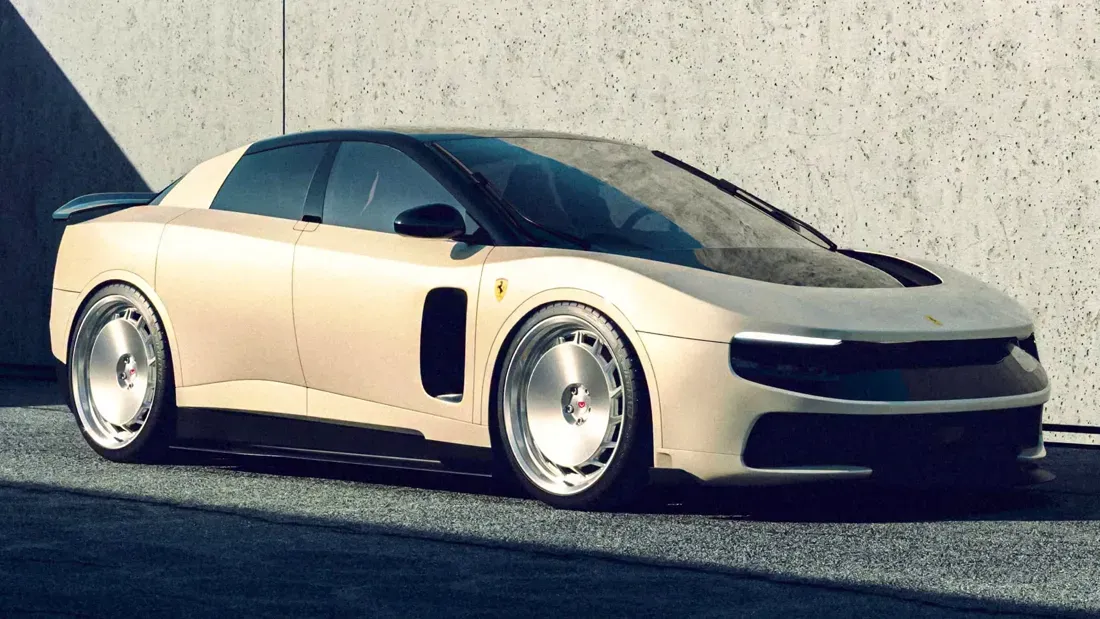
The automotive industry has long grappled with the transition from internal combustion engines to electric propulsion, a shift that has forced iconic manufacturers like Ferrari to rethink their aesthetic language. When Ferrari introduced the Luce, the brand’s inaugural fully electric vehicle, the reception was characterized by significant polarization. Designed under the influence of Jony Ive—the legendary mind behind the industrial design language of Apple—the Luce broke away from the traditional, aggressive, and razor-sharp silhouettes synonymous with Maranello’s legacy. Instead, it embraced a minimalist, almost clinical aesthetic that many critics labeled as "un-Ferrari." However, recent developments in aftermarket customization, spearheaded by Vossen Wheels, suggest that the Luce’s controversial design may simply require a shift in perspective, proving that even the most polarizing vehicles can be revitalized with the right technical modifications.
The Design Philosophy of the Ferrari Luce
To understand the public’s initial hesitation regarding the Luce, one must look at the design pedigree behind it. Jony Ive’s involvement introduced a philosophy of reductive design—stripping away unnecessary ornamentation to emphasize form and functionality. For a brand defined by the mechanical complexity and visceral intensity of V8 and V12 engines, the transition to an EV platform designed with "Apple-esque" simplicity created a dissonance for long-time enthusiasts.
The Luce features smooth, rounded surfaces that lack the complex air intakes and aggressive aerodynamic sculpting expected of a supercar. While this design likely achieves superior drag coefficients necessary for electric efficiency, it left many feeling that the soul of the Italian marque had been muted. The front fascia, devoid of a traditional radiator grille, presents a clean, featureless plane that some have critiqued as lacking the "presence" of the SF90 or the 296 GTB.
A Technical Intervention by Vossen Wheels
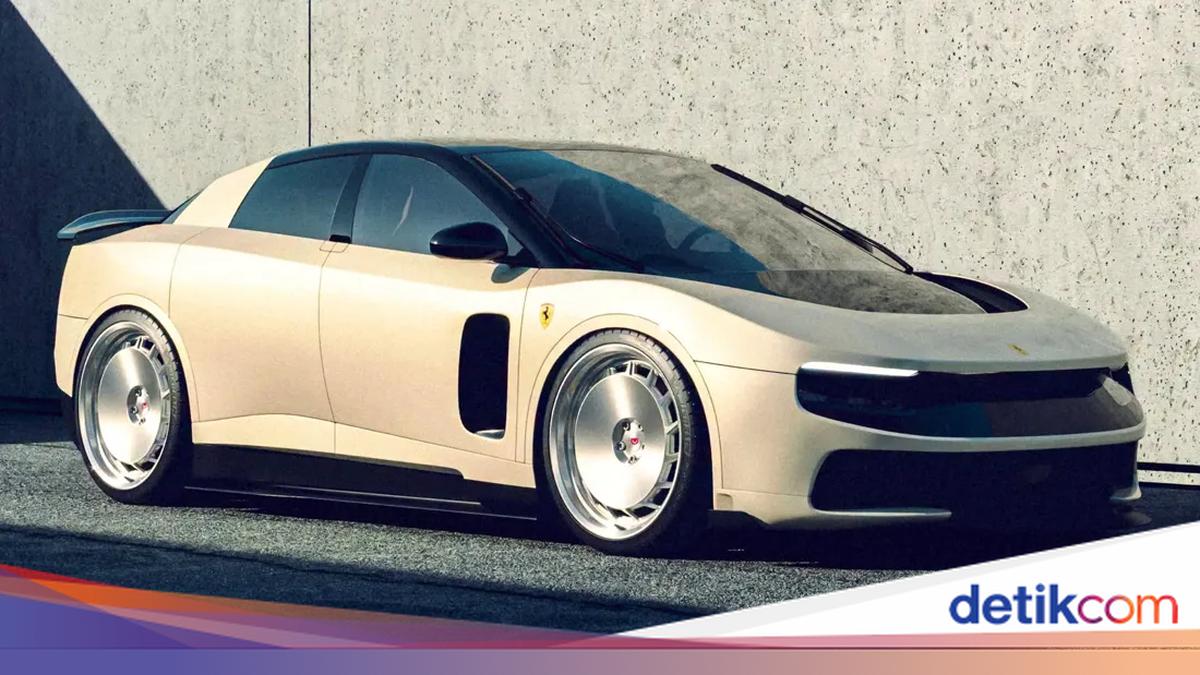
The narrative surrounding the Luce began to shift when aftermarket specialist Vossen Wheels released a digital render demonstrating the transformative power of wheel geometry and stance. Vossen’s approach centered on the G2-13T, a duoblock wheel launched in late August, which utilizes an "aerodisc" concept. This design choice is deeply rooted in motorsport history, particularly the endurance and rally racing scenes of the 1980s and 90s.
The G2-13T wheels, available in sizes ranging from 18 to 22 inches, serve two functions. First, they visually anchor the car, providing a sense of weight and mechanical intent that the factory wheels lacked. Second, the circular, flat face of the aerodisc complements the minimalist aesthetic of the Luce. In a striking visual irony, the wheels mirror the clean, circular geometry often found in high-end consumer technology, such as the lens housing of an iPhone. The brushed silver finish accentuates the futuristic lines of the vehicle, bridging the gap between high-fashion industrial design and automotive performance.
Beyond the Wheels: Aggressive Aerodynamic Enhancements
While the wheels provide the foundation for the transformation, Vossen’s rendering goes further by addressing the vehicle’s "stance"—a critical element in automotive aesthetics. By lowering the suspension to an extreme degree, the render creates a more planted, track-focused profile.
Further modifications included in this vision of the Luce feature:
- Front Splitter: A redesigned, deeper front splitter that extends the vehicle’s nose, adding the aggression that was missing from the stock bumper.
- Side Skirts: Extended rocker panels that bridge the gap between the wheels, creating a more cohesive, "grounded" look.
- Rear Diffuser and Wing: A prominent, track-inspired rear diffuser paired with a substantial fixed wing. These elements serve to signal that the Luce is a performance machine, not merely a tech-forward mobility pod.
These modifications successfully retain the core identity of the Luce while reintroducing the "aggression" that the Ferrari faithful have been clamoring for. It suggests that the vehicle’s chassis is inherently capable of supporting a more radical design language, provided the owner is willing to sacrifice some daily-driving practicality for visual impact.
Chronology of the Ferrari Electric Transition
The journey to the Ferrari Luce has been a decade-long internal debate within the company.
- 2019: Ferrari CEO John Elkann confirms the development of an all-electric model, noting that the company would not rush the process at the expense of its brand identity.
- 2023: Ferrari breaks ground on its "e-building" in Maranello, a facility dedicated to the production of high-performance electric motors, batteries, and inverters.
- May 2026: The official unveiling of the Ferrari Luce. Initial market feedback is mixed, with praise for its technology but confusion regarding its design direction.
- August 2026: Vossen Wheels launches the G2-13T, followed shortly by the release of their customized Luce render, which goes viral in the automotive enthusiast community.
- Q4 2026 (Projected): Commencement of initial customer deliveries in the European market.
Market Reception and Economic Implications
Despite the aesthetic controversy, commercial data indicates that Ferrari has successfully navigated the initial launch phase. Reports confirm that the company has already reached its production and sales targets for the first year of the Luce’s life cycle. This indicates that for a significant segment of the Ferrari buyer base, the brand’s transition to electrification—and the prestige associated with owning the "first" Ferrari EV—outweighs personal preference regarding its exterior styling.
The aftermarket interest from firms like Vossen also points to a burgeoning sub-sector within the luxury car market. As manufacturers shift toward more homogenized, aerodynamic designs to satisfy range requirements, the demand for high-end customization will likely increase. Owners are seeking to personalize these vehicles to differentiate them from the "factory-standard" look, turning the Luce into a canvas for individual expression.
Analysis: The Future of Ferrari Design
The reaction to the Luce is a microcosm of the broader challenges facing legacy luxury automakers. The industry is currently caught between two worlds: the emotional, tactile history of mechanical engineering and the cold, efficient future of software-defined vehicles.
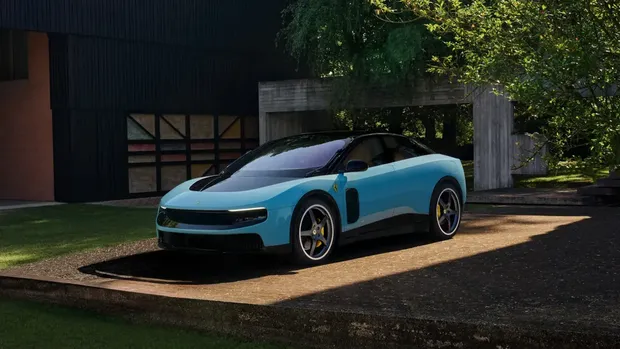
Ferrari’s decision to enlist Jony Ive was a bold attempt to define a new design language for the electric era. While the result has been polarizing, it is factually incorrect to label the project a failure. The vehicle’s performance metrics—which Ferrari has kept under tight wraps, though they are expected to set new benchmarks for the segment—coupled with high demand, suggest that the brand has maintained its cachet.
The work by Vossen Wheels proves that the Luce’s design is not inherently "ugly," but rather "neutral." In the world of automotive design, neutrality is often a prerequisite for a successful aftermarket transformation. By stripping the car back to its essential forms, the original design team may have unintentionally created the perfect base for owners to express their own automotive tastes.
As the first deliveries hit the streets of Europe before the end of 2026, the real-world impact of the Luce will become clear. If the aftermarket community continues to embrace the platform, we may see the rise of a new "Luce-tuning" culture, similar to how the Testarossa or the F40 became icons that owners felt compelled to modify and preserve.
Ultimately, the Ferrari Luce stands as a landmark in the history of the brand. Whether it is viewed as a design misstep or a visionary pivot, its ability to generate discourse and inspire creativity—even from aftermarket designers—confirms that it has captured the attention of the world. As the industry looks toward 2027 and the expansion of the Luce into global markets, the narrative will likely shift from "Is it a Ferrari?" to "What can a Ferrari be?" This evolution is not just a change in propulsion, but a fundamental redesign of the brand’s identity in the 21st century.

