
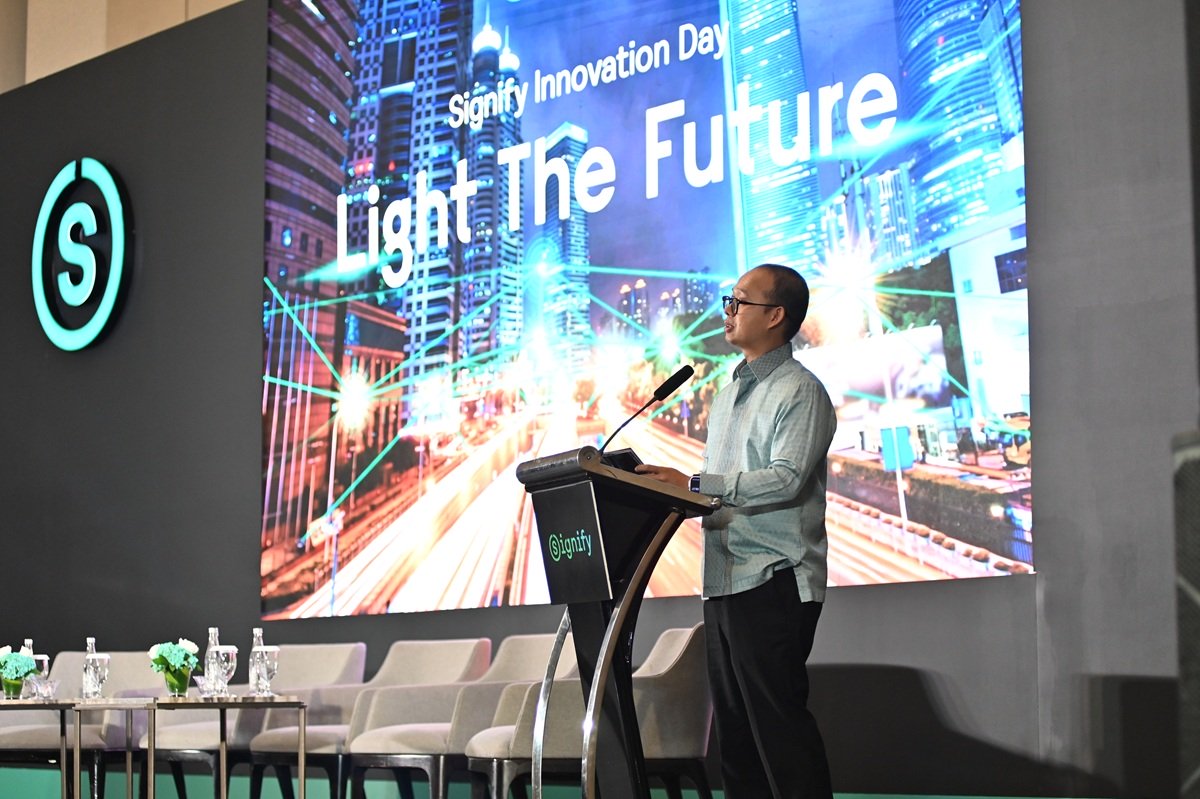
Signify, a global leader in lighting technology listed on Euronext under the ticker symbol LIGHT, convened key industry stakeholders, government officials, urban planners, and real estate leaders on September 2, 2026, in Jakarta. The flagship event, titled Signify Innovation Day — Light the Future, served as a high-level collaborative forum dedicated to exploring the transformative role of advanced lighting technologies in shaping sustainable, energy-efficient, and highly liveable urban environments across Indonesia. As Southeast Asia’s largest economy accelerates its transition toward smart urban infrastructure and sustainable commercial developments, the conference provided a timely platform to discuss how intelligent illumination systems can actively address climate change, reduce operational expenditures, and align with national decarbonization goals.
The comprehensive one-day forum successfully bridged the gap between public sector policymaking and private sector execution. Attendees included high-ranking representatives from the Ministry of Home Affairs, the Ministry of National Development Planning (Bappenas), the Jakarta Provincial Highways Agency (Dinas Bina Marga), prominent real estate developers, hospitality executives, green building certifiers, and technology providers. Through a series of targeted plenary discussions, interactive panel sessions, and immersive technology showcases, participants examined how modern lighting has evolved far beyond its traditional boundary of mere visibility. Today, connected and energy-efficient lighting ecosystems act as the digital nervous system of modern infrastructure, driving data collection, enhancing public safety, and optimizing resource management.
Evolution of Urban Infrastructure: Building Smart and Liveable Cities
The morning session, officially titled "Future of Smart & Liveable Cities: Driving Sustainability Through Innovation and Circularity," focused heavily on the structural transformation required to accommodate Indonesia’s rapidly growing urban population. Moderated by Stephani Julia from Signify Indonesia, the panel featured an esteemed lineup of public sector experts and industry leaders, including Prof. (H.C) Dr. Drs. Akmal Malik, M.Si, Director General of Politics and Public Administration at the Ministry of Home Affairs; Astu Gagono Kendarto, Senior Planner and Coordinator at Bappenas; Ery Ghazali, Head of Street Lighting and Public Facilities at the Jakarta Provincial Highways Agency; and Firmans Nur Gafi, Head of Sales Public Segment at Signify Indonesia.
Discussions during this foundational segment centered on data-driven urban planning methodologies and the integration of circular economy principles within public infrastructure projects. Circularity, in the context of urban development, emphasizes maximizing resource efficiency, extending asset lifecycles, minimizing construction and operational waste, and preserving both economic and environmental value throughout a product’s lifecycle. Panelists analyzed how municipal authorities can leverage Public-Private Partnerships (PPPs)—known locally as Kerja Sama Pemerintah dengan Badan Usaha (KPBU)—to accelerate the deployment of smart city initiatives without straining public budgets.
A primary focal point of the discussion was the ongoing modernization of public street lighting (Penerangan Jalan Umum or PJU) in major metropolitan areas, with special attention given to the strategic rollout implemented by the Jakarta Provincial Government. By transitioning from legacy high-pressure sodium fixtures to highly efficient LED technology integrated with centralized, cloud-based management systems, municipal governments can achieve exponential energy savings while simultaneously capturing real-time environmental and traffic data. These connected networks improve nighttime visibility, reduce crime rates, enhance pedestrian safety, and lower municipal energy consumption by up to 50% or more compared to conventional lighting setups.
Architecting Future-Ready Buildings for Corporate ESG Compliance
Shifting the lens from public infrastructure to commercial real estate, the afternoon panel explored the intersection of corporate sustainability, architectural design, and technological integration. Entitled "Achieving Sustainability Goals and Business Growth Through Future-Ready Buildings," the session was expertly moderated by Prasetyo Adi, Vice Chairman of the Green Building Council Indonesia. The panel brought together Christina Ng, CFM, LEED Green Associate and Director of Facilities Management at PT Colliers International Indonesia; Satrio Prakoso, President of IS2P; Stefanus Yonathan Astayasa, Chief Business Officer at PT MNC Tourism Indonesia Tbk; and Gregorius Wahyu Kurniawan, Head of Sales Intelligent Building Segment at Signify Indonesia.
The dialogue addressed the mounting regulatory pressures and evolving market expectations surrounding Environmental, Social, and Governance (ESG) criteria in Indonesian commercial real estate. As multinational corporations and local enterprises race to secure green building certifications such as LEED and Greenship, property managers are under intense pressure to adopt infrastructure solutions that minimize carbon footprints while enhancing tenant well-being and productivity.
Panelists emphasized that a "future-ready building" must be inherently adaptable, capable of reconfiguring its internal environment in response to occupancy patterns, natural daylight availability, and shifting business needs. Intelligent building management systems (BMS) that incorporate connected lighting act as crucial data collection nodes. These systems utilize integrated sensors to monitor space utilization, regulate indoor climate controls, and automate energy usage, thereby delivering significant operational efficiencies that translate directly into long-term financial returns for asset owners.
Executive Perspectives on Lighting as a Strategic Asset
Addressing the broader strategic implications of the event, Lucas Ardhana, Director and Commercial Leader of Professional Business at Signify Indonesia, underscored the paradigm shift in how the industry perceives illumination. He noted that modern lighting systems have transformed into intelligent, multi-functional assets that actively contribute to economic vitality and environmental stewardship.
"Smart and sustainable lighting technology does much more than simply illuminate a space," stated Lucas Ardhana during his keynote address at Signify Innovation Day. "These advanced systems actively enhance public safety and community comfort, support urban mobility and economic activity, reinforce city aesthetics, drive operational and energy efficiency, and play a critical role in reducing carbon emissions."
Echoing this sentiment, Jitender Khurana, Chief Executive Officer of Professional Business for Signify Southeast Asia & Far East, highlighted the indispensable role that lighting plays in harmonizing human activity with intelligent infrastructure.
"The buildings and cities of tomorrow require environments that are capable of responding dynamically to changing needs while operating with maximum efficiency and intelligence," explained Jitender Khurana. "Pencahayaan [lighting] holds a vital position in connecting people, spaces, and technology, providing unparalleled flexibility, intelligence, energy efficiency, and granular control over how a modern building functions." Khurana further emphasized that widespread commercial and municipal adoption of connected LED solutions provides an immediate, scalable pathway for organizations to slash energy consumption, lower overhead costs, and secure long-term commercial value.
Immersive Demonstrations and Broad Industry Applications
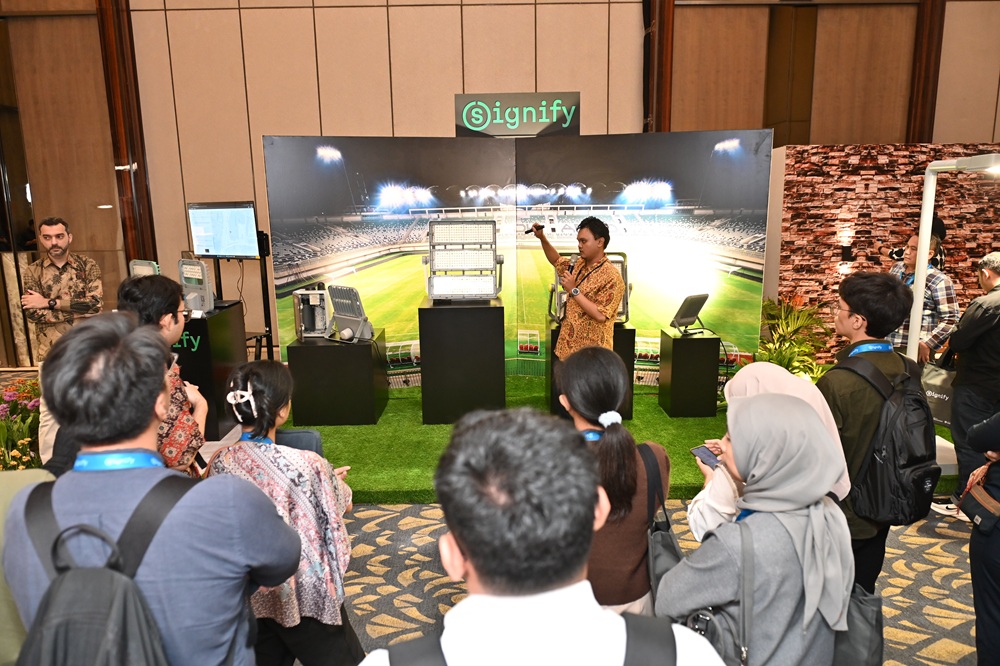
To complement the theoretical discussions, the event featured an extensive technology exhibition and live demonstration area. Signify showcased its comprehensive portfolio of professional lighting solutions tailored for diverse operational environments, including corporate offices, industrial manufacturing plants, mission-critical data centers, luxury hospitality venues, architectural facades, expansive landscapes, sports stadiums, and municipal road networks.
These live demonstrations vividly illustrated the versatility of Signify’s ecosystem, proving that advanced illumination technologies are equally capable of optimizing complex industrial supply chains as they are of elevating the aesthetic appeal of urban landmarks. By integrating Internet of Things (IoT) sensors, software-defined lighting controls, and energy-efficient LED fixtures, commercial operators can capture actionable spatial data, automate maintenance schedules, and create personalized lighting experiences that boost employee morale and customer satisfaction.
Macroeconomic Implications and Alignment with Indonesia’s Net Zero Roadmap
The timing of Signify Innovation Day 2026 aligns closely with Indonesia’s ambitious national development and climate objectives. The Indonesian government has formally committed to achieving Net Zero Emissions (NZE) by 2060 or even earlier, supported by mandatory energy efficiency regulations and national infrastructure modernization programs. Because buildings and urban municipal services account for a substantial percentage of total national electricity consumption and carbon emissions, upgrading these sectors is a mandatory prerequisite for meeting Indonesia’s Nationally Determined Contributions (NDCs) under the Paris Agreement.
From an analytical standpoint, the integration of connected lighting systems represents one of the lowest-hanging fruits in the corporate and municipal decarbonization playbook. Unlike deep structural retrofits, upgrading to intelligent LED infrastructure offers a rapid return on investment (ROI), often paying for itself within a few years through reduced electricity bills and slashed maintenance expenditures. Furthermore, when embedded within broader smart city frameworks, these lighting grids lay the foundational digital infrastructure required for advanced urban mobility management, public safety surveillance, and environmental monitoring.
By fostering a collaborative dialogue between government regulators, urban planners, real estate developers, and technology innovators, Signify Innovation Day 2026 successfully bridged the gap between policy ambition and technological execution. As Indonesia continues its rapid urbanization trajectory and expands its portfolio of smart, sustainable infrastructure, the deployment of intelligent, circular, and energy-efficient lighting systems will undeniably remain a cornerstone of the nation’s journey toward a resilient, low-carbon future.

