
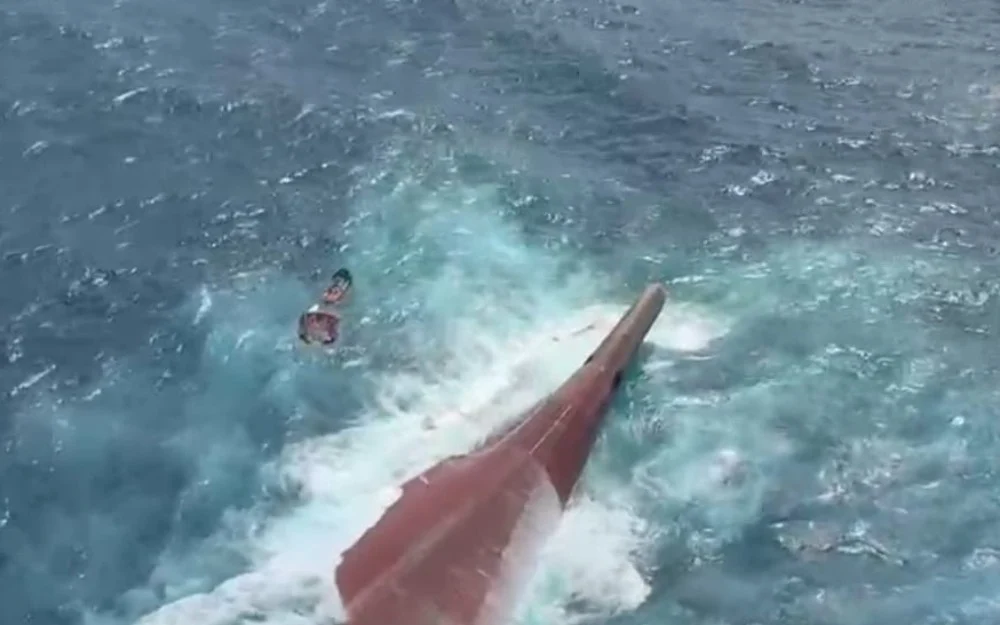
The Joint Search and Rescue (SAR) team continues to intensify its sweeping operations across the turbulent waters of the Masalembo region in the Java Sea, racing against time and adverse weather conditions to locate 116 people still missing following the tragic sinking of KM Virgo Transport 8. The maritime disaster has mobilized a massive multi-agency response, drawing resources from the National Search and Rescue Agency (Basarnas), the Indonesian Navy (TNI AL), the Water Police (Polairud), and local volunteer networks, all unified in the relentless pursuit of survivors and victims.
The scale of the catastrophe has placed maritime safety and regulatory compliance under intense national scrutiny. As rescue vessels comb hundreds of square nautical miles of open ocean, families of the missing passengers gather anxiously at designated crisis centers, awaiting news of their loved ones. The operation represents one of the most complex offshore search and missions in the region in recent years, complicated by unpredictable hydro-meteorological factors characteristic of the Java Sea during transitional weather periods.
Comprehensive Manifest Analysis and Current Search Status
According to official data released by Basarnas, KM Virgo Transport 8 was carrying a total of 243 individuals on board when disaster struck the vessel. Out of this comprehensive passenger and crew manifest, 116 people remain unaccounted for, forming the primary focus of the ongoing search operations.
Head of Basarnas, M. Syafii, provided formal clarification regarding the scope of the operation during a press briefing. "A total of 116 individuals remain under active search protocols out of a total manifest count of 243 people," Syafii stated in a written operational update. The vast discrepancy between those rescued, those found deceased, and the total manifest underscores the immense challenge facing the deployment teams, who must utilize aerial surveillance, sonar-equipped vessels, and specialized maritime rescue divers.
The search perimeter has been strategically expanded based on drift modeling, tidal current analysis, and wind patterns provided by the Meteorology, Climatology, and Geophysics Agency (BMKG). Specialized rescue boats equipped with thermal imaging and night-vision capabilities have been deployed to ensure continuous operations around the clock, shifting between surface sweeps and underwater acoustic localization.
Chronology of the Maritime Tragedy
The sequence of events leading up to the deployment of the Joint SAR team unfolded rapidly over a critical 48-hour window in late September 2026. KM Virgo Transport 8 was navigating a routine commercial maritime route across the Java Sea when it encountered severe environmental distress near the notorious Masalembo triangle—a maritime zone historically known for unpredictable weather patterns and extreme sea states.
On Tuesday, September 22, 2026, operational units deployed in the primary search zone achieved a grim milestone. During a systematic sweep of the designated sector, the SAR team successfully located and evacuated a male victim found deceased in the open sea. Geographic coordinates pinpointed the recovery site at approximately 3°33’6.34"S 111°41’33.69"E.
Upon retrieval, the remains were immediately secured aboard a tactical rescue vessel and transported ashore under strict maritime escort. The body was transferred directly to the Bhayangkara Hospital in Banjarmasin to undergo comprehensive forensic identification procedures conducted by the Disaster Victim Identification (DVI) unit of the Indonesian National Police (Polri). The DVI team has established a dedicated post to collect DNA samples, dental records, and antemortem data from families of the missing passengers to facilitate rapid and accurate identification.
By Wednesday, September 23, 2026, the operational focus intensified further as Basarnas coordinated assets from multiple regional offices, integrating naval support ships and commercial vessels operating in the vicinity into an expanded grid search.
Geographical Context and the Hazards of the Masalembo Waters
The sinking of KM Virgo Transport 8 once again thrusts the Masalembo waters into the national spotlight. Situated in the central part of the Java Sea, between the islands of Java and Sulawesi, the Masalembo area is geographically recognized as a confluence point for major ocean currents and seasonal wind patterns. Historically, this maritime corridor has witnessed several high-profile shipping incidents, earning it a formidable reputation among mariners and navigation experts.
Navigational safety in these waters is frequently compromised by sudden squalls, high wave heights, and shifting underwater currents that can destabilize watercraft, particularly if cargo shifts or if vessels encounter structural compromise during severe weather. Maritime analysts note that the transition periods between the monsoons often bring volatile meteorological phenomena, catching commercial operators off guard despite standard weather warnings issued by maritime authorities.
The incident involving KM Virgo Transport 8 highlights the persistent vulnerabilities inherent in inter-island maritime transportation—a vital logistical lifeline for an archipelagic nation like Indonesia, yet one that demands rigorous adherence to safety standards, load capacities, and real-time weather monitoring.
Official Responses and Institutional Mobilization
The government response to the sinking of KM Virgo Transport 8 has been swift, multi-layered, and coordinated at the highest levels of disaster management infrastructure. Basarnas, operating under the direct command of M. Syafii, has mobilized its premier response fleets, utilizing both floating assets and aircraft for aerial reconnaissance.
In addition to Basarnas, the Ministry of Transportation, through the Directorate General of Sea Transportation, has initiated an independent administrative and technical inquiry into the seaworthiness of KM Virgo Transport 8, the validity of its passenger manifest, and compliance with pre-departure clearance protocols. Investigators are tasked with determining whether safety equipment such as life rafts, personal flotation devices, and emergency position-indicating radio beacons (EPIRBs) were properly deployed and functioned according to international maritime standards.
Furthermore, regional governments in South Kalimantan and East Java have established crisis response desks to provide logistical, psychological, and administrative support to the families of victims and survivors. Social welfare agencies have been deployed to offer counseling services to grieving relatives stationed at the ports and hospitals coordinating the disaster response.
Forensic Operations and Victim Identification Protocols
The processing of recovered victims represents a critical and sensitive phase of the post-disaster response. At RS Bhayangkara Banjarmasin, the DVI Polri unit operates under stringent protocols to ensure the dignified handling and accurate identification of human remains recovered from the Java Sea.
Forensic specialists face unique challenges in maritime disasters due to tissue degradation caused by prolonged immersion in seawater. Consequently, the identification process relies heavily on a combination of primary identifiers—such as DNA profiling, dental matching, and fingerprint analysis—alongside secondary identifiers including distinct physical marks, tattoos, and personal belongings recovered with the victims.
Law enforcement officials have urged families with missing relatives to come forward voluntarily to provide biological reference samples, ensuring that identification timelines are expedited and remains can be returned to their respective hometowns for proper burial rites as soon as possible.
Broader Implications for Indonesian Maritime Safety
The tragedy of KM Virgo Transport 8 serves as a sobering reminder of the ongoing challenges facing Indonesia’s domestic maritime sector. Despite significant advancements in navigational technology, satellite tracking, and early warning systems, maritime accidents continue to claim lives, exposing systemic gaps in operational oversight, vessel maintenance, and weather risk management.
Industry experts and maritime safety advocates are calling for a comprehensive review of passenger vessel regulations, particularly regarding adherence to maximum load capacities and the enforcement of mandatory safety drills for crew members and passengers alike. The discrepancy often found between physical passengers on board and official manifest numbers remains a perennial issue that complicates rescue operations and post-incident accounting.
The findings from the National Transportation Safety Committee (KNKT) investigation into the sinking of KM Virgo Transport 8 are expected to provide critical recommendations for policy reforms. These recommendations will likely focus on tightening pre-departure inspections, upgrading meteorological communication systems for vessels operating in remote waters, and enhancing the emergency response capabilities of commercial shipping operators.
Looking Ahead: The Ongoing Search Strategy
As the operation enters its subsequent phases, the Joint SAR team remains steadfast in its mandate. Search grids are continually adjusted based on drift calculations provided by oceanographic experts. While the passage of time diminishes the statistical probability of finding survivors in open waters, search coordinators emphasize that protocol dictates comprehensive coverage of all projected drift zones until official directives mandate a transition or conclusion of the active rescue phase.
The resilience and dedication demonstrated by the hundreds of personnel deployed in the Java Sea reflect the gravity of the mission. For the families of the 116 missing individuals, the grueling wait continues, sustained by the tireless efforts of the rescue workers navigating the unpredictable swells of the Masalembo waters in search of closure and answers.

