
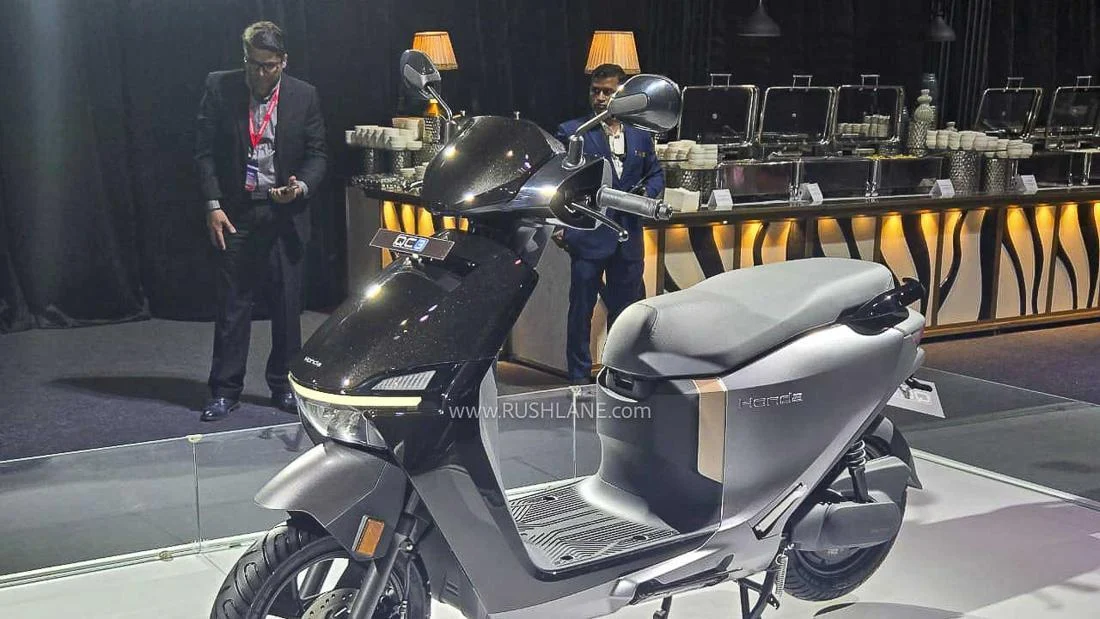
Honda has officially expanded its electric vehicle (EV) lineup in the Indian market with the introduction of the QC3, a new electric scooter designed to cater to the practical demands of daily commuting and family utility. Positioned as a mid-range offering, the QC3 enters a highly competitive segment, priced at Rs 1.35 lakh (approximately USD 1,600 or IDR 25 million), aiming to bridge the gap between entry-level electric commuters and premium performance scooters.
Technical Specifications and Performance Metrics
The Honda QC3 is engineered to provide a balance between range and convenience. At the heart of the vehicle is a 3 kWh fixed battery pack. Unlike some of its competitors that emphasize modular or swappable battery architectures, Honda has opted for a fixed configuration for the QC3, prioritizing battery density and integration within the chassis.
According to data released by Honda, the QC3 offers an impressive range of up to 145 kilometers on a single charge, based on the Indian Driving Cycle (IDC) testing standards. While real-world range may vary depending on riding conditions, passenger load, and traffic density, this figure places the QC3 in a strong position for urban commuters who seek to minimize daily charging intervals.
Charging infrastructure is a critical component of the user experience, and the QC3 addresses this through a tiered charging system. The internal charger allows the battery to reach an 80 percent charge state from zero in approximately two hours and 40 minutes. A full charge cycle requires roughly four hours, which is competitive for a 3 kWh battery capacity, allowing owners to replenish the power levels overnight or during typical working hours at a home or office station.
Design and Utility Focused Engineering
The design language of the Honda QC3 prioritizes ergonomics and utility. With a focus on family-oriented usage, the scooter features a generous 32-liter under-seat storage capacity. This is a notable selling point in the Indian market, where storage space often dictates the choice of a family vehicle.
The chassis is supported by a robust suspension setup, featuring telescopic forks at the front and a dual-shock absorber arrangement at the rear, designed to handle the diverse road conditions typical of urban and semi-urban India. Safety and braking are managed by a front disc brake paired with a rear drum brake, providing adequate stopping power for the scooter’s weight class.
The lighting suite is entirely LED-based, including a prominent headlight and daytime running lights (DRL), which improve visibility and align the vehicle with modern aesthetic trends. The scooter also incorporates a smart key system, enabling keyless ignition—a feature that has become increasingly popular for its convenience and added layer of security against theft.
Smart Connectivity and Digital Interface
Honda has integrated modern connectivity features to appeal to the digital-savvy consumer. The QC3 is equipped with a 5-inch TFT digital instrument cluster. This display serves as the central hub for vehicle telemetry and rider information.
Through the Honda RoadSync system, the scooter offers Bluetooth integration, enabling turn-by-turn navigation directly on the dashboard. Furthermore, the system provides real-time notifications for incoming calls and SMS, allowing riders to stay connected without needing to access their smartphones while in motion. This level of connectivity is indicative of Honda’s strategy to transition its fleet from traditional mechanical vehicles to smart, software-integrated mobility solutions.
Market Context and Strategic Timeline
The introduction of the QC3 is part of a broader, multi-year strategy by Honda to establish a foothold in the Indian electric two-wheeler market. This sector has seen rapid growth due to government subsidies, rising fuel costs, and increasing environmental awareness among urban populations.
The timeline of Honda’s electrification efforts in India has been deliberate. Following initial pilot programs, the company began mass-market rollouts with models such as the QC1 and the electric variant of its iconic Activa brand, the Activa e. These models were designed to test consumer reception and logistical viability.
However, the transition has faced hurdles. Market data from August 2026 highlights the challenges Honda faces in gaining significant market share against established electric-first incumbents. During that month, the Honda QC1 recorded sales of 1,902 units, while the Activa e saw a more modest performance with 140 units sold. These figures suggest that while the brand equity of Honda remains strong, the company is still in the process of convincing its traditional customer base to make the full switch from internal combustion engines (ICE) to electric power.
Industry Implications and Market Outlook
The launch of the QC3 serves as a tactical move to revitalize Honda’s EV portfolio. By diversifying its offerings, Honda is attempting to capture different price points and use cases. Analysts suggest that the QC3’s pricing strategy is specifically calibrated to compete with mid-tier electric scooters that currently dominate the market.
The decision to utilize a fixed battery architecture reflects Honda’s commitment to safety and quality control. While swappable batteries offer the advantage of "instant" energy, fixed batteries often provide better protection against environmental factors and allow for a more streamlined, integrated design that many family-oriented consumers prefer.
Furthermore, the expansion of the EV range is essential for Honda to meet evolving emission standards and align with India’s FAME (Faster Adoption and Manufacturing of Hybrid and Electric Vehicles) initiatives. As the government continues to incentivize EV production and charging infrastructure development, manufacturers like Honda are incentivized to move away from ICE-dependent models.
Challenges and Future Trajectory
Despite the technological advancements of the QC3, the success of the model will depend on several external variables. Firstly, the expansion of charging infrastructure remains a primary concern for Indian consumers. While a four-hour charge time is reasonable, the lack of widespread public charging stations makes the product heavily reliant on residential charging capabilities.
Secondly, the "range anxiety" that has long plagued the electric scooter segment in India must be mitigated by consistent performance in real-world scenarios. Honda’s ability to maintain its reputation for reliability and low maintenance costs will be the deciding factor in whether the QC3 can outperform its predecessors in terms of unit volume.
Looking ahead, industry experts anticipate that Honda will continue to refine its battery technology and software integration. The company is expected to leverage its extensive service network across India to reassure potential buyers, a major advantage that pure-play electric startups currently lack. If the QC3 succeeds in gaining traction, it will likely serve as the benchmark for subsequent models, potentially leading to a more aggressive expansion of the electric lineup by 2027.
In conclusion, the Honda QC3 represents a calculated step in the company’s electrification journey. By focusing on utility, connectivity, and a competitive price point, Honda is signaling its intent to capture a larger share of the Indian market. The coming quarters will be critical, as the brand seeks to prove that its electric offerings can match the longevity and reliability that have made its gasoline-powered scooters the standard for decades. The QC3 is not merely a new product; it is a vital component of Honda’s long-term vision to remain the dominant force in the Indian two-wheeler industry during the transition to a sustainable, electric future.

