
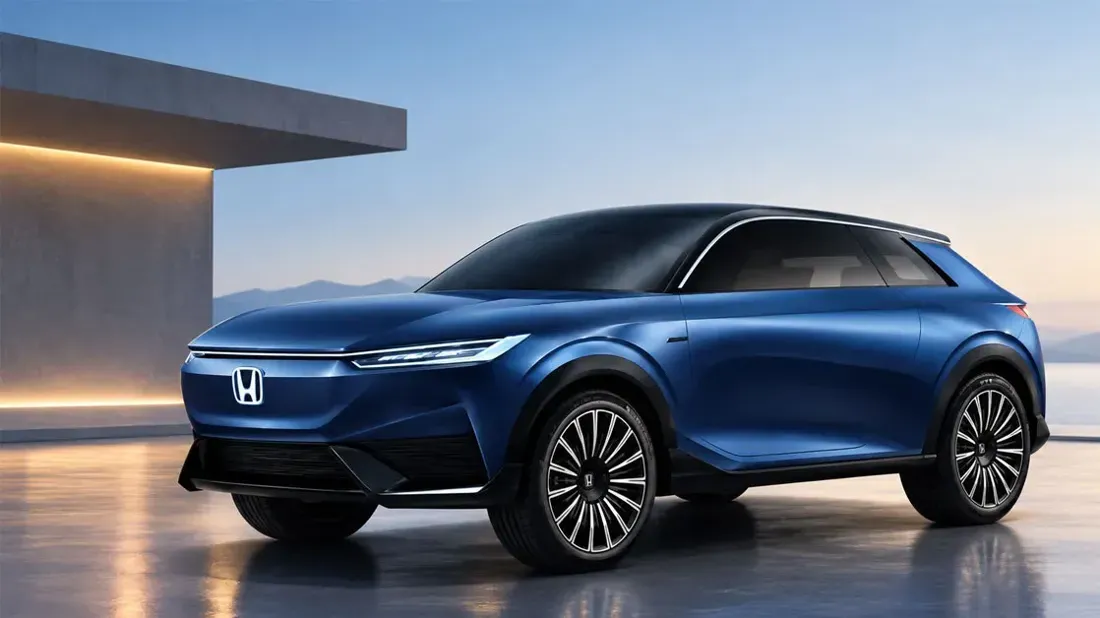
Honda Motor Co. is reportedly exploring an ambitious venture to penetrate India’s hyper-competitive entry-level SUV segment, aiming to introduce a model priced between Rs 9 lakh and Rs 12 lakh, or approximately IDR 168 million to IDR 225 million. This strategic move, if finalized, would position the Japanese automaker to challenge established market leaders in a segment that currently represents the fastest-growing slice of the Indian automotive landscape. Industry reports suggest that production for this vehicle could commence as early as October 2028, signaling a potential shift in Honda’s global manufacturing and sourcing philosophy.
The proposed vehicle would sit below the Honda Elevate in the company’s current product hierarchy, providing a more accessible entry point for consumers who are increasingly migrating from traditional hatchbacks and sedans to compact SUVs. While Honda has yet to issue an official confirmation regarding the specific powertrain suppliers or final technical specifications, the prospect of utilizing engines from Horse Powertrain—a joint venture between Renault Group and Geely—represents a significant departure from Honda’s long-standing tradition of vertical integration.
The Strategic Shift Toward Collaborative Engineering
Historically, Honda has prided itself on its internal combustion engine (ICE) prowess, famously manufacturing its own powerplants, such as the 1.2-liter engine utilized in the Amaze and the 1.5-liter i-VTEC unit powering the City and Elevate. The transition toward utilizing third-party engine architecture marks a paradigm shift for the brand, driven by the necessity to reduce research and development (R&D) costs and accelerate the time-to-market for new models.
Horse Powertrain, which includes Saudi Aramco as a strategic shareholder, specializes in the development of cutting-edge ICE systems, hybrid powertrains, transmissions, and range-extender technologies. By leveraging these external capabilities, Honda could potentially bypass the immense capital expenditure required to develop a new engine family from the ground up, particularly one capable of accommodating diverse fuel configurations, including gasoline, Compressed Natural Gas (CNG), and hybrid systems, all of which are critical for the Indian market.
Streamlining the Development Lifecycle
The pursuit of this new SUV is closely tied to Honda’s global mandate to optimize its product development lifecycle. The company is actively working to compress the time required to bring a new model from the concept phase to the assembly line, aiming to reduce the standard 49-month cycle to a much leaner 30-month window. This acceleration is essential in an era where automotive trends, consumer preferences, and emission regulations evolve rapidly.
To achieve these efficiency targets, Honda is reportedly involving specialized external partners. Tata Technologies is said to be playing a pivotal role in the vehicle’s engineering and design development, while Tata Consultancy Services (TCS) is expected to contribute to the integration of advanced infotainment systems. This ecosystem of collaboration suggests that Honda is moving toward a modular, outsourced development model that mirrors the practices of other global manufacturers currently operating in the Indian market.
Market Context: Why India’s SUV Segment Matters
The Indian automotive market is undergoing a structural transformation. In recent years, SUVs have surpassed hatchbacks to become the dominant body style, accounting for over 50% of total passenger vehicle sales in the country. The "sub-4 meter" SUV segment, which benefits from favorable tax structures, is the primary battleground where brands like Maruti Suzuki, Hyundai, Tata Motors, and Mahindra & Mahindra compete aggressively.
Honda’s current presence in this segment is limited to the Elevate, which, while well-received, competes in the mid-size SUV category. By introducing a model in the Rs 9 lakh to Rs 12 lakh price bracket, Honda would be entering the "compact SUV" fray, where the volume potential is significantly higher. For Honda, which has struggled to maintain market share in India amidst the SUV boom, this project is not merely an addition to its portfolio but a defensive necessity to remain relevant to the aspirational Indian consumer.
Evaluation of Existing Platforms
Reports indicate that Honda’s engineering teams are currently evaluating existing vehicle platforms that are already in production at the company’s manufacturing facilities in Indonesia. Utilizing a proven, localized platform could provide a massive cost advantage, as it would minimize the need for entirely new tooling and chassis development. The Indonesian market has historically shared many commonalities with India regarding consumer preferences for rugged, high-ground-clearance vehicles, making it a logical testing ground for the architecture of the proposed entry-level SUV.
Despite these plans, the lack of information regarding dimensions, transmission options, and specific power outputs leaves room for ongoing internal debate within Honda. The company is known for its rigorous quality standards, and any move to outsource engine production or share platforms must align with the "Honda DNA" of reliability and performance.
Official Stance and Future Outlook
While Honda has formally confirmed that it is working on a "strategic vehicle" for the Indian market with a target launch window of 2028, it has been careful not to explicitly link this announcement to the reported entry-level SUV project. The company remains in the execution phase of its broader growth strategy, which includes an increased focus on SUV penetration and potential electrification.
The involvement of Horse Powertrain, if confirmed, would be a landmark move. It would indicate that Honda recognizes the need to be more agile in the face of stiff competition from Chinese manufacturers and established Indian giants who are already leveraging shared technology and platform strategies. For the consumer, this could result in a more feature-rich, technologically advanced, and competitively priced vehicle that reflects the global standards of both Honda and its potential technical partners.
Implications for the Automotive Industry
The potential partnership between Honda and the Renault-Geely-backed Horse Powertrain underscores a wider trend in the automotive sector: the "de-commoditization" of the internal combustion engine. As companies pivot their primary R&D budgets toward Electric Vehicles (EVs), the traditional engine is increasingly being treated as a component that can be sourced from specialized firms. This allows OEMs to focus their core competencies on software, user interface, and vehicle dynamics.
Should this project proceed, it will likely set a precedent for how legacy automakers manage the transition from fossil fuels to hybrid and electric power. By utilizing an engine supplier, Honda can maintain its presence in the mass-market ICE segment while conserving resources for its long-term electrification goals in India.
Conclusion
The next three years will be critical for Honda in India. The period between now and 2028 will serve as a testing ground for the company’s ability to integrate external engineering partnerships, modernize its development cycles, and reclaim its status as a top-tier contender in the world’s third-largest automotive market. If the project succeeds, it will demonstrate that Honda is capable of evolving its corporate culture and manufacturing strategies to meet the specific demands of a fast-growing, price-sensitive, and highly competitive market.
For now, industry observers will remain focused on official announcements from Honda, specifically looking for confirmation on the powertrain strategy and the finalization of the development partners. Until such time, the proposed SUV remains a highly anticipated, albeit unofficial, cornerstone of Honda’s future roadmap in the region. As the 2028 deadline approaches, the automotive community will be watching to see if Honda can indeed achieve the elusive balance of affordability, performance, and brand integrity that the Indian SUV market demands.

