
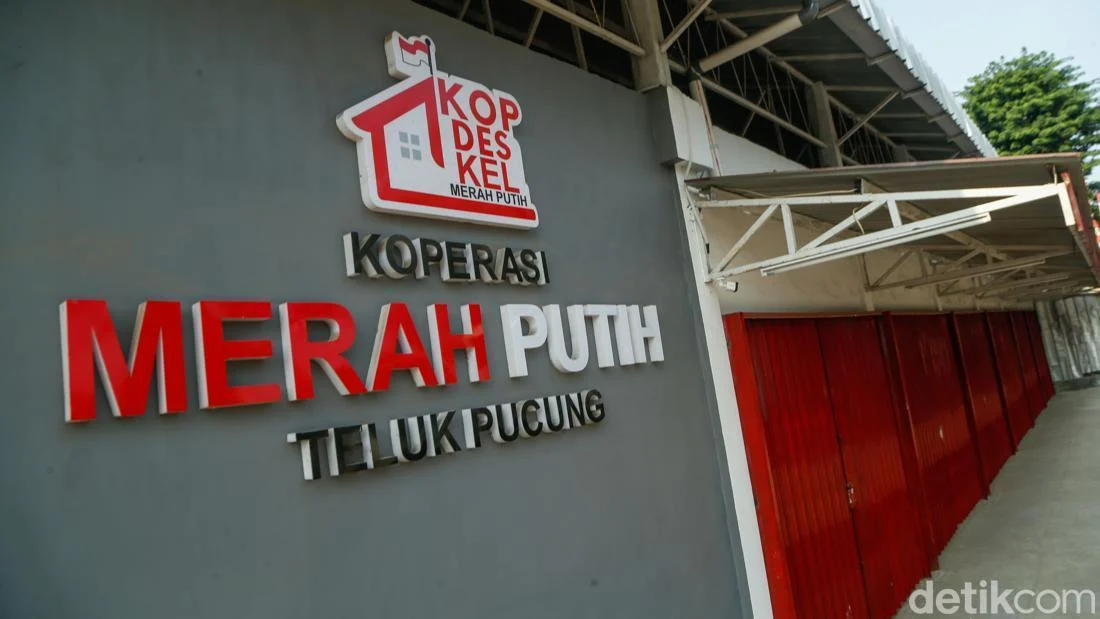
Jakarta — In a strategic move aimed at bolstering rural economic infrastructure and streamlining food distribution networks across the archipelago, Coordinating Minister for Food Zulkifli Hasan officially announced the employment terms and compensation scheme for managers and operational officers of the Village and Urban Community Cooperatives, known locally as Koperasi Desa/Kelurahan Merah Putih (KDKMP). Speaking at a press conference held at his office in Central Jakarta, the minister detailed that personnel deployed to run these grassroots cooperatives will be engaged under a Fixed-Term Employment Agreement, commonly referred to in Indonesia as Perjanjian Kerja Waktu Tertentu (PKWT), spanning an initial duration of two years.
The operational oversight of these cooperative managers will fall under the direct purview of PT Agrinas Pangan Nusantara, a state-backed corporate entity tasked with synchronizing agricultural supply chains, stabilizing food prices, and driving productivity from the ground up. The announcement provides crucial regulatory and administrative clarity for thousands of prospective applicants and local government stakeholders who have been tracking the rollout of the national cooperative initiative. By utilizing the PKWT mechanism managed through PT Agrinas Pangan Nusantara, the government seeks to establish a professionalized workforce capable of meeting strict Key Performance Indicators (KPIs) while maintaining institutional accountability at the village level.
Comprehensive Compensation Framework Tied to Regional Minimum Wages
Addressing one of the most anticipated aspects of the recruitment drive, Minister Zulkifli Hasan—widely known as Zulhas—revealed a competitive remuneration package designed to attract competent managerial talent to rural and remote areas. Managers and operational officers engaged under the KDKMP scheme are slated to take home a monthly salary ranging between Rp 6.8 million and Rp 8.3 million. This financial structure has been meticulously calibrated to reflect regional economic disparities, factoring in the local Regency/City Minimum Wage, legally known as Upah Minimum Kabupaten/Kota (UMK), alongside the geographical challenges and logistical hurdles of specific deployment zones.
Under this dynamic compensation model, personnel assigned to regions with higher baseline UMK figures and greater cost-of-living indices will be eligible for the upper threshold of Rp 8.3 million per month. Conversely, those stationed in areas with lower baseline economic indicators will receive the floor rate of Rp 6.8 million per month. The coordinating minister emphasized that these figures represent a comprehensive "take-home pay" package, meaning the nominal sums encompass basic salary, operational allowances, and any applicable benefits bundled into a single, transparent monthly disbursement.
"The contracts are set for a duration of two years, operating as fixed-term employment agreements under the umbrella of Agrinas Pangan," Minister Zulkifli Hasan stated during the briefing. When queried by reporters regarding the precise institutional status of the workers—specifically whether they would be classified as conventional State-Owned Enterprise (SOE) personnel or contractual staff—he reiterated the contractual nature of the positions. "When asked whether they are BUMN employees or something else, the status is clearly a fixed-term employment contract for two years under Agrinas Pangan."
Justifying the remuneration scale, the minister underscored the immense responsibilities shouldered by the cooperative managers. Revitalizing rural economies requires hands-on financial management, inventory oversight, distribution coordination, and community engagement. Therefore, the compensation must match the weight of the duties while remaining fair and equitable relative to regional economic standards. "Because the responsibility to develop the village economy is heavy, compensation is assessed based on the region, aligning with local UMK standards. It ranges between Rp 6.8 million and Rp 8.3 million, depending on remoteness and other logistical factors. That range covers everything comprehensively," he elaborated.
Background and Strategic Context of the KDKMP Initiative
The establishment of the Koperasi Desa/Kelurahan Merah Putih represents a cornerstone of Indonesia’s broader food security and rural development architecture. Designed to function as community-based economic hubs, these cooperatives are intended to bridge the persistent gap between smallholder agricultural producers and regional markets. For decades, Indonesian farmers and rural producers have faced structural vulnerabilities, including high logistics costs, limited access to formal credit, and heavy reliance on intermediaries who often capture the lion’s share of agricultural profits.
By establishing localized cooperatives equipped with professional management, the government aims to shorten the supply chain. KDKMP units are projected to serve multiple functions: acting as direct collection points for agricultural yields, distributing subsidized fertilizers and seeds, facilitating micro-loans through partnerships with state banks, and operating as retail outlets for essential food commodities. This decentralized approach aligns with national food self-sufficiency targets, ensuring that rural areas do not merely act as raw material suppliers but active participants in value-addition processes.
The involvement of PT Agrinas Pangan Nusantara as the overarching corporate guardian is strategic. As a specialized enterprise within the agricultural ecosystem, Agrinas provides the logistical backbone, quality control standards, and market linkages necessary to ensure that individual village cooperatives do not operate in isolation. Instead, they are integrated into a national grid of food distribution, stabilizing supply and dampening inflationary spikes during seasonal shortages or weather-induced harvest failures.
Chronology of Policy Rollout and Institutional Preparation
The rollout of the KDKMP administrative and employment framework follows a series of high-level inter-ministerial coordinations aimed at harmonizing agrarian policy, cooperative laws, and labor regulations. The conceptualization of the program gained significant momentum following the inauguration of the current administration, which elevated food coordination to a dedicated ministerial portfolio.
During the initial months of policy formulation, policymakers identified managerial capacity as the single greatest vulnerability in historical cooperative models across Indonesia. Many village cooperatives failed in the past due to a lack of professional governance, opaque bookkeeping, and an absence of clear performance metrics. To circumvent these historical pitfalls, the government decided to professionalize the management tier by introducing fixed-term corporate contracts rather than relying solely on voluntary or traditional community leadership structures.
By late 2025 and early 2026, operational blueprints were finalized, leading to the designation of PT Agrinas Pangan Nusantara as the primary employer and operational administrator. The announcement on September 29, 2026, marked the formal transition from structural planning to active human resource acquisition. The decision to peg salaries to the UMK while providing a guaranteed floor of Rp 6.8 million was finalized after extensive consultations with the Ministry of Manpower and regional macroeconomic forecasters to ensure compliance with national labor laws while remaining fiscally sustainable for the state budget.
Broader Economic Implications and Analyst Perspectives
Economic analysts and agricultural policy observers have offered measured reactions to the announcement, generally praising the initiative for attempting to professionalize rural governance while highlighting potential execution challenges.
On the positive side, providing a guaranteed salary package between Rp 6.8 million and Rp 8.3 million positions these cooperative management roles as attractive career opportunities for young professionals, university graduates, and local talents who might otherwise migrate to urban centers in search of formal employment. In many rural regencies, a monthly income exceeding Rp 6.8 million significantly outpaces the local average wage, potentially stimulating local consumer spending, housing markets, and secondary service sectors within the villages. Furthermore, the two-year PKWT structure allows PT Agrinas Pangan Nusantara to evaluate managerial performance rigorously, replacing underperforming personnel while offering contract renewals or career advancement within the broader corporate ecosystem for high achievers.
However, labor economists and cooperative watchdogs have also pointed out several critical implementation variables that require close monitoring. First, the financial sustainability of paying thousands of cooperative managers baseline salaries up to Rp 8.3 million depends heavily on the operational productivity and commercial viability of the individual cooperatives. If a local KDKMP unit fails to generate sufficient revenue through its commercial activities—such as crop aggregation, retail sales, and service fees—the financial burden could strain the administrative budget of PT Agrinas Pangan Nusantara unless subsidized continuously by state fiscal transfers.
Second, defining performance metrics in diverse geographical settings presents a complex administrative challenge. Managing a cooperative in an accessible agricultural hub in Java differs vastly from managing a unit in a remote, infrastructure-constrained pocket of Eastern Indonesia. While the salary adjustment based on UMK accounts for cost-of-living differences, additional operational hurdles such as unreliable electricity, poor road connectivity, and limited digital banking penetration could impact a manager’s ability to meet corporate targets within the stipulated two-year window.
Furthermore, training and capacity-building initiatives must run concurrently with the deployment of these managers. PT Agrinas Pangan Nusantara will likely need to institute rigorous onboarding programs covering modern inventory management systems, digital financial reporting, cooperative law, and conflict resolution techniques. Without adequate institutional support, even highly compensated managers may struggle to navigate the complex social dynamics and entrenched informal economic networks present in many rural Indonesian communities.
Looking Ahead: Implementation Roadmap and Expectations
As the recruitment process gathers pace following Minister Zulkifli Hasan’s landmark announcement, attention now turns to the operational launch of the first wave of KDKMP units across the country. Prospective candidates are expected to undergo a stringent selection process administered by PT Agrinas Pangan Nusantara, evaluating not only educational qualifications and managerial aptitude but also local cultural familiarity and integrity.
The success of this two-year contractual experiment will likely serve as a litmus test for future public-private partnerships in Indonesia’s agricultural sector. If the KDKMP managers succeed in transforming village cooperatives into profitable, efficient economic nerve centers, the model could be scaled up significantly, providing a blueprint for sustainable rural revitalization. Conversely, structural bottlenecks, bureaucratic friction, or inadequate commercial returns could necessitate policy recalibrations.
For now, the policy provides a clear financial and administrative roadmap. By offering competitive, UMK-adjusted remuneration under a structured corporate framework, the Indonesian government is signaling a decisive shift away from informal rural management toward professional, accountable, and legally protected enterprise governance at the very foundation of the national economy.

