
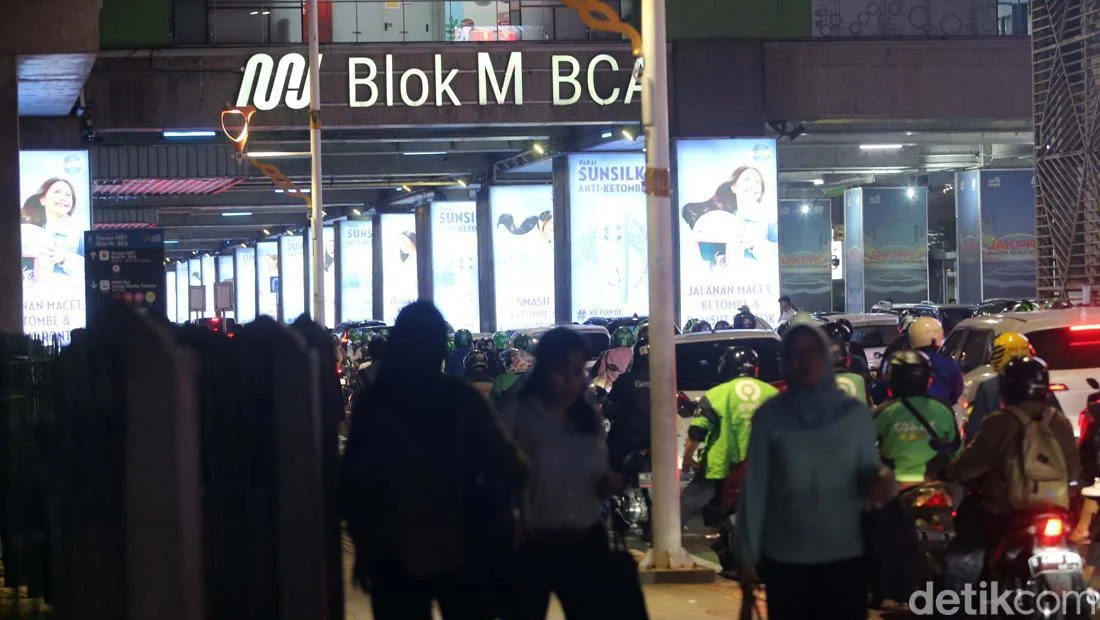
The revitalization of Jakarta’s iconic Blok M district is entering a highly anticipated new phase as PT MRT Jakarta (Perseroda) prepares to implement its comprehensive Ultimate Development Blok M concept. Building on the momentum of recent grassroots activations and burgeoning local commerce, the urban transit operator is setting its sights on a massive spatial transformation. The initiative aims to convert the bustling transit node into a fully integrated, pedestrian-first mixed-use ecosystem that combines residential towers, hospitality spaces, retail areas, and modern public amenities.
This strategic undertaking leverages Transit-Oriented Development (TOD) principles to optimize municipal assets owned by the Jakarta Provincial Government. By fostering public-private partnerships and courting international investment, MRT Jakarta seeks to redefine urban mobility and lifestyle integration in the Indonesian capital.
The Evolution of Blok M: From Past Glory to Modern Hub
To understand the scope of the Ultimate Development Blok M project, one must examine the historical trajectory of the area. For decades, Blok M served as the undisputed commercial and cultural heart of South Jakarta, renowned for its bustling bus terminal, legendary music scene, shopping centers, and vibrant nightlife. However, as the city expanded and new commercial centers emerged in other parts of the metropolis, parts of Blok M experienced economic stagnation and infrastructural decline.
The turning point for the district’s modern renaissance arrived with the construction and operation of the MRT Jakarta North-South Line. The presence of the Blok M BCA Station breathed new life into the vicinity, re-establishing it as a critical commuter crossroads. Capitalizing on this renewed foot traffic, stakeholders initiated a series of placemaking strategies.
According to M. Iqbal Bimo Arifianto, Division Head of Property Management at MRT Jakarta, the district’s transition into the current "Blok M Hub" accelerated significantly through multi-stakeholder collaborations. Over a relatively short span of just over 100 days following recent targeted activations, daily visitor volumes surged to an impressive 25,000 people. The area has successfully repositioned itself as a thriving ecosystem for Micro, Small, and Medium Enterprises (MSMEs), culinary ventures, lifestyle brands, and diverse urban communities.
The 3A 1C Approach and Master Plan
Riding on the wave of this organic revitalization, MRT Jakarta formulated a rigorous master plan aligned with its overarching TOD roadmap. The Ultimate Development Blok M project is designed to elevate the commuter and visitor experience by institutionalizing sustainable urban design principles.
At the core of this transformation lies MRT Jakarta’s proprietary 3A 1C approach, which stands for accessibility, amenities, attraction, and community. This framework dictates the physical and social restructuring of the district:
- Accessibility: Upgrading pedestrian connectivity, seamless modal integration between the MRT station, local bus networks, and pedestrian pathways.
- Amenities: Constructing public spaces, high-quality urban furniture, and green infrastructure to ensure public comfort.
- Attraction: Curating consistent cultural, commercial, and lifestyle activities that draw diverse demographics to the district.
- Community: Fostering active participation from local communities, creators, and business owners in the district’s ongoing management and programming.
Bimo revealed that the upcoming phase will physically reshape the district. The neighborhood will feature new high-rise towers seamlessly integrated with apartments, hotels, and expanded commercial zones. Crucially, the project is engineered to serve as a national benchmark for modern terminal design, prioritizing pedestrian safety and walkability above vehicular congestion.
Expanding the Footprint: Integration with Existing Landmarks
The ambitions of Ultimate Development Blok M extend far beyond the immediate vicinity of the MRT station exits. MRT Jakarta is adopting a collaborative urban planning model, engaging with adjacent property owners and legacy commercial centers to create a unified district.
Discussions and preliminary planning sessions are already underway with management teams from major surrounding landmarks, including Blok M Square and the historic Pasaraya department store. By weaving these established institutions into the broader TOD master plan, developers aim to eliminate physical barriers, improve pedestrian flows, and establish a continuous, porous commercial landscape. This coordinated approach ensures that existing businesses are not marginalized by new developments, but rather integrated into the district’s expanded economic pipeline.
International Fundraising and Strategic Partnerships
A revitalization project of this magnitude requires substantial capital expenditure. To finance the ambitious infrastructure overhaul, MRT Jakarta is actively courting domestic and international investors.
A cornerstone of this fundraising strategy was the recent TOD Investment Forum 2026, held in Singapore. The international forum served as a platform to showcase Jakarta’s high-potential urban railway corridors to global financial institutions, property developers, and urban planning experts. MRT Jakarta utilized the event to pitch the commercial viability of the Blok M project alongside other strategic TOD nodes.
Beyond securing capital, the forum facilitated knowledge exchange and technical cooperation. Bimo noted that international entities, including prominent real estate and infrastructure developers from Hong Kong, have expressed keen interest in the project. Engaging with foreign institutional partners not only brings necessary investment funds but also introduces international best practices in property management, smart-city technology, and sustainable construction to Jakarta’s urban development sector.
The broader vision relies heavily on the upcoming arrival of strategic partners. MRT Jakarta anticipates that within the next few months, official announcements regarding joint ventures and construction timelines will materialize, signaling the official commencement of large-scale physical revitalization works, including the construction of signature mixed-use towers.
Broader Portfolio of Transit-Oriented Development in Jakarta
Blok M is not an isolated initiative within MRT Jakarta’s urban renewal portfolio. The municipal enterprise is simultaneously spearheading several other high-profile TOD and urban heritage projects across the capital to maximize the socio-economic returns of the transit network.
Among these key pipeline projects are:
- Kali Besar Heritage: An urban conservation and revitalization project aimed at restoring historical water-front areas while integrating modern pedestrian infrastructure.
- Blok M Interchange: A dedicated infrastructural project designed to streamline multi-modal transportation transfers in the district.
- XGL Mixed-Use: A strategic commercial and residential development designed to optimize land use around key transit nodes.
- Lebak Bulus Interchange Bus Terminal, Park-and-Ride, and Mixed-Use: A comprehensive transit hub development at the southern terminus of the MRT line, designed to capture commuter traffic from the broader metropolitan periphery and facilitate seamless shifts to private vehicles or feeder buses.
Implications for Urban Economics and Mobility
The execution of the Ultimate Development Blok M carries profound implications for Jakarta’s urban landscape. From an economic perspective, the project stimulates local commerce by formalizing and upgrading spaces for MSMEs while attracting institutional retail brands and hospitality chains. This dual approach ensures that the district retains its diverse economic character while generating higher municipal revenues.
From a mobility standpoint, the project directly addresses Jakarta’s chronic traffic congestion and carbon emissions. By creating dense, walkable, mixed-use communities directly linked to high-capacity mass transit systems, the initiative reduces reliance on private motor vehicles. Commuters can live, work, shop, and socialize within a localized radius supported by reliable public transport.
As MRT Jakarta moves closer to finalizing investor agreements and launching physical construction phases, the Ultimate Development Blok M stands as a litmus test for modern urban renewal in Indonesia. If successful, the model established in South Jakarta will provide a blueprint for future transit-oriented developments across the nation, fundamentally reshaping how Indonesians interact with their cities.

