
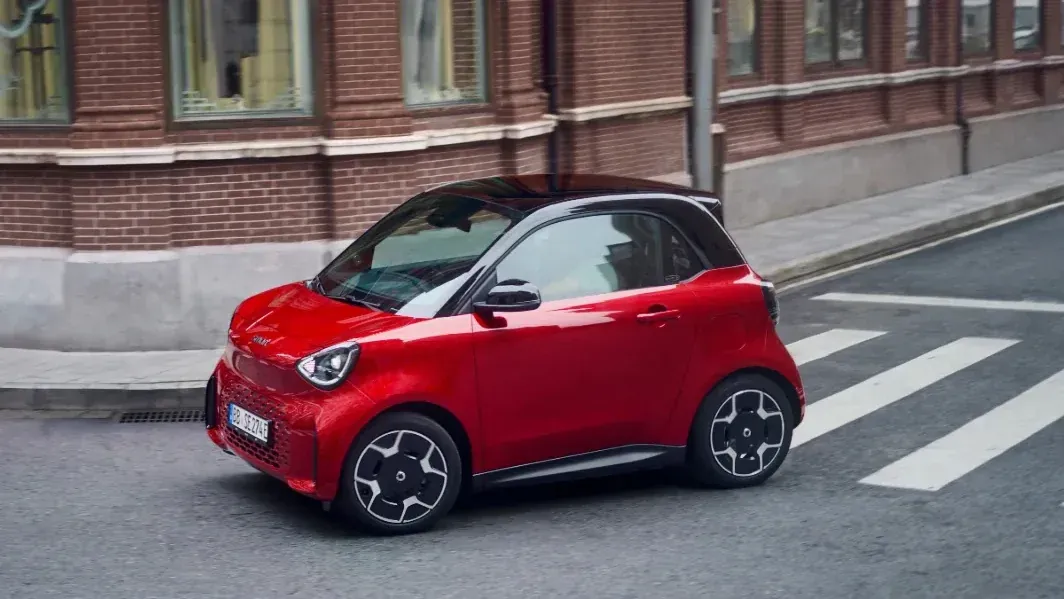
The automotive landscape in China has witnessed a significant shift toward specialized urban mobility solutions with the official commercial launch of the Smart #2. This two-door, two-seater electric micro-car, which carries the legacy of the iconic Smart fortwo, is now available in the Chinese market with a starting price of 99,900 yuan (approximately $13,800 or IDR 270.6 million). Developed under the strategic partnership between Mercedes-Benz and Geely, the vehicle serves as a cornerstone for the brand’s transition into a purely electric lineup, aiming to reclaim the title of the quintessential city car for the modern, electrified era.
Evolution and Development Chronology
The genesis of the Smart #2 traces back to the brand’s strategic restructuring. Once known exclusively for its combustion-engine micro-cars, the brand underwent a massive transformation following the joint venture formed between Mercedes-Benz AG and Geely Holding Group in 2019. The objective was to reposition Smart as a premium, all-electric automotive brand.
The #2 model serves as the spiritual successor to the original Smart fortwo, a vehicle that defined the micro-car segment for over two decades. While the #1 and #3 models moved into the crossover and SUV segments, the #2 returns to the brand’s roots. It was first teased and subsequently showcased at the Paris Motor Show, where it garnered significant attention for its adherence to the "sensual purity" design philosophy led by Mercedes-Benz’s global design team.
The vehicle is built upon the specialized Electric Compact Architecture (ECA), a platform designed specifically to optimize interior space despite the constrained external footprint. The development timeline saw the vehicle undergo rigorous testing in both European and Chinese environments, ensuring that it meets the stringent safety and performance standards expected of a product bearing the Smart name. The limited-run "Couture Edition," restricted to 999 units across China and Europe, served as a market test, with reports confirming that the entire inventory was sold out shortly after the pre-order window opened, signaling high consumer demand for compact electric mobility.
Design Philosophy and Engineering Specs
Under the guidance of the Mercedes-Benz design team, the Smart #2 maintains a distinctive "wheels-at-the-corners" stance, which is not merely an aesthetic choice but an engineering necessity to maximize interior cabin volume and ensure agile handling in dense urban environments.
The exterior dimensions are meticulously engineered: the car measures 2,751 mm in length (extending to 2,764 mm with the rear spoiler), 1,669 mm in width, and 1,555 mm in height. The wheelbase of 1,875 mm is remarkably efficient, allowing for a tight turning radius of just 3.35 meters—a critical feature for navigating narrow city streets and parking in tight spaces.
The front fascia is characterized by a capsule-style grille, high-output LED projector headlights, and a robust bumper configuration that integrates large ram-air intakes and vertical ventilation slots to manage airflow and cooling. At the rear, the vehicle features non-linear, dual-strip circular tail lights that provide a modern, high-tech aesthetic. The split-tailgate design is a functional highlight, with the lower section capable of supporting up to 120 kg, effectively acting as a temporary platform for loading cargo or a seat for stationary leisure.
The chassis utilizes a staggered tire setup—thinner in the front and wider in the back—a configuration derived from performance vehicle dynamics to optimize steering responsiveness while maintaining traction and stability. The suspension system consists of a MacPherson strut setup at the front and an independent five-link suspension at the rear, providing a balance between road comfort and maneuverability.
Interior Ergonomics and Technology
Despite its micro-car classification, the interior of the Smart #2 is designed to defy expectations. The cabin features an "S-shaped" cockpit layout that envelops the occupants, creating a focused driving environment. The primary interface is a 12.8-inch high-definition touchscreen, which serves as the hub for the vehicle’s infotainment system. This is powered by the Flyme Link system, ensuring seamless integration with mobile devices and providing a responsive user experience. An 8.8-inch digital instrument cluster provides essential driving data directly to the driver’s line of sight.
The spatial efficiency of the cabin is a result of lowering the floor by 25 mm compared to previous-generation Smart models, granting the occupants 1,000 mm of headroom. Smart claims an impressive 78 percent space utilization rate. The interior is equipped with premium touches including 256-color ambient lighting, heated seats and steering wheel, and a high-fidelity Sennheiser audio system, elevating the vehicle from a basic runabout to a premium personal mobility device.
Performance and Battery Technology
The Smart #2 is propelled by a rear-mounted single motor capable of delivering a maximum power output of 60 kW (approximately 80 horsepower). While this may seem modest by the standards of large electric SUVs, it is highly efficient for a vehicle of this mass, providing zippy acceleration suitable for urban stop-and-go traffic.
The energy storage solution is a 35.8 kWh lithium iron phosphate (LFP) battery pack supplied by CATL. This battery chemistry is chosen for its superior thermal stability and longer cycle life compared to traditional nickel-based chemistries. According to the CLTC (China Light-Duty Vehicle Test Cycle) standard, the vehicle offers a range of up to 410 km. For European markets, the equivalent WLTP rating is estimated at 332 km.
Charging capabilities are optimized for urban users who may not have access to private charging stations. The system supports fast charging, allowing the battery to replenish from 30 percent to 80 percent in approximately 15 minutes. Additionally, the #2 includes Vehicle-to-Load (V2L) technology, allowing the battery to power external appliances, a feature that has become increasingly popular in the Chinese market for camping and outdoor activities.
Safety Protocols
The vehicle does not compromise on safety despite its size. It features a robust safety structure equipped with seven airbags, including a side-curtain airbag designed to protect passengers in rollover or side-impact scenarios.
The vehicle is integrated with 16 active and passive safety functions. Notable driver assistance systems include:
- Adaptive Cruise Control (ACC): Facilitating easier navigation in traffic-heavy urban environments.
- Blind Spot Detection (BSD): Providing visual and auditory alerts to prevent collisions during lane changes.
- Lane Departure Prevention (LDP): Ensuring the vehicle maintains its intended path.
Market Implications and Future Outlook
The launch of the Smart #2 is a calculated move to capture a specific demographic: urban dwellers who value efficiency, ease of parking, and the prestige of a Mercedes-Benz-influenced design. In major Chinese metropolises, where space is a premium commodity and license plate regulations for traditional internal combustion vehicles are stringent, the Smart #2 offers a compelling, tax-incentivized alternative.
From an industry perspective, the success of the #2 model will likely influence how other manufacturers approach the micro-car segment. By blending premium features with essential urban functionality, Smart is attempting to move the micro-car out of the "economy" bracket and into the "lifestyle" category.
Analysts suggest that the rapid sell-out of the Couture Edition indicates that there is a strong niche for premium-tier electric city cars. If the Smart #2 sustains this momentum in the broader market, it could catalyze a resurgence of the micro-car segment globally. The challenge, however, will remain the price point; while 99,900 yuan is competitive, it positions the #2 against several budget-friendly domestic electric vehicles in China. Smart’s reliance on the brand heritage and the quality assurance provided by its Mercedes-Benz lineage will be the primary drivers of its market differentiation.
As the automotive industry continues its pivot toward total electrification, the Smart #2 represents a return to the fundamentals: a vehicle designed to master the city, minimizing its environmental footprint while maximizing the quality of the urban driving experience. With production scaling up to meet the needs of both the Chinese and eventually the European markets, the #2 is poised to become a significant player in the global micro-mobility transition.

