

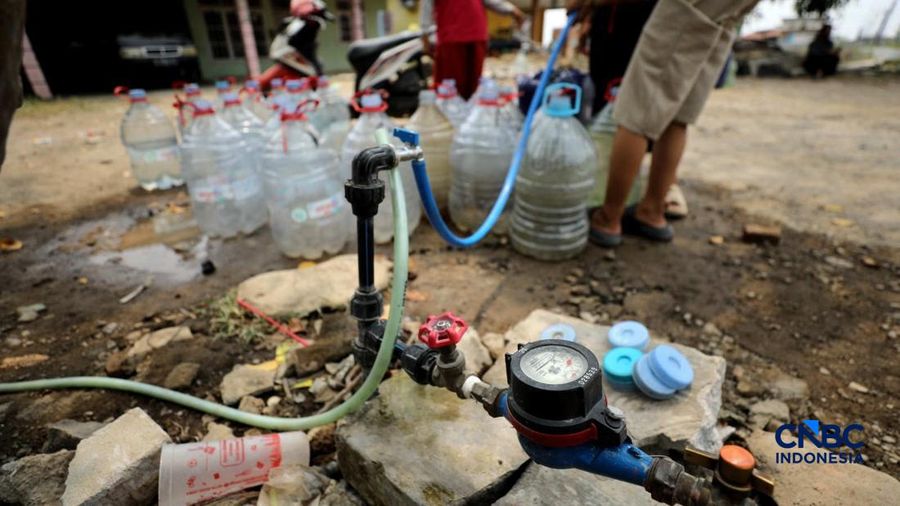
The water crisis in West Java’s Bekasi District has escalated significantly, plunging dozens of communities into a severe drought emergency. As natural water sources and shallow groundwater reserves rapidly dry up under the scorching heat, local residents face unprecedented hardships in securing basic daily necessities. The situation has transformed everyday routines into grueling struggles for survival, exemplified by long queues of villagers carrying empty gallon jugs and containers, desperately waiting for dwindling supplies from public utilities and emergency distribution points.
This unfolding humanitarian and environmental challenge highlights the vulnerability of peri-urban and rural regions in Indonesia to extended dry seasons. With meteorological agencies warning that peak drought conditions may persist through the end of the year, local authorities, disaster mitigation agencies, and affected communities are scrambling to manage an escalating crisis that threatens public health, sanitation, and local livelihoods.
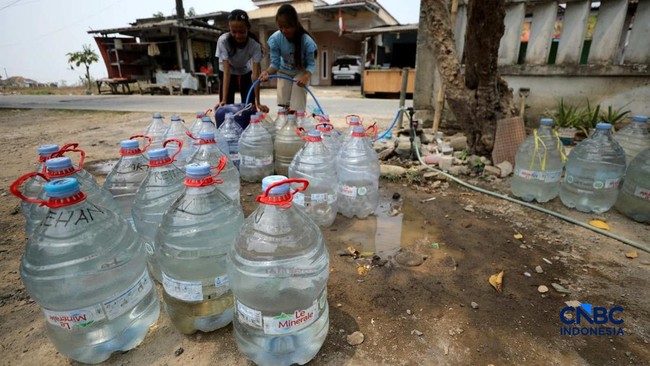
The Epicenter of the Crisis: Hard-Hit Sub-Districts and Villages
The geographical spread of the drought has expanded across a substantial portion of the Bekasi Regency. According to field assessments and localized reports from affected neighborhoods, the disaster has impacted nearly half of the entire regency’s territorial jurisdiction. The crisis currently spans across 45 villages distributed among 12 distinct sub-districts, leaving tens of thousands of households without reliable access to piped water or functioning wells.
Among the hardest-hit areas is the Cibarusah sub-district, situated in the southern elevated sector of Bekasi. Despite sitting on higher terrain compared to northern lowlands, Cibarusah has historically served as a recurring focal point for seasonal water shortages. The current dry spell has crippled the sub-district entirely, affecting roughly 60 distinct focal points distributed across all of its constituent villages, including Ridhomanah, Ridhogalih, Cibarusah Kota, Cibarusah Jaya, Sindangmulya, Wibawamulya, and Sirnajati.
In Kampung Cibogo, located within the Sindangmulya urban village of Cibarusah, daily life has ground to a near-halt. Residents, including children and the elderly, spend hours every day hovering around municipal water lines or makeshift distribution pipes, hoping to fill empty water containers. Similar scenes play out in the southernmost corners of the regency, where the neighboring Serangbaru sub-district reports critical shortages across 42 locations spanning all of its villages. The worst concentrations in Serangbaru are centered in Jayamulya Village, where at least 14 critical scarcity points have been identified. Furthermore, the Medalkrisna Village area stands as another severe pocket of distress, accounting for 17 critically dry zones out of 44 recorded scarcity points within its administrative boundaries.
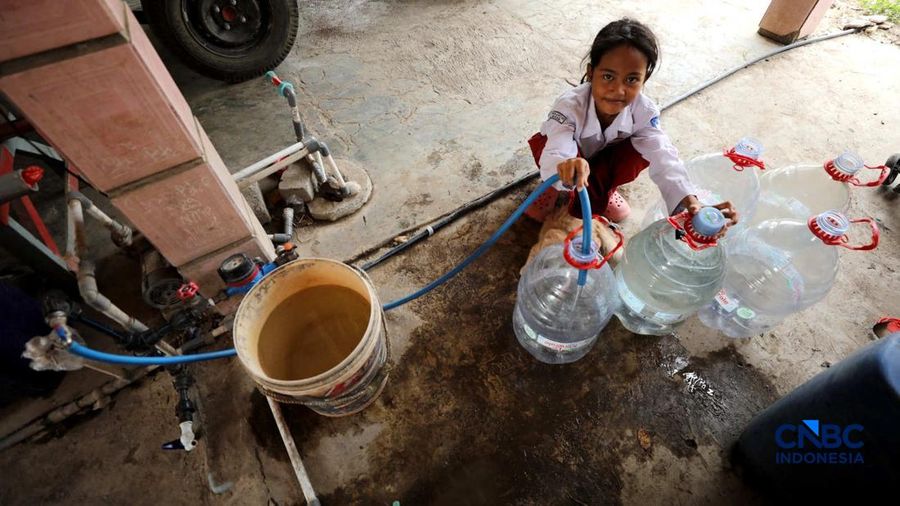
Chronology and Escalation: How the Drought Unfolded
The genesis of this year’s prolonged water scarcity traces back to delayed monsoon transitions and erratic weather patterns influenced by broader regional climate phenomena. As precipitation dropped sharply across West Java, groundwater replenishment rates plummeted.
By mid-autumn, the cumulative effect of months of below-average rainfall began manifesting visibly across the landscape. Agricultural lands turned into cracked clay, irrigation canals dried into dusty trenches, and residential wells dropped far beyond the reach of standard household pumps. Local residents who invested in deep-bore drilling—reaching depths of tens of meters—found that even subterranean aquifers failed to yield potable water, as the water table receded or became heavily mineralized and contaminated.
Data compiled by the Bekasi Regency Regional Disaster Management Agency (BPBD) maps the steady expansion of the crisis. Official records updated through late October documented an alarming scale of human impact: over 22,381 heads of households (KK), representing tens of thousands of individual residents, found themselves directly affected across 205 distinct geographic points of vulnerability. As the calendar flipped into November, the situation deteriorated further, moving from localized shortages to a systemic regional emergency that required urgent intervention.
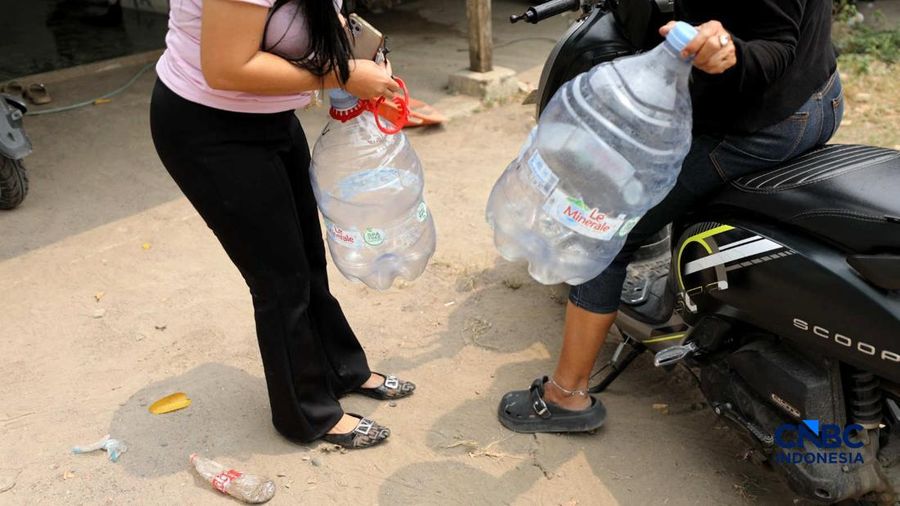
Meteorological Outlook and Climate Context
Meteorological authorities and climatologists note that the severity of the 2026 dry season aligns with shifting weather anomalies affecting the tropical archipelago. While typical seasonal transitions usually bring early showers by October or November, prevailing atmospheric conditions have delayed significant rainfall across the western districts of Java.
The peak of the dry season, compounded by extended solar radiation and high ambient temperatures, has created high evapotranspiration rates that strip soils of residual moisture. Environmental scientists emphasize that the ongoing crisis is not merely a transient weather event, but a symptom of compounding ecological pressures, including deforestation, rapid industrialization, and uncontrolled groundwater extraction that outpaces natural recharge capacities.
In regions like Cibarusah and Serangbaru, the geological profile exacerbates the problem. The shallow soil layers sit atop impermeable bedrock or dense clay formations, preventing deep percolation of rainwater even during wet months. When prolonged dry spells occur, these sub-surface reservoirs empty rapidly, leaving communities with virtually no cushion against rainless weeks.
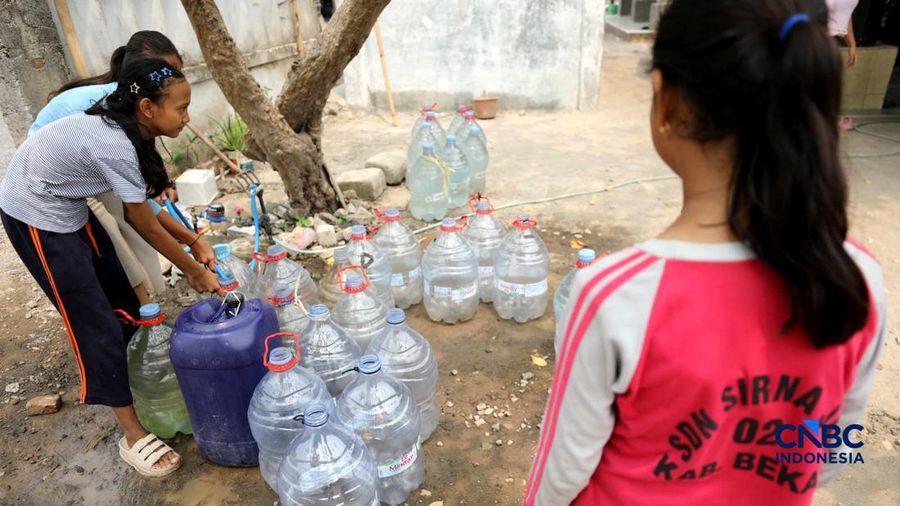
Official Responses and Emergency Relief Operations
In response to the mounting crisis, the Bekasi Regency government, alongside the BPBD, Indonesian Red Cross (PMI), and corporate social responsibility (CSR) initiatives, has mobilized emergency mitigation efforts. Water tanker trucks have been dispatched on daily routes to supply critical volumes of clean water to the hardest-hit neighborhoods in Cibarusah, Serangbaru, and surrounding administrative zones.
However, logistics remain a formidable hurdle. Delivering water via truck to hundreds of scattered points across 45 villages requires a massive fleet and continuous fuel supplies, stretching local disaster funds thin. Distribution points often see chaotic scenes as residents rush forward with jerrycans, buckets, and empty gallon bottles as soon as the blue tanker trucks arrive. Local volunteers and neighborhood association leaders work tirelessly to maintain order and ensure equitable distribution, prioritizing households with infants, pregnant women, and elderly residents.
Local authorities have also begun exploring medium-to-long-term engineering solutions. Proposals include expanding the coverage of the regional drinking water company (PDAM) pipeline networks into remote southern enclaves, constructing deep artificial recharge wells, and developing small-scale rainwater harvesting infrastructure in public community centers. Nevertheless, implementation timelines for these infrastructure projects mean that immediate relief remains heavily dependent on trucking operations and philanthropic donations.
Socio-Economic and Public Health Implications
The prolonged water crisis carries deep socio-economic repercussions for the residents of Bekasi. Economically, families are forced to allocate a significant portion of their daily disposable income to purchasing commercial bottled water for drinking and cooking, straining household budgets already burdened by inflationary pressures. Farmers and livestock owners face crippling losses as agricultural plots wither and animals suffer from dehydration and lack of fodder.
From a public health perspective, sanitation risks loom large. The scarcity of clean water forces residents to reuse limited quantities for multiple purposes, increasing the incidence of skin irritations, gastrointestinal disorders, and waterborne diseases. Schools have reported challenges in maintaining basic hygiene standards, potentially impacting student attendance and concentration. Furthermore, the dry conditions elevate the risk of accidental fires in densely populated rural settlements where wooden structures predominate and water supplies for firefighting are virtually non-existent.
As the community looks toward the eventual arrival of the rainy season, the crisis in Bekasi serves as a stark reminder of the urgent need for comprehensive water resource management, watershed conservation, and climate adaptation strategies to safeguard vulnerable populations against recurring natural disasters.

