
Jakarta witnessed a significant diplomatic engagement on Friday, July 24, 2026, as Mukhtarudin, the Indonesian Minister for Migrant Worker Protection (P2MI), hosted a courtesy visit from H.E. Mr. Vedat Işıkhan, the Minister of Labor and Social Security of the Republic of Turkey. The high-level meeting, held at the P2MI Ministry Office in Jakarta, underscored a mutual commitment to fortifying bilateral relations, with a particular focus on enhancing cooperation in labor affairs, safeguarding migrant workers’ rights, and fostering the development of professional workforces between the two nations. This convergence of ministerial delegations marks a crucial step in translating the deep historical and diplomatic bonds between Indonesia and Turkey into tangible, actionable frameworks for shared prosperity and worker welfare.
A Pivotal Meeting for Bilateral Labor Synergy
The Turkish delegation accompanying Minister Işıkhan reflected the comprehensive nature of Ankara’s interest in this partnership. It included distinguished officials such as Mr. Ali Aybey, Director General of Foreign Relations and European Union; Dr. İhsan Esen, Director General of Information Technologies and Chief of Cabinet; Mr. Yunus Öz, Director General of International Labour Force; Mr. Samet Güneş, Director General of Turkish Employment Agency; Dr. Selim Dağlıoğlu, Deputy Director General of Foreign Relations and European Union; and Mr. Reşat Uğur Karacan, Deputy Chief of Mission and Counsellor at the Turkish Embassy in Jakarta. The presence of such a diverse group of experts from various departments within Turkey’s Ministry of Labor and Social Security signaled Ankara’s serious intent to engage across multiple facets of labor policy, from international employment strategies to digital infrastructure supporting workforce management.
Minister Mukhtarudin, in his opening remarks, reiterated that the Ministry of P2MI operates under the direct mandate of President Prabowo Subianto, with a core mission to strengthen the comprehensive governance of Indonesian migrant worker protection. This mandate extends beyond mere placement, encompassing robust protection mechanisms and empowerment programs designed to ensure the dignity and welfare of Indonesians working abroad. Mukhtarudin expressed profound appreciation for Minister Işıkhan’s visit, emphasizing its symbolic importance. "This visit serves as an acknowledgment of the strategic existence and pivotal role of the Ministry of P2MI in managing the placement, protection, and empowerment of Indonesian migrant workers," Mukhtarudin stated, highlighting the global recognition of Indonesia’s efforts in this critical domain.
Indonesia’s Strategic Focus on Migrant Worker Protection
The establishment of the Ministry of Migrant Worker Protection (P2MI) in Indonesia represents a strategic evolution in the nation’s approach to its vast overseas workforce. With millions of Indonesian citizens contributing significantly to global economies and sending back substantial remittances that bolster the national income, the protection and empowerment of these workers have become a paramount national priority. Historically, the management of migrant workers was often fragmented across various ministries, leading to coordination challenges and sometimes leaving workers vulnerable to exploitation. President Prabowo Subianto’s administration, recognizing these complexities, consolidated these functions under a dedicated ministry. This new structure is designed to streamline policies, enhance oversight, and provide more comprehensive support systems, from pre-departure training and legal assistance to post-arrival welfare and reintegration programs. The ministry’s mandate includes not only protecting workers from illegal recruitment and exploitation but also upskilling them to meet international labor market demands, thereby increasing their value and earning potential. This shift underscores a proactive and holistic strategy aimed at transforming Indonesian migrant workers from a vulnerable group into a highly valued, protected, and empowered professional force.
A Legacy of Friendship: Indonesia-Turkey Relations
The meeting between the two ministers was set against a backdrop of deeply rooted historical and diplomatic ties between Indonesia and Turkey. As Minister Işıkhan eloquently noted, 2026 marks the 76th anniversary of formal diplomatic relations between the two nations, which were officially established in 1950. However, the bonds between the two archipelagic nations extend far beyond this modern timeline, reaching back over four centuries. Historical records indicate cultural and trade exchanges between the Ottoman Empire and various Southeast Asian sultanates, including those in the Indonesian archipelago, long before the advent of modern nation-states. These historical connections, often facilitated by Islamic scholars and traders, fostered a shared sense of identity and mutual respect.
In contemporary times, Indonesia and Turkey have emerged as two of the most significant Muslim-majority nations, both playing increasingly influential roles on the global stage. They are key partners in various international forums, including the G20, the Organisation of Islamic Cooperation (OIC), and MIKTA (Mexico, Indonesia, South Korea, Turkey, Australia) – a middle power consultative platform. These shared platforms facilitate dialogue and cooperation on a wide array of global issues, from economic development and trade to regional security and humanitarian efforts. The robust personal relationship between Turkish President Recep Tayyip Erdoğan and Indonesian President Prabowo Subianto serves as a vital guiding principle for deepening bilateral cooperation across all sectors, including the crucial area of labor mobility. This high-level political endorsement provides a strong impetus for ministries like P2MI and the Ministry of Labor and Social Security to forge closer operational ties.
Key Discussions and the Path to a Comprehensive MoU
Central to the discussions was the imperative to strengthen bilateral cooperation through the finalization of a Memorandum of Understanding (MoU) in the field of labor. This comprehensive agreement, currently under review by both parties, aims to establish a structured framework for managing international labor mobility between Indonesia and Turkey. Minister Mukhtarudin confirmed that Indonesia had already submitted its draft MoU to Turkey and was eagerly awaiting a response from Ankara regarding the timeline for its official signing. Such an MoU is anticipated to cover crucial aspects of migrant worker management, including ethical recruitment practices, standardized contracts, dispute resolution mechanisms, social security provisions, and measures to combat human trafficking and illegal employment.
Beyond the formalization of the MoU, both ministers expressed a shared vision for establishing a system of international labor mobility that is not only safe and orderly but also mutually beneficial for both countries. This vision is firmly anchored in the principles of decent work and the unwavering respect for workers’ rights. Minister Mukhtarudin emphasized, "Indonesia welcomes the Turkish Government’s attention to the importance of strengthening cooperation in employment, international professional labor mobility, and the protection of workers’ rights." This statement underscores Indonesia’s proactive stance in seeking partners who align with its commitment to ethical labor migration practices. The proposed MoU is expected to formalize avenues for skilled and semi-skilled Indonesian workers to access opportunities in the Turkish market, providing legal pathways and protections that minimize risks often associated with informal migration channels.
Mukhtarudin’s Vision: Safe, Orderly, and Empowered Mobility
Minister Mukhtarudin articulated a clear and ambitious vision for Indonesian migrant workers, emphasizing the importance of empowering them through robust governance. He highlighted that Indonesia and Turkey share a common philosophy in constructing a framework for international labor mobility that is characterized by safety, order, and mutual benefit. This framework is intrinsically linked to upholding the fundamental principles of decent work and respecting the human rights of all laborers, regardless of their nationality.
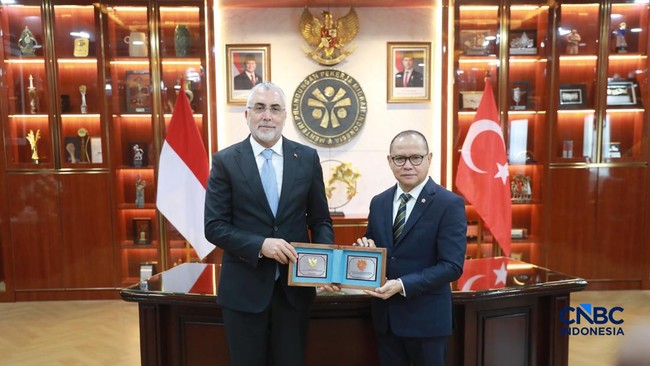
The Indonesian minister’s statements reflected a broader strategic objective: to not only protect Indonesian workers but also to position them as a highly valued and professional workforce on the global stage. He reiterated that the ongoing discussions with Turkey represented a "strategic step to strengthen bilateral relations in the labor sector and simultaneously open wider cooperation opportunities for Indonesian migrant workers." This proactive diplomacy aims to diversify destination countries for Indonesian labor, reduce over-reliance on traditional markets, and explore new sectors where Indonesian skills can thrive. Mukhtarudin also revealed Indonesia’s intent to undertake a reciprocal visit to Turkey. This planned visit by the P2MI Ministry underscores a commitment to sustained engagement and strengthening the "friendship and strategic cooperation" between the two ministries, moving beyond a single meeting to foster continuous dialogue and collaborative implementation.
Minister Işıkhan’s Optimism: Valuing Indonesian Workforce and Deepening Ties
H.E. Mr. Vedat Işıkhan, the Turkish Minister of Labor and Social Security, conveyed profound optimism regarding the future of labor cooperation between Indonesia and Turkey. He expressed genuine pleasure at his return to Indonesia, a nation he affectionately described as "a friendly country and a brotherly nation" to Turkey. This sentiment of camaraderie, deeply ingrained in the historical fabric of both countries, permeated his address. Minister Işıkhan conveyed his gratitude for the warm reception and hospitality extended by Minister Mukhtarudin and the Indonesian delegation, acknowledging the genuine spirit of partnership.
A significant part of Minister Işıkhan’s address was dedicated to congratulating Indonesia on the recent formation of the Ministry of Migrant Worker Protection (KP2MI). He voiced his hope that this newly established ministry would yield substantial benefits for the Indonesian populace, particularly for its citizens residing and working abroad. "I express my hope that this newly formed ministry will bring benefits to the people of Indonesia, especially for Indonesian citizens abroad. I also congratulate Mr. Minister Mukhtarudin, and wish him success in carrying out his mandate," he stated, recognizing the strategic importance of P2MI’s mission.
Minister Işıkhan further underscored the historical significance of the timing, noting that 2026 marks the 76th anniversary of diplomatic relations between Indonesia and Turkey. He then delved into the deeper historical narrative, emphasizing that the ties between the two nations span an astonishing four centuries, underscoring a bond that transcends modern political frameworks. He characterized Indonesia not merely as a strategic partner but as a pivotal nation within the Islamic world, a sentiment that resonates deeply within Turkey’s foreign policy objectives. He reiterated the importance of the strong personal rapport between President Recep Tayyip Erdoğan and President Prabowo Subianto, deeming it "a crucial momentum and a guiding principle for us to continue strengthening cooperation in the future." This political synergy at the highest level provides a robust foundation for enhanced ministerial-level collaboration.
The Growing Demand for Indonesian Talent in Turkey
A compelling point raised by Minister Işıkhan was Indonesia’s increasingly strategic position in the landscape of international labor mobility. He specifically lauded the exemplary reputation of Indonesian migrant workers within Turkey. "Indonesian people are known as honest workers and possess a high commitment to their work. These two characteristics are what we always remember," Vedat stated, offering valuable insights into the perception of Indonesian labor quality. This positive assessment serves as a strong endorsement and a foundation for expanding opportunities.
Crucially, Minister Işıkhan disclosed a tangible indicator of this rising esteem: a "significant increase in the number of work permit applications submitted to our ministry on behalf of Indonesian citizens over the past few years." While specific figures were not divulged in the public statement, the emphasis on "significant" and "continues to increase from time to time" suggests a substantial upward trend. This surge in demand likely spans various sectors, potentially including hospitality and tourism (given Turkey’s booming industry), healthcare (for nurses and caregivers), manufacturing, construction, and domestic services. This trend not only signifies a growing trust in the quality and work ethic of the Indonesian workforce but also opens vast new avenues for mutually beneficial labor cooperation. It suggests that Turkish employers are increasingly seeking out Indonesian talent, driven by positive experiences and a recognition of their dedication and integrity.
Broader Implications: Economic Growth, Diplomatic Strength, and Worker Welfare
The potential implications of this strengthened labor cooperation between Indonesia and Turkey are multi-faceted, extending across economic, diplomatic, and social spheres. Economically, a well-managed labor migration corridor can provide significant benefits for both nations. For Indonesia, it means expanded employment opportunities for its large and youthful workforce, leading to increased remittances that contribute substantially to its foreign exchange reserves and national development. These remittances often support families, fund education, and stimulate local economies. For Turkey, access to a skilled, honest, and committed workforce, as described by Minister Işıkhan, can address labor shortages in key sectors, boost productivity, and support its economic growth trajectory.
Diplomatically, this enhanced partnership reinforces the strategic alliance between two influential nations, both active members of the G20 and the OIC. It sends a strong signal about the efficacy of South-South cooperation and provides a model for other developing nations seeking to manage labor migration effectively and ethically. This collaboration further solidifies their roles as middle powers capable of shaping regional and global norms.
From a social and welfare perspective, the emphasis on a comprehensive MoU and the commitment to decent work principles are critical. A robust legal framework helps to safeguard migrant workers from exploitation, abuse, and discrimination – persistent challenges in global labor migration. It ensures fair wages, safe working conditions, social security benefits, and access to legal redress. This proactive approach to worker protection aligns with international labor standards and enhances the dignity and well-being of Indonesian citizens abroad. It also fosters greater trust and understanding between the populations of the two countries, promoting cultural exchange and mutual respect.
Looking Ahead: Sustained Engagement and Future Prospects
The meeting concluded with both ministers reaffirming their unwavering commitment to continuously strengthening bilateral cooperation in labor affairs and migrant worker protection. They specifically pledged to enhance communication and coordination between their respective ministries and to expedite the finalization and signing of the updated Memorandum of Understanding. This commitment extends to actively promoting "safe, orderly, and mutually beneficial labor mobility" while also working to "expand opportunities for competent Indonesian workers across various sectors in line with the needs of the Turkish labor market."
Minister Mukhtarudin closed the meeting by reiterating his gratitude to the Turkish delegation and expressing optimism for the continued growth of relations between the two countries. The planned reciprocal visit by the P2MI Ministry to Turkey further solidifies this intention for sustained, high-level engagement. This ongoing dialogue is crucial for addressing emergent issues, fine-tuning policies, and ensuring that the labor migration framework remains responsive to the evolving needs of both Indonesia and Turkey. The collaboration signals a proactive, forward-looking approach to international labor governance, promising a future of deeper partnership, mutual economic benefit, and enhanced protection for migrant workers between these two historically intertwined nations.

