
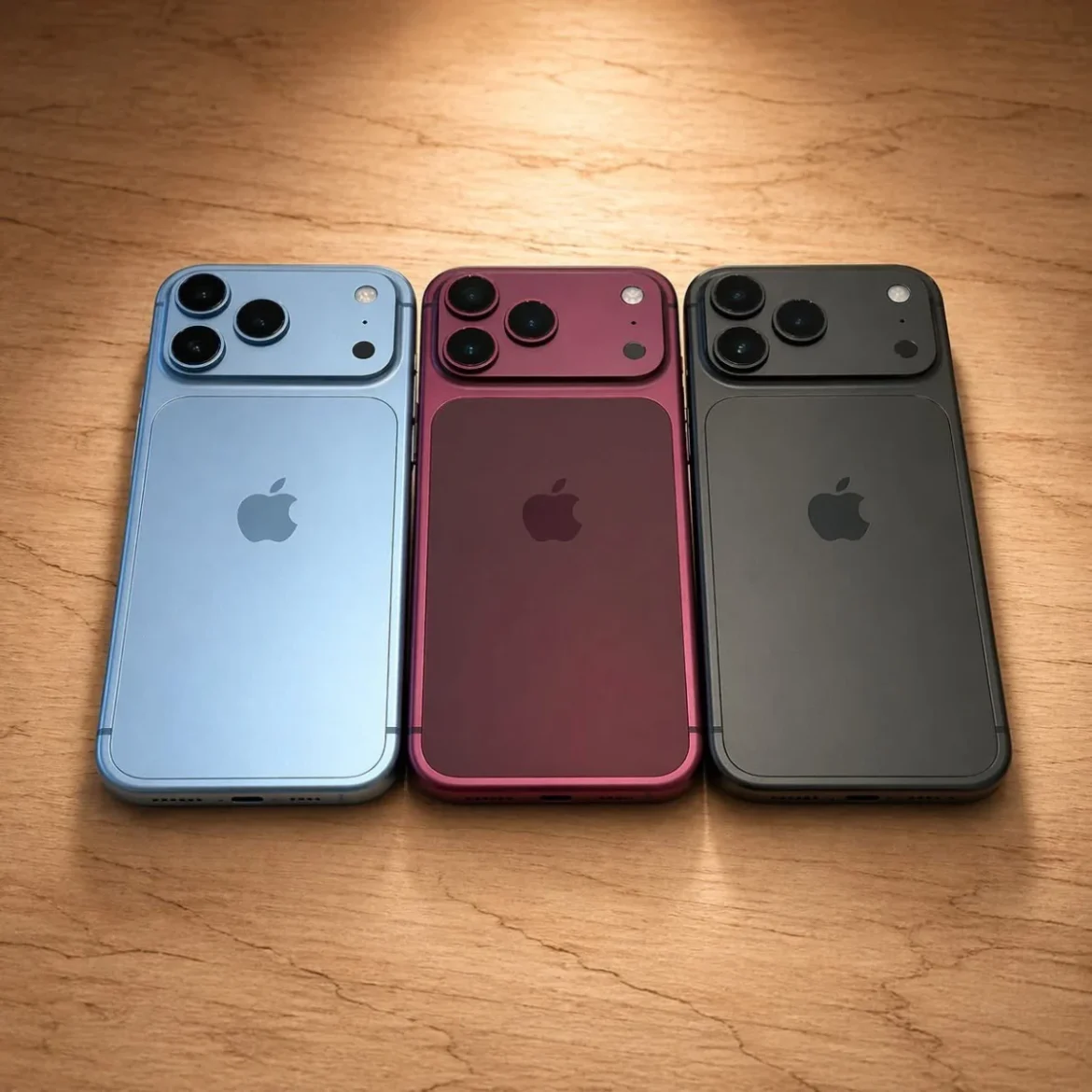
Recent, highly anticipated leaks concerning Apple’s forthcoming iPhone 18 Pro Max suggest a significant overhaul of its primary camera system, with a particular emphasis on a new, cutting-edge sensor and the introduction of variable aperture technology. The information, disseminated by the prominent technology account Beebom on July 17, 2026, indicates that while many camera components will see continuity, the main sensor is poised for a transformative upgrade, potentially setting a new benchmark for smartphone photography and videography. This development arrives amidst an intensely competitive landscape where flagship smartphones increasingly vie for supremacy through advanced imaging capabilities.
The Core Leak Details: A Focused Camera Evolution
According to Beebom’s detailed report, corroborated by the accompanying tweet that quickly garnered attention across tech communities, the iPhone 18 Pro Max will feature a new 48-megapixel Sony IMX905 sensor for its main camera. Crucially, this sensor is expected to integrate variable aperture technology, a feature that has historically been more prevalent in professional-grade cameras and select high-end Android smartphones. The leak specifies that this main sensor will be the sole camera component to receive a substantial upgrade from the previous generation, suggesting a strategic focus by Apple on refining its core photographic capabilities rather than merely adding more lenses or increasing raw pixel counts across the board.
The comprehensive breakdown of the iPhone 18 Pro Max’s camera configuration, as revealed in the leak, outlines a predominantly Sony-powered imaging system:
- Main Camera: 48MP Sony IMX905 with Variable Aperture
- Ultrawide Camera: Sony IMX972
- Telephoto Camera: Sony IMX973
- LiDAR Sensor: Sony IMX591
- Front Camera: Sony IMX914
This specification list notably refutes earlier whispers within the industry that Apple might be considering diversifying its sensor suppliers to include Samsung, reinforcing the Cupertino giant’s enduring partnership with Sony, a dominant force in the imaging sensor market. The consistency in supplier for the other lenses underscores a mature, stable ecosystem that Apple likely seeks to optimize rather than disrupt with entirely new hardware paradigms across every focal length.
Variable Aperture Technology: A Deep Dive into Its Impact
The most striking element of the leaked specifications is the inclusion of variable aperture in the main camera. This technology represents a significant leap for iPhone photography, offering photographers and videographers unprecedented control over light intake and depth of field directly within the smartphone’s hardware. Unlike fixed apertures, which are common in most smartphone cameras and rely heavily on computational photography to simulate effects, a variable aperture allows the physical opening of the lens to adjust.
In practical terms, variable aperture offers several distinct advantages:
- Enhanced Low-Light Performance: When shooting in dimly lit environments, the lens can open to a wider aperture (e.g., f/1.4 or f/1.7), allowing a maximum amount of light to reach the sensor. This reduces the need for higher ISO settings, thereby minimizing digital noise and preserving detail, resulting in brighter, cleaner, and more vibrant low-light photographs and videos.
- Superior Depth of Field Control: For portraiture and macro photography, a wider aperture creates a shallower depth of field, producing the coveted "bokeh" effect—a beautifully blurred background that isolates the subject. Conversely, a narrower aperture (e.g., f/4.0 or f/5.6) keeps more of the scene in sharp focus, ideal for landscapes or group shots where clarity from foreground to background is desired. This capability moves beyond software-based approximations, offering a more natural and optically accurate blur.
- Improved Performance in Bright Conditions: In overly bright scenarios, a narrower aperture can be engaged to limit the amount of light hitting the sensor. This prevents overexposure, maintains detail in highlights, and allows for slower shutter speeds without requiring neutral density (ND) filters, which is particularly beneficial for capturing motion blur in bright daylight or achieving crisp, well-exposed images under harsh sunlight.
- Versatile Video Recording: For videographers, variable aperture provides greater flexibility in managing exposure transitions and achieving cinematic effects. It allows for smoother adjustments to lighting changes within a scene and offers creative control over the visual storytelling through depth of field manipulation, enhancing the iPhone’s already robust video capabilities, including ProRes and Cinematic Mode.
While variable aperture has been a staple in traditional cameras for decades, its integration into the compact form factor of a smartphone presents engineering challenges related to miniaturization and durability. Select Android flagships, such as certain Samsung Galaxy S and Note series models (e.g., S9, S10) and Huawei’s Mate series, have previously experimented with dual or multi-step variable apertures. If Apple adopts this technology, it signals a commitment to hardware innovation that complements its industry-leading computational photography algorithms, promising a hybrid approach to imaging excellence.
The Significance of the Sony IMX905: A New Benchmark for the Main Sensor
The rumored 48MP Sony IMX905 sensor for the main camera is a critical component of this upgrade. Sony has long been the predominant supplier of image sensors for Apple’s iPhones, a testament to the quality, performance, and reliability of their technology. While specific details about the IMX905 are scarce given it’s a future product, the "48MP" designation, coupled with variable aperture, suggests a sensor designed for high performance across diverse lighting conditions.
Current iPhone Pro models already utilize 48MP main sensors, often employing pixel-binning technology to combine data from multiple pixels into one larger "super pixel" for improved low-light sensitivity, while also offering full 48MP output for detailed captures. The IMX905 is likely an evolution of this concept, potentially featuring larger individual pixels, a more advanced sensor architecture, or enhanced light-gathering capabilities. The combination of a high-resolution sensor with variable aperture could allow the iPhone 18 Pro Max to deliver unbinned 48MP images with greater clarity and dynamic range in optimal lighting, while still excelling in low light through pixel binning and wider apertures. This iterative improvement aligns with Apple’s historical strategy of refining existing technologies rather than pursuing a ‘megapixels for megapixels’ race.
Comprehensive Camera Array: Beyond the Main Sensor
While the main camera steals the spotlight, the consistent use of other Sony sensors—IMX972 for ultrawide, IMX973 for telephoto, IMX591 for LiDAR, and IMX914 for the front camera—is equally noteworthy. This continuity suggests a finely tuned system where each component plays a specific, optimized role within Apple’s integrated hardware-software imaging pipeline.
- Ultrawide (Sony IMX972): The ultrawide lens is crucial for landscape photography, architectural shots, and creative perspectives. An advanced ultrawide sensor typically offers improved distortion correction, better low-light performance compared to previous generations, and enhanced detail capture, ensuring a consistent imaging experience across focal lengths.
- Telephoto (Sony IMX973): The telephoto lens is vital for optical zoom capabilities, enabling users to capture distant subjects without significant loss of quality, which is often seen with digital zoom. Improvements in this sensor would likely focus on optical image stabilization, sharper details at longer focal lengths, and potentially improved low-light performance for zoomed shots.
- LiDAR Sensor (Sony IMX591): The LiDAR (Light Detection and Ranging) scanner, first introduced with the iPhone 12 Pro, is not primarily for image capture but plays a crucial supporting role. It uses laser pulses to measure depth, significantly enhancing autofocus speed and accuracy in low-light conditions. Furthermore, LiDAR is instrumental for augmented reality (AR) applications, enabling more realistic and precise placement of virtual objects within the real world. An updated LiDAR sensor would likely offer faster depth mapping, improved range, and greater accuracy, further benefiting both photography/videography and AR experiences.
- Front Camera (Sony IMX914): The front-facing camera, increasingly important for video calls, vlogging, and high-quality selfies, benefits from improved sensors through better low-light performance, sharper detail, and enhanced dynamic range. The IMX914 would likely contribute to more natural skin tones and overall image quality for self-portraits and communication.
The decision to maintain these sensors while upgrading only the main one indicates that Apple is confident in their current performance and believes the most significant photographic gains can be achieved by innovating at the primary imaging point.
Apple’s Strategic Camera Evolution: A History of Refinement
Apple’s approach to iPhone camera development has consistently prioritized a holistic blend of hardware innovation and sophisticated computational photography. Rather than engaging in a pure "megapixel war," the company has historically focused on optimizing image quality through larger sensors, improved lens elements, advanced image signal processors (ISPs), and groundbreaking software algorithms like Deep Fusion, Smart HDR, and Photographic Styles.
The introduction of variable aperture fits perfectly into this strategy. It’s a hardware-driven enhancement that directly impacts the raw data captured by the sensor, providing a superior foundation upon which Apple’s computational photography can build. This synergy between advanced optics and intelligent software processing is where Apple has traditionally excelled, delivering consistent, high-quality results that are often praised for their natural color science and ease of use. This strategic move for the iPhone 18 Pro Max indicates a continued commitment to pushing the boundaries of what a smartphone camera can achieve, not just through sheer numbers but through meaningful, impactful technological advancements.
The Apple-Sony Partnership: A Consistent Alliance
The leak’s confirmation that all sensors for the iPhone 18 Pro Max will be supplied by Sony, with no involvement from Samsung, underscores the strength and exclusivity of the Apple-Sony relationship in the camera component sector. Sony Semiconductor Solutions has long been the dominant player in the smartphone image sensor market, known for its cutting-edge Exmor RS and later-generation sensors. Their consistent innovation in sensor technology, including stacked CMOS designs and advanced pixel architectures, makes them an ideal partner for Apple, which demands precision and performance.
Earlier rumors of Samsung potentially supplying sensors for future iPhones suggested a diversification strategy or an effort to reduce reliance on a single supplier. However, the current leak indicates that Apple remains deeply committed to Sony, likely due to established integration processes, trusted supply chain logistics, and Sony’s ability to meet Apple’s stringent performance and volume requirements. This continued partnership ensures a high degree of component quality and consistency across the entire camera array, allowing Apple to fine-tune its software and algorithms for optimal performance with known hardware specifications.
Industry Context: The Flagship Smartphone Camera Race
The smartphone camera market is intensely competitive, with manufacturers constantly pushing the boundaries of imaging technology to differentiate their flagship models. Android counterparts from Samsung, Google, Huawei, Xiaomi, and others have often led with innovations like periscope telephoto lenses, larger sensors, and even multi-step variable apertures. Google, in particular, has excelled in computational photography, demonstrating what advanced software can achieve even with seemingly modest hardware.
Apple’s rumored variable aperture on the iPhone 18 Pro Max main camera is a direct response to this competitive pressure and a move to regain or solidify its lead in specific aspects of imaging hardware. While Apple’s overall camera experience has consistently been rated among the best, this particular hardware upgrade provides a tangible, measurable improvement that can be easily communicated to consumers and differentiates the iPhone from rivals that might rely solely on software for depth effects or struggle with extreme lighting conditions. This enhancement will undoubtedly fuel further innovation across the industry as competitors respond with their own advancements.
Implications for Users and Content Creators
For the average iPhone user, these camera upgrades translate directly into more versatile and higher-quality imaging. Point-and-shoot photography will benefit from the intelligent adaptation of the variable aperture, automatically optimizing for light conditions without user intervention. Casual photographers will notice improved low-light shots, more natural bokeh, and better-exposed photos in bright sunlight.
For professional photographers and videographers who rely on the iPhone for content creation, the variable aperture offers a new level of creative control. It enables them to achieve specific aesthetic looks, such as shallow depth of field for cinematic video or deep focus for landscape photography, directly from their device. Combined with Apple’s ProRAW and ProRes formats, the iPhone 18 Pro Max could further solidify its position as a legitimate tool for professional mobile content creation, reducing the need for external lenses or complex post-production work to achieve certain effects. The enhanced LiDAR sensor also bodes well for AR content creators and developers, promising more robust and immersive experiences.
The Nature of Leaks and Apple’s Secrecy
It is imperative to note that, despite the detailed nature and credible source of this information, these specifications remain leaks and have not received official confirmation from Apple. The company is renowned for its stringent secrecy surrounding unreleased products, rarely commenting on rumors or speculation. Official details are typically reserved for Apple’s annual fall product launch events, which historically occur in September.
However, the tech industry has a well-established ecosystem of leakers, analysts, and supply chain insiders who often gain access to information far in advance of official announcements. Accounts like Beebom have built reputations on the accuracy of their predictions over time, lending significant weight to such disclosures. These leaks often originate from supply chain partners, component manufacturers, or internal testing phases, making them relatively reliable indicators of future product features. While the specifics could change before launch, the general direction of these camera enhancements seems consistent with Apple’s strategic trajectory.
Looking Ahead: Anticipation for the Official Reveal
The leaked camera specifications for the iPhone 18 Pro Max ignite considerable excitement and anticipation for Apple’s next-generation flagship. If accurate, the focus on a new 48MP main sensor with variable aperture represents a substantial hardware leap, complementing Apple’s software-driven photography prowess. This strategic upgrade, alongside the continued reliance on Sony’s advanced sensor technology across the entire camera array, positions the iPhone 18 Pro Max to deliver a refined and versatile imaging experience. As the official launch approaches in the coming months, the tech world will be closely watching for Apple’s definitive unveiling, eager to see if these rumors translate into reality and how they will redefine the benchmark for smartphone photography in 2026. The implications extend beyond mere specifications, touching upon user experience, content creation capabilities, and the broader competitive dynamics within the global smartphone market.
