
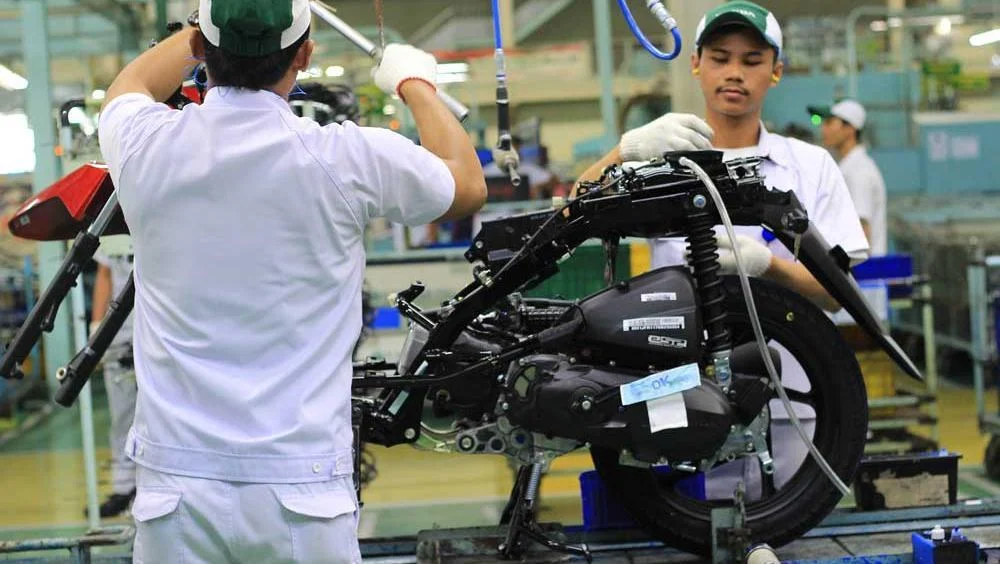
The Indonesian motorcycle industry recorded a complex performance during the first half of 2026, characterized by a notable divergence between international shipments and local consumption. According to the latest data released by the Association of the Indonesian Motorcycle Industry (AISI) on July 12, 2026, the sector witnessed a significant contraction in export volumes across all categories—Completely Built Up (CBU), Completely Knocked Down (CKD), and individual components—during the month of June. Conversely, the domestic market showed robust resilience, with sales figures rebounding to surpass the half-million unit mark, providing a much-needed counterbalance to the slowing global demand.
The decline in exports during June 2026 has raised questions regarding the shifting dynamics of the global two-wheeler market. Data indicates that CBU exports, which represent fully assembled motorcycles ready for the showroom floor, reached only 50,067 units in June. This figure represents a 9.3 percent decrease compared to the performance in May 2026. The downward trend was not limited to finished products; the CKD sector, which involves the export of disassembled kits for local assembly in destination countries, also experienced a downturn. CKD exports fell from 697,614 units in May to 644,402 units in June. Furthermore, the export of vehicle components, a vital part of Indonesia’s manufacturing ecosystem, saw a contraction of 9.9 percent over the same period.
Despite the monthly dip, the cumulative figures for the first semester of 2026 paint a picture of a massive industrial operation. From January to June 2026, Indonesia successfully exported 316,819 CBU units. The CKD segment remained the powerhouse of international trade for the industry, with a total of 3,863,794 units shipped abroad during the first six months. Additionally, the component export sector achieved a staggering volume of 81,967,446 parts, underscoring Indonesia’s role as a primary manufacturing hub for global motorcycle brands such as Honda, Yamaha, Suzuki, and Kawasaki.
Chronological Overview of the 2026 Motorcycle Market
To understand the current state of the industry, it is essential to examine the trajectory of the market throughout the first half of the year. The year 2026 began with a period of stabilization following the post-pandemic adjustments of previous years.
In January, the industry maintained a steady pace as manufacturers adjusted production lines for new model year releases. February emerged as the standout month for the domestic market, recording the highest monthly sales of the year thus far, with figures reaching approximately 587,000 units. This surge was largely attributed to early-year promotions and the introduction of several updated scooter models that captured consumer interest.
The months of March and April saw a moderate cooling of demand, a seasonal trend often associated with shifting consumer spending priorities. However, April faced additional challenges as logistical bottlenecks and fluctuating raw material costs began to exert pressure on export schedules. By May, while domestic sales hovered in the 470,000 to 480,000 range, export volumes remained relatively high before the sharp correction observed in June.
The June data serves as a pivotal point for the industry. While the export decline is concerning for trade balances, the recovery of domestic sales to 515,136 units—a 7.5 percent increase from May’s 479,388 units—suggests that local purchasing power remains strong. This domestic growth has allowed the industry to achieve a total of 3,129,587 units sold locally in the first half of 2026, representing a 0.8 percent year-on-year increase compared to the same period in 2025.
Deep Dive into Export Challenges and Global Factors
The contraction in June’s export figures can be attributed to a variety of external and internal factors. Industry analysts suggest that the 9.3 percent drop in CBU exports may be linked to economic cooling in key destination markets within Southeast Asia and Latin America. Inflationary pressures in these regions have led to higher financing costs for consumers, slowing the replacement cycle for two-wheelers.
Furthermore, the rise of domestic manufacturing capabilities in countries that previously relied on Indonesian imports has created a more competitive landscape. As nations like Vietnam and the Philippines expand their own assembly lines, the demand for Indonesian CKD kits and CBU units faces natural headwinds. The 9.9 percent drop in component exports further suggests that global supply chains are recalibrating, with some manufacturers potentially shifting sourcing strategies to mitigate geopolitical risks or to take advantage of localized incentives in other regions.
However, it is important to view the June decline within the broader context of the semester. With over 3.8 million CKD units exported in six months, Indonesia remains a dominant force. The temporary dip in June may reflect a "wait-and-see" approach by international distributors ahead of the third-quarter product launches and the anticipated transition toward more stringent emission standards in several international markets.
Domestic Resilience and the Path to 6.4 Million Units
While the export market faced turbulence, the Indonesian domestic market proved to be the industry’s anchor. The jump to 515,136 units in June is a significant psychological and economic milestone. After dipping into the 400,000-unit range in previous months, returning to the 500,000-unit level indicates a stabilization of consumer confidence.
Several factors have contributed to this domestic growth:
- New Model Launches: The second quarter of 2026 saw the release of several highly anticipated fuel-efficient scooters and entry-level sportbikes, which traditionally drive the bulk of Indonesian sales.
- Financing Accessibility: Despite global interest rate volatility, local multi-finance companies have remained aggressive in offering competitive credit schemes, making motorcycle ownership accessible to the middle and lower-income segments.
- Agricultural Cycles: In many regions outside of Java, the harvest season in the second quarter provided rural consumers with the liquidity necessary for vehicle purchases.
The AISI has set an ambitious domestic sales target of 6.4 million units for the full year of 2026. With 3.12 million units already sold in the first half, the industry needs to move approximately 3.28 million units in the second half to meet this goal. Historically, the second semester in Indonesia—spanning from July to December—is the more productive half for the automotive sector. This period encompasses the year-end holiday season, various regional festivals, and the year-end "cuci gudang" (clearance) sales events that typically drive high volumes. Based on these historical patterns, the target of 6.4 million units appears not only feasible but highly likely, provided that macroeconomic stability is maintained.
Official Responses and Industry Sentiment
While official statements from individual manufacturers remain cautious, the general sentiment within AISI reflects a blend of vigilance regarding exports and optimism for the home market. Spokespersons for the association have indicated that the focus for the remainder of the year will be on maintaining production efficiency to keep prices competitive amidst fluctuating commodity prices.
"The fluctuation in June’s export data is a reminder of the volatility in the global market," noted an industry representative in an informal briefing following the data release. "However, the strength of our domestic consumers is the backbone of the industry. We are working closely with the government to ensure that the transition to newer technologies, including electric motorcycles, does not disrupt the momentum we have built in the first half of the year."
Government officials from the Ministry of Industry have also weighed in, emphasizing the importance of diversifying export destinations. There is a concerted effort to push Indonesian-made motorcycles into African and Middle Eastern markets to reduce reliance on traditional ASEAN partners. Additionally, the government continues to promote the "Local Content Requirement" (TKDN) to ensure that even as export volumes fluctuate, the value-add within the Indonesian economy remains high.
The Role of Electric Vehicles and Future Outlook
A significant underlying narrative in the 2026 data is the gradual integration of Electric Vehicles (EVs) into the total sales figures. While internal combustion engine (ICE) motorcycles still dominate the 3.1 million units sold in H1, the growth rate of electric two-wheelers is outpacing traditional segments in terms of percentage. Government subsidies and the expansion of charging infrastructure in major cities like Jakarta, Surabaya, and Bandung have begun to yield results.
As the industry moves into the second half of 2026, the "EV factor" will likely play a larger role in helping the industry reach its 6.4 million unit target. Manufacturers are expected to introduce more affordable EV models that cater to the "oek" (online motorcycle taxi) industry, which is a massive driver of demand in Indonesia.
In conclusion, the June 2026 report from AISI highlights a transitional period for the Indonesian motorcycle industry. The "deep" decline in exports serves as a cautionary tale of global economic interconnectedness, while the "meroket" (skyrocketing) domestic sales figures underscore the enduring importance of the Indonesian consumer. As the industry enters the second half of the year, all eyes will be on whether the domestic momentum can carry the sector toward its year-end goals and if the export market can find a new floor from which to recover. With a solid foundation of over 3 million units sold in six months, the Indonesian motorcycle industry remains a vital pillar of the national economy, navigating global headwinds with local strength.
