
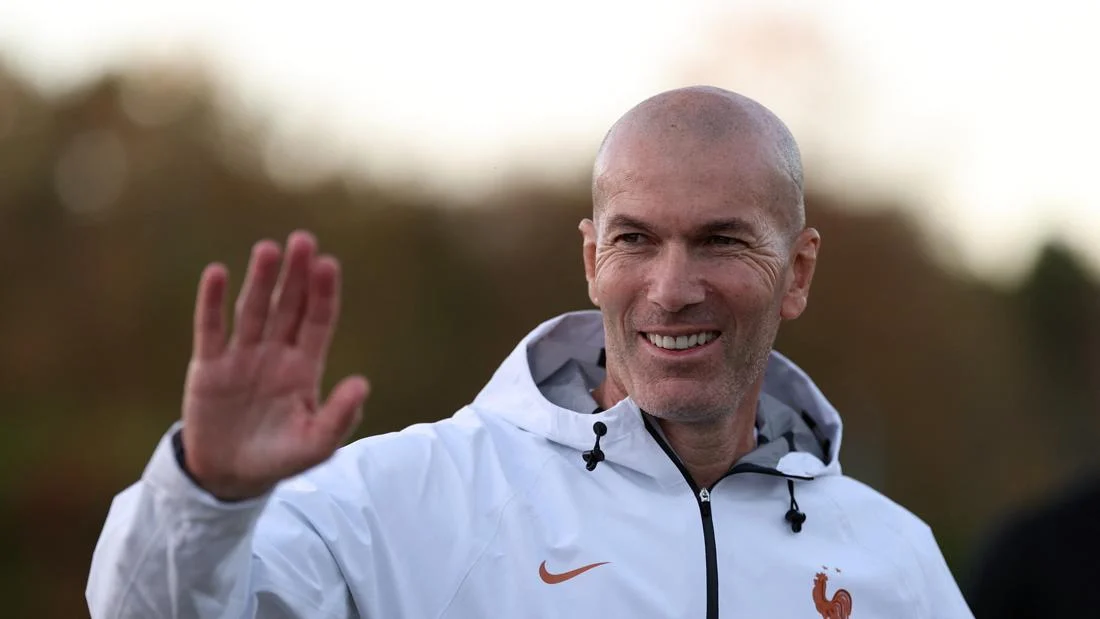
The European football calendar reaches a fever pitch this weekend as the UEFA Nations League returns with a slate of blockbuster encounters from League A. Among the standout fixtures scheduled for the upcoming matchday, Group A1 is set to capture the attention of the global footballing community. The spotlight shines brightest on Kocaeli Stadyumu, where Turkey is slated to host France in a match carrying immense historical and sporting significance. Beyond the traditional rivalry between the two nations, this encounter marks a monumental watershed moment for the French national team: the official managerial debut of Zinedine Zidane.
The appointment of Zidane to the helm of Les Bleus has been one of the most anticipated coaching transitions in modern football history. For months, media outlets and supporters alike speculated on when the iconic former playmaker would take over the reins of his country’s senior team. That moment has finally arrived, setting the stage for what many hope will be a golden new chapter for French football. As the team prepares to step onto the pitch in Turkey, the pressure, expectations, and tactical intrigue surrounding Zidane’s inaugural match are palpable.
Simultaneously, Group A1 features another heavyweight clash at the Stadio Olimpico in Rome, where Italy is set to lock horns with Belgium. Like France, both of these footballing powerhouses enter this fixture under the guidance of newly appointed managers, promising a fascinating tactical chess match. With vital points on the line in Europe’s premier international tournament, the opening matches of this Nations League cycle offer an early indication of which continental giants are adapting successfully to their new leadership paradigms.
The Chronology and Context of Zidane’s Appointment
To fully appreciate the gravity of Zinedine Zidane’s debut against Turkey, one must examine the chronology of events that led to this managerial milestone. The departure of Didier Deschamps from the French dugout at the conclusion of the previous international cycle marked the end of an era. Deschamps, who guided France to World Cup glory in 2018 and a runner-up finish in 2022, left behind a legacy of stability and competitive excellence. However, with the national federation seeking a fresh tactical impetus, the path was cleared for Zidane.
Zidane’s pedigree as both a player and a manager is virtually peerless. As the talismanic playmaker of the French generation that captured the 1998 FIFA World Cup and UEFA Euro 2000, he understands the unique pressures and expectations associated with representing the national crest. His transition to management was met with equal acclaim, most notably during his historic tenure at Real Madrid. At the Santiago Bernabéu, Zidane achieved the unprecedented feat of winning three consecutive UEFA Champions League titles, alongside domestic triumphs in LaLiga.
Following a self-imposed hiatus from club management, Zidane’s acceptance of the French national team job represents the ultimate homecoming. The French Football Federation (FFF) acted swiftly to secure his signature, viewing him as the ideal candidate to maintain the nation’s elite status. Analysts and former players have widely praised the appointment, noting that Zidane’s aura and tactical acumen command immediate respect within the dressing room. Yet, translating club success to the international stage presents a unique set of challenges, beginning with a hostile away fixture against a fiercely proud Turkish side in Kocaeli.
Tactical Outlook: Turkey vs. France at Kocaeli Stadyumu
The tactical battle at Kocaeli Stadyumu on Saturday, September 26, 2026, scheduled for 01.45 WIB, promises to be a rigorous test for the newly minted French coach. Turkey, playing in front of an intensely partisan home crowd, has historically proven to be a formidable opponent on home soil. Under the guidance of their own technical staff, the Crescent-Stars have built a reputation for high-intensity pressing, tactical discipline, and quick transitions.
For Zidane, the primary objective will be to instill a fluid, possession-dominant style while maintaining the defensive solidity that became a hallmark of the Deschamps era. While Zidane utilized a pragmatic, highly adaptable 4-3-3 or 4-2-3-1 formation during his time at Real Madrid, analysts are eager to see how he configures France’s generational depth of talent. With world-class operators anchoring every area of the pitch, the onus will be on Zidane to maximize the creative output of his midfielders while unleashing a devastating frontline.
Preparatory training sessions at Clairefontaine have reportedly focused on tactical shape, quick ball circulation, and defensive recovery. Senior players within the squad have publicly voiced their enthusiasm for working under the legendary midfielder, noting that his presence alone has injected a renewed sense of vigor and ambition into the camp. However, friendly optimism will quickly give way to the harsh realities of competitive international football once the referee blows the opening whistle in Kocaeli.
The Italian Renaissance Under Roberto Mancini
While all eyes are fixed on the French dugout in Turkey, Group A1 offers an equally compelling narrative in the Italian capital. Italy welcomes Belgium to the historic Stadio Olimpico in Rome, marking the beginning of the second managerial tenure for Roberto Mancini with the Azzurri.
Mancini’s return to the Italian national team bench comes in the wake of a deeply painful period for Italian football. The failure of the Azzurri to qualify for the 2026 FIFA World Cup marked an unprecedented and catastrophic low point, representing the third consecutive time the four-time world champions missed the quadrennial global showcase. The subsequent fallout led to a restructuring of the technical staff and a collective soul-searching within the Italian Football Federation (FIGC).
Seeking stability and a proven winner, the federation turned back to the man who brought them European glory. Mancini previously managed Italy from 2018 to 2023, masterminding a remarkable cultural revival that culminated in victory at UEFA Euro 2020. His departure prior to the recent qualifying campaign left a void that the federation ultimately decided could best be filled by bringing him back. Mancini’s mandate is clear: restore tactical identity, rebuild national confidence, and secure qualification for the next major tournament cycle, starting with a strong showing in the UEFA Nations League.
Belgium’s New Direction Under Marc van Bommel
On the opposing bench in Rome, Belgium enters a new era of its own under the stewardship of newly appointed head coach Marc van Bommel. The former Dutch international and tenacious midfielder takes over the Red Devils following the departure of Rudi Garcia, who successfully guided Belgium to the quarter-finals of the 2026 FIFA World Cup.
Van Bommel inherits a squad in a state of gradual transition. While the golden generation of Belgian football has largely transitioned into veteran leadership roles, a vibrant crop of emerging talent is beginning to stake its claim in the senior setup. Known for demanding tactical rigor, physical commitment, and disciplined positional play from his managerial stints at clubs like PSV Eindhoven and Royal Antwerp, Van Bommel is expected to add a layer of defensive resilience to Belgium’s traditionally expansive attacking philosophy.
The tactical duel between Mancini’s revitalized Italian side and Van Bommel’s defensively resolute Belgians provides a fascinating subplot to the Group A1 proceedings. Both coaches are eager to make an immediate statement of intent, making the clash at the Stadio Olimpico a must-watch affair for tactical purists and casual fans alike.
Implications and Broader Impact on European Football
The opening round of fixtures in Group A1 carries profound implications for the broader landscape of European international football. The UEFA Nations League has evolved from an experimental tournament into a highly coveted trophy and a crucial pathway for qualification seeding. Consequently, no team can afford a slow start.
For France, a victory under Zidane would not only validate the federation’s managerial gamble but also send an ominous warning shot to the rest of Europe. Conversely, a stumble in Turkey would immediately invite intense media scrutiny, illustrating the immense pressure that accompanies the most high-profile job in French sport. The margin for error at the elite level of international management is razor-thin, and Zidane’s ability to manage expectations, squad rotation, and tactical adjustments will be scrutinized from his very first match.
For Italy and Belgium, the fixture in Rome serves as an early barometer of their respective rebuilding projects. For Italy, a convincing performance against top-tier opposition is essential to heal the psychological wounds of missing out on the 2026 World Cup and to reassure a demanding fanbase that the team is moving in the right direction. For Belgium, securing a positive result away from home against a wounded Italian giant would establish Van Bommel’s credentials immediately and signal that the Red Devils remain a formidable force on the continent.
Conclusion and Official Match Schedule
As the clock ticks down to kickoff, the anticipation across Europe reaches fever pitch. The convergence of managerial debuts, historic rivalries, and continental prestige ensures that this round of the UEFA Nations League will be remembered as a pivotal juncture in the current footballing cycle. Whether Zinedine Zidane can seamlessly translate his legendary status into managerial triumph on the international stage, or whether his tactical counterparts can spoil the historic occasion, remains to be seen.
The complete fixture list for League A, Group A1 matches scheduled for this Saturday is as follows:
UEFA Nations League Group A1 Fixtures
Date: Saturday, September 26, 2026
Time: 01.45 WIB
- Turkey vs. France (Venue: Kocaeli Stadyumu)
- Italy vs. Belgium (Venue: Stadio Olimpico)
As the teams take to the pitches in Kocaeli and Rome, millions of television viewers worldwide will bear witness to the dawn of new eras, where tactical philosophies clash and legends write the opening lines of their next great chapters.
