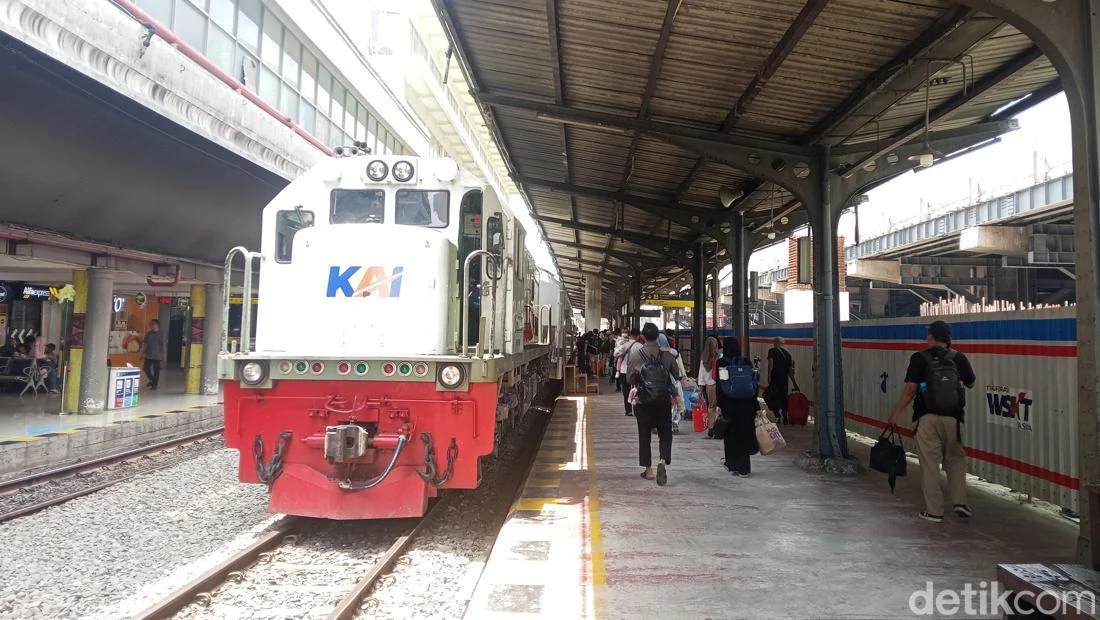
Jakarta, Indonesia – PT Kereta Api Indonesia (KAI), the state-owned railway operator, currently manages an expansive fleet of 12,856 rolling stock units, underscoring its pivotal role in facilitating both intra-city and inter-city passenger travel, as well as crucial logistics operations across the Indonesian archipelago. This formidable inventory, detailed by KAI’s Vice President Corporate Communication Anne Purba, is a testament to the company’s commitment to maintaining a robust and reliable rail transport system essential for national mobility and economic distribution. The sheer scale of KAI’s operations is reflected in its diverse fleet composition, which includes locomotives, Electric Multiple Units (EMUs) or Kereta Rel Listrik (KRL), passenger coaches, freight wagons, and Diesel Multiple Units (DMUs) or Kereta Rel Diesel Elektrik/Indonesia (KRDE/I), each meticulously managed to ensure optimal performance and safety.
Comprehensive Fleet Composition and Strategic Deployment
The 12,856 units under KAI’s stewardship are strategically allocated to address varied operational demands. Specifically, the fleet comprises 551 locomotives, which serve as the primary motive power for both passenger and freight trains, providing the necessary traction across KAI’s extensive network. Complementing these are 1,064 KRL units, predominantly deployed for urban and agglomeration services, catering to the high-density commuter traffic in metropolitan areas. For longer-distance passenger services, KAI utilizes 2,238 passenger coaches, designed to provide comfort and safety for inter-city travelers. The largest component of the fleet, numbering 8,907 units, consists of freight wagons, which are indispensable for the efficient distribution of a wide array of commodities throughout the country. Finally, 96 KRDE/I units support regional and local services, offering flexibility in areas where electrification might not be feasible or for specific operational needs.
Anne Purba emphasized the critical importance of this diverse rolling stock in maintaining the capacity and reliability of Indonesia’s rail-based transportation system. "The mobility of society and the distribution of logistics require the readiness of adequate rolling stock. Each locomotive, KRL, passenger coach, freight wagon, and KRDE/I unit has complementary functions to ensure that services remain safe, reliable, and responsive to demand," Purba stated in an official release on Sunday, July 19, 2026. This statement highlights KAI’s holistic approach to fleet management, where each type of rolling stock plays a distinct yet interconnected role in the broader operational framework.
A more detailed breakdown of the fleet percentages reveals the strategic focus on freight operations. Freight wagons constitute the overwhelming majority, accounting for approximately 69.28% of the total fleet with 8,907 units. This dominance reflects Indonesia’s reliance on rail for bulk commodity transport and its strategic importance to various industries. Passenger coaches represent 17.41% (2,238 units), KRLs comprise 8.28% (1,064 units), locomotives make up 4.29% (551 units), and KRDE/I units are the smallest segment at approximately 0.75% (96 units). This distribution is not arbitrary but rather a calculated deployment reflecting the specific demands of KAI’s diverse service portfolio. Locomotives are designed to haul heavy loads over long distances, while passenger coaches are configured for passenger comfort and safety. Freight wagons are purpose-built to handle various types of commodities, from bulk goods to containers, each optimized for specific handling requirements. KRLs and KRDE/I units, with their multiple-unit configurations, are ideal for high-frequency, shorter-distance routes, offering rapid acceleration and deceleration suitable for urban and suburban environments. These functional differences directly influence operational aspects such as crew requirements, train formations, inspection protocols, maintenance cycles, and the necessary supporting infrastructure.
Historical Context and Evolution of Indonesian Rail Transport
The origins of Indonesia’s railway system date back to the Dutch colonial era, with the first railway line inaugurated in 1867. Over nearly a century, the network expanded significantly, primarily serving the economic interests of the colonial power by facilitating the transport of agricultural products and minerals from plantations and mines to ports. Following Indonesia’s independence in 1945, the nationalization of these railways led to the establishment of the Djawatan Kereta Api Republik Indonesia (DKARI), which eventually evolved into PT Kereta Api Indonesia (KAI). This transition marked a shift in focus from colonial exploitation to serving the needs of the newly independent nation.
In the decades since, KAI has undergone significant modernization and expansion, particularly in response to rapid urbanization and economic growth. The early 2000s saw a renewed government commitment to rail infrastructure development, recognizing its potential to alleviate road congestion, reduce logistics costs, and provide a more sustainable mode of transport. Investments poured into track rehabilitation, signaling system upgrades, and, crucially, fleet modernization. The introduction of modern KRLs for Jakarta’s commuter lines, for instance, revolutionized urban transit, significantly improving capacity and punctuality. Similarly, the ongoing development of new freight corridors and the enhancement of existing ones underscore rail’s strategic importance in supporting Indonesia’s industrial and agricultural sectors. KAI’s current extensive fleet is a direct outcome of this continuous investment and strategic vision, positioning it as a cornerstone of the nation’s transportation infrastructure.
Surging Demand: Passenger and Freight Performance in 2026
The management of such a vast fleet is directly correlated with the escalating demand for rail transport in Indonesia. KAI Group’s performance in the first half of 2026 illustrates this upward trend, with passenger numbers reaching an impressive 258,993,359. This represents a substantial increase of 7.55% compared to the 240,805,920 passengers served during the same period in 2025. This consistent growth in passenger volume can be attributed to several factors, including the country’s growing population, increasing urbanization leading to greater commuter reliance on public transport, and KAI’s sustained efforts to enhance service quality, punctuality, and customer experience. Improvements in ticketing systems, station facilities, and on-board amenities have made rail travel an increasingly attractive option for millions of Indonesians. Furthermore, government policies promoting public transport and investments in integrated multimodal hubs have also played a significant role in encouraging ridership.
On the freight front, KAI also recorded robust performance, transporting a total volume of 32,498,043 tons throughout the first half of 2026. This freight volume is predominantly driven by bulk commodities, with coal accounting for 26,534,095 tons. The remaining 5,963,948 tons comprise a diverse range of non-coal goods, including cement, fuel oil, containers, various bulk and plantation commodities, general cargo, and parcel deliveries. This broad spectrum of freight services underscores KAI’s vital contribution to various sectors of the Indonesian economy. The reliable movement of these commodities supports energy production, construction projects, industrial operations, trade, and the integrity of supply chains across different regions. For instance, the efficient transport of cement is crucial for infrastructure development, while fuel oil distribution supports energy needs nationwide. The growth in container traffic also highlights the increasing integration of rail into Indonesia’s logistics network, offering a more cost-effective and environmentally friendly alternative to road transport for long-haul movements. This consistent growth in both passenger and freight volumes necessitates a proactive approach to capacity planning and fleet management, ensuring that KAI can continue to meet the nation’s evolving transport needs.
Rigorous Maintenance and Safety Protocols: Ensuring Operational Excellence
To uphold its commitment to safety and reliability, KAI implements a stringent regimen of inspection and maintenance for its entire fleet. Every single unit of rolling stock undergoes thorough checks before being cleared for service. These pre-service inspections are designed to verify compliance with all technical, safety, and operational requirements, ensuring that each locomotive, coach, KRL, KRDE/I, and freight wagon is in optimal condition to perform its designated duties. This proactive approach minimizes the risk of operational failures and enhances overall safety for passengers and cargo.
Beyond daily checks, KAI adheres to a comprehensive schedule of periodic maintenance, which is meticulously planned based on several critical parameters: operational time, accumulated mileage, the condition of individual components, and the findings from previous inspections. This multi-faceted approach ensures that potential issues are identified and addressed before they can escalate. The maintenance activities are carried out at two primary levels: Depots and Balai Yasa. Depots are strategically located across the network and are responsible for routine inspections and minor maintenance tasks that support daily operations. These facilities handle quick turnarounds and essential checks, keeping the fleet running smoothly on a day-to-day basis.
Balai Yasa, on the other hand, are larger, more specialized workshops equipped to handle extensive periodic maintenance and major overhaul works. These facilities conduct more in-depth inspections, component replacements, structural repairs, and comprehensive refurbishments. The work at Balai Yasa is typically scheduled for longer intervals, such as every few years or after a certain mileage threshold, ensuring the long-term integrity and safety of the rolling stock. This two-tiered maintenance system, combining routine checks with heavy overhauls, is fundamental to KAI’s operational strategy, guaranteeing that its diverse fleet remains in peak condition, capable of delivering safe, reliable, and efficient services across Indonesia’s challenging railway landscape. The commitment to these rigorous protocols is a cornerstone of KAI’s reputation as a dependable public transport provider.
KAI’s Strategic Outlook: Capacity Expansion and Modernization
The continuous growth in both passenger and freight traffic underscores the necessity for KAI to maintain a forward-looking strategy focused on capacity expansion and fleet modernization. Anne Purba articulated this vision, stating, "Customer growth needs to be followed by planned capacity readiness. The availability of rolling stock, technical reliability, maintenance facilities, and continuous renewal are interconnected parts in responding to the needs of community mobility." This statement encapsulates KAI’s commitment to strategic planning that integrates various aspects of its operations to meet future demands effectively.
KAI’s strategy involves several key pillars. Firstly, there is a sustained investment in new rolling stock. As older units reach the end of their service life, they are gradually replaced with newer, more technologically advanced models that offer greater efficiency, improved safety features, and enhanced passenger comfort or freight capacity. This modernization drive extends to all segments of the fleet, from more powerful and fuel-efficient locomotives to modern KRLs with higher passenger capacities and advanced safety systems, as well as specialized freight wagons designed for specific commodities. Secondly, there is a strong emphasis on upgrading existing maintenance facilities and developing new ones. With an expanding and modernizing fleet, the infrastructure for its upkeep must also evolve. This includes investing in state-of-the-art diagnostic equipment, expanding workshop capacities, and training a skilled workforce capable of handling advanced railway technology.
Furthermore, KAI is actively exploring opportunities for digitalization across its operations and maintenance processes. Implementing smart rail systems, predictive maintenance analytics, and digital fleet management tools can significantly enhance operational efficiency, reduce downtime, and improve overall service reliability. Collaboration with government agencies and other stakeholders is also crucial for KAI’s future. This includes advocating for continued investment in railway infrastructure, such as new lines, double tracking, and electrification projects, which are essential for expanding KAI’s network and increasing its operational capacity. By aligning its strategic goals with national development objectives, KAI aims to strengthen its role as a key enabler of economic growth and social connectivity in Indonesia.
Broader Impact and Implications for National Development
The extensive operations and strategic management of KAI’s vast fleet have profound implications for Indonesia’s national development across economic, social, and environmental dimensions. Economically, KAI is a significant contributor to the nation’s Gross Domestic Product (GDP). Its operations create numerous direct and indirect jobs, ranging from train operators and maintenance technicians to administrative staff and construction workers involved in infrastructure projects. The procurement of new rolling stock and maintenance services also stimulates domestic manufacturing and related industries, fostering local expertise and supply chains. By facilitating the efficient movement of goods, KAI helps reduce logistics costs for businesses, thereby enhancing the competitiveness of Indonesian products in both domestic and international markets. This efficiency is particularly vital for an archipelagic nation where inter-island connectivity is paramount.
Socially, KAI plays a crucial role in enhancing connectivity and accessibility for millions of Indonesians. Improved passenger services, especially in urban agglomerations, offer a reliable and affordable mode of transport, reducing commuting times and improving the quality of life for urban residents. Inter-city rail services connect distant regions, fostering tourism, trade, and social cohesion. KAI’s commitment to safety and punctuality also builds public trust in the railway system, encouraging more people to opt for train travel. Environmentally, rail transport is widely recognized as a more sustainable alternative to road transport, particularly for mass transit and heavy freight. By shifting passenger and freight volumes from roads to railways, KAI helps reduce carbon emissions, lower fuel consumption, and alleviate road congestion, contributing significantly to Indonesia’s climate change mitigation efforts and promoting greener transportation practices.
Despite its successes, KAI faces ongoing challenges. Securing adequate funding for continuous fleet modernization and infrastructure expansion remains a significant hurdle. Land acquisition for new railway lines and station developments can be complex and time-consuming. Moreover, KAI must navigate the competitive landscape of the transportation sector, continually innovating to retain and attract customers amidst growing options. Adapting to rapid technological advancements, such as high-speed rail integration and advanced signaling systems, also requires substantial investment and expertise. Nevertheless, KAI’s strategic vision, coupled with its robust fleet management and commitment to operational excellence, positions it as an indispensable asset in Indonesia’s journey towards becoming a more connected, prosperous, and sustainable nation. The continuous evolution of its services and infrastructure will undoubtedly shape the future of mobility and logistics in the archipelago for decades to come.