
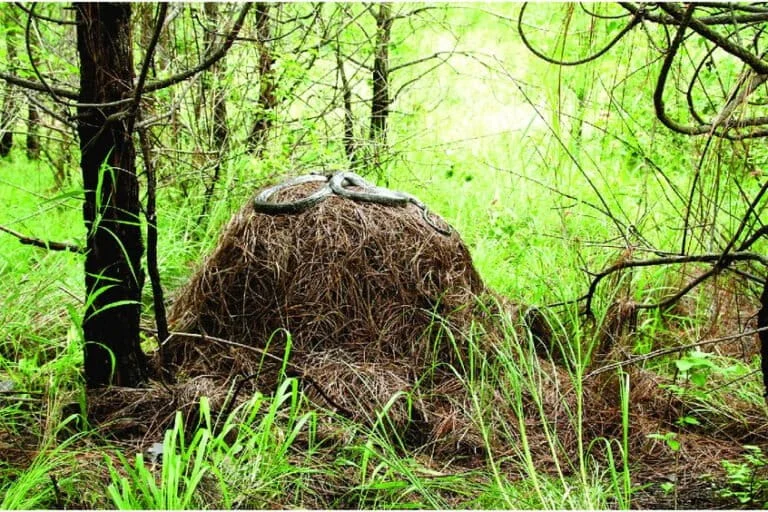
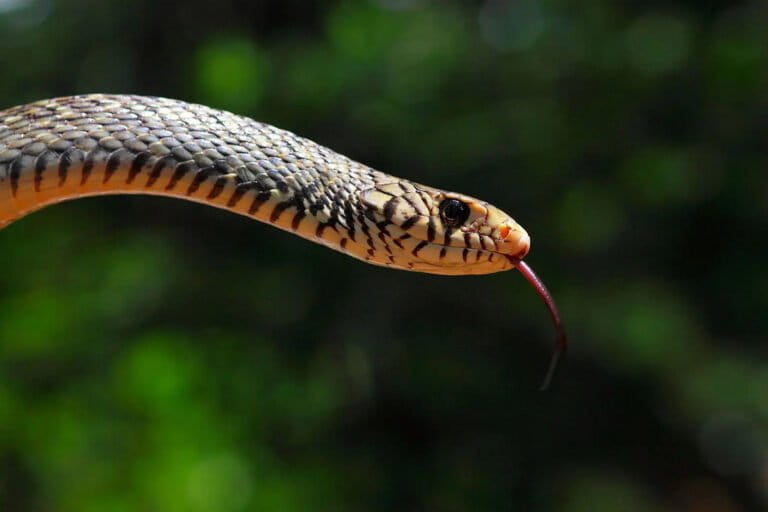
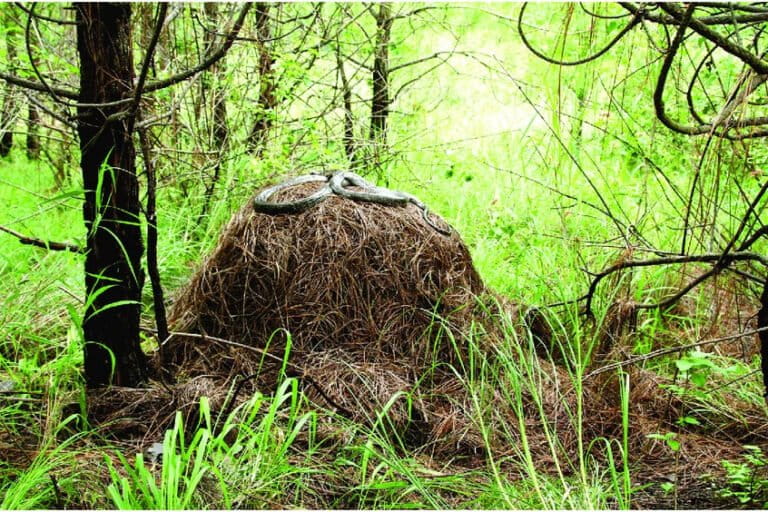
The king cobra (Ophiophagus hannah), recognized globally as the longest venomous snake, is distinguished not only by its lethal potency and imposing stature but also by a unique reproductive behavior that defies the norms of reptilian biology. While the vast majority of reptiles simply deposit their eggs in a suitable substrate and abandon them, leaving the fate of their offspring to environmental chance, the female king cobra invests significant energy in constructing elaborate, dedicated nests. Recent empirical research conducted in the Himalayan foothills of Uttarakhand, India, has provided a granular look at how these structures function as vital thermal buffers, directly dictating the survival and developmental outcomes of the next generation of apex predators.
The Thermal Challenge of High-Altitude Nesting
For ectothermic species, the environment is the primary regulator of metabolic processes. When a reptile lays eggs, the thermal environment of the nest serves as a critical incubator. Temperatures that are too high can lead to developmental abnormalities or mortality, while temperatures that are too low can arrest development or extend the incubation period to non-viable lengths. In the subtropical, mountainous terrain of the Western Himalayas, these risks are amplified by volatile weather patterns and sharp fluctuations in diurnal and seasonal temperatures.
A team of researchers led by Jignasu Dolia, Abhijit Das, and Nachiket Kelkar sought to quantify the extent to which the king cobra’s nest acts as an engineered micro-environment. Their study, published in the Journal of Thermal Biology, involved the deployment of automated data loggers across 25 natural nests. By recording internal nest temperatures alongside ambient forest conditions, the team aimed to bridge the gap between architectural effort and biological success.
The study established that the nest is not merely a passive pile of forest floor debris but a sophisticated thermal buffer. While external temperatures drop significantly as elevation increases—a standard meteorological phenomenon—the internal environment of the king cobra’s nest remains remarkably stable. The gundukan, or mound, effectively dampens the sharp, unpredictable swings in temperature that characterize the Indian Himalayan foothills, providing a reliable incubator that keeps the developing embryos within a "Goldilocks zone" of viability.
Chronology and Field Observations
The research spanned several breeding seasons, relying on both remote sensing technology and traditional ecological knowledge. Because king cobra nests are exceptionally difficult to locate in the dense, rugged terrain of the Himalayan forests, the research team collaborated extensively with local villagers. These residents, who frequent the forest for agriculture and resource collection, provided the initial sightings that allowed the scientists to monitor the nests from the onset of construction through to the hatching of the neonates.
The timeline of the nesting process is labor-intensive and lengthy. Once the female selects a site, she begins to gather leaf litter and pine needles to form a mound. During the 70 to 100-day incubation period, the female exhibits a high level of parental vigilance, often observed coiling atop or near the mound in a state of heightened alertness. However, a peculiar and yet-to-be-explained behavioral trait occurs near the end of the cycle: the female invariably abandons the nest shortly before the eggs hatch.
The researchers noted a stark correlation between thermal stability and hatching success. In two specific nests monitored early in the study, the internal temperature remained 2 to 4 degrees Celsius higher than the surrounding environment, accompanied by a near-constant relative humidity of 97 percent. In this optimal scenario, the success rate was near-total: out of 47 eggs, only one failed to hatch. Conversely, in a high-altitude nest situated 1,730 meters above sea level, the results were catastrophic. An average internal temperature of just 21 degrees Celsius resulted in a 96 percent failure rate, with only one neonate emerging from a clutch of 25.
Data-Driven Insights into Nesting Biology
The statistical analysis performed by Dolia and his colleagues challenges some long-held assumptions regarding reptilian nest construction. One of the most significant findings is that the physical size of the nest and the specific composition of the leaf litter do not necessarily correlate with higher internal temperatures. In other words, a "larger" nest is not automatically a "warmer" one. Instead, the size of the nest appears to be a function of the number of eggs deposited. Larger nests accommodate larger clutches, but the thermoregulatory capacity remains dependent on the structural integrity and the ambient forest climate.
The data underscores the high stakes of reproduction at the edge of the species’ range. As a species often associated with the humid, lowland tropics, the king cobra’s presence at altitudes exceeding 1,600 meters in the Uttarakhand region is a testament to its evolutionary adaptability. However, this adaptability has limits. When ambient temperatures dip too low—as evidenced by the failure of the high-altitude nest—the thermal buffering capacity of the nest is overwhelmed. This suggests that as climate patterns shift, the geographic range of the king cobra may be sensitive to changes in mountain temperature gradients.
The Conservation Imperative
The king cobra is currently classified as "Vulnerable" by the International Union for Conservation of Nature (IUCN). The rarity of these nests in the wild makes them incredibly precious from a conservation standpoint. During the course of this study, researchers documented instances where nests were destroyed by human interference, highlighting the urgent need for local education and protection strategies.
The researchers have taken the step of uploading their comprehensive dataset—which includes granular temperature logs and hatching success metrics—to the open-access repository Zenodo. This move facilitates longitudinal study and allows other herpetologists to analyze the thermal regimes of king cobra nests across different global regions. Such open-access data is critical for building a global understanding of how apex predators respond to environmental stress.
Broader Implications for Herpetology
This study shifts the perception of the king cobra from a solitary, instinct-driven creature to an animal that employs a degree of "home-making" that has profound evolutionary consequences. By investing in a nesting site that provides a thermal buffer, the king cobra increases the likelihood that its offspring will hatch with greater physical vigor, weight, and length. These traits are essential for survival in a competitive, predator-heavy environment.
The findings also provide a cautionary tale regarding habitat loss. Since the nest’s ability to maintain a steady temperature depends on the specific micro-climate of the forest floor, the degradation of the canopy or the removal of leaf litter could indirectly render a habitat unsuitable for reproduction, even if the adult snakes are physically present.
As climate change continues to alter global thermal regimes, the "house-warming" behavior of the king cobra will likely become a primary focus of conservation biology. Protecting the specific forest patches where these snakes nest is not just about protecting a location; it is about protecting a sophisticated, evolved strategy that ensures the continuation of the species. The work of Dolia, Das, and Kelkar provides the baseline data necessary to ensure that these unique "nursery mounds" are recognized as critical habitats in the ongoing efforts to preserve the king cobra in its wild, mountain strongholds.
Conclusion
The research in Uttarakhand stands as a significant contribution to our understanding of the king cobra’s life cycle. By moving beyond the anecdotal and into the realm of quantitative thermal analysis, the study confirms that the king cobra’s nest is an essential tool for survival. As we move forward, the integration of local community knowledge with rigorous scientific data collection will remain the gold standard for studying and protecting this iconic, yet vulnerable, species. The data suggests that for the king cobra, the road to adulthood begins not with a birth, but with a carefully constructed cradle, the warmth of which is the difference between life and death in the cool, unpredictable heights of the Himalayas.
