
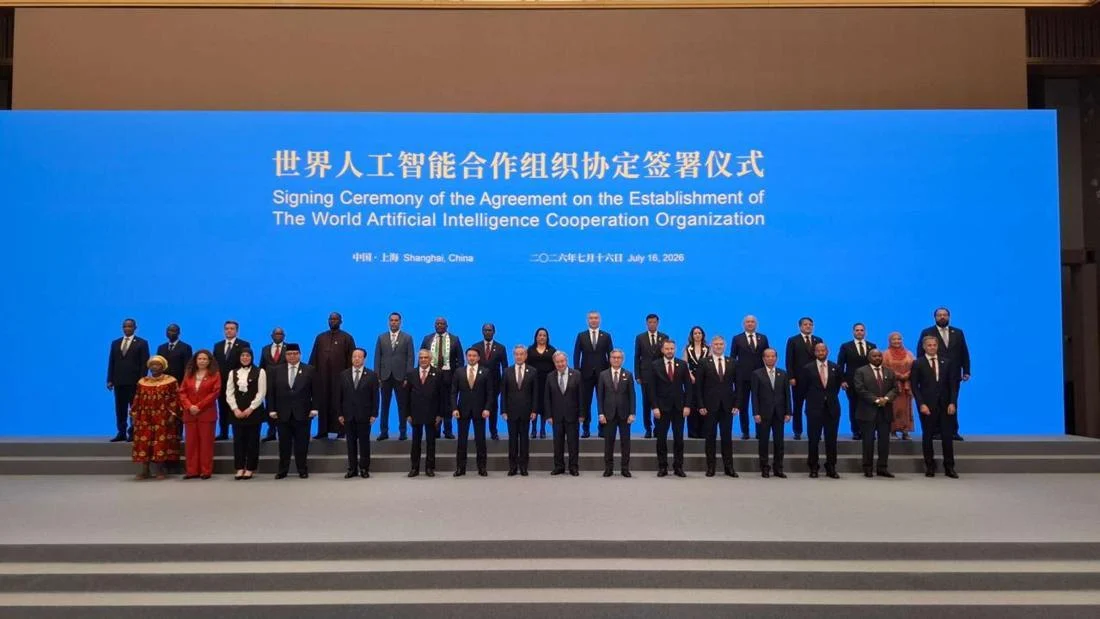
Indonesia has officially cemented its position as a key player in the burgeoning global landscape of artificial intelligence (AI) by becoming one of the 29 founding member states of the World Artificial Intelligence Cooperation Organization (WAICO). This landmark intergovernmental body, established to foster robust international collaboration in the development and governance of AI, marks a significant step towards a more unified and responsible approach to this transformative technology. The formal establishment of WAICO, underscored by the signing of its foundational charter, took place in Shanghai, China, on July 16, 2026. The Indonesian delegation, a testament to the nation’s commitment, was led by Coordinating Minister for Economic Affairs Airlangga Hartarto, who was accompanied by Deputy Minister of Communication and Digital Angga Raka Prabowo. The significance of WAICO’s formation was further amplified by the presence and endorsement of United Nations Secretary-General António Guterres during the signing ceremony, highlighting the international community’s recognition of the critical need for structured global AI governance.
The Genesis of WAICO: A United Nations-Backed Initiative
The establishment of WAICO emerges against a backdrop of increasing global recognition of AI’s profound impact on societies, economies, and international relations. For years, experts and policymakers have grappled with the dual nature of AI: its immense potential for progress and its inherent risks, including ethical dilemmas, issues of bias, privacy concerns, and the potential for misuse. The rapid pace of AI development, often outpacing regulatory frameworks, necessitated a dedicated international platform to guide its trajectory. WAICO is conceived as an independent, non-profit, intergovernmental organization operating under the overarching framework of the United Nations. This unique positioning grants it a broad mandate and legitimacy, distinguishing it from regional or sector-specific AI initiatives.
The primary objective of WAICO is multifaceted: to strengthen global cooperation in promoting AI innovation while simultaneously ensuring that its development is open, inclusive, responsible, and universally beneficial. Unlike previous dialogues that often centered around technologically advanced nations, WAICO’s foundation reflects a broader commitment to ensuring that the benefits of AI are accessible to all countries, particularly developing ones, and that its governance reflects a diverse range of perspectives. The UN’s involvement, symbolized by Secretary-General Guterres’s presence, underscores a collective aspiration to leverage AI for sustainable development goals, mitigate its risks, and prevent a deepening of the digital divide. The move to establish such an organization reflects a growing global consensus that AI’s cross-border implications demand a concerted, multilateral response, rather than fragmented national or regional approaches.
A Chronology of Collaboration: From Shanghai to Global Dialogue
The journey towards WAICO’s formal establishment involved extensive preparatory work and diplomatic engagements. While the specifics of the pre-founding negotiations are still emerging, the selection of Shanghai as the host city for the signing ceremony on July 16, 2026, signals China’s active role and commitment to fostering international AI cooperation. China, a major player in AI research and application, has consistently advocated for global dialogue on AI governance, positioning itself as a proponent of multilateralism in technological development. The high-level representation from Indonesia, with both a Coordinating Minister and a Deputy Minister attending, illustrates the strategic importance Jakarta places on this initiative.
The signing ceremony itself was not merely a formality but a symbolic convergence of nations committed to shaping the future of AI responsibly. Following this pivotal event, the Indonesian delegation, led by Deputy Minister Angga Raka Prabowo, actively participated in an "Informal Preparatory Session on the Establishment of WAICO" held on July 17, 2026. This follow-up meeting was crucial for laying the groundwork for the organization’s operational framework. Discussions during this session likely centered on immediate next steps, including the appointment of interim leadership, the drafting of initial work plans, and identifying priority areas for collaboration. For Indonesia, leading a session at such an early stage demonstrates its intent to be an active contributor rather than a passive participant, influencing WAICO’s direction from its very inception. This chronology underscores a rapid progression from foundational agreement to practical implementation, reflecting the urgency felt by member states to operationalize WAICO’s mandate.
Defining WAICO’s Mandate: Fostering Responsible and Inclusive AI
WAICO’s mandate extends beyond mere innovation; it seeks to embed principles of ethics, inclusivity, and shared benefit into the core of AI development. As an intergovernmental body, it will provide a unique forum for member states to deliberate on AI policies, share best practices, and collectively address challenges that transcend national borders. Its non-profit nature ensures that its focus remains on public good rather than commercial interests, aligning with the UN’s broader development agenda.
The organization’s specific functions are comprehensive:
- Capacity Building for Human Resources: This will involve facilitating training programs, workshops, and educational initiatives to equip professionals and policymakers in member states, especially developing ones, with the skills necessary to develop, deploy, and govern AI effectively. It aims to bridge knowledge gaps and foster a globally competent AI workforce.
- Expanding Access to AI Technology: WAICO will work towards democratizing access to AI tools, platforms, and infrastructure. This could include promoting open-source AI initiatives, facilitating technology transfer, and advocating for policies that reduce barriers to entry for countries seeking to adopt and adapt AI solutions.
- Strengthening Coordination of AI Development Strategies: By providing a platform for dialogue, WAICO intends to harmonize national AI strategies, prevent regulatory fragmentation, and foster interoperability between different AI systems. This coordination is vital to avoid a ‘race to the bottom’ in AI governance and ensure a coherent global approach.
- Promoting the Development of International AI Governance and Ethics: This is arguably WAICO’s most critical function. It will involve developing common norms, standards, and best practices for ethical AI. Key areas of focus will likely include data privacy, algorithmic bias, accountability frameworks, transparency requirements, and the societal impact of autonomous systems. The goal is to create a robust ethical framework that guides AI development across diverse cultural and legal contexts.
The emphasis on "open, inclusive, responsible, and beneficial" development is crucial. It signifies a departure from a purely technological perspective, acknowledging the need for AI to serve humanity’s best interests, protect fundamental rights, and contribute to sustainable development rather than exacerbate existing inequalities or create new vulnerabilities. The diversity of its founding members further reinforces this commitment to inclusivity, ensuring that the voices and needs of countries at varying stages of digital development are heard and integrated into global AI policy.
Indonesia’s Strategic Imperative: Catalysing National Digital Transformation
For Indonesia, joining WAICO as a founding member is not merely a diplomatic gesture but a strategic imperative deeply intertwined with its national digital transformation agenda. As the largest economy in Southeast Asia, Indonesia has ambitious goals to become a leading digital economy, leveraging technology to drive economic growth, improve public services, and enhance societal well-being. AI is recognized as a pivotal enabler of this vision.
The benefits for Indonesia are multi-layered:
- Active Role in Global AI Policy Formulation: Membership provides Indonesia with a direct seat at the table where global AI policies, norms, and standards are being shaped. This allows Jakarta to advocate for its national interests, ensure that global guidelines are culturally sensitive and applicable to its unique context, and champion the needs of developing nations. It is an opportunity to move from being a technology consumer to a technology co-creator and co-regulator on the international stage.
- Expanded International Cooperation: WAICO facilitates unparalleled opportunities for collaboration in technology, investment, research, and the development of Indonesia’s AI ecosystem. This could translate into:
- Technology Transfer: Gaining access to advanced AI research and applications from other member states.
- Joint Research and Development: Collaborating on projects in areas critical to Indonesia, such as smart cities, disaster management, agriculture tech, and healthcare AI.
- Investment Attraction: Positioning Indonesia as an attractive destination for foreign direct investment in AI startups, data centers, and digital infrastructure.
- Talent Exchange: Participating in programs that foster knowledge sharing and skill development among AI professionals globally.
- Acceleration of National Digital Transformation: WAICO is seen as a catalyst for Indonesia’s broader digital economy goals. By aligning its national AI strategy with international best practices and leveraging global expertise, Indonesia can:
- Boost AI-driven Sectors: Foster the growth of high-value-added sectors like fintech, e-commerce, smart manufacturing, and the creative economy, which are increasingly reliant on AI.
- Enhance Human Capital: Develop a skilled workforce capable of innovating and deploying AI solutions, addressing the critical shortage of AI talent.
- Strengthen Regulatory Frameworks: Inform and refine its national AI strategy, ethics guidelines, and data protection laws based on internationally agreed principles, ensuring a robust and trustworthy AI environment.
- Drive Economic Growth: Position AI as a new source of economic growth, attracting investment and creating high-quality jobs, thereby contributing to the national target of becoming a top-tier global economy.
Indonesia’s participation signals its proactive stance in ensuring that the future of AI is not only technologically advanced but also equitable and beneficial for all segments of its society.
Voices from the Delegation: Commitment to Ethical and Collaborative AI
The official statements from the Indonesian delegation underscore the strategic importance of WAICO membership. Deputy Minister of Communication and Digital Angga Raka Prabowo emphasized the crucial timing of this involvement. "Indonesia’s participation in WAICO is a strategic moment to strengthen national AI governance that is aligned with international best practices, while also opening avenues for cross-country collaboration in developing an inclusive and responsible AI ecosystem," Angga stated, as quoted from a press release on Saturday, July 18, 2026. This statement highlights Indonesia’s dual objective: to refine its domestic AI policies by learning from global standards and to actively contribute to shaping those standards. The emphasis on "inclusive and responsible" AI reflects a national commitment to ethical AI development that serves societal good.
While specific quotes from Coordinating Minister for Economic Affairs Airlangga Hartarto regarding WAICO at the time of the event were not provided in the original text, it is logical to infer his perspective given his leadership role in the delegation and his portfolio. He would likely emphasize the economic potential and strategic necessity of this collaboration. "Artificial intelligence holds immense promise for Indonesia’s economic future, driving innovation across sectors and creating new opportunities for growth and employment," Minister Hartarto might have commented. "Our founding membership in WAICO ensures that Indonesia is not merely a recipient of AI technology but an active architect of its global future, ensuring its development is equitable, sustainable, and aligns with our national development goals. This initiative is pivotal for strengthening our digital economy and securing our competitive edge in the global arena."
Furthermore, the presence of UN Secretary-General António Guterres lends significant weight to WAICO’s mission. His participation at the signing ceremony likely came with a statement reinforcing the UN’s commitment to multilateralism in addressing global challenges. Secretary-General Guterres would have stressed the urgent need for a global framework to govern AI, stating, "The rise of artificial intelligence presents both unprecedented opportunities and profound risks for humanity. It is imperative that we establish inclusive global governance mechanisms to harness AI’s potential for good while mitigating its dangers. WAICO represents a critical step towards building a shared understanding and common principles for AI, ensuring it serves all of humanity, leaves no one behind, and respects human rights." These inferred statements collectively paint a picture of a broad, multi-stakeholder commitment to shaping a positive and responsible future for AI.
A Global Coalition: The Diverse Founding Members of WAICO
The composition of WAICO’s founding members is particularly noteworthy. Beyond Indonesia, the list of 28 other nations includes a diverse array of countries, predominantly from the Global South, such as China, Brazil, Russia, Malaysia, South Africa, Pakistan, Kazakhstan, Uzbekistan, Serbia, Kenya, Ethiopia, Venezuela, and Zambia. This broad geographic and economic representation distinguishes WAICO from other AI governance initiatives that have historically been dominated by Western industrial powers (e.g., the G7 Hiroshima AI Process or the OECD AI Principles).
The inclusion of a significant number of developing and emerging economies suggests a collective desire to ensure that AI governance is not dictated solely by a few technologically advanced nations. It implies a recognition that the impact of AI is global and that its ethical and regulatory frameworks must reflect a wider range of societal values, developmental priorities, and geopolitical perspectives. For many of these nations, AI offers a pathway to accelerate economic development, improve public services, and address pressing societal challenges, but they also face unique challenges related to infrastructure, data privacy, and the potential for technological dependency.
This diverse membership means that WAICO’s discussions will likely encompass a broader spectrum of issues, including digital sovereignty, equitable access to AI resources, capacity building in regions with limited technological infrastructure, and the prevention of AI-driven inequalities. The collaboration between countries with differing political systems and economic models could foster a more robust and universally applicable set of AI governance principles, making WAICO a truly global forum for AI cooperation.
Navigating the Future: Challenges and Opportunities for WAICO and Indonesia
While WAICO’s formation represents a significant milestone, its journey forward will not be without challenges. The very diversity that strengthens its inclusivity could also pose difficulties in reaching consensus on complex issues. Differing national priorities, regulatory philosophies, and ethical frameworks among member states will require careful negotiation and compromise. Funding, institutional structure, and the ability to translate high-level principles into actionable policies will be critical to WAICO’s long-term effectiveness. Furthermore, WAICO will need to carve out its unique niche in an already crowded landscape of AI governance initiatives, ensuring its efforts complement rather than duplicate existing work.
For Indonesia, the opportunities presented by WAICO membership are immense, but so are the responsibilities. The nation will need to:
- Develop Robust National AI Strategy: Translate international best practices and WAICO’s guidelines into a coherent and enforceable national AI strategy that addresses its unique socio-economic context.
- Bridge the Digital Divide: Ensure that the benefits of AI are distributed equitably across its vast archipelago, preventing further marginalization of remote or underserved communities.
- Cultivate Talent and Innovation: Invest significantly in AI education, research, and startup ecosystems to foster local innovation and reduce reliance on foreign technology.
- Uphold Ethical Standards: Implement strong ethical guidelines and regulatory frameworks for AI development and deployment within the country, ensuring data privacy, algorithmic fairness, and accountability.
- Attract Investment: Leverage its WAICO membership to attract global investment into its AI sector, demonstrating a commitment to a stable and predictable regulatory environment.
Indonesia’s active engagement in WAICO’s initial preparatory sessions indicates its proactive approach to these challenges. By taking a leadership role early on, Indonesia can help shape the organization’s agenda to address issues most pertinent to developing countries, ensuring that WAICO truly serves its mandate of inclusive and responsible AI development. The future success of WAICO, and Indonesia’s role within it, will depend on sustained commitment, effective collaboration, and a shared vision for AI that prioritizes human well-being and global cooperation.
Conclusion: Paving the Way for a Shared AI Future
Indonesia’s founding membership in the World Artificial Intelligence Cooperation Organization marks a pivotal moment in its digital journey and in the global effort to govern AI responsibly. By joining forces with 28 other nations under the auspices of the United Nations, Indonesia is not only securing a seat at the table where the future of AI is being decided but also actively contributing to shaping a framework that is inclusive, ethical, and beneficial for all. This collaboration is set to significantly accelerate Indonesia’s national digital transformation, foster innovation, and solidify its position as a proactive leader in the global technological landscape. As WAICO embarks on its mission to foster collaboration, capacity building, and the development of global AI governance, Indonesia’s commitment to an "inclusive and responsible AI ecosystem" will be instrumental in paving the way for a shared and prosperous AI future.
