
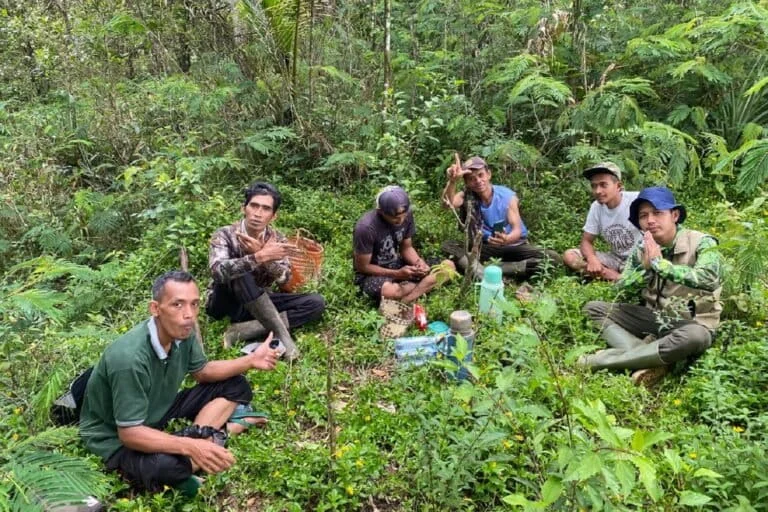
In the lush, verdant landscapes of the Menoreh Hills, a quiet revolution is taking place as local communities transition from being hunters to becoming the primary guardians of their avian heritage. This movement reached a critical juncture in May when the Lestari Purwosari Group, a leading force in the development of ecotourism in Purwosari Tourism Village, Kulon Progo Regency, Yogyakarta, successfully apprehended a bird poacher operating within their jurisdiction. The incident highlights a growing trend of grassroots enforcement in response to the persistent threat of the illegal wildlife trade, which continues to target the Menoreh region to supply the insatiable demand of the songbird market.
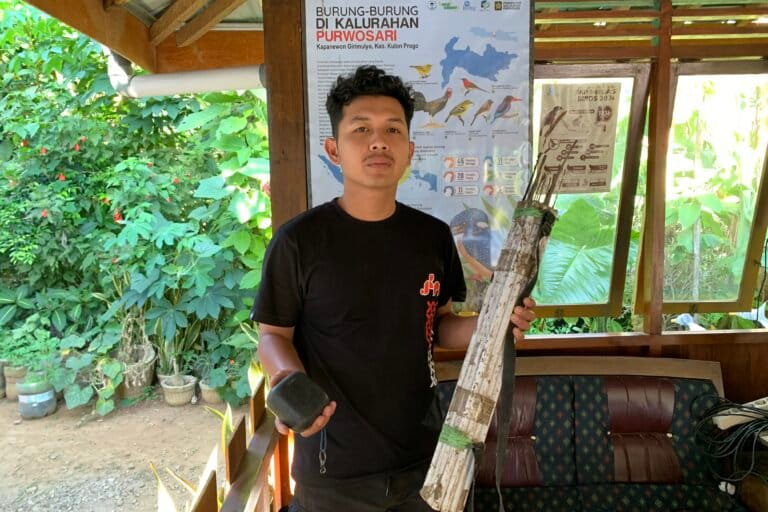
The encounter began when Tegar Cahaya Putra, the initiator and activist of the Lestari Purwosari Group, and local residents noticed a suspicious individual on one of the village’s hills. The man, a resident of Sleman, was found carrying a specialized poaching kit: a small electronic speaker, pulut (a traditional high-strength bird glue), and a carrying cage. These tools represent the modern face of poaching, where technology is used to mimic bird calls to lure unsuspecting creatures into sticky traps. Despite an initial verbal warning from the villagers, the poacher merely relocated to another part of the village, underestimating the vigilance of the community.
The persistence of the poacher triggered a rapid response through the village’s digital network. Residents utilized a WhatsApp group to track his movements, leading to his eventual capture by the community. He was escorted to the community secretariat, where his identity was recorded, and he was required to sign a formal statement on a stamped document (materai) pledging never to repeat his actions. Upon inspection, several birds were found in his possession, including the Oriental White-eye (kacamata kuning), the Maroon-breasted Philentoma (cucak delima), and the Horsfield’s Thrush (poksay kuda). All the captured birds were immediately released back into the wild by the activists.
The Persistence of Poaching and the Economic Driver
The challenge of protecting the Menoreh Hills is compounded by the involvement of various demographics in poaching activities. Shortly after the Sleman resident was caught, another poacher was intercepted in Purwosari. To the disappointment of the community, this individual was a minor—a junior high school student from the neighboring district of Girimulyo. When questioned, the youth admitted that his primary motivation was financial gain, seeking to sell the birds to supplement his income.
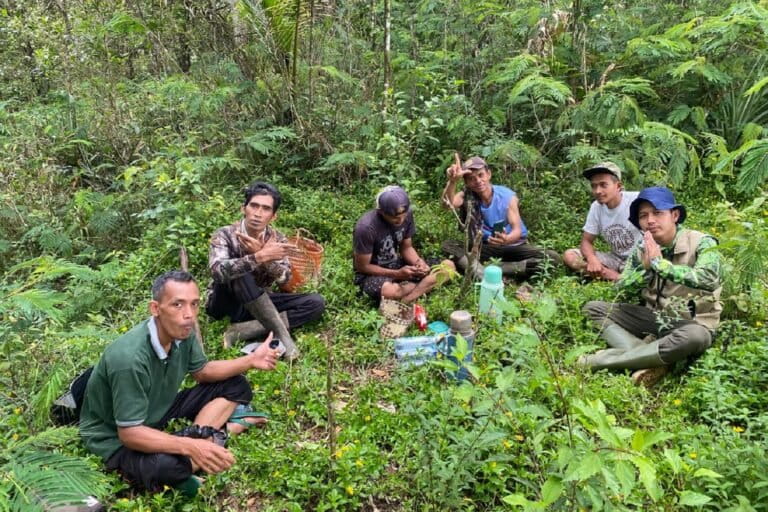
The methodology remains consistent across different age groups: the use of electronic speakers to play recorded birdsong, which draws territorial or social birds toward the pulut traps. Once the birds land on the glue-covered branches or cages, they are unable to fly, often suffering stress or physical injury in the process. This incident underscored a harsh reality for the conservationists: as long as there is a market for songbirds, individuals from both within and outside the region will continue to view the Menoreh Hills as a resource to be exploited.
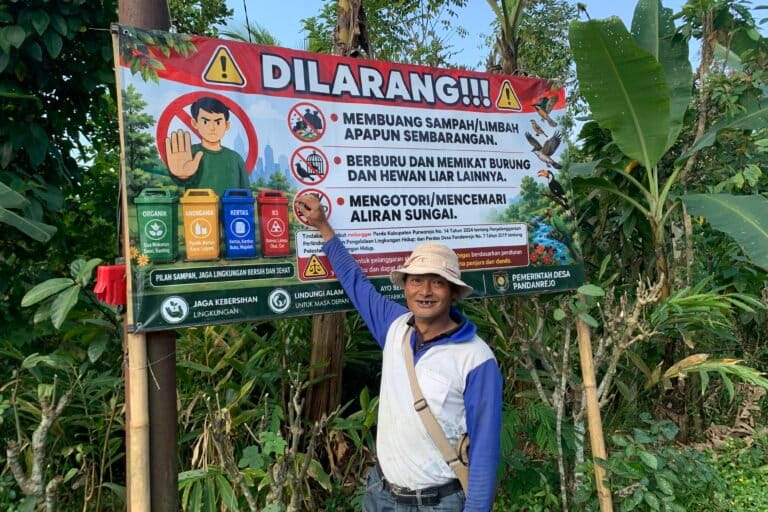
To combat this, the Kalurahan (Village) of Purwosari has taken proactive measures. Warning signs prohibiting hunting have been installed along the main entry points from both the Yogyakarta side to the east and the Purworejo side to the west. These physical warnings are backed by Village Regulation (Peraturan Kalurahan) No. 9 of 2022 concerning Environmental Preservation. While the regulation has been successful in deterring local residents from hunting, the primary threat now originates from outsiders who travel to the region specifically to harvest its biodiversity.
From Scarcity to Awareness: The Birth of a Movement
The catalyst for this intensive conservation effort was a period of alarming silence. Around 2020, residents of Purwosari began to notice a significant decline in the bird population. The once-vibrant dawn chorus had faded to a few fleeting chirps. For a community situated in the Menoreh Hills—a vital habitat for Javanese endemic species and a known migratory corridor—the absence of birds was an ecological red flag.
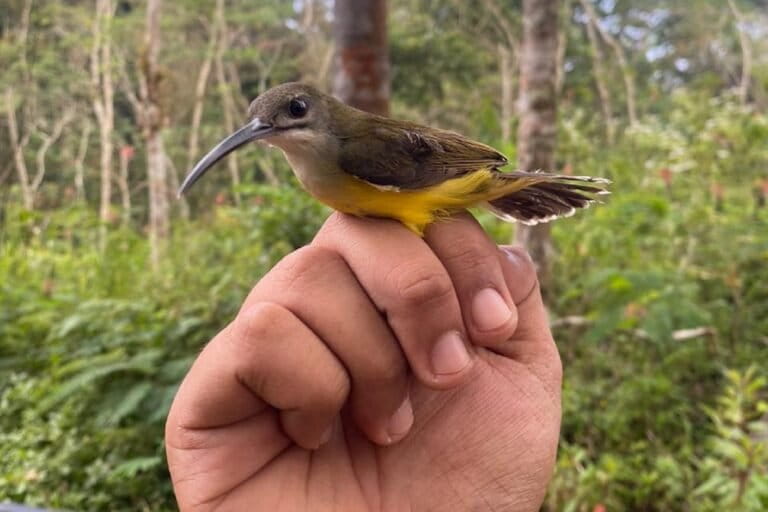
The region is home to several high-priority species, including the Indigo Flycatcher (sikatan cacing), the Crested Serpent Eagle (elang ular bido), the Green Iora (cucak ranting), and the Javan Partridge (puyuh gonggong jawa). Recognizing the impending loss of these species, Tegar and other community leaders initiated a ban on bird trapping. The transition was not initially met with universal support, as many residents had long relied on hunting as a primary or supplementary source of income.
To address the economic gap, the community partnered with the Yayasan Kanopi Indonesia (Canopy Indonesia Foundation) to launch a "Nest Adoption" program. This innovative conservation model allows donors or tourists to "adopt" a bird’s nest, providing financial compensation to the villagers who monitor and protect the nest until the chicks fledge. This program, combined with the rise of birdwatching tourism and wildlife photography, has provided a sustainable alternative to poaching. Former hunters have now found that they can earn more by guiding photographers and protecting habitats than they ever could by selling birds in the market.
Legal Frameworks and Cross-Border Challenges
The success of conservation in the Menoreh Hills depends heavily on the consistency of regulations across administrative boundaries. While Purwosari implemented its regulation in 2022, the neighboring village of Pandanrejo in Purworejo, Central Java, has had a similar regulation in place since 2019. However, Dwi Kristanto Sektyawan, the Village Head of Pandanrejo, admits that enforcement was initially slow.
"We only truly began implementing the regulation in 2023," Sektyawan noted. He observed that the shift in community mindset takes time, but the progress is encouraging. In Pandanrejo, the village is planning to implement stricter social sanctions, such as displaying photos of apprehended poachers in front of the village office to create a public deterrent.
Sugiyanto, the Conservation Coordinator for Pandanrejo Tourism Village, highlighted the difficulty of managing "border zones." Poachers often claim they are operating outside the restricted village boundaries to avoid repercussions. "Birds do not recognize administrative borders," Sugiyanto remarked. "They fly across village lines, and if we don’t coordinate, the poachers will simply wait at the edge of the protected zones."
To close these loopholes, a cross-village patrol network has been established. This collaborative effort includes Purwosari, Pandanrejo, Donorejo, and Jatimulyo. The latter, Jatimulyo, has been a pioneer in bird conservation since 2015 and serves as a model for the surrounding areas. By coordinating patrols, the villages can effectively corner poachers, leaving them with no route for escape and ensuring that a violation in one village is recognized and penalized by the others.
Ecological Impact and Agricultural Sustainability
The drive to protect birds is not merely a matter of sentiment; it is rooted in the practicalities of agricultural survival. The Menoreh Hills are characterized by an agroforestry system where coffee, cloves, cocoa, tea, and durian are grown in mixed plantations. These crops are highly dependent on the ecosystem services provided by birds.
Nurina Indriyani, Director of Yayasan Kanopi Indonesia, emphasized the strategic role of birds in this landscape. "Birds are essential for pollination, which directly affects the yields of crops like durian and coffee," she explained. "Furthermore, they act as natural pest controllers. When insect populations surge, birds are the first line of defense. Without them, farmers would be forced to use expensive and harmful chemical pesticides."
Data collected by the foundation and local groups shows the high stakes of this conservation effort. Purwosari is home to at least 98 bird species, while Pandanrejo hosts 52. Among these are nine protected species and one species listed as critically endangered. The presence of these birds serves as a vital indicator of environmental health; a thriving bird population suggests a balanced ecosystem, while their disappearance signals environmental degradation.
Analysis of Implications and the Path Forward
The community-led conservation model in the Menoreh Hills represents a significant shift in Indonesia’s approach to wildlife protection. Traditionally, conservation has been the domain of state agencies and large NGOs. However, the Menoreh experience demonstrates that when local communities are given the tools and economic incentives to protect their own environment, the results are often more immediate and sustainable.
The transition from a "hunting culture" to a "protection culture" has profound social implications. It fosters a sense of collective ownership over natural resources and creates a social environment where poaching is no longer seen as a viable livelihood but as a theft from the community’s collective future. The use of social media and digital communication has also empowered these rural communities to act with the speed and efficiency of a professional security force.
However, challenges remain. The demand for songbirds in urban centers like Jakarta and Surabaya continues to drive high prices, which will always tempt some to bypass the law. Furthermore, as bird populations recover in the Menoreh Hills, they may become even more attractive targets for large-scale professional poaching syndicates.
To ensure long-term success, the "Menoreh Model" requires continued support from regional governments to harmonize regulations across the Yogyakarta and Central Java provincial lines. Expanding the ecotourism infrastructure—such as high-quality birdwatching hides and trained local guides—will be essential to solidify the economic benefits of conservation.
The story of Purwosari and its neighbors is a testament to the power of local action. By choosing to protect the "winged assets" of their hills, these villages are not only saving species from extinction but are also securing the ecological and economic foundations of their own future. The silent mornings of 2020 are being replaced by the diverse melodies of a forest in recovery, a sound that serves as both a reward for their efforts and a reminder of the vigilance required to keep the Menoreh Hills a sanctuary for all its inhabitants.
