
The arrival of the Kampung Nelayan Merah Putih (KNMP) in the Tongke-tongke region of Sinjai Regency, South Sulawesi, has catalyzed a transformative shift in the local maritime economy. Within a brief span of four to five months since the facility became operational, fishermen in the region have witnessed a substantial increase in the market price of tuna, with rates climbing from approximately IDR 30,000 per kilogram to IDR 45,000 per kilogram. This 50 percent surge in value reflects a systemic improvement in how artisanal fisheries operate, bridging the gap between remote coastal harvesting and high-value industrial markets.
The success of the KNMP initiative represents a strategic pivot in Indonesia’s fisheries management, moving away from fragmented, intermediary-heavy trade structures toward a centralized, transparent, and quality-controlled ecosystem. By providing local fishermen with direct access to corporate-level pricing and advanced preservation infrastructure, the government aims to elevate the socioeconomic status of coastal communities that have historically been marginalized by long, inefficient supply chains.
The Anatomy of Price Volatility and Market Disruption
Historically, the fishermen of Sinjai operated under a precarious model defined by dependence on a series of intermediaries. Before the establishment of the KNMP, a typical catch would pass through multiple hands—agents, local collectors, and regional middlemen—before reaching processors in major hubs like Makassar or Java. Each transition point in this chain absorbed a portion of the profit, effectively suppressing the "farm-gate" price received by the fishermen at the point of landing.
Hairul Mukmin, a prominent local boat owner and stakeholder in the regional fishing industry, explains that the traditional model was inherently disadvantageous. "Before the KNMP, we were at the mercy of a tiered system of agents and middlemen. The fish would change hands several times, and each step diluted the potential earnings of the actual producers," Mukmin noted. The introduction of the KNMP has effectively truncated this chain, allowing for a direct transaction model where fishermen sell their catch directly to the KNMP unit. Because the KNMP adheres to corporate pricing standards, the income disparity has been effectively bridged, resulting in a direct increase in revenue for the fishermen.
Strategic Infrastructure: The Role of Cold Chain Management
While market access is a primary driver of the price increase, the long-term sustainability of this growth is inextricably linked to the quality of the catch. During a recent inspection visit to the Tongke-tongke facility on September 25, 2026, Minister of Marine Affairs and Fisheries Sakti Wahyu Trenggono underscored the critical importance of post-harvest handling. According to the Minister, the premium pricing achieved by the local community is only sustainable if the quality of the tuna meets rigorous export and industrial standards.
The Ministry has identified the lack of "cold chain" infrastructure as the primary bottleneck in Indonesia’s fisheries sector. In the tropical climate of South Sulawesi, the rapid degradation of fish protein is a significant factor in economic loss. To mitigate this, the KNMP in Tongke-tongke has been equipped with a comprehensive suite of cold chain technologies. This includes state-of-the-art cold storage units, high-capacity ice-block factories, refrigerated transport vehicles, and specialized cool boxes designed for at-sea preservation.
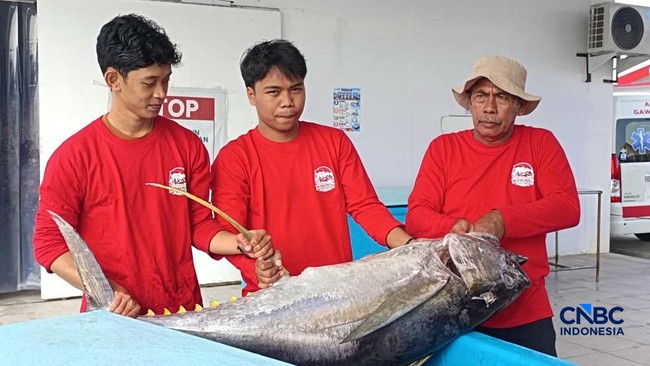
Minister Trenggono emphasized that the next phase of development involves upgrading the cold storage units to reach deep-freeze temperatures, specifically aiming for minus 60 degrees Celsius. "The cold storage design is paramount. To maintain the integrity of tuna—a high-value commodity—we must ensure the chain is uninterrupted from the moment the fish is hauled onto the deck to the moment it arrives at the processing plant," Trenggono stated. This technical precision is expected to allow Sinjai’s tuna to compete in international markets, where demand for sashimi-grade or premium processed tuna is inelastic and price-sensitive to quality.
Socioeconomic Implications and Community Empowerment
The establishment of the KNMP is not merely an infrastructure project but a governance model. Emil Salim, head of the local branch of the Indonesian National Fishermen’s Association (HNSI) and manager of the KNMP’s fish processing unit, notes that the most significant change, aside from the price hike, is the introduction of price transparency.
"The presence of the KNMP has brought a new level of openness to the pricing mechanism. For the first time, our fishermen have a clear understanding of market guarantees and the rationale behind the pricing of their catch," said Salim. This transparency reduces the information asymmetry that previously kept fishermen in a state of financial insecurity. With the KNMP serving as a price anchor, local fishers can now forecast their income more accurately, allowing for better planning and investment in their vessels and safety equipment.
The ripple effects of this increased purchasing power are expected to revitalize the local economy of Sinjai. As fishermen earn 50 percent more on their primary commodity, the local circulation of capital is anticipated to rise, potentially stimulating demand for local goods and services. Furthermore, the stabilization of prices provides a buffer against the seasonal volatility that often plagues the maritime sector.
Analysis: A Blueprint for National Maritime Strategy
The KNMP model in Tongke-tongke offers a replicable template for the Ministry of Marine Affairs and Fisheries (KKP) to address the broader challenges facing Indonesia’s archipelagic economy. By concentrating investment in localized hubs, the government can optimize logistics and reduce the "carbon footprint" associated with long-distance, uncoordinated distribution.
However, the success of this model will depend on long-term operational maintenance. The transition to a cold-chain-reliant system requires consistent electricity supply, technical maintenance of refrigeration units, and ongoing training for local operators. If these logistical pillars remain robust, the Sinjai model could serve as a pilot program for the "Blue Economy" vision, where high-value marine products are processed closer to the source, maximizing the value-added component within the domestic economy rather than exporting raw, low-value commodities.
Chronology of Development
- Early 2026: The Ministry of Marine Affairs and Fisheries initiates the development of the Kampung Nelayan Merah Putih (KNMP) in Sinjai, focusing on the Tongke-tongke coastal area.
- Q2 2026: Installation of preliminary cold chain facilities, including ice production units and local collection centers, begins.
- May-June 2026: Initial operations commence; the first shift in the supply chain occurs as fishermen begin bypassing traditional intermediaries.
- September 24-25, 2026: Official ministerial site visit confirms the price surge of tuna from IDR 30,000 to IDR 45,000 per kg and announces plans for further technical upgrades, including minus 60-degree cold storage.
Conclusion and Outlook
The transformation observed in Tongke-tongke serves as a compelling case study in how targeted infrastructure investment can dismantle exploitative market structures. By prioritizing the intersection of quality control, direct market access, and price transparency, the KNMP has demonstrated that the welfare of Indonesia’s fishermen is intrinsically linked to the modernization of the post-harvest supply chain. As the government continues to refine the cold chain capabilities in Sinjai, the focus will likely shift toward scaling these operations to include other high-value species, further cementing the region’s position as a vital node in the national seafood supply network. The long-term success of this initiative will be measured not just by the current 50 percent increase in prices, but by the ability of the local community to sustain these quality standards in an increasingly competitive global seafood market.
