
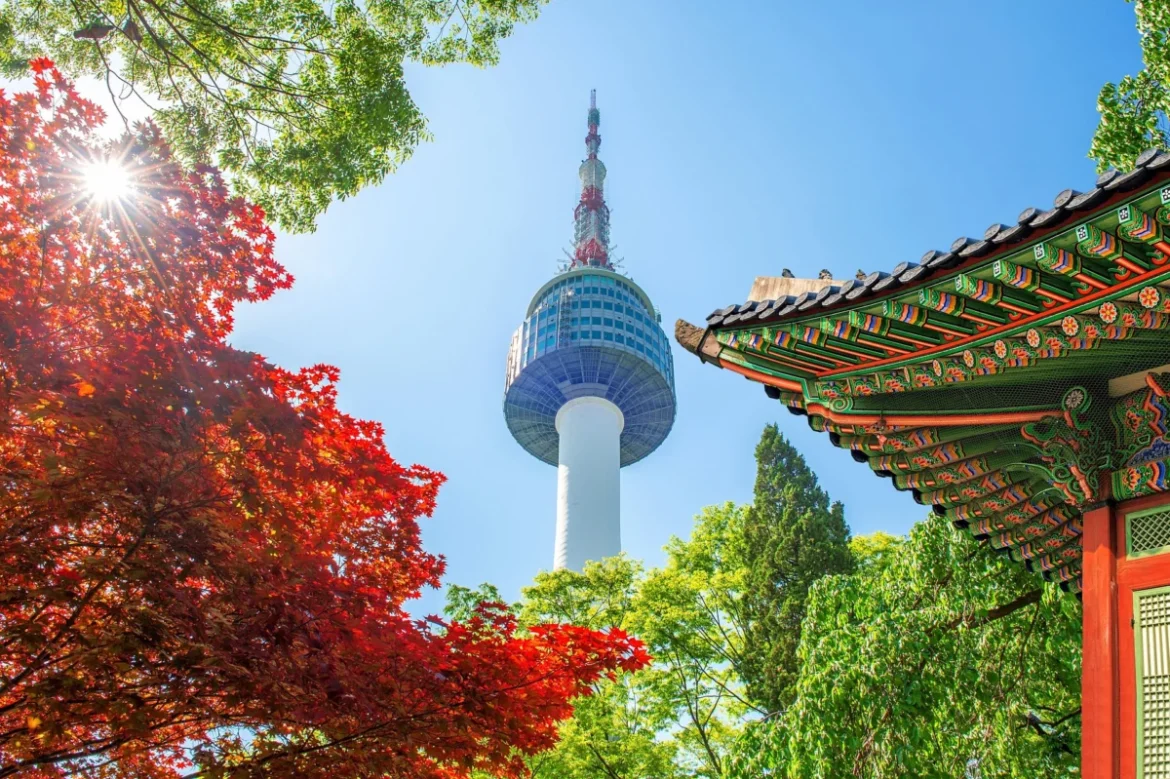
The pursuit of higher education abroad has taken an exciting turn for international students, particularly those captivated by South Korea’s surging global cultural footprint. The Global Korea Scholarship (GKS), formerly known as the Korea Government Scholarship Program (KGSP), continues to serve as the premier gateway for ambitious students seeking to earn their undergraduate degrees at prestigious South Korean universities without bearing the financial burden of tuition and living expenses. Administered by the National Institute for International Education (NIIED), a body under the Ministry of Education in South Korea, this fully funded scholarship program aims to foster international cooperation in education and promote mutual understanding between nations by inviting talented students from around the world.
Understanding the Global Korea Scholarship (GKS) Framework
The Global Korea Scholarship is meticulously designed to attract high-achieving global talent to South Korea’s robust academic ecosystem. By covering virtually all expenses associated with an undergraduate degree—including complete tuition waivers, monthly living allowances, airfare, settlement grants, health insurance, and intensive Korean language training—the program removes economic barriers that often deter prospective international applicants.
Historically established to strengthen global educational ties, GKS has expanded significantly over the decades. It now supports thousands of scholars from over 150 countries. Beyond the financial incentives, the program offers a strategic advantage: graduates are not bound by a mandatory return-to-home-country policy upon completion of their studies. This unique policy allows alumni to transition smoothly into the South Korean workforce, capitalizing on the nation’s advanced technological industries, dynamic corporate sectors, and vibrant multicultural urban centers.
Eligibility Criteria and Academic Requirements
Securing a GKS undergraduate slot requires strict adherence to academic and administrative prerequisites set by the South Korean government. While specific requirements can vary slightly depending on the annual application guidelines released by NIIED, the baseline criteria remain consistent:
- Nationality: Applicants and their parents must hold citizenship in a country invited by the GKS program. South Korean citizens are strictly ineligible.
- Age Restrictions: Candidates must generally be under the age of 25 as of the official entrance date (exact age limits may vary by academic level or regional agreement).
- Educational Background: Applicants must have successfully graduated or be scheduled to graduate from a high school or equivalent educational institution by the designated arrival date. High school GPA requirements are typically stringent, often requiring applicants to rank in the top 20% of their graduating class or maintain a cumulative Grade Point Average (CGPA) above 80% on a 100-point scale.
- Health and Character: Candidates must be in good physical and mental health, capable of residing in South Korea for an extended academic period. Individuals with severe chronic illnesses or criminal records are automatically disqualified.
Comprehensive Application Documentation
Preparing a competitive GKS application demands meticulous attention to detail and adherence to strict formatting guidelines. Missing or improperly authenticated documents often result in immediate disqualification during the initial screening phases. The mandatory documentation portfolio typically includes:
- Application Form: Completed accurately with the applicant’s chosen universities and majors clearly specified.
- Personal Statement and Study Plan: Detailed essays outlining the applicant’s academic motivation, life goals, and reasons for choosing South Korea and their specific field of study.
- Letters of Recommendation: Confidential evaluations from high school teachers, principals, or academic mentors who can attest to the applicant’s intellectual capability and character.
- Academic Transcripts and Graduation Certificates: Official high school transcripts and diplomas bearing apostille or consular authentication from the South Korean embassy.
- Proof of Citizenship: Official documents, such as birth certificates or family registries, verifying both the applicant’s and parents’ nationalities.
- Optional Credentials: Standardized language proficiency test scores, such as the Test of Proficiency in Korea (TOPIK) or English proficiency certifications like TOEFL, TOEIC, or IELTS. While formally categorized as optional in certain application tracks, possessing high-level language scores substantially elevates an applicant’s competitive edge.
Dual Application Tracks: Embassy versus University
Candidates navigating the GKS undergraduate admissions process must choose between two distinct application pathways: the Embassy Track and the University Track. Each track operates under distinct administrative procedures and timelines.
- Embassy Track: Applicants apply through the South Korean Embassy in their home country. Successful candidates nominated by the embassy proceed through multiple rounds of screening, including a rigorous regional evaluation by NIIED followed by university-specific evaluations. This track generally offers a broader selection of participating institutions, allowing applicants to apply to up to three different universities.
- University Track: Applicants apply directly to a participating regional or metropolitan university in South Korea. This track is ideal for candidates who have targeted a specific institution renowned for their intended major. However, applicants under the University Track are restricted to applying to a single university, increasing the stakes of institutional selection.
Chronological Timeline and Key Application Periods
Navigating the GKS application cycle requires a long-term strategic approach, as the entire selection process spans several months.
- September to October: The application window officially opens for the Embassy Track, announced via the official Study in Korea portal (studyinkorea.go.kr) and local South Korean embassy websites.
- October to November: The application window opens for the University Track, managed independently by participating higher education institutions.
- December to February: Document screening, preliminary evaluations, and interviews are conducted by embassies and universities.
- March to April: NIIED announces the successful candidates who have passed the second round of evaluations.
- May: Final successful scholars are announced, followed by visa issuance and pre-departure orientation sessions.
- September: Scholars arrive in South Korea to commence their mandatory one-year Korean language training program prior to undergraduate degree enrollment.
Strategic Selection of Universities and Academic Majors
To maximize admission probability, applicants must carefully evaluate institutional quotas and departmental competitiveness. South Korea boasts world-class higher education institutions, with top-tier universities concentrated heavily in the capital region. Prominent institutions frequently chosen by GKS scholars include Seoul National University, Korea University, Yonsei University, Sungkyunkwan University, and Hanyang University.
Furthermore, academic major selection plays a pivotal role in admission outcomes. Natural sciences, engineering, information technology, and specialized regional studies often feature higher departmental quotas compared to heavily saturated humanities or social science programs. Choosing fields aligned with South Korea’s national strategic development goals—such as artificial intelligence, advanced robotics, semiconductor technology, and green energy—can significantly enhance an applicant’s prospects during the NIIED final review.
Broader Socioeconomic Implications and Career Pathways
The continuous expansion of the Global Korea Scholarship reflects Seoul’s broader geopolitical and economic strategy to cement its status as a global hub for higher education and technological innovation. By integrating international scholars directly into its academic and professional pipelines, South Korea actively addresses demographic shifts, including a declining domestic student population and a growing demand for specialized global labor in high-tech industries.
For international recipients, the long-term implications extend far beyond obtaining a degree. Alumni equipped with fluency in the Korean language, a degree from an internationally recognized institution, and direct immersion in South Korea’s corporate culture are uniquely positioned for transnational careers. Whether entering multinational corporations based in Seoul, bridging diplomatic and economic ties between South Korea and their home countries, or advancing into postgraduate research, GKS graduates represent a new generation of globally mobile professionals equipped to navigate an increasingly interconnected world economy.
