
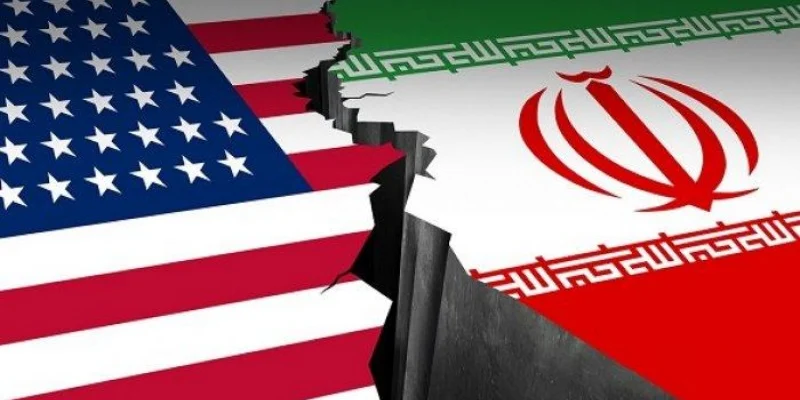
Four and a half months after the initial skirmishes, the United States and Iran find themselves locked in a renewed, intensified conflict, but one fundamentally altered in its objectives. The focus has dramatically shifted from Iran’s nuclear program and regional proxy networks to the control and taxation of commercial shipping routes through the Strait of Hormuz. Israel, a prominent player in the earlier phase, is conspicuously absent from this new chapter. The core contention is no longer about centrifuges or missile capabilities, but rather who holds the right to levy fees on passing oil tankers. This profound reorientation of war aims raises critical questions about how a conflict’s purpose can drift so far from its original impetus.
This latest escalation is not merely a continuation of the earlier war under different pretexts; it represents a conflict with an entirely distinct strategic objective. What is now at stake is no longer Iran’s military or nuclear capabilities, but rather the fundamental authority over the Strait of Hormuz. This very shift in objectives makes the conflict significantly harder, not easier, to resolve, introducing complex layers of economic and sovereignty claims that intertwine with traditional geopolitical rivalries.
The Strategic Pivot: From Nuclear Ambitions to Maritime Control
The initial phase of the conflict, ignited around February 28, was primarily framed by the United States and its allies, particularly Israel, as a comprehensive effort to dismantle Iran’s asymmetric warfare capabilities, including its nascent nuclear program, ballistic missile arsenal, and extensive network of regional proxies. US Central Command (CENTCOM) reports at the time frequently highlighted operations aimed at degrading Iran’s ability to project power through groups in Iraq, Syria, Lebanon, and Yemen. This period saw a series of coordinated strikes targeting known Iranian Revolutionary Guard Corps (IRGC) assets, command-and-control centers, and suspected missile launch sites, often accompanied by strong rhetoric from Washington emphasizing the need for denuclearization and an end to Tehran’s destabilizing regional activities. The objective was clear: to curb Iran’s strategic leverage and force it to comply with international nuclear agreements.
However, the Strait of Hormuz was not the primary target of US operations on February 28. Its emergence as the central flashpoint was a direct consequence of Iran’s retaliatory maneuvers. On March 27, the IRGC, Iran’s elite military force, issued a provocative declaration: the Strait of Hormuz would henceforth be closed to any vessel bound for, or originating from, ports in the United States, Israel, and their key allies. This bold statement transformed a critical international waterway into a potential choke point, signaling Iran’s intent to weaponize its geographical advantage in response to the pressure it faced.
The Geopolitical Lifeline: Understanding the Strait of Hormuz
To understand the gravity of this shift, one must appreciate the unparalleled strategic importance of the Strait of Hormuz. This narrow waterway, connecting the Persian Gulf with the Arabian Sea and the open ocean, is arguably the world’s most critical oil transit chokepoint. Approximately one-fifth of the world’s total petroleum liquids consumption, or about 21 million barrels per day, passed through the Strait in recent years, according to data from the U.S. Energy Information Administration (EIA). This includes nearly all the oil exports from Saudi Arabia, Iran, UAE, Kuwait, Qatar, and Iraq. Any significant disruption to traffic through Hormuz sends immediate shockwaves through global energy markets, leading to sharp spikes in oil prices and threatening the economic stability of nations worldwide. The strait is also crucial for the transit of liquefied natural gas (LNG), particularly from Qatar, one of the world’s largest LNG exporters.
International law, specifically the United Nations Convention on the Law of the Sea (UNCLOS), generally upholds the right of "transit passage" through straits used for international navigation. This means that all ships and aircraft enjoy the freedom of navigation and overflight solely for the purpose of continuous and expeditious transit of the strait. Iran, while a signatory to UNCLOS, has not fully ratified it and has historically maintained that it reserves the right to regulate passage through the Strait, particularly for military vessels, under its national security interests. This long-standing legal ambiguity provides a complex backdrop to the current dispute.
Iran’s Assertive Gambit: A Claim to Sovereignty and Revenue
Following its March 27 declaration, Iran moved beyond merely using the Strait as a weapon of leverage; it sought to fundamentally transform it into a sovereign property. In a series of escalating demands and policy proposals, Tehran articulated its ambition to exert full control and monetize passage.
On March 25, 2026, Iran presented a five-point counter-proposal demanding international recognition of its sovereignty over the Strait of Hormuz. This was a direct challenge to established international maritime norms. This was followed by an even more detailed 10-point plan issued between April 6 and 8, outlining a scheme to levy a transit fee of $2 million per vessel, with the revenue purportedly to be shared with Oman and dedicated to financing reconstruction efforts in the region, presumably those impacted by the preceding conflict. This demand resurfaced in a comprehensive 10-point plan on May 10, reinforcing Iran’s consistent position.
This strategy was particularly audacious given that Iran was, in effect, manufacturing a dispute over a shared international waterway and then demanding recognition for its self-proclaimed authority over it. The international community, however, largely pushed back against these unilateral claims. The Islamabad Memorandum, signed on June 17, explicitly affirmed the principle of free and unimpeded passage through the Strait, directly contradicting Iran’s demands for tolls and sovereign control. This agreement, designed to de-escalate tensions and ensure global energy security, held for barely three weeks before new hostilities erupted.
For Iran, the aggressive posture over Hormuz was a calculated strategic move, leveraging geography to compensate for perceived weaknesses in other domains. Military intelligence assessments, widely reported by Western media, indicated that Iran’s air defense capabilities had been severely degraded in the initial phase of the conflict. Its missile launching capabilities were reportedly reduced by as much as 90 percent. Furthermore, its network of regional proxies, while still active, had become increasingly semi-autonomous and less directly controllable by Tehran, diminishing their effectiveness as instruments of Iranian foreign policy. Critically, its nuclear program remained unacknowledged and under intense international scrutiny, denying Iran a key strategic deterrent. In this context, the Strait of Hormuz offered Iran a potent, immediate, and undeniable point of leverage against the international community, a means to assert its relevance and reclaim a measure of strategic power.
A Timeline of Escalation: From Declarations to Direct Confrontation
The conflict rapidly escalated from diplomatic maneuvering to direct military confrontation:
- July 2: Iran’s joint military command issued a stark warning, declaring that all tankers transiting the Strait must adhere to its newly approved routes. This was a direct challenge to the established international shipping lanes and protocols.
- July 6: In response, the Joint Maritime Information Center (JMIC), a multinational body operating under the oversight of the U.S. Navy’s Fifth Fleet, countered by informing shipping companies that the alternative route around Oman’s Musandam Peninsula "has been expanded and remains available for all traffic." This was an implicit directive to ignore Iran’s demands and uphold freedom of navigation.
- July 6-7: The standoff turned violent. Within 24 hours, three commercial vessels were struck along the alternative Oman route:
- The Qatari LNG tanker Al Rekayyat was hit near Limah, a sensitive area close to the Omani coast.
- A Saudi-flagged oil tanker sustained damage near the Oman-UAE border.
- A third tanker was reportedly struck by a drone off the Omani coast.
While Iran never officially claimed responsibility for these attacks, its state television enigmatically broadcast reports implying that the vessels had been "attacked after ignoring warnings," a thinly veiled acknowledgment.
- US Retaliation: Anonymous U.S. officials, quoted by Axios, immediately attributed these attacks to the IRGC. Within hours, the United States retaliated. CENTCOM framed its response as an enforcement action, stating that Iran had been given an opportunity to comply with the earlier Memorandum of Understanding (MoU) regarding free passage but had "once again failed to do so." The precise nature of the initial U.S. retaliation was not immediately detailed but signaled a firm response to the targeting of commercial shipping.
- July 13: The escalation continued unabated. Iran declared it had "disabled" two more tankers, though specifics remained vague. Simultaneously, the United Arab Emirates reported that Iranian missiles had struck two of its tankers in Omani territorial waters, resulting in the death of one crew member. In response to these aggressions, President Trump announced the immediate reinstatement of the maritime blockade against Iran. The impact on global energy markets was immediate and dramatic: Brent crude oil prices surged by 9.59 percent to $83.30 per barrel, marking the largest daily increase in over six years, reflecting profound market anxiety.
- July 16: The conflict expanded geographically and intensified militarily. For the sixth consecutive night, a barrage of attacks targeted key Iranian strategic sites, including Qeshm Island, the port cities of Bandar Abbas and Chabahar, Iranshahr, and Bandar-e Khamir. The strikes, initially concentrated on the southern coast, soon extended to northern Iran, indicating a broader US offensive. Iranian state media reported significant damage to infrastructure, including the airport in Iranshahr, communication towers in Bandar Abbas leading to widespread power outages, and a vital bridge in Bandar-e Khamir. Iran swiftly retaliated, launching missile and drone attacks against U.S. military assets stationed in Kuwait, Bahrain, and Jordan, broadening the conflict’s regional footprint.
The Shifting Battlefield: Who Bears the Brunt?
Two crucial distinctions emerged in this new phase compared to the initial conflict in February. Firstly, the February war was characterized as a joint operation, with significant Israeli involvement, primarily aimed at dismantling Iran’s proxy networks and military capabilities. The July attacks, however, were predominantly U.S.-led operations, explicitly framed and executed by CENTCOM, one of the eleven unified combatant commands of the U.S. Department of Defense, with specific responsibility for the Middle East. This highlighted a more direct and unilateral U.S. engagement.
Secondly, and perhaps more tellingly, the primary victims of Iran’s attacks were not U.S. or Israeli assets, but rather vessels belonging to Gulf states: Qatar, Saudi Arabia, and the UAE. Qatar, notably, had even been acting as a mediator in ongoing regional discussions, highlighting the indiscriminate nature of the attacks and their potential to destabilize broader peace efforts. This indicated a dangerous shift where the conflict was now directly harming parties actively seeking its resolution, complicating diplomatic pathways.
The "Toll Booth" Dilemma: A Battle for Control and Revenue
The irony of the situation was profound: both sides, in their escalating actions, were now effectively demanding the same thing – control over the "toll booth" of the Strait of Hormuz. Since the June MoU, Iran had consistently threatened and attacked vessels in Hormuz, attempting to compel commercial shipping and the international community to adhere to its self-imposed routes and protocols. Its explicit goal was to control the strait and collect fees.
For the United States, the strategic value of Hormuz extended beyond mere freedom of navigation. It became a critical measure of its hegemonic credibility in the Gulf region, especially in the context of perceived failures to achieve regime change or complete denuclearization in Iran during earlier phases. On July 13, President Trump controversially declared that the U.S. would also begin levying a 20 percent fee on all cargo transiting Hormuz. This statement, however, was swiftly walked back the very next day, replaced with a more nuanced proposal for "Trade and Investment Agreements that various Gulf States would make with the United States." This suggested a shift from direct tolls to a broader economic framework designed to benefit the U.S. through strategic alliances and financial flows from the region.
Therefore, the battle had evolved from a simple free strait versus a tolled strait. It was now a fierce contest over who would operate the toll booth. Iran subtly shifted its rhetoric from demanding "sovereignty" to claiming "service fees, not transit tolls," attempting to frame its demands within a more commercially acceptable lexicon. The U.S., similarly, moved from an explicit "20 percent toll" to a more politically palatable "investment agreements with Gulf States," signaling its intent to manage and profit from the region’s economic lifeline without directly violating international maritime law on transit passage.
US Counter-Strategy: Reasserting Hegemony and Economic Interests
In the aftermath of the short-lived ceasefire, the US intensified its attacks on Iran. CENTCOM publicly stated that the IRGC had attacked a Cyprus-flagged container ship transiting Hormuz, resulting in one crew member missing. This incident, according to CENTCOM, served as further proof of Iran’s continued non-compliance with the MoU, providing justification for heightened military action.
CENTCOM explicitly declared that the subsequent attacks were aimed at degrading Iran’s capability to target commercial vessels in Hormuz. Consequently, the primary objective of the U.S. offensive was to re-establish a naval blockade over Iran’s ports and coastal areas. The targets were precisely chosen to neutralize Iranian military assets used to threaten free navigation: military bases on Qeshm Island, port facilities in Bandar Abbas and Chabahar, and strategic infrastructure like the airport in Iranshahr and the communications towers in Bandar Abbas, which were essential for coordinating naval and air operations. The expansion of attacks to northern Iran indicated a broader strategy to cripple Iran’s overall military capacity to interfere with maritime trade.
This strategic shift by the U.S. was fundamentally transactional and commercial. President Trump’s initial declaration of a 20 percent toll on Hormuz cargo, even if later modified, underscored a desire for direct economic benefit from the Strait. The U.S. sought to assert itself as the ultimate "guardian" of the Strait, effectively managing its passage and extracting economic value. This transformed the conflict between the two nations into a direct contest over the rights to manage and profit from the critical waterway.
Broader Implications: Geopolitics, Global Economy, and Maritime Law
The change in strategic objectives carries profound implications for global dynamics. The U.S. motivation now appears centered on maintaining economic hegemony in the Middle East and definitively curtailing Iran’s asymmetric capabilities, which have historically relied heavily on the strategic leverage provided by the Strait of Hormuz. This shift creates a complex and dangerous scenario for negotiations. Both actors are now vying for control over a geographical area that has historically represented both a significant vulnerability for the U.S. and Iran’s primary asymmetric weapon against perceived threats.
The direct targeting of commercial shipping and the subsequent military escalations have immediate and severe consequences for the global economy. The volatility in oil prices, as evidenced by the Brent crude surge, threatens to destabilize economies reliant on stable energy supplies. Insurance premiums for shipping through the Gulf have skyrocketed, increasing operational costs for carriers and ultimately consumers. Furthermore, the conflict poses a direct challenge to the principles of freedom of navigation and international maritime law, potentially setting dangerous precedents for other strategic chokepoints around the world.
The involvement of Gulf states as direct victims of the attacks also complicates regional security architecture. It forces these nations to choose between maintaining neutrality and aligning more closely with either the U.S. or Iran, further fracturing regional alliances. The prospects for a peaceful resolution appear dimmer, as both sides have now invested significant military and political capital in their claims over the Strait, transforming a long-standing geopolitical rivalry into a high-stakes commercial and sovereign dispute over a vital artery of global trade. The path forward demands sophisticated diplomacy, but with the "toll booth" now at the heart of the conflict, compromise seems increasingly elusive.
Yugolastarob Komeini
Senior Researcher in Defense and International Relations – Populi Center

