
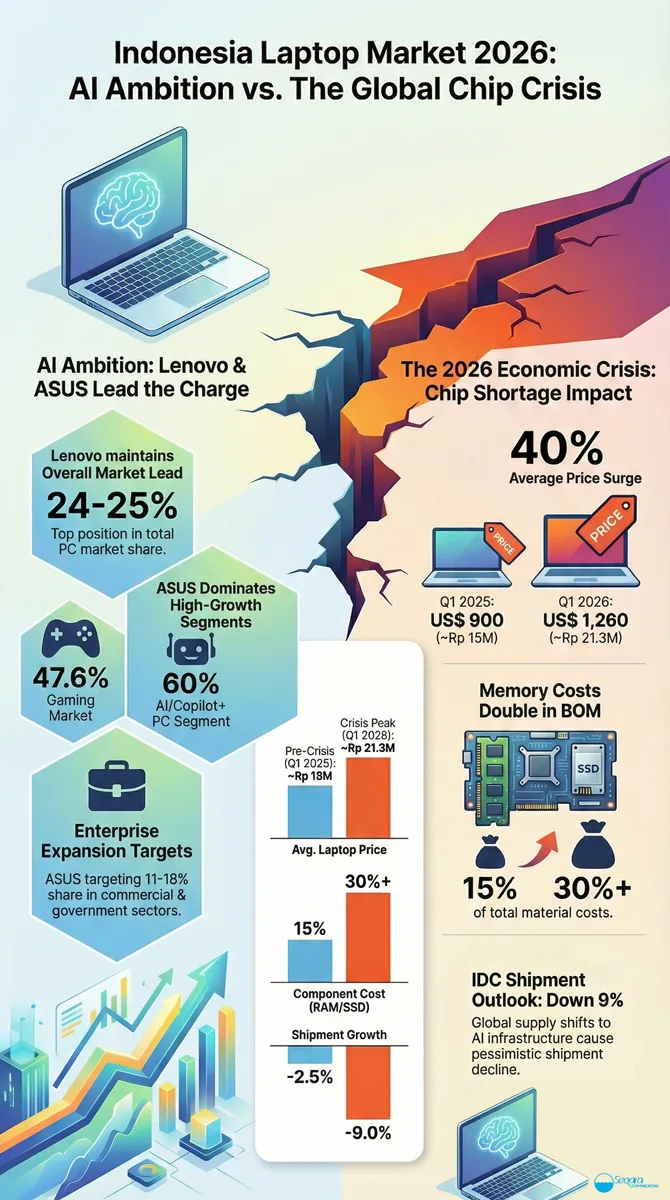
Entering 2026, the Indonesian laptop market finds itself at a critical juncture, defined by a profound tension between surging demand for Artificial Intelligence (AI) capabilities and an increasingly volatile global supply chain. This period marks a pivotal moment for regional stakeholders, as the convergence of Microsoft’s Copilot+ ecosystem and the impending end-of-life (EOL) cycle for Windows 10 would, under normal circumstances, trigger a historic replacement boom. Instead, the market is grappling with a structural scarcity of critical components that threatens unit growth and is fundamentally reshaping brand hierarchies. Sentiment within Jakarta’s distribution centers is notably somber, reflecting an industry that has yet to fully recover from a nearly 15% post-pandemic decline and now confronts a supply-side crisis hindering any robust rebound.
The Looming Windows 10 End-of-Life and the AI Imperative
The cessation of free support for Windows 10 in October 2025 has created an urgent need for upgrades across consumer and commercial segments. Historically, such EOL events have been powerful catalysts for PC refreshes, driving millions of users to new hardware compatible with the latest operating systems. In Indonesia, a significant portion of the installed base still relies on Windows 10, making the upgrade cycle potentially massive. Simultaneously, the advent of AI PCs, exemplified by Microsoft’s Copilot+ initiative, introduces a new performance benchmark. These machines, featuring dedicated Neural Processing Units (NPUs), promise enhanced productivity, security, and innovative AI-powered features directly on the device, reducing reliance on cloud computing. This technological leap has spurred significant consumer and enterprise interest, positioning AI PCs as the next frontier in personal computing. However, the anticipated demand surge from both the EOL and AI trends is now running headlong into severe supply constraints, creating a paradox that could stifle market potential.
Early 2026 Market Dynamics: A Snapshot
Preliminary projections for early 2026 indicate a market struggling for equilibrium. While specific unit shipment data remains fluid, initial assessments suggest that the "Big Four" manufacturers – Lenovo, HP, Dell, and ASUS – are consolidating their dominant positions. Their established supply chain networks and financial clout provide a significant competitive moat, allowing them to better navigate the current instability.
- Projected Market Share Distribution (Early 2026, Estimated):
- Lenovo: 28%
- HP: 24%
- ASUS: 19%
- Dell: 15%
- Acer: 6%
- Others: 8%
This distribution highlights the increasing concentration of power among Tier-1 vendors. Their ability to secure components through Fixed-Price Long-Term Supply Agreements (LTSAs) effectively shields them, to some extent, from the extreme volatility plaguing the spot retail market. Smaller regional players and white-box assemblers, lacking such leverage, face existential risks, often forced to pay premium prices for scarce components, eroding their margins and competitive edge. Even for the industry giants, however, the fundamental cost structure is under unprecedented strain, a burden that will inevitably be passed on to the end consumer.
Market Leadership in a Challenging Environment
Each of the leading brands leverages distinct strengths to maintain its market position amidst the current turbulence:
- Lenovo: Continues to be a powerhouse in the enterprise and education sectors, known for its robust ThinkPad line and extensive service network. Its focus on corporate solutions, including Device-as-a-Service (DaaS) offerings, provides stable revenue streams.
- HP: Maintains a strong presence across consumer, small-to-medium business (SMB), and corporate segments. Its diversified portfolio and strong brand recognition, particularly with its ProBook and EliteBook series, allow it to cater to a broad user base.
- ASUS: Increasingly making inroads beyond its traditional gaming and consumer strongholds. The company is strategically sharpening its offerings for the finance, manufacturing, and government sectors, where specialized services, stringent security, and guaranteed product lifecycle management are crucial. This diversification is a key strategy to mitigate risks associated with consumer market volatility.
- Dell: Remains a preferred choice for large enterprises and IT departments, offering comprehensive end-to-end solutions, high-performance workstations, and robust support services. Its emphasis on corporate contracts and custom configurations provides a steady demand pipeline.
The Price Shock: A Crisis in Memory and Processing Units
The most immediate and impactful challenge facing the market is a severe component scarcity, particularly in memory and central processing units (CPUs). What was once a relatively stable part of the bill of materials (BOM) for a notebook has now become a major cost inflator. DRAM (Dynamic Random-Access Memory) and NAND flash memory, which collectively accounted for approximately 15% of a notebook’s BOM, have seen their share more than double to over 30% within a single year.
This dramatic surge is driven by a confluence of factors: escalating demand from AI data centers, new generation smartphones, and a more conservative production outlook from major memory manufacturers like Samsung, SK Hynix, and Micron following a period of oversupply. Historically, the memory market has been cyclical, but the current upswing is exacerbated by the foundational requirements of AI PCs, which demand significantly more RAM.
Adding to this pressure, Intel, a dominant CPU supplier, has already implemented price increases, with double-digit hikes observed on certain higher-end SKUs. Other major US chipmakers are anticipated to follow suit for their mid-to-high-end platforms within the current quarter. The simultaneous escalation in both memory and CPU prices creates an unprecedented cost burden for original equipment manufacturers (OEMs). Analysts project that this dual price surge could translate into a 30-40% increase in the average retail price of laptops, a significant jump that could deter potential buyers and dampen the anticipated replacement boom.
Shifting Demand: What Buyers Prioritize Now
Despite the looming price shocks, demand has not evaporated; rather, it has undergone a significant shift in focus. Consumers and businesses are becoming more discerning, prioritizing specific attributes in their purchasing decisions.
- AI Readiness: With the promise of Copilot+ and on-device AI capabilities, buyers are increasingly looking for laptops equipped with dedicated NPUs and sufficient RAM (16GB minimum, ideally 32GB) to handle AI workloads efficiently. This trend is particularly strong among early adopters and professionals in creative or data-intensive fields.
- Performance for Hybrid Work: The enduring hybrid work model continues to drive demand for powerful processors, ample storage, and robust connectivity to ensure seamless multitasking and collaboration. Laptops capable of handling demanding applications and multiple video conferencing sessions without lag are highly sought after.
- Enhanced Security Features: With the rise of cyber threats and the handling of sensitive data, especially on AI PCs, advanced security features (hardware-level encryption, biometric authentication, robust antivirus integration) are now non-negotiable for both corporate and discerning individual buyers.
- Battery Life and Portability: For mobile professionals and students, extended battery life and lightweight designs remain crucial. The ability to work efficiently away from a power outlet is a key purchasing factor.
- Value Proposition: As prices rise, consumers are more acutely evaluating the "value for money." This might lead to a longer replacement cycle for some, or a willingness to invest more in a device perceived as future-proof and durable.
The Corporate and Public Sector: The Next Battleground
The corporate and public sectors are emerging as critical battlegrounds for market share, offering more stable and predictable demand compared to the volatile consumer market. ASUS’s strategic pivot to strengthen its offerings in finance, manufacturing, and government segments underscores this trend. These sectors demand more than just hardware; they require comprehensive solutions encompassing services, robust security, and guaranteed product lifecycles.
Lenovo and HP, with their extensive corporate legacies, established sales channels, and sophisticated service infrastructures, remain formidable competitors in this space. Key differentiators in securing large tenders are expected to include:
- Annual Supply Agreements: Providing stability and predictable pricing for large volume purchases.
- Managed Services: Offering end-to-end IT management, from deployment and maintenance to security updates and helpdesk support, allowing organizations to focus on core competencies.
- Device-as-a-Service (DaaS) Packages: A subscription-based model that bundles hardware, software, and services into a single, predictable monthly cost, appealing to organizations looking to shift from capital expenditure to operational expenditure and simplify IT asset management.
- Customization and Scalability: The ability to provide tailored solutions that meet specific industry compliance standards and scale with organizational growth.
IDC’s Bleaker Global Outlook
The latest projections from IDC paint a somber picture for global PC shipments in 2026. Their baseline scenario anticipates a moderate decline of approximately 5%, with a worst-case scenario plummeting closer to 9%. This represents a sharp downturn from earlier, more optimistic forecasts, directly attributed to the severe memory constraints colliding with the anticipated Windows 10 refresh wave and the nascent push towards AI PCs.
IDC’s analysis highlights a crucial paradox: while underlying demand drivers are robust, the supply-side bottlenecks are effectively negating the potential for growth. Furthermore, the report predicts that the average selling price (ASP) of PCs could rise by 6-8% even as unit volumes contract. This implies that consumers and businesses will be paying more for fewer devices, a challenging economic reality that could impact overall technology adoption and refresh cycles. This global trend is expected to significantly influence the Indonesian market, which is often a reflection of broader international supply and demand dynamics.
The AI PC Paradox: Innovation Meets Reality
The very features that define an AI PC are now contributing to its cost and accessibility challenges. Microsoft’s minimum requirements for a Copilot+ PC, mandating at least 16GB of RAM, with many premium designs targeting 32GB, directly clash with the harsh reality of memory scarcity and soaring prices. These specifications, while essential for unlocking the full potential of on-device AI, significantly inflate the bill of materials.
This situation forces OEMs into difficult strategic choices:
- Higher Manufacturer’s Suggested Retail Price (MSRP): Passing the increased component costs directly to consumers, potentially pricing AI PCs out of reach for a broader market segment.
- Delayed Launches: Waiting for component prices to stabilize or supply to increase, risking being late to market in a rapidly evolving technological landscape.
- Reduced Specification Flexibility: Offering fewer configuration options, potentially compromising the "AI experience" for some models or limiting consumer choice.
This paradox underscores the intricate balance between technological innovation and market accessibility, particularly in developing economies like Indonesia where price sensitivity can be a significant factor.
Indonesia 2026: Predicted Market Realities
Synthesizing these global and local dynamics, several key realities are projected to define the Indonesian laptop market in 2026:
- Overall Unit Decline: Despite the strong demand drivers from Windows 10 EOL and AI PC interest, the severe supply constraints and resulting price increases are expected to lead to a net decline in overall unit shipments.
- Significant Price Escalation: Consumers should brace for a substantial increase in laptop prices across all segments, with AI-capable models experiencing the most pronounced hikes due to their higher memory and NPU requirements.
- Segmented Market Growth: While the overall market shrinks, the premium and enterprise segments focusing on AI PCs and corporate solutions may show relative resilience, driven by businesses needing to upgrade and early adopters willing to pay for cutting-edge technology.
- Intensified Competition in Enterprise: The corporate and public sectors will become even more fiercely contested, with vendors emphasizing managed services, DaaS, and long-term contracts.
- Resurgence of Refurbished/Second-hand Market: With new laptop prices soaring, there might be an increased demand for quality refurbished or second-hand devices, particularly for budget-conscious consumers and SMBs.
- Delayed Mass Adoption of AI PCs: The high cost barrier will likely delay the widespread adoption of AI PCs in Indonesia, pushing the true "AI PC boom" further into the future, contingent on supply chain stabilization and price moderation.
Key Indicators to Watch Next
Market observers and industry stakeholders will be closely monitoring several critical indicators in the coming months:
- Memory Price Trends: Movements in DRAM and NAND flash futures contracts will be a primary indicator of potential relief in component costs. Any signs of stabilization or decline could signal easing pressure on OEM margins.
- CPU Supply and Pricing: Updates from Intel, AMD, and Qualcomm regarding their production capacities and pricing strategies for new NPU-integrated processors will be crucial.
- Geopolitical Developments: Ongoing geopolitical tensions, particularly those affecting semiconductor manufacturing hubs and logistics routes, could further exacerbate or alleviate supply chain disruptions.
- Consumer Spending Patterns: Economic indicators in Indonesia, including inflation rates, disposable income, and consumer confidence, will dictate purchasing power and the willingness to absorb higher laptop prices.
- OEM Inventory Management: How effectively manufacturers manage their existing component inventory and new supply allocations will determine product availability and pricing strategies.
- Government Policies: Any local government initiatives related to technology procurement, digital transformation, or import regulations could influence market dynamics.
Guidance for Buyers in 2026
For consumers and businesses contemplating laptop purchases in 2026, a strategic approach is advised:
- Act Proactively: If an upgrade is genuinely needed and budget permits, consider purchasing sooner rather than later, as prices are widely expected to continue their upward trajectory.
- Prioritize Essential Features: Differentiate between "must-have" and "nice-to-have" features. If on-device AI capabilities are not critical for your immediate needs, consider non-AI models that may offer better value.
- Evaluate Total Cost of Ownership (TCO): For businesses, look beyond the initial purchase price. Factor in the cost of support, security, software licenses, and potential DaaS packages to understand the true long-term investment.
- Consider Component Upgrades: For existing machines, assess if upgrading RAM or storage can extend their lifespan and meet current performance demands, potentially delaying a full replacement.
- Research Service and Support: With increasing complexity and costs, the quality of after-sales service and warranty support from vendors becomes even more critical.
- Explore Alternatives: Investigate refurbished options or explore alternative form factors if budget constraints are severe, though be mindful of security and performance implications.
The Indonesian notebook market in 2026 is poised as a dramatic tug-of-war between formidable brand strength and severe component scarcity. While established players like ASUS and Lenovo are strategically positioned to navigate these challenges, every vendor is contending with the same fundamental headwinds. Prices are climbing, choices are narrowing, and AI, while a compelling value proposition, simultaneously presents a significant cost and supply constraint. The market’s trajectory will hinge on how quickly supply bottlenecks can be eased—and which players are most adept at converting the first signs of relief into sustained market leadership.

