
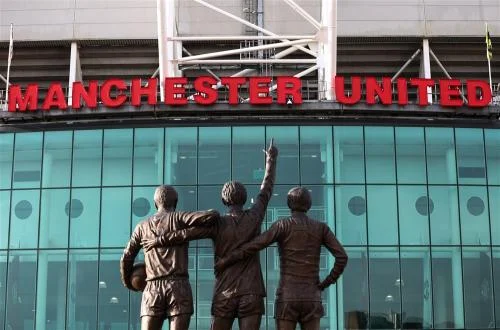
A consortium of Qatari investors is reportedly preparing to submit an initial offer for Manchester United, a move that could further cement the status of elite football clubs as trophy assets for ultra-wealthy individuals and ambitious nation-states. The potential acquisition, if successful, would mark the third major English Premier League club to fall under the ownership of resource-rich Middle Eastern investment groups, raising significant questions about economic disparity within the sport and the future landscape of European football.
The Growing Influence of Gulf Investment in Football
The emergence of Qatar as a serious contender for Manchester United is not an isolated event but rather the latest chapter in a discernible trend. For years, football clubs, particularly those with a global brand and a rich history, have become attractive acquisition targets for sovereign wealth funds and private equity firms from the Gulf. This trend gained significant momentum following the acquisition of Manchester City by Abu Dhabi United Group in 2008, followed by Saudi Arabia’s Public Investment Fund (PIF) taking a controlling stake in Newcastle United in 2021. The proposed Qatari bid for Manchester United, one of the most storied and globally recognized football brands, represents a significant escalation of this phenomenon.
Background to the Manchester United Bid
Reports from Bloomberg News on February 14, 2023, indicated that a Qatari investor group was on the cusp of lodging a preliminary proposal to acquire Manchester United. The sources, who requested anonymity as they were privy to the matter, stated that officials from the Qatar Investment Authority (QIA), the emirate’s sovereign wealth fund, were actively involved in preparing the bid in conjunction with a local family office. This involvement immediately signaled the potential backing of the Qatari state, a crucial factor given the immense financial resources at its disposal.
The timing of this development is significant. The Glazer family, the American owners of Manchester United, had publicly stated their openness to exploring strategic alternatives for the club, including a potential sale. This announcement, made in November 2022, had already sparked considerable speculation about interested parties. The market reacted positively to the news of Qatari interest, with Manchester United’s shares trading on the New York Stock Exchange seeing an uptick on February 14, 2023. At the time, the club’s market capitalization stood at approximately $3.9 billion (equivalent to roughly Rp 59.8 trillion).
The Financial Might of the Bidders
The financial firepower of Qatari entities dwarfs that of most potential suitors. Jim Ratcliffe, the British billionaire and founder of chemical giant Ineos Group Holdings Plc, had previously emerged as the most prominent interested party. Ratcliffe, consistently ranked among the wealthiest individuals in the UK with a net worth estimated at $13.4 billion (approximately Rp 203 trillion) according to the Bloomberg Billionaires Index, was reportedly working with financial giants Goldman Sachs Group Inc. and JPMorgan Chase & Co. on his potential bid. While Ratcliffe’s wealth is substantial, it pales in comparison to the estimated $450 billion (around Rp 6,826 trillion) assets under management by the QIA. The ruling Emir of Qatar, Sheikh Tamim bin Hamad Al Thani, is also known to be a supporter of Manchester United, adding a personal dimension to the potential state-backed acquisition.
Regulatory Hurdles and the UEFA Conundrum
The primary obstacle to any Qatari takeover of Manchester United may not be financial but regulatory. UEFA, European football’s governing body, has rules in place that prohibit clubs with common majority ownership from competing in major European tournaments. This rule is designed to prevent conflicts of interest and ensure a level playing field.
Qatar Sports Investments (QSI), a subsidiary of the QIA, already owns Paris Saint-Germain (PSG), the dominant force in French football. The prospect of a single entity, or closely linked entities, controlling two of Europe’s most prominent clubs raises immediate red flags for UEFA. The potential disqualification of such clubs from competitions like the Champions League would be a significant deterrent for both fan bases and football’s governing bodies.
The crucial question for UEFA will be whether QSI and QIA are deemed sufficiently independent from one another. Nasser Al-Khelaifi, the chairman of QSI and a key figure in PSG’s operations, also holds a position on UEFA’s executive committee, further complicating the situation and raising questions about potential conflicts of interest.
Precedents and UEFA’s Stance
UEFA has previously navigated similar situations. In 2018, RB Leipzig (Germany) and Red Bull Salzburg (Austria) were permitted to compete in the Champions League despite both being part of the Red Bull GmbH group. UEFA’s determination at the time was that no single person or entity held controlling influence over both clubs. However, the scale and profile of Manchester United and PSG are considerably higher, making any assessment of independence more scrutinized. The financial might and state backing associated with Qatari investment add another layer of complexity.
The Broader Economic and Sporting Implications
Even if UEFA determines that QSI and QIA are independent entities, the acquisition would still place two of the world’s top revenue-generating clubs (Manchester United and PSG are typically ranked among the top five globally by revenue) under the control of state-linked investors from Qatar. This scenario is likely to provoke significant backlash across Europe, where football officials are already deeply concerned about the financial sustainability of the sport in the face of exorbitant spending power, particularly from Premier League clubs.
The impact of state-backed investment has already been evident. Under QSI’s ownership, PSG has been responsible for two of the most expensive player transfers in history: Neymar’s €222 million ($238 million) move in 2017 and Kylian Mbappé’s €180 million transfer the following year. While such extravagant spending might be tempered for Manchester United, especially in light of recent developments concerning financial regulations, the potential for significant capital injection remains.
The Premier League, in particular, has been under intense scrutiny for its role in driving up player wages and transfer fees. The recent charges brought against Manchester City by the Premier League for over 100 alleged breaches of financial rules highlight the ongoing tensions surrounding financial fair play. Newcastle United, owned by Saudi Arabia’s PIF, has adopted a more measured approach to spending compared to Manchester City or Chelsea, which was acquired by American investor Todd Boehly from Russian oligarch Roman Abramovich in 2022.
Fan Sentiment and the Future of Manchester United
For Manchester United fans, the prospect of new ownership is fraught with hope and apprehension. Many supporters have been vocal in their criticism of the Glazer family, blaming them for the club’s mounting debt and perceived underinvestment in infrastructure and playing staff. The Glazers are reportedly seeking a valuation of around $6 billion (as reported by Bloomberg News in 2022), a figure that would represent a substantial return on their initial investment. This valuation, if achieved, would place Manchester United at an exceptionally high EV/EBITDA multiple, exceeding 60 times. Despite a dip in on-field success over the past decade, Manchester United boasts an unparalleled global fanbase and a rich history, making it a prime target for investors seeking brand prestige and commercial opportunities.
A Qatari takeover, particularly one that brings financial stability and the resources to compete at the highest level, could be welcomed by a significant portion of the fanbase. The hope is that such an acquisition would place the club on a more equal financial footing with rivals like Manchester City, owned by Abu Dhabi. However, concerns about the broader implications of state ownership, including potential impacts on competitive balance and the integrity of the sport, will undoubtedly remain a significant talking point.
Conclusion: A Pivotal Moment for European Football
The potential Qatari acquisition of Manchester United is more than just a business transaction; it is a pivotal moment that could reshape the future of European football. It underscores the growing economic power of Gulf states and their strategic use of football as a vehicle for national ambition and global influence. As the situation unfolds, football authorities, fans, and stakeholders will be closely watching to see how regulatory bodies navigate these complex issues and what this latest chapter in the globalization of football means for the sport’s long-term sustainability and competitive landscape. The next few months are likely to be crucial in determining whether Manchester United embarks on a new era under Qatari ownership, and what precedent this sets for other major European clubs.

