
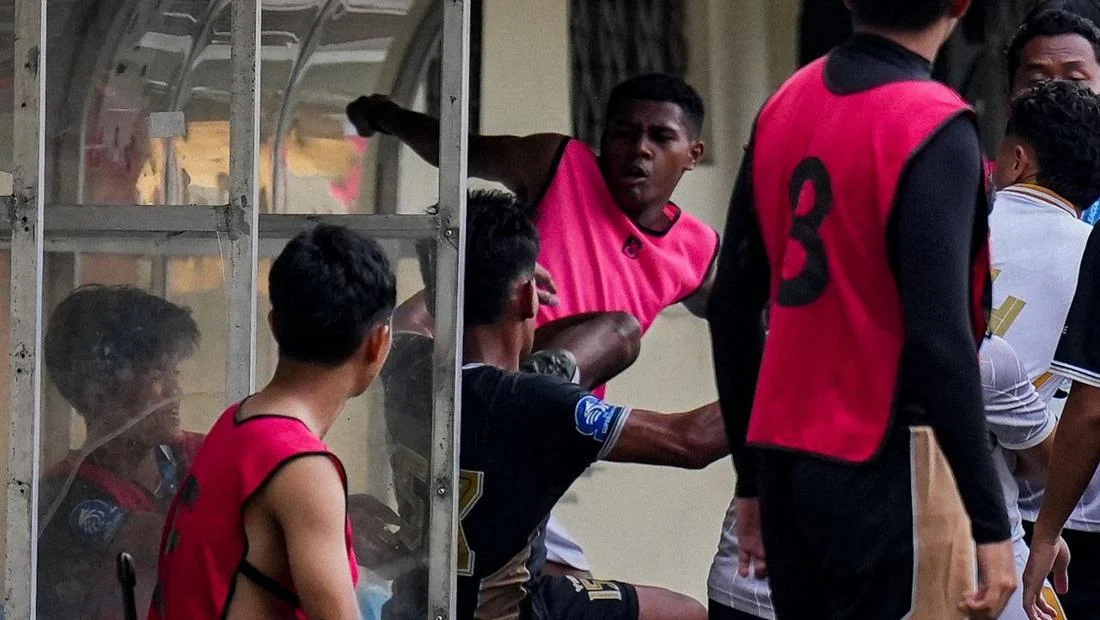
Jakarta – A disturbing incident of alleged violence has marred a youth football match in Indonesia, leaving a young player from Dewa United U-20 reportedly suffering from a dislocated shoulder and facial injuries. The alleged assault occurred following a tense Elite Pro Academy U-20 fixture between Bhayangkara FC U-20 and Dewa United U-20 at the Citarum Stadium in Semarang on Sunday, April 19, 2026. The incident, described by onlookers and club officials as a "kungfu kick," has sparked outrage and calls for stricter sportsmanship enforcement at the developmental level.
The gravity of the situation was amplified by photographic evidence circulating online, reportedly showing the injured Dewa United player with visible wounds on his face. Beyond the facial trauma, the player is also reported to have sustained a dislocated shoulder, a significant injury that could sideline him for an extended period and potentially impact his future development. The exact nature and severity of the injury are still subject to official medical assessment, but the initial reports paint a concerning picture of the physical consequences of the alleged altercation.
Chronology of a Controversial Encounter
The match itself, a league fixture in the Elite Pro Academy U-20, a crucial developmental league for aspiring young footballers in Indonesia, was reportedly characterized by heightened emotions and physicality. While competitive spirit is expected, reports suggest that the contest devolved into unsportsmanlike conduct after the final whistle. It was in the immediate aftermath of the match that the alleged violent act occurred, leading to the serious injury of the Dewa United U-20 player.
According to initial reports, the incident involved a player from Bhayangkara FC U-20 delivering a forceful kick, described as a "kungfu kick," to the Dewa United player. The timing and nature of this alleged attack, occurring post-match, has drawn particular condemnation, as it suggests an act beyond the heat of competitive play and potentially premeditated aggression. The location of the incident, within the stadium premises, also raises questions about the security and supervision protocols in place during youth league matches.
Dewa United’s Strong Condemnation and Call for Accountability
The management of Dewa United has been swift and unequivocal in its condemnation of the alleged violence. Ardian Satya, President of Dewa United, expressed deep disappointment and strong disapproval of the incident, emphasizing that such actions are unacceptable, especially within a youth development program.
"We are deeply regretful of the occurrence of violence. Moreover, it was perpetrated by players and even coaching staff who should be role models and capable of maintaining a conducive situation," Ardian stated in a press release on Monday, April 20, 2026. His statement underscores the club’s commitment to fostering an environment of respect and fair play, highlighting the responsibility of coaches and senior players to set positive examples for younger athletes.
The club’s stance suggests a commitment to pursuing the matter further, likely through official channels within the football federation. This could involve lodging formal complaints, demanding an investigation, and seeking appropriate sanctions against the individuals involved, as well as potentially the club responsible, should evidence of systemic issues emerge. The emphasis on "panutan" (role models) and "menjaga situasi tetap kondusif" (maintaining a conducive situation) points to a belief that the incident was not an isolated lapse in judgment but a failure of leadership and ethical conduct within the participating team.
Understanding Shoulder Dislocations: A Medical Perspective
The injury sustained by the Dewa United player, a dislocated shoulder, is a significant orthopedic concern. According to medical resources such as the Cleveland Clinic, a shoulder dislocation occurs when the bones within the shoulder joint are forced out of their normal position. The shoulder is a ball-and-socket joint, a highly mobile articulation that allows for a wide range of motion. This mobility, however, also makes it susceptible to injury.
A dislocation happens when the "ball" (the head of the humerus, or upper arm bone) is forcibly separated from the "socket" (the glenoid cavity of the scapula, or shoulder blade). This separation can be caused by a direct blow to the shoulder, a fall onto an outstretched arm, or sudden forceful movement that pulls the joint beyond its normal range of motion. In the context of the alleged "kungfu kick," it is plausible that a direct impact or a forceful twisting motion during the incident could have led to the dislocation.
The consequences of a dislocated shoulder can extend beyond immediate pain and immobility. The forceful displacement can stretch or tear ligaments, tendons, and nerves surrounding the joint, potentially leading to chronic instability, pain, and a higher risk of re-dislocation. In severe cases, it can also damage blood vessels.
Types of Shoulder Dislocations
Medical professionals categorize shoulder dislocations based on the degree of separation between the bones. Understanding these classifications can provide a clearer picture of the injury’s severity:
-
Complete Dislocation (Luxation): This is the most severe form, where the bones of the shoulder joint are entirely separated and forced completely out of their normal alignment. The "ball" is no longer in contact with the "socket" at all. This typically results in significant pain, deformity of the shoulder, and inability to move the arm.
-
Subluxation: Also referred to as a partial dislocation, subluksasi occurs when the shoulder joint is stretched or partially separated, but the bones remain in partial contact. The joint may feel loose or unstable, and the individual might experience a "popping out" sensation. While less severe than a complete dislocation, subluxations can still cause pain and instability and may indicate underlying damage to the joint’s supporting structures.
The reports suggesting the Dewa United player experienced a dislocated shoulder imply that the injury was likely a complete dislocation, given the severity of the reported pain and the description of the forceful nature of the incident.
Broader Implications for Youth Football Development
This incident casts a dark shadow over Indonesia’s efforts to develop young football talent through programs like the Elite Pro Academy. The league is designed to be a nurturing ground, providing aspiring players with structured training, competitive experience, and exposure to higher levels of the sport. However, instances of violence and unsportsmanlike conduct undermine this objective, potentially deterring young athletes and creating a negative perception of the sport.
The involvement of players and potentially coaches in such an incident raises critical questions about the disciplinary frameworks and educational programs in place within youth football academies. It highlights the need for robust mechanisms to:
- Enforce Sportsmanship: Clear and consistently applied rules against violent conduct and unsportsmanlike behavior are paramount. This includes swift investigations and proportionate sanctions.
- Promote Ethical Development: Beyond technical skills, youth football programs must prioritize character development, emphasizing respect, fair play, and emotional control. This can be achieved through workshops, mentoring, and the consistent modeling of these values by coaches and staff.
- Ensure Player Safety: Stadium security, refereeing standards, and medical support at youth matches need to be rigorously assessed and maintained to prevent and effectively manage incidents that put player safety at risk.
- Educate Parents and Guardians: Involving parents and guardians in reinforcing the values of sportsmanship and fair play can create a supportive ecosystem for young athletes.
The reaction from Dewa United’s president, Ardian Satya, indicates that the club is taking a proactive stance. Their emphasis on the role of coaches and senior players as "panutan" suggests an understanding that discipline and ethical conduct must be instilled from the top down. This incident, therefore, serves as a crucial catalyst for a broader review of how youth football is governed and nurtured in Indonesia, ensuring that the focus remains on holistic player development rather than just on-field performance. The future of Indonesian football depends on its ability to cultivate not only skilled athletes but also responsible and respectful individuals.

