
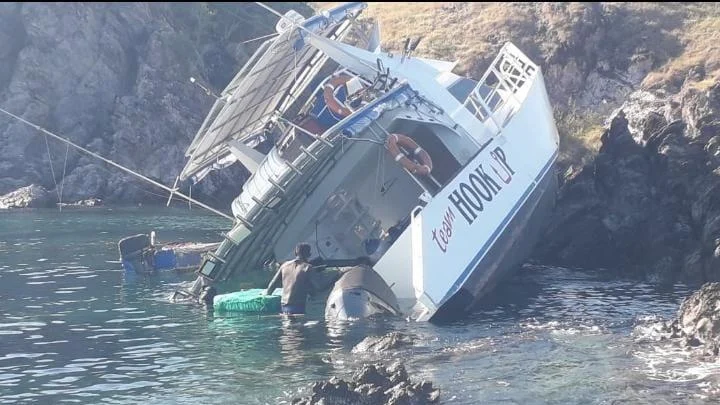
The waters of Labuan Bajo in East Nusa Tenggara (NTT), a region globally renowned for its pristine marine biodiversity and status as a "Super Priority" tourism destination, became the site of a significant maritime accident in the early hours of Saturday, July 11, 2026. The Speedboat Hook Up, a vessel chartered for a recreational fishing excursion, struck a coral reef near Pulau Bidadari (Angel Island), leading to a rapid emergency response from local authorities and the search and rescue (SAR) community. While the incident resulted in no fatalities among the six domestic tourists on board, the vessel’s captain sustained injuries during the collision, prompting an urgent evacuation to a nearby medical facility.
The accident occurred at approximately 04:30 WITA (Central Indonesia Time) as the vessel was navigating through the northern waters of Pulau Bidadari. According to Stephanus Risdiyanto, the Head of the Class III Labuan Bajo Port Authority and Office of Port Master (KSOP), the vessel appeared to lose control shortly before the impact. The loss of maneuverability caused the speedboat to drift erratically before ultimately running aground on the northern coastal reef of the island. The force of the impact was sufficient to dislodge the captain from the vessel’s bridge, resulting in physical trauma that required immediate clinical intervention.
Chronology of the Incident
The voyage of the Speedboat Hook Up began on Friday, July 10, 2026. The vessel departed from the Marina Labuan Bajo at approximately 16:00 WITA. The group, consisting of six domestic tourists, had set out for an overnight fishing trip, a popular activity in the nutrient-rich waters surrounding the Komodo National Park buffer zones. The itinerary included fishing in the northern sea of Pulau Bidadari, an area known for its deep-water channels and diverse fish species.
After spending several hours at sea, the vessel began its return journey toward the Marina Labuan Bajo in the pre-dawn hours of Saturday. It was during this return leg that the navigation issues began. Preliminary reports suggest that the vessel encountered a sudden loss of steering or engine control, though technical investigations are still ongoing to determine the exact cause of the mechanical failure. Deprived of its ability to steer, the Speedboat Hook Up was at the mercy of the local currents, which pushed the craft toward the jagged coral formations that fringe Pulau Bidadari.
By 04:30 WITA, the vessel made hard contact with the reef. The sudden deceleration caused by the collision threw the captain from his station on the bridge. The six passengers, while shaken by the impact, managed to remain on board the vessel as it came to rest in the shallow waters of the island’s northern coast. Emergency signals were promptly dispatched, alerting the Class III KSOP Labuan Bajo and the local SAR team to the distress situation.
Emergency Response and Medical Evacuation
Upon receiving the distress call, a joint SAR team was immediately mobilized. The response unit included personnel from the National Search and Rescue Agency (Basarnas), the Indonesian Navy (TNI AL), and the local water police (Polairud), coordinated under the guidance of KSOP Labuan Bajo. "The emergency response team headed to the location of the incident to evacuate the crew and passengers as quickly as possible," stated Stephanus Risdiyanto.
The rescue operation was carried out with precision, despite the logistical challenges of navigating shallow, reef-filled waters in the early morning light. The injured captain and the six tourists were successfully transferred from the stricken speedboat to a rescue vessel. Given the nature of the captain’s injuries, the decision was made to transport all individuals directly to Siloam Hospital in Labuan Bajo. Siloam is the primary trauma center in the region, equipped to handle maritime-related injuries and catering to the high volume of tourists that visit the Komodo district.
As of the latest updates, the six tourists have been discharged after undergoing medical evaluations for shock and minor abrasions. The captain remains under medical supervision, though his condition is reported to be stable. The swiftness of the SAR operation has been credited with preventing further complications, particularly given the vulnerability of a grounded vessel in tidal waters.
The Strategic Importance of Maritime Safety in Labuan Bajo
This incident serves as a stark reminder of the inherent risks involved in maritime tourism, even in highly regulated zones. Labuan Bajo has undergone a massive transformation over the last decade, evolving from a quiet fishing village into a premier international travel hub. As part of the Indonesian government’s "Ten New Balis" initiative, the infrastructure in West Manggarai has been significantly upgraded to support luxury tourism and international summits.
However, the increase in vessel traffic—ranging from traditional phinisi boats and luxury yachts to high-speed tourist boats—has placed immense pressure on maritime safety protocols. The waters around the Komodo National Park are notoriously difficult to navigate due to strong tidal currents, shifting sandbanks, and extensive coral reef systems.
Stephanus Risdiyanto and the KSOP have been vocal about the necessity of strict adherence to the Sailing Approval Letter (Surat Persetujuan Berlayar or SPB) requirements. Every vessel departing from Labuan Bajo is required to undergo a safety check and verify that its navigation equipment is functional. The investigation into the Hook Up incident will likely focus on whether the vessel had maintained its technical standards and if the captain had followed the prescribed night-navigation protocols.
Ecological and Environmental Implications
Beyond the immediate human cost, maritime accidents in Labuan Bajo often carry an environmental price. Pulau Bidadari is part of a delicate ecosystem that serves as a gateway to the Komodo National Park. The coral reefs in this area are not only vital for local biodiversity but are also a primary draw for the diving and snorkeling industry that fuels the local economy.
When a vessel hits a reef, the physical damage to the coral structures can take decades to recover. Furthermore, there is always a risk of fuel leaks or chemical spills from grounded boats. While there were no immediate reports of significant oil spills following the Hook Up’s grounding, environmental authorities are expected to conduct an assessment of the northern coast of Pulau Bidadari to ensure that the reef’s integrity has not been compromised.
The incident highlights the need for "green" maritime corridors where vessel speed and navigation are more tightly controlled to protect the underwater heritage. Local environmental NGOs have previously called for better buoyage systems and GPS-monitored lanes to prevent vessels from straying into shallow reef zones, particularly during low-visibility hours.
Analysis of Recent Maritime Safety Trends
The collision involving the Speedboat Hook Up is not an isolated event. As tourism numbers in Labuan Bajo continue to climb, the frequency of maritime mishaps has seen a proportional increase. Data from the past three years suggests that mechanical failures and human error remain the leading causes of accidents in the East Nusa Tenggara waters.
To combat this, the Ministry of Transportation has been working to modernize the Port of Labuan Bajo and the Marina area. This includes the implementation of a Digital Port system to track vessel movements in real-time. However, smaller speedboats and private fishing charters sometimes operate on the fringes of these digital networks, making them more susceptible to accidents when technical issues arise at sea.
Industry experts suggest that the "fishing trip" sub-sector of tourism requires more specific oversight. Unlike standard island-hopping tours that occur during daylight hours, fishing trips often involve overnight stays and navigation during the "golden hours" of dawn and dusk when visibility is at its most deceptive. Enhancing the certification requirements for captains who operate night charters could be a logical step forward for the West Manggarai tourism board.
Conclusion and Future Outlook
The successful rescue of the six tourists and the captain of the Speedboat Hook Up is a testament to the efficiency of the Labuan Bajo joint SAR teams. However, the incident underscores the fragile balance between expanding tourism and maintaining rigorous safety and environmental standards.
As the investigation continues, the KSOP is expected to issue a formal report detailing the technical causes of the loss of control. This report will be crucial for vessel operators across the region to understand potential failure points in similar speedboat models. For the tourists involved, the ordeal ended safely at Siloam Hospital, but the image of a vessel grounded on the reefs of Pulau Bidadari remains a cautionary tale for the industry.
For Labuan Bajo to maintain its status as a world-class destination, the safety of its maritime operations must remain beyond reproach. This involves a combination of advanced technology, such as better reef marking and night-vision navigation aids, and a culture of safety among local operators. As the region prepares for even higher visitor volumes in the coming years, the lessons learned from the Hook Up incident will likely play a role in shaping future maritime policies in the waters of East Nusa Tenggara.

