
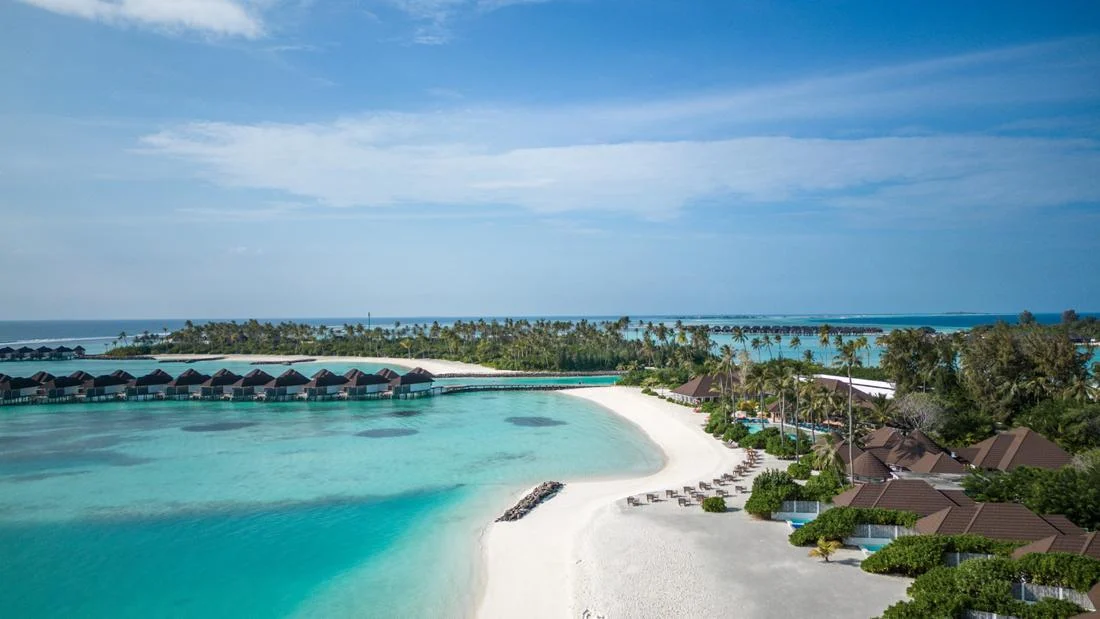
The Republic of Maldives, an archipelago synonymous with luxury tourism and pristine coral reefs, has recently found itself at the center of a digital firestorm following a viral video suggesting a catastrophic collapse in visitor numbers. A travel influencer from Sweden, identified as Filippa, recently shared a video depicting a starkly quiet scene on the local island of Dhiffushi. In the clip, which has garnered nearly 2.8 million views across various social media platforms, a local resident claims that tourism in the area has plummeted by as much as 90 percent. The video attributes this alleged decline to the ongoing geopolitical tensions and military conflicts involving the United States, Israel, and Iran in the Middle East. However, a deep dive into official government data, aviation patterns, and ministerial statements reveals a far more nuanced reality that contradicts the narrative of a total industry collapse.
The Genesis of the Viral Misconception
The controversy began approximately two weeks ago when Filippa’s video began circulating, showing the influencer walking through what appeared to be a deserted Dhiffushi. Dhiffushi is a "local island," a category of Maldivian tourism that allows visitors to stay in guesthouses alongside residents, offering a more affordable and culturally immersive alternative to the country’s world-famous private resort islands. In the video, the local interviewee expresses despair, noting that the island is usually teeming with visitors during the peak season but currently stands nearly empty.
The timing of the video, set against the backdrop of heightened regional instability in the Middle East, fueled immediate speculation that the Maldives—a nation heavily dependent on international transit hubs—was being avoided by global travelers. Given that the Maldives is a 100 percent Muslim nation, social media discourse also speculated on whether political sentiments or safety concerns regarding flight paths were deterring the Western market. While the visual evidence in the video was striking, industry experts and government officials have been quick to point out that anecdotal evidence from a single local island does not necessarily reflect the macro-economic health of the nation’s primary GDP driver.
Analyzing the 2026 Arrival Data
According to official statistics released by the Maldives Ministry of Tourism and the Maldives Airports Company Limited (MACL), the claim of a 90 percent decline is statistically unfounded. As of April 1, 2026, the Maldives recorded a total of 653,513 visitor arrivals for the year. This figure actually represents a marginal increase of 0.7 percent compared to the same period in 2025. These numbers suggest that, on a broad scale, the Maldives remains a highly sought-after destination despite global headwinds.
However, a month-by-month breakdown reveals why some local operators might be feeling a pinch. The first two months of 2026 showed robust growth, with arrival numbers exceeding those of January and February 2025. The trend shifted in March 2026, which saw a year-on-year decline of 20.7 percent. While a 20 percent drop is significant and poses challenges for hospitality businesses, it remains a far cry from the 90 percent "ghost town" scenario portrayed in the viral video.
The disparity between the influencer’s report and the official data can be attributed to the "two-tier" nature of Maldivian tourism. While private resorts often maintain high occupancy through long-term bookings and luxury branding, local islands like Dhiffushi are more susceptible to the fluctuations of the budget and mid-range markets, which are typically more sensitive to increased flight costs and economic uncertainty.
Geopolitical Friction and the Aviation Bottleneck
The primary factor behind the recent slowdown is undoubtedly the volatility in the Middle East. The Maldives is geographically isolated in the Indian Ocean, and its connectivity is inextricably linked to the "Big Three" Middle Eastern hubs: Dubai (Emirates), Doha (Qatar Airways), and Istanbul (Turkish Airlines).
Tourism Minister Thoriq Ibrahim recently confirmed that approximately 30 percent of all tourists arriving in the Maldives transit through Middle Eastern carriers. The ongoing conflict involving US-Israel-Iran tensions has led to frequent disruptions in regional airspace, forcing airlines to reroute flights. These detours often result in longer flight times, higher fuel surcharges, and, in some cases, the temporary suspension of certain routes.
For travelers from the United States, South America, and Northern Europe, the prospect of navigating unstable airspace or facing long delays at transit hubs has dampened travel sentiment. Despite these hurdles, the aviation sector has shown remarkable adaptability. Carriers such as British Airways and Edelweiss Air have actually increased their flight frequencies to Male to capture the direct-flight market, while Aeroflot and Air India have expanded services to provide alternative transit routes that bypass the most volatile zones of the Middle East.
Shifting Market Demographics
The 2026 tourism landscape in the Maldives is also defined by a significant shift in source markets. As of the second quarter of 2026, China has reclaimed its position as the top source market, accounting for 14.9 percent of all arrivals. This resurgence of the Chinese market has provided a critical cushion against the decline in European and North American visitors.
The current top-tier markets are:
- China: 14.9%
- Russia: 12.5%
- United Kingdom: 9.7%
- Italy: 9.0%
- Germany: 6.9%
- India: 4.2%
The decline in the Indian market, which was a top performer in previous years, is also a notable factor. Diplomatic tensions and a shift in Indian consumer preference toward domestic "staycations" or alternative regional destinations have contributed to the lower 4.2 percent share. Meanwhile, the Russian market remains resilient, as the Maldives continues to be one of the few luxury destinations easily accessible and welcoming to Russian travelers amidst ongoing global sanctions elsewhere.
Government Response and Strategic Mitigation
In a press conference held on March 22, 2026, Minister of Tourism and Environment Thoriq Ibrahim acknowledged the slowdown but emphasized a strategy of diversification rather than despair. The government is acutely aware that relying on traditional transit routes is a vulnerability. To combat this, the Maldivian administration is working with international airlines to establish more "point-to-point" connectivity, reducing the reliance on Middle Eastern hubs.
Furthermore, the government is looking to evolve the Maldivian "brand" to attract different types of travelers who stay longer and contribute more to the local economy. Two major legislative proposals are currently under discussion:
- Remote Worker Visa: Designed for digital nomads, this visa would allow professionals to live and work from guesthouses on local islands for extended periods, providing a steady stream of income for local communities regardless of short-term tourist fluctuations.
- Content Creator Visa: Recognizing the power (and sometimes the peril) of social media, this visa aims to attract influencers and filmmakers by offering streamlined permits and incentives, ensuring that the Maldives remains visible in the global digital space.
Minister Thoriq also highlighted plans to expand niche tourism sectors. These include the promotion of "Big Game" fishing, technical diving expeditions, and the development of halal tourism packages to attract more visitors from Southeast Asia and the Gulf Cooperation Council (GCC) countries. There is also a concerted effort to market the Maldives as a hub for educational and marine research tourism, appealing to a demographic that is less affected by seasonal travel trends.
The Resilience of the Maldivian Model
While the viral video from Dhiffushi may have captured a moment of quietude, it failed to capture the broader resilience of the Maldivian tourism infrastructure. The Maldives has a long history of navigating global crises, from the 2004 Indian Ocean Tsunami to the total shutdown caused by the COVID-19 pandemic. In each instance, the nation’s "one island, one resort" policy provided a unique safety and isolation advantage that allowed it to recover faster than its competitors.
The current challenge is less about a lack of interest in the destination and more about the logistics of global movement. The 20.7 percent dip in March 2026 is a significant hurdle, but it is a manageable one. For the local residents of islands like Dhiffushi, the slowdown is a reminder of the volatility of the global travel market. However, for the Maldivian government and the larger tourism industry, the focus remains on adaptation.
Implications for Future Travel
The situation in the Maldives serves as a case study for how modern tourism destinations must navigate the intersection of social media influence and geopolitical reality. A single viral video can create a perception of crisis that takes months of data-driven communication to correct. For the Maldives, the path forward involves balancing its identity as a luxury escape with a new pragmatism in aviation logistics and market diversification.
As 2026 progresses, the industry will be watching closely to see if the April and May figures rebound as airlines settle into new flight paths and the Chinese market continues its upward trajectory. While the Middle East conflict remains a variable that the Maldives cannot control, its internal policy shifts—toward digital nomads and niche markets—suggest a nation that is no longer content to be a passive bystander to global events. The "paradise" remains open; it is simply the way the world reaches it that is changing.

