
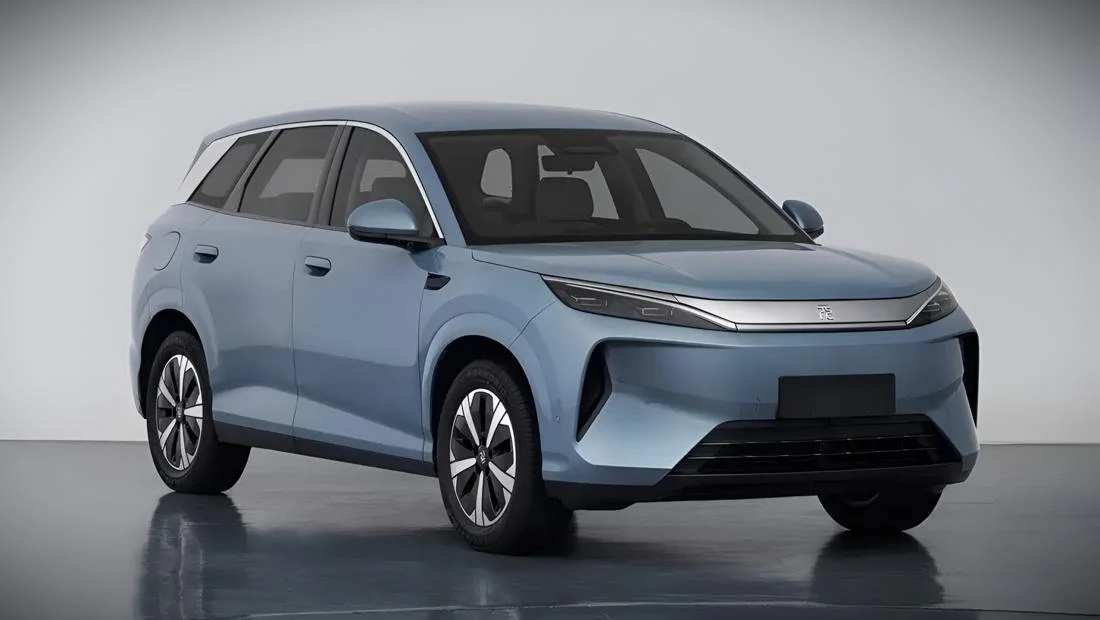
The automotive landscape in China is witnessing a significant shift as BYD, the world’s leading manufacturer of new energy vehicles (NEVs), prepares to launch a major update to its most popular global export, the BYD Atto 3. Known domestically in China as the BYD Yuan Plus, the latest iteration of this electric compact SUV has officially appeared in the New Energy Vehicle Purchase Tax Exemption Directory published by the Chinese Ministry of Industry and Information Technology (MIIT). This regulatory listing confirms a series of substantial technical upgrades that position the Atto 3 to maintain its dominance in an increasingly competitive global market. The new model features enhanced battery density, significantly improved charging speeds, and a shift in drivetrain configuration that signals a new era for BYD’s e-Platform technology.
Technical Specifications and Performance Breakthroughs
According to the official government documentation, the upcoming BYD Atto 3 will be offered with two distinct battery pack options, both of which utilize BYD’s proprietary Lithium Iron Phosphate (LFP) chemistry. The entry-level variant is equipped with a 57.545 kWh battery, while the long-range version boasts a 68.547 kWh capacity. These hardware updates translate to a notable increase in driving range. Under the China Light-Duty Vehicle Test Cycle (CLTC), the new Atto 3 is rated for a range of 540 kilometers and 630 kilometers, respectively.
While CLTC ratings are generally more optimistic than the European WLTP or American EPA standards, the 630 km figure represents a significant leap from the previous generation’s maximum range of approximately 510 km (CLTC). This improvement is attributed not only to the increased kilowatt-hour capacity but also to the integration of the second-generation Blade Battery. This new iteration of BYD’s signature battery technology offers higher volumetric energy density, allowing more energy to be stored within the same physical footprint, thereby optimizing the vehicle’s weight-to-range ratio.
Perhaps the most disruptive feature of the new Atto 3 is its "flash charging" capability. BYD’s documentation indicates that the second-generation Blade Battery can charge from 10% to 70% in just five minutes. For a more comprehensive charge, the vehicle can reach 97% from a 10% baseline in approximately nine minutes. This level of DC fast-charging performance suggests that BYD may be implementing an 800-volt electrical architecture or a highly advanced thermal management system capable of handling extreme current loads. Furthermore, the technology addresses a common pain point for EV owners in colder climates; BYD claims that even at temperatures as low as -30°C, the charging time increases by only three minutes compared to optimal conditions.
Strategic Shift to Rear-Wheel Drive Architecture
In a departure from the front-wheel-drive (FWD) configuration of the current Atto 3, the new model is listed as utilizing a newly developed rear-wheel-drive (RWD) pure electric platform. This transition suggests that the updated Atto 3 may be moving toward the e-Platform 3.0 Evo or a similar evolution of BYD’s modular architecture. The move to RWD is often preferred by automotive engineers for better weight distribution, improved traction during acceleration, and a tighter turning radius—features that could enhance the Atto 3’s appeal in the European and Australian markets where driving dynamics are highly scrutinized.
The powertrain options have also seen a boost in output. The updated SUV will be available with two motor configurations: a 200 kW (approximately 268 hp) motor and a more powerful 240 kW (approximately 322 hp) variant. For comparison, the existing Atto 3 typically features a 150 kW motor. This increase in power ensures that the vehicle remains competitive against rivals like the Tesla Model Y and the MG4 Electric, providing more spirited performance to match its refreshed underpinnings.
Design Evolution and Dimensional Updates
Visually, the new BYD Atto 3 continues to adhere to the "Dynasty" design language, which has become a hallmark of BYD’s premium SUV lineup. The front fascia retains the sleek, aerodynamic profile with a silver-finished grille panel flanked by slim, blackened LED headlights. The bumper design has been refined to include vertically arranged air intakes on both sides, flanking a trapezoidal lower intake that aids in cooling the battery’s thermal management system.
The vehicle has grown slightly in its physical dimensions to accommodate the new hardware and improve interior packaging. The new Atto 3 measures 4,665 mm in length, 1,895 mm in width, and 1,675 mm in height, with a generous wheelbase of 2,770 mm. These dimensions place it firmly in the C-segment SUV category, offering a competitive amount of legroom and cargo space. Exterior options include a choice between 18-inch and 19-inch alloy wheels, featuring designs optimized for aerodynamic efficiency to further squeeze out extra kilometers of range.
The rear of the vehicle maintains the clean aesthetic of the Dynasty series, featuring a full-width light bar that creates a "through-type" lighting effect. A two-segment high-mount stop lamp and a rear wiper integrated into the spoiler assembly complete the look. The "Build Your Dreams" lettering, which appeared on earlier international models, is expected to be replaced by the more minimalist "BYD" badge, a trend recently seen in the brand’s updated 2024 global lineup.
Chronology of the Atto 3 and Market Context
The BYD Atto 3 was first introduced to the Chinese market as the Yuan Plus in early 2022. It quickly became a cornerstone of BYD’s "Ocean" and "Dynasty" series strategy, acting as the primary vehicle for the brand’s aggressive international expansion. By late 2022 and throughout 2023, the Atto 3 was launched in dozens of markets, including Thailand, Australia, Israel, Germany, and Indonesia, frequently topping EV sales charts in these regions.
The decision to update the model so significantly within a three-year window reflects the rapid pace of innovation in the Chinese NEV sector. In 2023, BYD surpassed Tesla in total volume of electrified vehicles produced, though the two companies remain in a tight race for the title of the world’s top battery-electric vehicle (BEV) seller. The introduction of the second-generation Blade Battery and flash-charging tech is a direct response to the "price war" and "tech war" currently unfolding in the global automotive industry.
Industry Reactions and Competitive Implications
While BYD has not yet released an official press statement regarding the global rollout of this specific 630-km variant, industry analysts suggest that the update is a strategic necessity. "BYD is no longer just competing on price; they are now competing on core technology leadership," says an automotive analyst specializing in the Asian market. "The ability to charge an EV in under ten minutes removes one of the final barriers to mass adoption. By bringing this to the Atto 3—a vehicle already known for its value—BYD is putting immense pressure on traditional European and Japanese manufacturers."
Inferred reactions from competitors suggest a looming challenge. Manufacturers like Volkswagen and Toyota, who are currently scaling their own EV platforms, may find it difficult to match the charging speeds and range-per-dollar ratio offered by BYD’s vertically integrated supply chain. Because BYD manufactures its own batteries and semiconductors, it can implement these generational leaps in technology faster than competitors who rely on external suppliers.
Broader Impact and Global Outlook
The implications of the new Atto 3 extend far beyond the Chinese border. As BYD continues to build manufacturing hubs in Brazil, Hungary, Thailand, and Uzbekistan, the updated Atto 3 is expected to be the flagship product for these new facilities. The enhanced cold-weather charging performance is particularly relevant for the Northern European market, where BYD aims to capture a larger share of the premium-mass market.
Furthermore, the shift to a 630-km range (CLTC) likely translates to a real-world range of approximately 450-500 km, which effectively eliminates "range anxiety" for the vast majority of urban and suburban commuters. If BYD manages to keep the pricing of this updated model close to the current version, it could redefine the expectations for what a "budget-friendly" electric SUV should offer.
As the vehicle moves from the regulatory directory to full-scale production, the automotive world will be watching closely to see how the second-generation Blade Battery performs in real-world conditions. With its improved range, revolutionary charging speeds, and refined RWD architecture, the new BYD Atto 3 is poised to reinforce BYD’s position as a formidable force in the global transition to sustainable mobility.

