
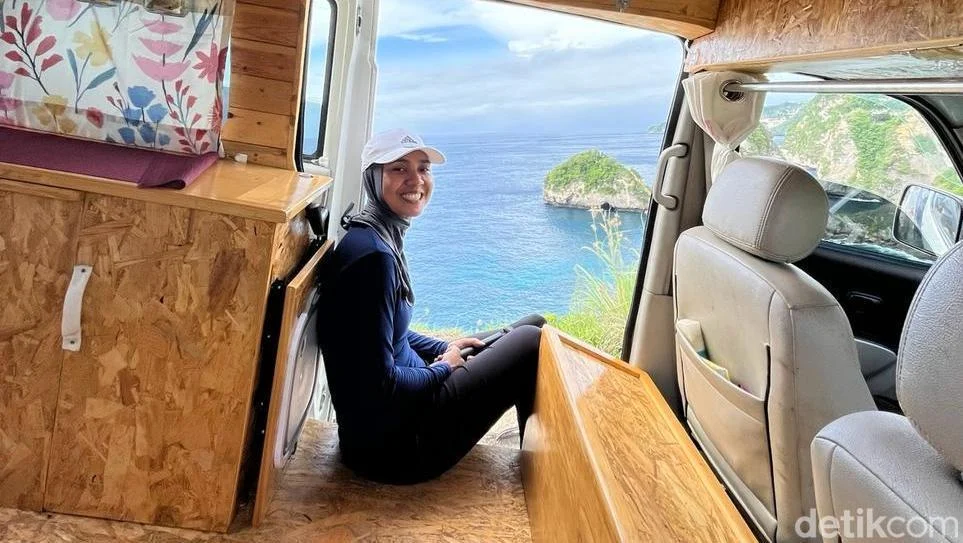
The transition from a structured corporate environment to the unpredictable life of a nomad is a narrative that has gained significant traction in the post-pandemic era. For Rahmi Syofia, now widely recognized by her digital moniker "Mimi Campervan," this shift was not merely a career change but a profound existential realignment. Her journey, which began with the realization that her life had become a repetitive cycle of professional obligations, has evolved into a comprehensive exploration of the Indonesian archipelago. This transition highlights a growing cultural shift in Indonesia, where professionals are increasingly prioritizing personal fulfillment and mental well-being over traditional ladder-climbing in the corporate sector.
Syofia’s story began in 2010, marking the start of a decade-long tenure as a dedicated office worker. Over ten years, she navigated the high-pressure environments of various companies across Jakarta, Bali, and Malang. Like many in the urban workforce, her routine was characterized by long hours, frequent overtime, and a dwindling amount of personal time. In her own words, the exhaustion of the workweek often bled into the weekends, leaving little room for self-reflection or recreation. This phenomenon, often described by sociologists as "burnout culture," is prevalent in Indonesia’s major metropolitan hubs, where the demands of the modern economy often clash with individual health and social connectivity.
The Catalyst of Change: A Pandemic-Induced Reflection
The turning point for Syofia arrived during the COVID-19 pandemic, a period that forced global populations into a state of involuntary stillness. For Syofia, who was based in Bali at the time, the pandemic acted as a mirror, reflecting the fragility of life and the limitations of her current path. The sudden shift in global dynamics, coupled with the loss of acquaintances and the palpable uncertainty of the era, prompted a deep internal audit. She reached a realization at the age of 35, a stage in life often associated with mid-career re-evaluation.
The psychological impetus for her departure from the corporate world was encapsulated in a single, poignant thought: "If life is merely about seeking food, then even the animals in the forest do the same." This perspective shift suggested that human existence should strive for more than basic survival or material accumulation. This sentiment echoes the "Great Resignation" or "Big Quit," a global economic trend that saw millions of employees voluntarily leaving their jobs starting in 2021. In Indonesia, this trend manifested as a surge in entrepreneurship and a renewed interest in domestic travel, as individuals sought to reclaim their time and autonomy.
From Two Wheels to a Mobile Home: The Evolution of the Journey
Syofia did not immediately jump into the campervan lifestyle. Her initial foray into nomadic living began on a smaller scale, using a motorcycle to explore the diverse landscapes of Bali. This period served as a testing ground for her endurance and her desire for a life on the move. However, the limitations of a motorcycle—particularly regarding shelter and storage—eventually led her to the concept of a campervan.
The process of building a campervan in Indonesia is a complex undertaking that involves both mechanical engineering and interior design. Syofia’s transition involved repurposing a vehicle into a functional living space capable of navigating Indonesia’s varied terrain, from the paved highways of Java to the rugged paths of more remote islands. This DIY approach to vehicle modification has become a cornerstone of the "Van Life" community in Indonesia, a subculture that blends automotive enthusiasm with a minimalist lifestyle.
The Growth of the Indonesian Campervan Community (ICC)
Syofia’s individual journey is part of a much larger movement. The Indonesian Campervan Community (ICC) and similar groups have seen a significant membership increase over the last five years. According to industry observers, the rise of the campervan movement in Indonesia is supported by several factors:
- Infrastructure Development: The completion of the Trans-Java and Trans-Sumatra toll roads has significantly reduced travel times between major provinces, making long-distance road trips more accessible to the general public.
- Social Media Influence: Platforms like Instagram and YouTube have allowed travelers like Mimi Campervan to document their lives, providing both inspiration and practical "how-to" guides for aspiring nomads.
- The Digital Nomad Infrastructure: The proliferation of 4G and 5G connectivity, even in relatively rural areas, has made it possible for some travelers to maintain "remote-ready" jobs while living on the road.
- Domestic Tourism Focus: Following the pandemic, the Indonesian Ministry of Tourism and Creative Economy (Kemenparekraf) shifted its focus toward domestic travelers, encouraging Indonesians to explore "hidden gems" within their own borders.
Economic and Social Implications of Nomadic Living
The rise of individuals like Syofia has measurable implications for the local economy. Traditional tourism often concentrates wealth in established hubs like South Bali or Yogyakarta. However, campervan travelers tend to stop in smaller, off-the-beaten-path villages. By purchasing fuel, food, and supplies in these areas, they contribute to the decentralization of tourism revenue.
Furthermore, the "Mimi Campervan" brand represents a shift in the creator economy. By sharing her journey, Syofia provides a form of "experiential marketing" for various regions of Indonesia. Her content highlights the accessibility of travel, potentially encouraging others to engage in domestic tourism, which is a vital component of the national GDP.
From a sociological standpoint, Syofia’s choice challenges the traditional Indonesian "success" narrative, which typically emphasizes job security, homeownership, and steady career progression. Her lifestyle advocates for a different set of values: mobility, adaptability, and the prioritization of experiences over possessions. This shift is particularly notable among Millennials and Gen Z in Indonesia, who are increasingly vocal about the need for work-life balance and mental health awareness.
Challenges and Logistical Realities
Despite the romanticized image of van life often portrayed on social media, the reality involves significant challenges. Syofia has noted that the journey is not just about reaching a destination but about the process of adaptation. In Indonesia, campervan travelers face specific hurdles:
- Regulations and Compliance: Modifying a vehicle into a campervan requires adherence to safety standards and transportation laws. Ensuring that a modified vehicle remains road-legal (TNKB) and passes periodic inspections (KIR) can be a bureaucratic challenge.
- Waste Management and Sustainability: As more people take to the roads, the environmental impact on pristine areas becomes a concern. Responsible travelers like Syofia emphasize the "Leave No Trace" principle, but the lack of dedicated "grey water" disposal stations in Indonesia remains an issue.
- Safety and Security: Navigating remote areas requires a high level of situational awareness. While Indonesia is generally hospitable to travelers, solo female travelers like Syofia must take extra precautions regarding where they park and sleep.
- Maintenance: A campervan is both a vehicle and a home. Mechanical failures can lead to total disruptions of daily life, requiring travelers to possess a basic understanding of automotive repair or have access to a reliable network of mechanics.
Timeline of the Mimi Campervan Transformation
To understand the scale of Syofia’s journey, a look at the chronology of her transition provides essential context:
- 2010 – 2019: Professional career phase. Syofia works in various corporate roles across Jakarta, Bali, and Malang. This period is marked by high productivity but increasing personal dissatisfaction and burnout.
- 2020: The Pandemic Pivot. Lockdown measures and the global health crisis trigger a period of deep reflection. Syofia begins to question the sustainability of her corporate lifestyle.
- 2021: The Bali Exploration. Residing in Bali, she quits her corporate job and begins exploring the island via motorcycle, testing her comfort levels with nomadic travel.
- 2022 – 2023: The Construction Phase. Syofia invests in a vehicle and begins the process of converting it into a campervan. She starts documenting her progress online, gaining a following.
- 2024 – Present: Full-Scale Exploration. Operating under the name "Mimi Campervan," she begins her mission to traverse the Indonesian archipelago, moving from island to island and sharing the realities of life on the road.
Analysis: The Future of Alternative Lifestyles in Indonesia
The story of Rahmi Syofia is a micro-reflection of a macro-trend. As the world moves further away from the traditional 20th-century employment model, alternative lifestyles like van life are likely to become more normalized. For Indonesia, a nation with over 17,000 islands and a rapidly growing middle class, the potential for "overland" tourism is immense.
Analysts suggest that if the government and private sector can provide better infrastructure—such as dedicated campervan parks with electricity and water hookups—Indonesia could become a premier destination for both domestic and international nomadic travelers. Currently, most campervan travelers rely on gas stations (SPBU), mosques, or public parking areas for overnight stays. Formalizing this sector could open up new revenue streams for local municipalities.
Furthermore, Syofia’s journey serves as a case study for the "Age of Autonomy." Her decision to leave a stable job at 35 highlights a rejection of the "sunk cost fallacy," where individuals feel obligated to continue a path simply because they have already invested years into it. By choosing the road, Syofia has rebranded herself not just as a traveler, but as an advocate for intentional living.
Conclusion
Rahmi Syofia’s evolution into "Mimi Campervan" is more than a travel story; it is a narrative of reclamation. By stepping away from the "Monday to Friday" grind that had consumed her life since 2010, she has highlighted the possibilities that exist when one chooses to redefine the parameters of success. While her path is not without its hardships—ranging from mechanical issues to the social isolation that can sometimes accompany nomadic life—the sense of purpose she has found suggests that for many, the risk is worth the reward.
As Indonesia continues to develop its tourism infrastructure and as its workforce continues to seek meaning beyond the cubicle, the roads of the archipelago will likely see many more mobile homes. Syofia remains a pioneer in this space, proving that sometimes, the best way to find oneself is to get lost on the open road, one kilometer at a time. Her journey continues to inspire a generation of Indonesians to look at their vast country not just as a map of cities and workplaces, but as a boundless horizon of opportunity and self-discovery.

