
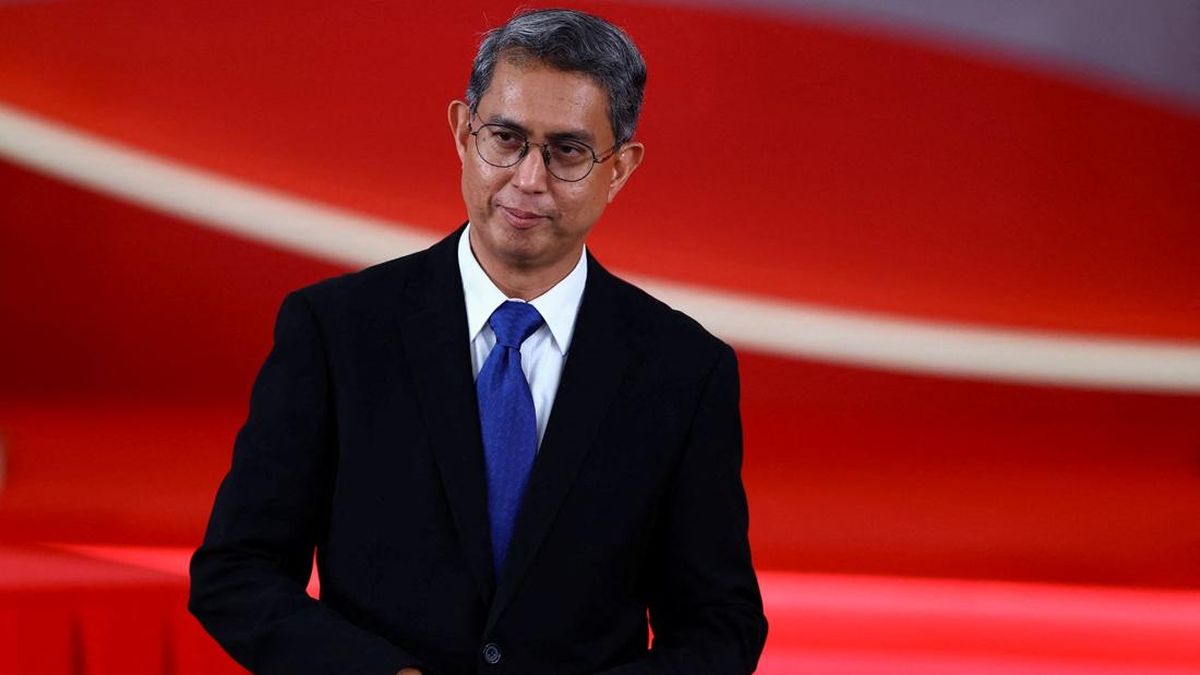
Muhammad Faishal Ibrahim, who was serving as the Acting Minister for Muslim Affairs in Singapore, has tendered his resignation from both his ministerial post and his parliamentary seat, following allegations of inappropriate interactions with a woman. The abrupt departure, which came to light on Monday, July 20th, marks another high-profile political scandal in Singapore, a nation widely known for its stringent adherence to public service ethics and zero-tolerance policy for misconduct. The incident has drawn significant attention, not only due to the senior position held by Faishal Ibrahim but also because it follows a series of similar resignations by other Members of Parliament (MPs) over the past year, raising questions about political conduct standards in the republic.
The South China Morning Post (SCMP) was among the first to report the details surrounding Faishal’s resignation, indicating that the minister stepped down from the cabinet and parliament due to "inappropriate interactions" with a woman, which subsequently led to accusations of harassment. The Prime Minister’s Office (PMO), under the leadership of Prime Minister Lawrence Wong, received a report regarding these interactions approximately a month prior to Faishal’s resignation. This report, an email from a female member of the public, initiated an internal inquiry that ultimately culminated in the minister’s departure.
Upon receiving the complaint, the matter was thoroughly investigated by the police. Following their inquiry, authorities concluded that there were no grounds for criminal charges against either Faishal Ibrahim or the woman involved, who had also filed a cross-allegation of harassment. Despite the absence of criminal culpability, Prime Minister Wong engaged Faishal regarding the appropriateness of his conduct and his suitability to continue serving as a politician and public office holder. In a statement released on Monday, Prime Minister Wong elaborated on the sequence of events, stating, "This matter came to our attention about a month ago when the PMO received an email from a female member of the public regarding her interactions with Associate Professor Faishal." Wong further clarified that while the police investigation found no basis for criminal charges, the crucial question revolved around whether Faishal’s behaviour met the elevated standards expected of a public official in Singapore.
After careful consideration and discussions with the Prime Minister, Associate Professor Faishal acknowledged that his conduct fell short of the expected standards. He subsequently submitted his resignation, which Prime Minister Wong accepted. In his resignation letter to Prime Minister Wong, which was also disseminated on social media, Faishal Ibrahim admitted to an "error of judgment" in handling the situation. He stated, "Although there was no physical relationship between us, and I did not intend for the interactions to develop as such, there was an error of judgment on my part in the way I handled the interactions, and in failing to set clearer boundaries at an earlier stage." He further expressed his understanding that his actions did not align with the high expectations placed upon him and were inconsistent with the responsibilities entrusted to his office. Concluding his statement, Faishal declared, "I have therefore decided that it is appropriate for me to step down from politics, so that I can devote my time and attention to my family." Faishal Ibrahim, aged 58, is married and has two children. His decision to step down aims to allow him to focus on his family during this challenging period.
A Distinguished Career and the Significance of the Portfolio
Muhammad Faishal Ibrahim entered the political arena in 2006, having built a strong academic and professional background. He holds a PhD in management science, a testament to his intellectual capabilities and dedication. His career trajectory within the People’s Action Party (PAP), Singapore’s dominant ruling party, saw him steadily rise through the ranks. In 2020, he was appointed as the Minister of State for National Development and Home Affairs, roles that placed him at the forefront of critical national policy-making and public service delivery.
His appointment as the Acting Minister for Muslim Affairs was particularly significant. This portfolio is crucial in Singapore’s multi-ethnic and multi-religious society, where the government actively promotes social cohesion and interfaith harmony. The Minister for Muslim Affairs plays a vital role in representing the interests of the Muslim community, overseeing Islamic religious institutions, and implementing policies that support the community’s development while ensuring its integration within the broader national fabric. Faishal Ibrahim was also slated for a more prominent role, having been designated to succeed Masagos Zulkifli as the full Minister-in-Charge of Muslim Affairs after the general election expected in 2025. This prospective promotion underscored the confidence the party leadership had in his abilities and his growing influence within the PAP’s central executive committee. His resignation therefore not only removes a key figure from the current administration but also disrupts future leadership succession plans within a critical portfolio.
Seamless Transition and Constituency Management
In the wake of Faishal’s resignation, the government moved swiftly to ensure continuity in leadership and public service. Zaqy Mohamad, who currently serves as the Senior Minister of State for Defence and Manpower, has been appointed to succeed Faishal as the Acting Minister for Muslim Affairs. This swift appointment underscores the PAP government’s commitment to maintaining administrative stability and ensuring that vital portfolios remain adequately staffed.
Regarding his parliamentary duties, Faishal Ibrahim represented the Kembangan ward within the Marine Parade Group Representation Constituency (GRC). Following his departure, the remaining four Members of Parliament within the Marine Parade-Braddell Heights GRC will collectively continue to serve the residents of the Kembangan ward. This collective approach is a standard practice in GRCs when one member steps down, ensuring that constituents continue to receive parliamentary representation and access to local services without disruption.
Singapore’s High Standards: A Recurring Challenge
Faishal Ibrahim’s resignation marks one of the most significant political scandals in Singapore since July 2023. This period has seen an unusual cluster of high-profile resignations and ethical breaches, challenging Singapore’s long-standing reputation for impeccably clean governance and high moral standards among its political leaders.
The previous year witnessed three other prominent Members of Parliament resigning due to personal misconduct. In July 2023, then-Speaker of Parliament Tan Chuan-Jin and MP Cheng Li Hui both resigned from their legislative positions and from the ruling PAP after their extramarital affair became public. Then-Prime Minister Lee Hsien Loong revealed to local media that he had first learned of the affair after the 2020 general election. In February 2023, he had advised both individuals to end their illicit relationship. Tan reportedly offered his resignation at that time, but Lee urged him to prioritize his constituents’ interests and to terminate the affair. However, Lee later disclosed that he had "recently" discovered information indicating that the relationship between Tan and Cheng was still ongoing, leading to their ultimate resignations. This incident sent shockwaves through the political establishment, given Tan Chuan-Jin’s senior position as Speaker and a former military chief.
Just two days after the revelations concerning Tan and Cheng, another scandal erupted involving members of the Workers’ Party (WP), Singapore’s largest opposition party. Leon Perera, an MP, and Nicole Seah, a senior party leader, both resigned from the party and parliament. This followed the emergence of an old video showing Perera caressing Seah’s hand in a restaurant. Both Perera and Seah admitted to having an illicit relationship that began in 2020 and had ended prior to the video’s public release. They also confessed to having lied to WP leader Pritam Singh when initially questioned about the matter. These incidents, spanning both the ruling and opposition parties, underscored the intense scrutiny and high ethical bar applied to all political figures in Singapore.
Implications for Governance and Public Trust
The recent string of political misconduct cases, culminating in Muhammad Faishal Ibrahim’s resignation, presents a unique challenge for Singapore’s political landscape. The People’s Action Party has historically built its legitimacy and sustained its decades-long dominance on a foundation of clean governance, integrity, and meritocracy. The party’s founding leaders, most notably Lee Kuan Yew, instilled a culture where public officials are expected to uphold the highest ethical standards, both in their public and private lives. This ethos is considered critical for maintaining public trust and ensuring the effective functioning of government.
The current series of resignations, particularly those involving allegations of inappropriate personal conduct, inevitably tests this bedrock principle. While the swift action taken by the party leadership in accepting resignations and ensuring accountability reaffirms the commitment to these standards, the frequency of such incidents raises questions among the populace. It prompts reflection on whether the pressures of public life are contributing to these lapses, or if there is a broader societal shift in expectations.
For Prime Minister Lawrence Wong, who recently took over the premiership from Lee Hsien Loong, these events represent an early test of his leadership. His handling of Faishal’s case, particularly his emphasis on "standards" even in the absence of criminal charges, reinforces the consistent message from the PAP that public office holders are held to an exceptionally high moral and ethical benchmark. This steadfastness is crucial for Wong as he seeks to solidify his mandate and lead the PAP into the next general election. The party will undoubtedly strive to demonstrate that these are isolated incidents and that the institutional commitment to integrity remains uncompromised.
Furthermore, the impact on public perception cannot be understated. Singaporeans generally hold their political leaders in high regard, and any breach of trust can erode confidence in institutions. The government’s transparency in addressing these issues, including the detailed explanations provided by the Prime Minister, is essential for mitigating such erosion. It communicates a commitment to accountability and a recognition that public office is a privilege that demands unwavering ethical conduct.
In conclusion, Muhammad Faishal Ibrahim’s resignation, while personally unfortunate, serves as a stark reminder of the rigorous ethical demands placed upon Singaporean politicians. The government’s decisive action, even in cases where criminal charges are not warranted, underscores a deep-seated commitment to maintaining high standards of integrity in public life. As Singapore navigates these challenges, the consistent upholding of these principles will be paramount for sustaining public trust and ensuring the continued strength and stability of its governance system.

