
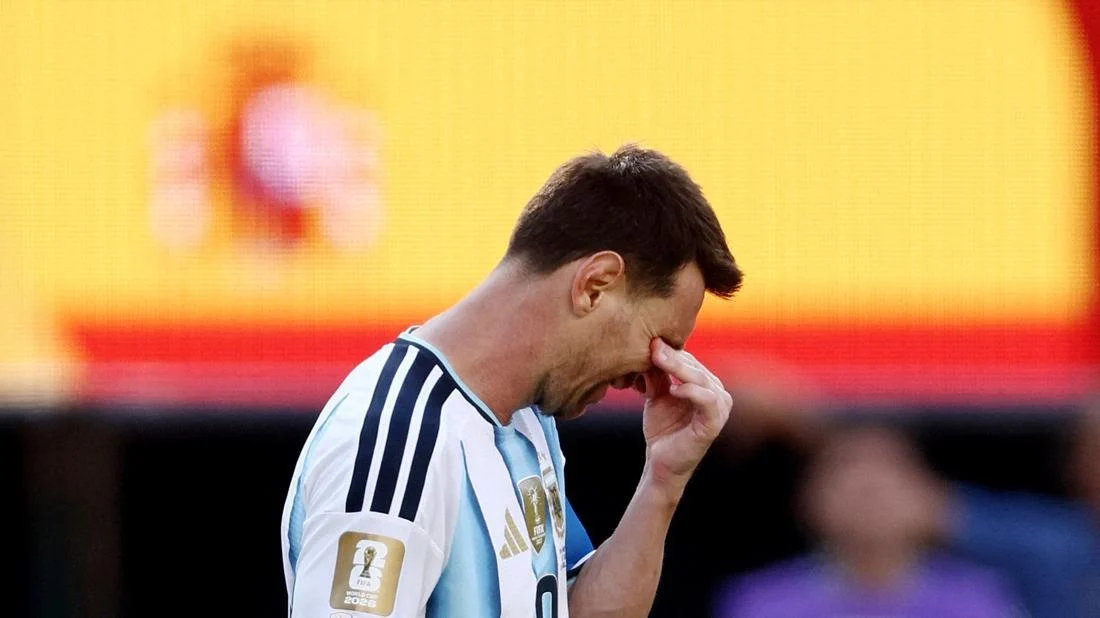
The roar of the crowd at the colossal New York/New Jersey Stadium on Monday, July 20, 2026, was met with stunned silence from the Argentine contingent as Lionel Messi and his beloved La Albiceleste were brought to tears by a dominant Spanish performance in the FIFA World Cup 2026 final. The dream of a fairytale ending for the legendary Lionel Messi was cruelly extinguished, as Spain clinched their first World Cup title in 12 years with a narrow 1-0 victory.
The final, a highly anticipated clash between two footballing titans, ultimately saw Argentina utterly outplayed by a tactically astute and relentlessly energetic Spanish side. From the opening whistle to the final agonizing moments of extra time, the South American champions struggled to impose their will, a stark contrast to the dominant displays that had carried them to this prestigious stage. The statistics from the 120 minutes of play painted a grim picture for Lionel Scaloni’s charges, who failed to register a single shot on target throughout the entire match, a testament to Spain’s suffocating defensive organization and effective pressing game.
The decisive moment arrived in the second half when Ferran Torres, the dynamic winger, etched his name into Spanish football history. Receiving a perfectly weighted pass from his creative counterpart, Nico Williams, Torres coolly dispatched the ball past the despairing dive of Emiliano Martinez in the Argentine goal. This single strike, the culmination of Spain’s sustained pressure and attacking intent, proved to be the insurmountable difference between the two sides.
Messi’s Quiet Demise Amidst Spanish Dominance
The narrative of the match inevitably gravitated towards the performance of Lionel Messi, widely considered the greatest footballer of all time. Former England and Manchester City goalkeeper, Joe Hart, who was part of the BBC’s punditry team, offered a poignant assessment of Messi’s impact, or lack thereof, during the final. "There was no fairytale ending for Messi, who had virtually no impact on the game due to Spain’s dominance," Hart stated, as reported by BBC Sport. "He barely had any opportunities until the closing moments."
Further analysis from Opta, the renowned sports statistics provider, highlighted Messi’s peripheral involvement in the critical areas of the pitch. In the opening 15 minutes of the match, a period where teams often seek to establish control, Messi reportedly did not touch the ball within the opposition’s penalty area. This statistic underscores the effectiveness of Spain’s defensive strategy, which successfully denied Messi the space and opportunities to weave his magic.
Despite the overwhelming Spanish control, Hart acknowledged Messi’s enduring influence on the Argentine team. "However, he still has a bit of fight left in him. Whatever happens for Argentina, it always starts with him. He has had an incredible tournament, but today was simply not his day," Hart added, a sentiment that resonated with many watching the dejected Argentine captain.
The Road to the Final: A Tale of Two Nations
The journey to the World Cup 2026 final was a testament to the contrasting styles and unwavering determination of both Spain and Argentina.
Spain’s Resurgence: Under the astute guidance of manager Luis de la Fuente, Spain had embarked on a period of resurgence in international football. After a somewhat disappointing World Cup 2022 campaign, they had meticulously rebuilt their squad, blending seasoned veterans with a new generation of exciting talent. Their qualification for the 2026 tournament was solid, marked by a disciplined approach and a commitment to their possession-based philosophy, often referred to as "tiki-taka."
Throughout the 2026 tournament, Spain had showcased a formidable and balanced team. Their midfield, anchored by players like Rodri and Gavi, demonstrated exceptional control and distribution, dictating the tempo of matches. The attacking prowess of Ferran Torres and Nico Williams, coupled with the clinical finishing of Álvaro Morata, provided a consistent goal threat. Defensively, they were exceptionally organized, conceding very few goals and demonstrating a remarkable ability to shut down opposing attacks. Their path to the final included impressive victories over strong European and South American rivals, signaling their genuine championship credentials.
Argentina’s Emotional Campaign: For Argentina, the 2026 World Cup was imbued with immense emotional significance. Following their triumphant Copa América victory in 2021 and their iconic World Cup win in 2022, there was a palpable desire to secure a historic "three-peat" of major international titles. Lionel Messi, in what was widely anticipated to be his final World Cup appearance, carried the hopes and dreams of an entire nation.
Scaloni’s side had navigated their way through the tournament with their characteristic grit and flair. While perhaps not as consistently dominant as in previous campaigns, they had demonstrated an uncanny ability to find a way to win, often through moments of individual brilliance from Messi and the tireless efforts of players like Rodrigo De Paul and Enzo Fernández. Their journey had been punctuated by passionate performances and an undeniable bond with their adoring fanbase, creating an emotional narrative that had captivated the world.
A Chronology of the Final Match
The final itself unfolded with a tense and cagey opening. Both teams appeared to respect each other’s strengths, leading to a cautious start.
- First Half: Spain gradually began to assert their dominance, controlling possession and probing the Argentine defense. While Argentina struggled to create clear-cut chances, their defensive solidity, marshaled by Nicolás Otamendi and Cristian Romero, kept the Spanish attack at bay for much of the first half. The absence of effective attacking penetration from Argentina was noticeable, with Messi finding himself tightly marked and often isolated.
- Second Half: The pattern continued in the second half, with Spain increasing the pressure. The introduction of fresh legs and tactical adjustments by De la Fuente began to pay dividends. The breakthrough came in the 68th minute. Nico Williams, who had been a constant threat on the wing, delivered a precise cross into the box, finding Ferran Torres. Torres, with composure beyond his years, finished the chance to put Spain ahead.
- Late Surge and Extra Time: Trailing by a goal, Argentina pushed forward in desperation. Scaloni made attacking substitutions, but Spain’s defensive structure remained resolute. The final minutes of regulation time saw a flurry of Argentine pressure, but they were unable to find an equalizer. As the referee signaled for full time, the score remained 1-0, forcing the match into extra time.
- Extra Time Stalemate: The additional 30 minutes were largely a testament to Spain’s ability to manage the game. While Argentina threw everything they had forward, their efforts were largely disorganized and lacked the incisiveness needed to breach Spain’s well-drilled defense. Spain, sensing victory, focused on maintaining possession and frustrating their opponents, ultimately seeing out the match to secure their historic triumph.
Supporting Data and Analysis
The statistical disparity between the two teams in the final was stark and telling. According to official FIFA data, Spain registered:
- Possession: 62% to Argentina’s 38%
- Total Shots: 18 to Argentina’s 7
- Shots on Target: 6 to Argentina’s 0
- Corners: 8 to Argentina’s 3
- Pass Completion Rate: 88% to Argentina’s 82%
This data clearly illustrates Spain’s superior control over the game and their effectiveness in creating scoring opportunities, while Argentina’s offensive struggles were profoundly evident. The fact that Argentina failed to force a single save from the Spanish goalkeeper, Unai Simón, throughout 120 minutes of play is a remarkable and concerning statistic for their attacking unit.
From an analytical perspective, Spain’s victory can be attributed to several key factors:
- Tactical Discipline: Luis de la Fuente’s tactical blueprint was executed to perfection. Spain’s pressing game stifled Argentina’s build-up play, and their defensive shape was nearly impenetrable.
- Midfield Dominance: The control exerted by Spain’s midfield trio prevented Messi from receiving the ball in dangerous areas and disrupted Argentina’s rhythm.
- Effective Wing Play: The dynamism and creativity of Nico Williams and Ferran Torres proved to be a constant thorn in Argentina’s side, culminating in the decisive goal.
- Mental Fortitude: Despite facing a team with the emotional weight of Argentina and the legend of Messi, Spain maintained their composure and executed their game plan flawlessly.
Reactions and Implications
The aftermath of the final saw a mixture of jubilation and heartbreak. Spanish players and staff erupted in ecstatic celebration, having achieved their nation’s ultimate footballing dream. Manager Luis de la Fuente expressed his immense pride in his players, stating, "This is a dream come true for all of us. The players have given everything, and they deserve this moment. We played with heart, intelligence, and a belief that we could win."
On the Argentine side, tears flowed freely. Lionel Messi, though visibly devastated, received a standing ovation from many sections of the crowd, a testament to his unparalleled career and the indelible mark he has left on the sport. While the exact nature of his immediate post-match reaction was not widely reported, his disappointment was evident. Coach Lionel Scaloni acknowledged the superiority of the opponent on the day, stating in his post-match press conference, "We fought until the end, but Spain was the better team today. We are heartbroken, but we must congratulate them on their victory."
The implications of this result are significant for both nations. For Spain, it marks a glorious return to the pinnacle of international football, solidifying their place among the elite. It also signals the successful integration of a new generation of talent, promising continued success in the years to come.
For Argentina, the loss represents a poignant end to a potentially historic era. While Messi’s incredible journey may have concluded without a final World Cup triumph, his legacy as one of the greatest ever is indisputable. The team now faces the challenge of rebuilding and forging a new identity without their talisman. The emotional investment of the Argentine nation in this campaign was immense, and the defeat will undoubtedly be deeply felt.
The 2026 FIFA World Cup final will be remembered as a match where a dominant Spanish side shattered Argentine dreams, denying Lionel Messi the fairytale ending he so richly deserved. It was a contest that showcased the beautiful unpredictability of football, the thrill of victory, and the profound agony of defeat on the grandest stage of all.

