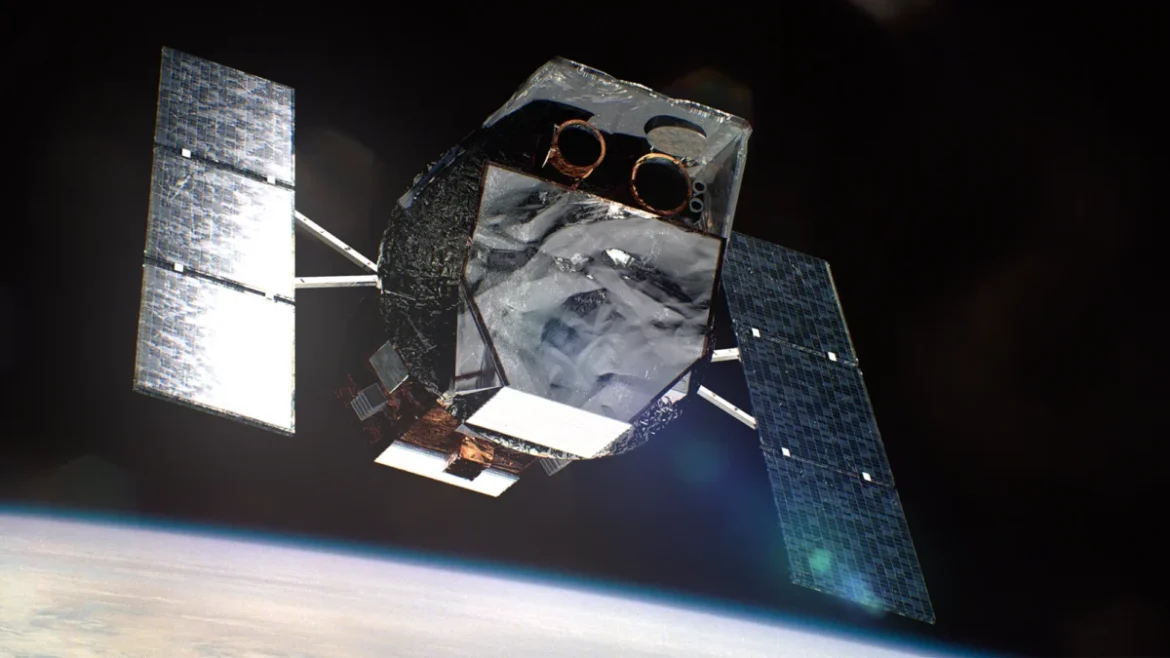
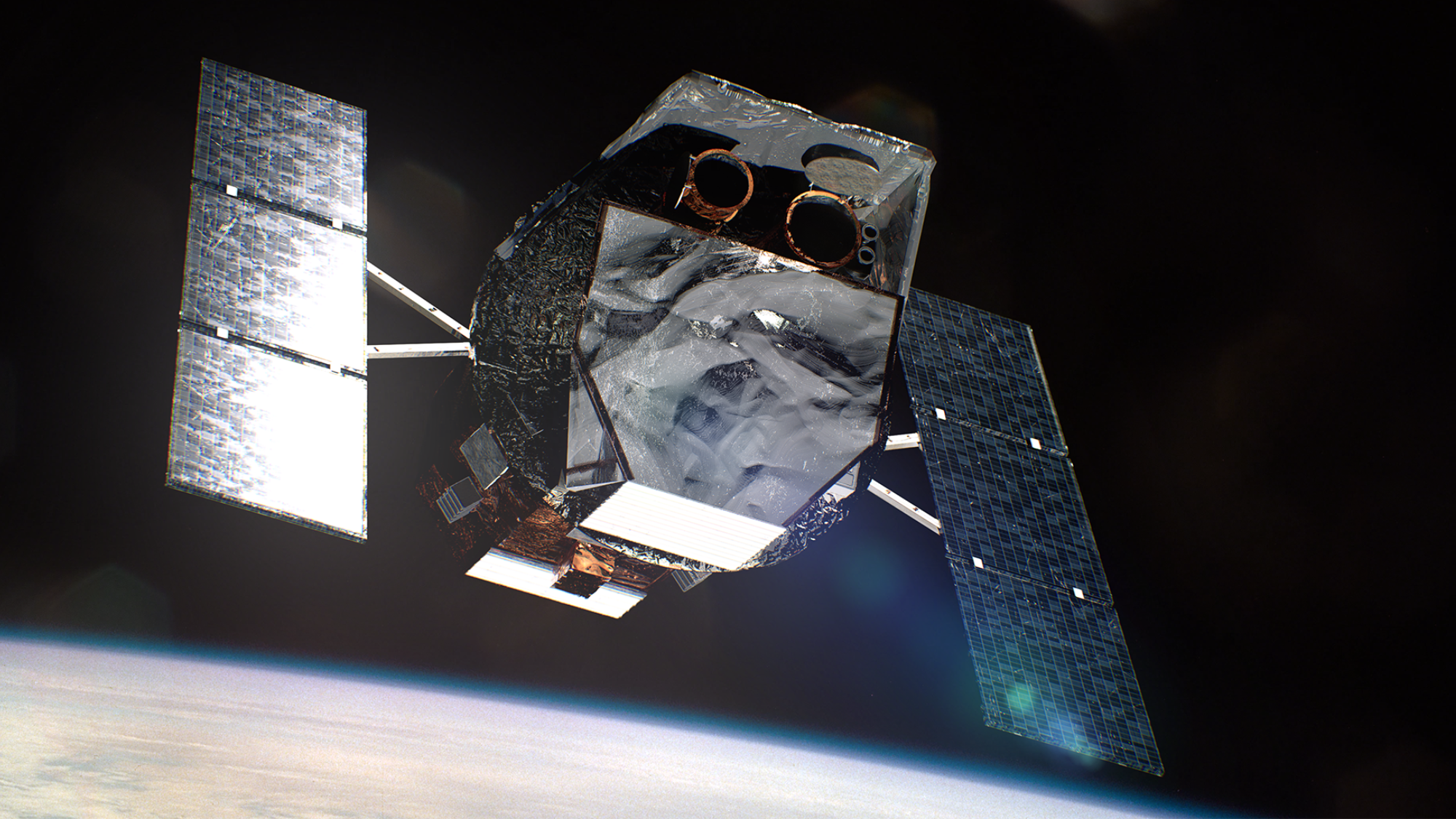
The Neil Gehrels Swift Observatory, a cornerstone of high-energy astrophysics for over two decades, has officially resumed science operations after a period of operational uncertainty. On August 26, 2026, mission controllers at NASA’s Goddard Space Flight Center successfully reactivated the observatory’s Ultraviolet/Optical Telescope and X-ray Telescope. This restoration of functionality comes shortly after the abandonment of a high-stakes, private-sector rescue mission that was intended to extend the satellite’s lifespan. While the observatory is now back to conducting its mission of monitoring the high-energy universe, its long-term future remains constrained by the immutable laws of orbital mechanics.
A Legacy of Gamma-Ray Discovery
Launched in 2004, the Neil Gehrels Swift Observatory was designed with a singular, revolutionary purpose: to solve the mystery of gamma-ray bursts (GRBs). These bursts, the most luminous electromagnetic events in the universe, occur when massive stars collapse or neutron stars collide, releasing as much energy in seconds as our Sun will in its entire ten-billion-year lifetime.
Swift’s unique capability was its "rapid response" mechanism. Within seconds of detecting a burst, the spacecraft could autonomously pivot to point its instruments at the event, providing real-time data to ground-based observatories across the globe. Over the last 22 years, the mission has fundamentally reshaped our understanding of black hole formation, the evolution of galaxies, and the chemical enrichment of the universe. Its contributions were so significant that the mission was renamed in 2018 to honor Neil Gehrels, the mission’s original principal investigator and a titan of the astrophysics community.
The Orbital Crisis: Atmospheric Drag and Solar Cycles
Unlike many modern satellites, the Neil Gehrels Swift Observatory was not equipped with an onboard propulsion system capable of re-boosting its altitude. Since its launch, the spacecraft has maintained a low-Earth orbit, gradually losing altitude due to atmospheric drag. Under normal solar conditions, this decay is predictable and manageable. However, the current solar cycle—Solar Cycle 25—has proven to be more intense than initial forecasts suggested.
Increased solar activity heats the Earth’s upper atmosphere, causing it to expand. This expansion exerts greater friction on satellites in low-Earth orbit, significantly accelerating their descent. By early 2026, NASA engineers realized that Swift’s orbit was decaying at a rate that would lead to uncontrolled atmospheric re-entry much sooner than planned. In February 2026, the agency initiated a series of shutdowns to conserve the satellite’s power and internal resources, effectively placing it in a "stripped-down" mode while awaiting a potential commercial rescue.
The Failed Rescue: The Katalyst Space Mission
In 2025, NASA awarded a contract to Katalyst Space to demonstrate a novel orbital servicing capability using their "Link" spacecraft. The objective was ambitious: the Link vehicle was tasked with rendezvous, capture, and eventually a boost maneuver to shift the Swift observatory into a more stable, higher-altitude orbit.
The mission faced significant technical hurdles throughout the summer of 2026. On August 30, while attempting to finalize proximity maneuvers, the Link spacecraft suffered a critical anomaly, entering an uncontrollable spin. This rendered the capture of the Swift observatory impossible. On August 19, NASA officially announced the termination of the rescue effort. During the final phase of the mission, the Link vehicle captured several imagery snapshots of the Swift observatory from a distance of approximately 9 miles, serving as a bittersweet testament to how close the mission came to success.
"We got so close, but so far," said Ghonhee Lee, CEO of Katalyst Space, in a statement to the Associated Press. While the rescue mission failed to secure the observatory’s future, NASA officials have emphasized that the data collected during the Link technology demonstration remains valuable. The agency noted that the performance data from the Link spacecraft’s maneuvers will inform the development of future autonomous orbital servicing and debris-removal technologies—a growing necessity as the density of objects in low-Earth orbit increases.
Current Status and Short-Term Goals
With the decision to move forward without a rescue, NASA has pivoted to extracting the maximum possible scientific return from the observatory before its final descent. As of early September 2026, the Ultraviolet/Optical and X-ray telescopes are functioning within expected parameters. A technical team is currently working to stabilize the Burst Alert Telescope (BAT), the third instrument in the observatory’s suite. The BAT is critical for the rapid detection of new GRBs, and its reactivation is expected to occur in the coming weeks.
NASA’s current projections indicate that the observatory will remain in a viable orbit at an altitude of approximately 185 miles (300 kilometers) for the next one to two months. This period represents the "final window" of operation. The agency has stated that once the satellite descends below this 300-kilometer threshold, the increase in atmospheric drag will make stable pointing impossible. At that point, the spacecraft will begin a rapid, non-recoverable descent toward the Earth’s atmosphere.
Implications for Future Astrophysics
The decommissioning of Swift is a significant loss for the astronomical community. It marks the end of a unique era in time-domain astronomy. While newer observatories, such as the James Webb Space Telescope or the Vera C. Rubin Observatory, provide unprecedented sensitivity, they lack the specific, wide-field, rapid-response capability that made Swift a pioneer in the field.
The failure to save the observatory has also sparked a broader discussion regarding the sustainability of scientific assets in low-Earth orbit. The reliance on commercial servicing for mid-life upgrades or orbital maintenance is a growing trend, but as the Katalyst Space mission demonstrated, the technology remains in its infancy. For NASA, the focus has shifted from preservation to legacy management. Data archives accumulated by Swift will continue to be analyzed for decades, likely holding secrets about the early universe that have not yet been uncovered.
The Final Timeline: October to December 2026
The scientific community is now preparing for the conclusion of the Swift mission. Between October and late December 2026, the observatory is expected to burn up upon re-entry into the Earth’s atmosphere. Because the spacecraft is relatively small, most of its mass is expected to vaporize during the descent, posing no threat to the surface.
NASA has indicated that it will continue to provide updates on the mission’s status, including the final planned observation date and the expected re-entry window. For now, the Neil Gehrels Swift Observatory continues to "work" from its precarious position, scanning the cosmos for one last series of bursts. Its 22-year tenure serves as a benchmark for mission longevity and a reminder of the fragility of human instruments in the harsh environment of space. When the observatory finally descends, it will mark the end of one of the most successful and productive missions in the history of NASA’s Explorer program. The scientific contributions made by the Swift mission—specifically its ability to bridge the gap between high-energy physics and observational astronomy—will remain a guiding light for future generations of astrophysicists who will build upon the foundation laid by this small, but mighty, sentinel of the sky.