
Spain has officially ascended to the pinnacle of international football, claiming the FIFA World Cup 2026 trophy after a grueling 1-0 victory over Argentina in a final that will be remembered for its tactical discipline and high-stakes drama. The decisive moment came in the second half of extra time when Ferran Torres found the back of the net, breaking the deadlock and securing La Roja’s second world title. The match, held at the MetLife Stadium in East Rutherford, New Jersey—rebranded as the New York New Jersey Stadium for the duration of the FIFA tournament—served as the climax to the largest World Cup in history, featuring 48 teams and matches across three host nations: the United States, Canada, and Mexico.
The final was more than just a sporting event; it was a logistical and cultural milestone for the state of New Jersey. As the final whistle blew and Spanish players collapsed in joy on the pitch, the eyes of an estimated global audience of over 1.5 billion people were fixed on the Meadowlands. This historic occasion has thrust New Jersey into the international spotlight, showcasing the region’s ability to host mega-events while simultaneously highlighting its diverse array of tourist destinations. From the historic halls of Princeton to the adrenaline-pumping heights of world-record-breaking roller coasters, the conclusion of the World Cup marks the beginning of a new era for New Jersey’s tourism industry.
The Final Match: A Tactical Chess Match
The showdown between Spain and Argentina was a clash of philosophies. Spain, under the guidance of a modernized "tiki-taka" approach, prioritized possession and high pressing, while Argentina, led by a veteran core and emerging young talents, relied on explosive counter-attacks and defensive solidity. The first 90 minutes ended in a scoreless draw, with both goalkeepers—Unai Simón for Spain and Emiliano Martínez for Argentina—making world-class saves to keep their respective sides in the hunt.
As the match moved into extra time, fatigue began to set in, opening up spaces in the midfield. In the 112th minute, a quick transition play initiated by Pedri found Ferran Torres on the right flank. Torres cut inside, evading a sliding challenge from Cristian Romero, and curled a precise shot into the far corner of the net. The stadium, filled to its 82,500-seat capacity, erupted as the Spanish contingent celebrated what would eventually be the winning goal. Argentina launched a desperate offensive in the final minutes, but the Spanish defense, anchored by Robin Le Normand, held firm until the final whistle.
Tournament Chronology and Path to the Final
Spain’s journey to the 2026 title was characterized by consistency. They emerged from the group stages with a perfect record, overcoming challenges from formidable European and African opponents. In the knockout rounds, Spain navigated a difficult path, defeating the Netherlands in the Round of 16, Brazil in the quarter-finals, and France in a tense semi-final.
Argentina’s path was equally storied. Entering the tournament as one of the favorites, they overcame an early scare in the group stages to dominate the knockout phase. Their semi-final victory over co-hosts the United States was a highlight of the tournament, setting up the titanic final against Spain. The 2026 edition was unique due to its expanded format, which saw 104 matches played over 39 days, testing the depth and endurance of every squad involved.
Official Reactions and Global Impact
Following the trophy presentation, Spanish head coach Luis de la Fuente praised his team’s resilience. "This victory belongs to the players who never stopped believing in our style of play," de la Fuente stated in the post-match press conference. "To win here, in such an iconic venue and against a legendary opponent like Argentina, is the crowning achievement of this generation."
FIFA President Gianni Infantino hailed the event as a resounding success for the North American hosts. "The New York New Jersey Stadium has provided a fitting stage for the greatest final in history," Infantino said. "The passion we saw here today confirms that the United States is now a true footballing nation."
New Jersey Governor Phil Murphy also commented on the event’s success, focusing on the economic and promotional benefits for the state. "We have shown the world that New Jersey is a premier destination for global events. The legacy of this World Cup will be felt in our local businesses, our hotels, and our tourism sector for decades to come."
New Jersey as a Global Destination: Beyond the Stadium
While the MetLife Stadium was the heart of the action, the surrounding region offers a wealth of attractions that FIFA fans and international travelers have begun to explore in record numbers. The following five destinations represent the diverse appeal of the Garden State.
1. Liberty State Park: The Gateway to History
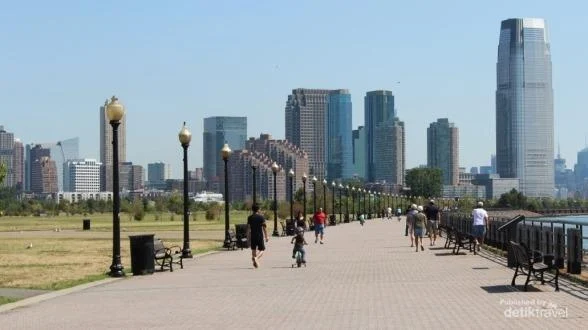
Located in Jersey City, Liberty State Park offers perhaps the most dramatic urban vista in the United States. Spanning over 1,200 acres, the park provides an unobstructed view of the Manhattan skyline, the Statue of Liberty, and Ellis Island. For international visitors, it serves as a serene escape from the frenetic energy of the city while remaining deeply connected to American history.
The park is the only location in New Jersey with ferry service to the Statue of Liberty and Ellis Island, making it a critical hub for heritage tourism. Beyond its historical significance, the park features the "Empty Sky" 9/11 Memorial and the Liberty Science Center, an interactive museum that attracts hundreds of thousands of families annually. During the World Cup, the park served as a primary fan zone, where supporters from across the globe gathered to watch matches on giant screens with the Statue of Liberty as a backdrop.
2. Cape May County and The Wildwoods: Coastal Elegance and Nostalgia
At the southern tip of the state lies Cape May, a National Historic Landmark renowned for its impeccably preserved Victorian architecture. Cape May represents the sophisticated side of the Jersey Shore, offering boutique bed-and-breakfasts, fine dining, and pristine bird-watching sites.
In contrast, the adjacent Wildwoods offer a vibrant, high-energy seaside experience. The Wildwood Boardwalk stretches for nearly two miles, featuring three amusement piers with over 100 rides and attractions. The area is famous for its "Doo Wop" architecture, a mid-century modern style that gives the town a unique retro atmosphere. This combination of quiet elegance and family-friendly excitement makes the southern coast a cornerstone of New Jersey’s $45 billion tourism industry.
3. American Dream: A Modern Marvel of Entertainment
Situated within the Meadowlands Sports Complex, just a stone’s throw from the MetLife Stadium, American Dream has redefined the concept of a shopping mall. It is a massive 3-million-square-foot entertainment and retail destination that operates year-round.
The complex houses several record-breaking attractions, including Nickelodeon Universe, the largest indoor theme park in the Western Hemisphere, and DreamWorks Water Park, which features the world’s largest indoor wave pool. For those looking for winter sports in mid-summer, Big SNOW American Dream provides North America’s first indoor, real-snow ski and snowboard park. The integration of high-end luxury retail with world-class entertainment makes it a vital asset for attracting international tourists who seek a comprehensive leisure experience.
4. Six Flags Great Adventure: The Adrenaline Capital
For thrill-seekers, Six Flags Great Adventure in Jackson, New Jersey, is a mandatory pilgrimage. The park is home to Kingda Ka, which holds the record for the tallest roller coaster in the world and the fastest in North America. The park’s "Jersey Devil Coaster" and "El Toro" are consistently ranked among the best wooden and single-rail coasters globally.
In addition to the theme park, the complex includes Hurricane Harbor water park and a 350-acre Wild Safari Drive-Thru Adventure. The safari allows visitors to see over 1,200 animals from six continents, including elephants, rhinos, and lions, from the safety of their own vehicles. This combination of mechanical thrills and wildlife education ensures the park remains one of the most visited attractions in the Northeast.
5. Princeton University: Intellectual and Architectural Grandeur
Founded in 1746, Princeton University is one of the eight prestigious Ivy League institutions and offers a starkly different experience from the coastal boardwalks. The campus is a masterpiece of Collegiate Gothic architecture, with gray stone buildings and ivy-covered walls that evoke a sense of timelessness.
Visitors often tour Nassau Hall, which briefly served as the capitol of the United States in 1783, and the Princeton University Art Museum, which houses a world-class collection ranging from ancient civilizations to contemporary masters. The surrounding town of Princeton is equally charming, filled with independent bookstores, upscale cafes, and historic sites related to former residents like Albert Einstein and Woodrow Wilson. It provides a cultural depth to the New Jersey travel itinerary that appeals to history buffs and academic enthusiasts alike.
Economic and Strategic Implications
The successful hosting of the 2026 World Cup Final is expected to yield a significant "halo effect" for New Jersey. Preliminary economic impact studies suggest that the tournament generated over $2 billion in regional economic activity. This includes direct spending on lodging, transportation, and hospitality, as well as long-term benefits from increased global brand recognition.
Furthermore, the infrastructure improvements made in preparation for the tournament—including upgrades to the NJ Transit rail system and renovations at Newark Liberty International Airport—will serve the state for years to come. By positioning itself as a host capable of managing the complexities of a FIFA World Cup Final, New Jersey has entered the top tier of global event destinations, potentially paving the way for future bids for the Olympics or major international summits.
As the Spanish team returns home to celebrate their triumph, the legacy of the 2026 World Cup remains firmly planted in the soil of New Jersey. The state has proven that it is much more than a corridor between New York and Philadelphia; it is a destination of substance, history, and unparalleled excitement. For the millions of travelers who discovered the Garden State during this tournament, the final whistle was not an end, but an invitation to return.

