Jakarta, CNN Indonesia – Iran has vehemently denied accusations from the United States and Israel regarding the existence of a clandestine nuclear uranium enrichment facility hidden deep beneath the mountains, specifically naming a location referred to as "Pickaxe Mountain" or "Kolang Kouh." This denial comes amidst sharply escalating rhetoric and direct threats of military action from the US, further exacerbating an already volatile geopolitical standoff in the Middle East. The Iranian Foreign Ministry asserted that these allegations are fabricated pretexts for aggression, while the US President issued an unprecedented public threat to bomb the alleged site, signaling a dangerous new phase in the long-standing nuclear dispute.
The Shadow of Nuclear Ambition: A Decades-Long Saga
Iran’s nuclear program has been a source of international concern for decades, with Western powers and Israel fearing its potential diversion towards weapons development. Tehran has consistently maintained that its nuclear activities are solely for peaceful purposes, primarily electricity generation and medical applications, in line with its obligations as a signatory to the Nuclear Non-Proliferation Treaty (NPT). However, a history of undeclared activities and limited cooperation with the International Atomic Energy Agency (IAEA) has fueled suspicion. The Joint Comprehensive Plan of Action (JCPOA), signed in 2015 between Iran and the P5+1 (China, France, Germany, Russia, the United Kingdom, and the United States), was designed to curb Iran’s nuclear program in exchange for sanctions relief. This landmark agreement significantly rolled back Iran’s enrichment capabilities and introduced stringent international inspections.
However, the JCPOA’s future was cast into doubt when the United States, under President Donald Trump, unilaterally withdrew from the accord in May 2018, subsequently re-imposing crippling sanctions on Iran. In response, Iran gradually scaled back its commitments to the deal, increasing uranium enrichment levels and deploying advanced centrifuges, drawing strong condemnations from the remaining signatories and the IAEA. This unraveling of the JCPOA set the stage for the current heightened tensions, creating an environment where trust is virtually nonexistent and direct confrontation looms large. The international community, particularly European powers, has repeatedly called for a return to the negotiating table and adherence to the agreement, fearing the destabilizing consequences of its complete collapse. The absence of a clear diplomatic pathway has allowed accusations and threats to proliferate, pushing the region closer to conflict.
The "Pickaxe Mountain" Controversy: Allegations and Denials
The latest flashpoint centers on accusations from the US and Israel that Iran is operating a secret uranium enrichment facility approximately 100 meters underground at a site they refer to as "Pickaxe Mountain." The allegations suggest that Iran has moved thousands of centrifuges to this subterranean location following previous attacks on its known nuclear sites. Such underground facilities are typically constructed to withstand conventional aerial bombardment, raising serious concerns about Iran’s defensive preparations and its intent to shield sensitive nuclear infrastructure from external strikes.
Esmaeil Baghaei, spokesperson for the Iranian Ministry of Foreign Affairs, vehemently refuted these claims. In a series of posts on his X account, Baghaei stated unequivocally that "there is no nuclear activity at Kolang Kouh (Pickaxe)." He condemned Washington’s "obsessive focus" on the site, labeling it merely "a made-up pretext for aggression, destruction, and sabotage." Baghaei further asserted that Iran has consistently declared all its nuclear activities to the IAEA, fully complying with its safeguards obligations. He accused the United States of violating international law by attacking and threatening Iran’s nuclear facilities, highlighting a long-standing grievance from Tehran regarding perceived acts of sabotage and assassinations of its nuclear scientists.
Baghaei also questioned the "silence" of IAEA Director General Rafael Grossi regarding the US threats, implying a perceived double standard or lack of condemnation for actions against Iran. He concluded his statements by affirming Iran’s readiness to confront any further US aggression, signaling a defiant posture in the face of escalating military rhetoric. This firm denial underscores Iran’s position that it is the victim of hostile foreign policy rather than a proliferator, framing its nuclear activities as legitimate and transparent within the bounds of its international commitments, as interpreted by Tehran.
A Volatile Timeline: From Truce to Threats
The current crisis did not emerge in a vacuum but is the culmination of a series of escalations and breakdowns in communication. The original report indicates that the US and Iran were, surprisingly, engaged in a "full-scale war" despite having previously agreed upon a "ceasefire and memorandum of understanding (MoU) to end the war." This detail is crucial, as it suggests a recent and significant deterioration from a period of de-escalation or at least a cessation of open hostilities. The nature and specifics of this "truce" and "MoU" are not detailed in the original article, but their mention by President Trump implies a prior diplomatic effort that has clearly failed. This breakdown likely involved indirect negotiations or agreements on regional issues, which have now collapsed, leading to renewed direct confrontation.
It was against this backdrop of renewed hostilities that President Donald Trump issued his stark warning from the White House on Tuesday, July 21st. When directly questioned by reporters about whether Iran had moved centrifuges to Pickaxe Mountain, Trump responded with an unprecedented public threat: "We will attack the Pickaxe Mountain area very soon, and very hard. Maybe in a very short time, and there is nothing they can do to stop it." He further emphasized the seriousness of his threat, stating, "Normally I wouldn’t say such a thing. If I thought they could still do something about it, I would never say it. But we will attack that area very soon, and with great force."
Such explicit and public threats of military action against a specific, alleged nuclear site are highly unusual in international diplomacy, particularly from a sitting US President. They represent a significant departure from conventional strategic ambiguity and signal a direct challenge to Iran’s sovereignty and its nuclear program. The implication that Iran "could do nothing to stop it" suggests a high degree of confidence in US military capabilities and a deliberate attempt to project overwhelming force. This public declaration not only raises the immediate specter of military conflict but also complicates any future diplomatic efforts by hardening positions on both sides.
Adding to the context, Al Jazeera reported that the focus on Pickaxe Mountain emerged after intelligence suggested Iran had relocated thousands of centrifuges to the mountainous region. This move reportedly followed a series of US and Israeli attacks that damaged several of Iran’s primary nuclear facilities during the previous year’s conflict. These earlier attacks, often covert or attributed to cyber warfare and sabotage, included incidents at the Natanz enrichment facility and other sensitive sites, aiming to slow down Iran’s nuclear advancements. The relocation of centrifuges to a deeply buried, hardened site would be a logical defensive measure by Iran, seeking to protect its assets from future strikes, thus making the "Pickaxe" claim strategically plausible, even if denied by Tehran.
Strategic Implications and Technical Feasibility
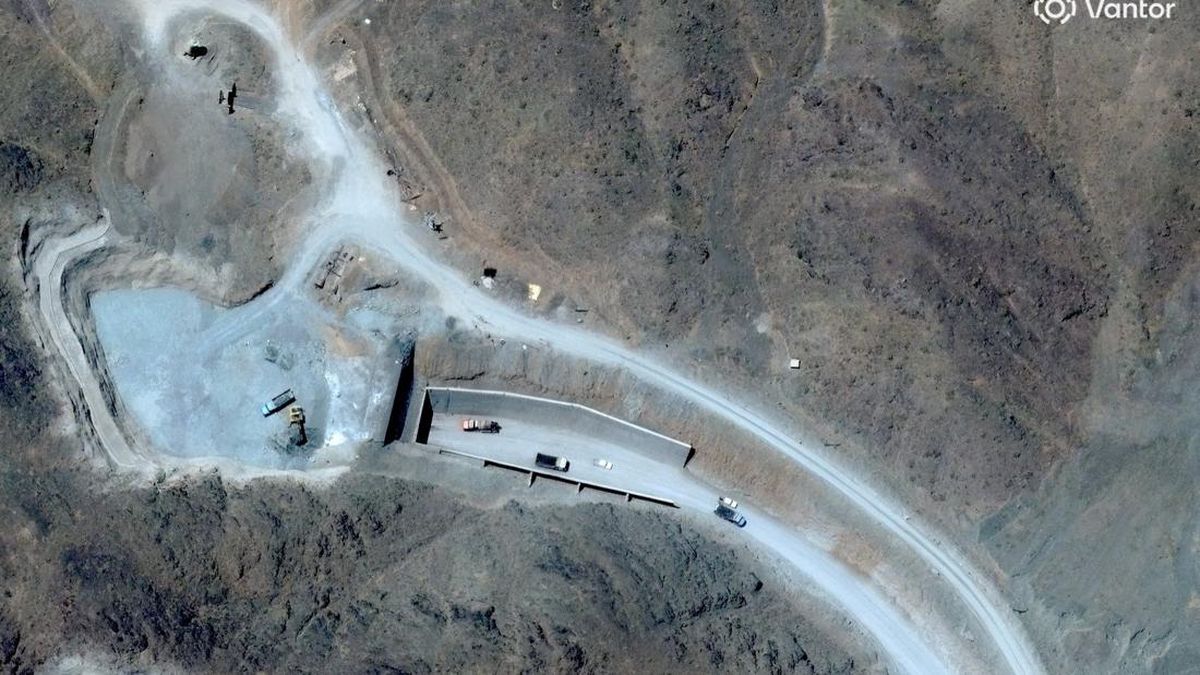
The strategic implications of an alleged deeply buried enrichment facility like "Pickaxe Mountain" are profound. Such underground sites are designed to be impervious to conventional bunker-buster bombs, necessitating specialized munitions and tactics, potentially including deep-penetrating bombs like the GBU-57 Massive Ordnance Penetrator (MOP) possessed by the US. The existence of such a facility, if proven, would significantly complicate any military efforts to dismantle Iran’s nuclear program and would represent a major step in Iran’s ability to protect its nuclear infrastructure.
The relocation of thousands of centrifuges, as reported, would also indicate a substantial commitment by Iran to continue its enrichment activities despite international pressure and past attacks. Centrifuges are critical for enriching uranium, a process that can produce fuel for nuclear power reactors or highly enriched uranium for nuclear weapons, depending on the enrichment level. Iran’s current enrichment levels, significantly higher than those permitted under the JCPOA, already raise proliferation concerns. A secret, fortified facility would only intensify these fears, as it would be more difficult for the IAEA to monitor effectively.
The role of the IAEA is central to verifying Iran’s nuclear activities. Its mandate is to ensure the peaceful use of nuclear energy and prevent proliferation. However, the IAEA’s access to Iranian sites has been a persistent point of contention, particularly since the US withdrawal from the JCPOA. While Iran claims full cooperation, the IAEA has often reported on Iran’s limited transparency and access restrictions to certain sites or personnel. Director General Rafael Grossi’s "silence," as highlighted by Iran, could be interpreted in several ways: a diplomatic cautiousness not to prejudge intelligence claims, a quiet effort to seek verification, or simply a lack of verifiable information at that precise moment. In any case, any credible allegation of an undeclared site would trigger immense pressure on the IAEA to investigate and demand immediate and unfettered access, which Iran would likely resist, citing national security concerns and accusing the agency of bias.
Global Concern and Diplomatic Deadlock
The unfolding crisis at "Pickaxe Mountain" resonates deeply across the international community, particularly among world powers and regional actors. European signatories to the JCPOA (France, Germany, and the UK), collectively known as the E3, would undoubtedly express grave concern. Their long-standing efforts to preserve the JCPOA and promote de-escalation would be severely undermined by direct military action. They would likely call for extreme restraint from all sides, emphasizing the imperative of diplomatic solutions and the full implementation of international safeguards. The E3’s position has consistently been that the JCPOA, despite its flaws, remains the best mechanism for monitoring Iran’s nuclear program.
Russia and China, also signatories to the JCPOA and often critical of US unilateralism, would likely condemn any preemptive military strike against Iran. They would emphasize the need for multilateralism, adherence to international law, and the role of the IAEA as the sole legitimate body for verifying nuclear compliance. Their support for Iran in the UN Security Council could complicate any efforts to impose further international sanctions or authorize military action.
Regional actors, particularly Saudi Arabia and the United Arab Emirates, which view Iran as a primary threat to regional stability, would likely react with a mixture of apprehension and support for decisive action. While concerned about the potential for wider conflict, they have often advocated for a stronger stance against Iran’s nuclear ambitions and ballistic missile program. Any military escalation could trigger retaliatory actions from Iran or its proxies, further destabilizing the Gulf region and potentially impacting global energy markets.
The UN Security Council would undoubtedly become a focal point for intense diplomatic wrangling, with calls for emergency sessions and potential resolutions. However, the deep divisions among permanent members, especially between the US and its allies on one side, and Russia and China on the other, would likely lead to a diplomatic deadlock, preventing any unified international response beyond expressions of concern.
Escalation Risks and Regional Instability
The explicit threats from President Trump and Iran’s defiant response dramatically heighten the risks of a direct military confrontation. A strike on an alleged Iranian nuclear facility, even if conventional, could trigger a cascade of retaliatory actions from Iran, potentially targeting US assets, Israeli interests, or shipping in the Persian Gulf. Such a conflict would have devastating consequences for the region and could send shockwaves through the global economy, particularly affecting oil prices and international trade routes. The Strait of Hormuz, a critical chokepoint for global oil supplies, would be especially vulnerable.
Beyond the immediate military risks, the "Pickaxe Mountain" controversy has profound implications for the global nuclear non-proliferation regime. If Iran is indeed operating a secret, undeclared enrichment facility, it would represent a significant breach of its NPT obligations and IAEA safeguards, further eroding trust in the international verification system. Conversely, if the US and Israel act on unverified intelligence, it could set a dangerous precedent for unilateral military action based on accusations rather than confirmed facts, potentially undermining the authority of international bodies like the IAEA.
The crisis also has significant internal implications for Iran. External threats and military pressure often serve to consolidate power among hardliners within the Iranian government, strengthening their narrative of resistance against foreign aggression and making any future diplomatic overtures more challenging. Public opinion in Iran, while often critical of government policies, tends to rally against perceived external threats, which could further entrench the current regime.
An Unfolding Crisis
The situation surrounding "Pickaxe Mountain" represents an unfolding crisis with potentially catastrophic consequences. Iran’s steadfast denial, coupled with its historical opaque nuclear activities, places the onus on the international community, particularly the IAEA, to seek immediate clarification and verification. President Trump’s unprecedented threats, however, have significantly narrowed the diplomatic space, pushing both sides closer to the brink of military confrontation.
The high stakes demand extreme caution, robust intelligence gathering, and a renewed commitment to diplomatic engagement. Without clear, verifiable evidence and a pathway for de-escalation, the "Pickaxe Mountain" allegations could become the catalyst for a devastating conflict that would destabilize the Middle East for years to come and reverberate across the globe. The world watches with bated breath as the US and Iran navigate this perilous new chapter in their long-standing antagonism. The need for transparency, verification, and restraint from all parties has never been more urgent to avert a wider catastrophe.

